
 Safa Marwah
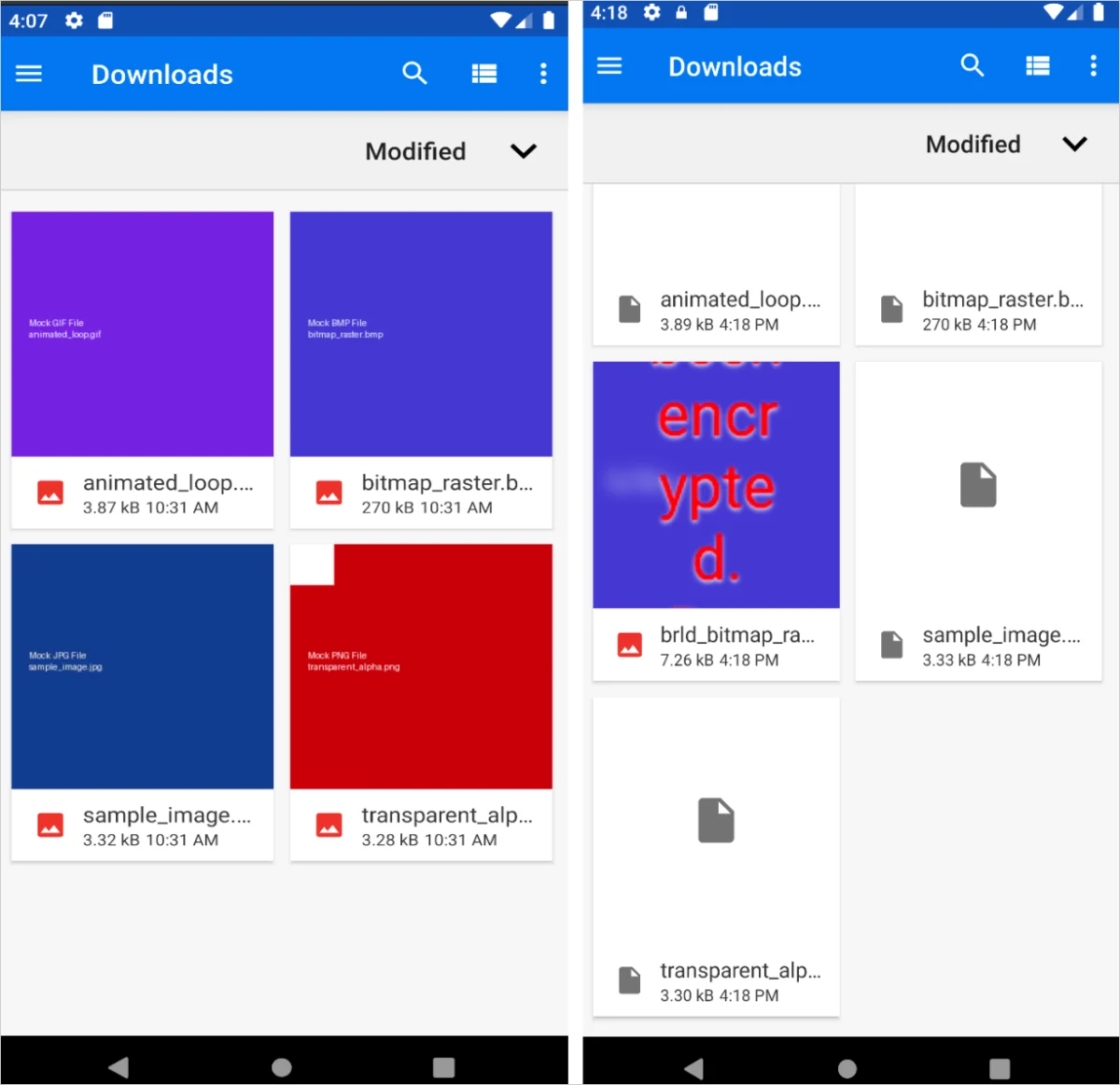
A novel and highly aggressive Android malware variant, identified as Mantax Otax, has emerged, presenting a significant threat to mobile users by seamlessly integrating ransomware, sophisticated spyware, and psychological harassment capabilities. This malicious software is designed not only to compromise device integrity and steal sensitive information but also to exert intense pressure on victims through a combination of data encryption and persistent digital torment.
The Infiltration Vector and Initial Compromise
The distribution of Mantax Otax primarily relies on deceptive tactics, leveraging social engineering and phishing campaigns to trick unsuspecting users into installing the malware. Operators of this threat originate from Indonesia and disseminate the malicious payload through rogue Android Package Kit (APK) files hosted outside the official Google Play Store. This off-store distribution method is a common vector for illicit applications, as it bypasses the stringent security checks implemented by Google. Victims are typically lured by convincing messages that prompt them to download and install what appears to be a legitimate application, often preying on curiosity, perceived utility, or urgency.
Upon successful installation, Mantax Otax immediately initiates a critical step in its compromise chain: requesting extensive permissions. A cornerstone of its operational efficacy is the acquisition of access to the Android Accessibility service. This particular service, originally designed to assist users with disabilities by providing enhanced control and interaction capabilities, is frequently abused by malware to gain unparalleled control over the device. With Accessibility service permissions, Mantax Otax can simulate user gestures, interact with other applications, intercept user input, and bypass many standard security prompts, effectively granting it a near-omnipotent presence on the compromised device.
Following permission acquisition, the malware establishes its command-and-control (C2) infrastructure. It retrieves the C2 domain from seemingly benign platforms like GitHub, a common tactic for threat actors to blend their malicious traffic with legitimate network activity. Subsequently, it transmits a comprehensive dossier of victim details back to the C2 server, including geographical location, mobile carrier information, Android operating system version, and unique device identifiers. The C2 server then orchestrates further malicious actions, issuing commands through either Firebase, a Google-owned development platform often misused for C2, or WebSocket connections, enabling real-time, interactive communication with the infected device.
The Ransomware Module: Targeting Legacy Systems
A core component of Mantax Otax is its ransomware functionality, designed to encrypt user files and hold them for ransom. However, this encryption module exhibits a notable architectural limitation: it primarily targets devices running older versions of the Android operating system, specifically Android 9 (Pie) and earlier. This selectivity stems from significant security enhancements introduced in Android 10 and subsequent versions, most notably the "Scoped Storage" feature.

Scoped Storage fundamentally altered how applications interact with the device’s file system, significantly restricting an app’s access to external storage to its own dedicated directories. This change was a pivotal move by Google to enhance user privacy and security, preventing malicious applications from freely accessing and modifying files across the entire shared storage. Consequently, Mantax Otax’s ransomware module, which requires broad access to shared storage to encrypt diverse file types, finds its capabilities severely curtailed on modern Android versions.
On vulnerable older devices, the malware systematically scans the shared storage for specific file types that are commonly valuable to users, such as documents, photos, and videos. It then encrypts these targeted files using a unique Advanced Encryption Standard (AES) key, which is dynamically generated for each victim and retrieved from the C2 server. After successful encryption, Mantax Otax deletes the original, unencrypted files and appends a ".enc" extension to the newly encrypted copies, making them inaccessible to the user.
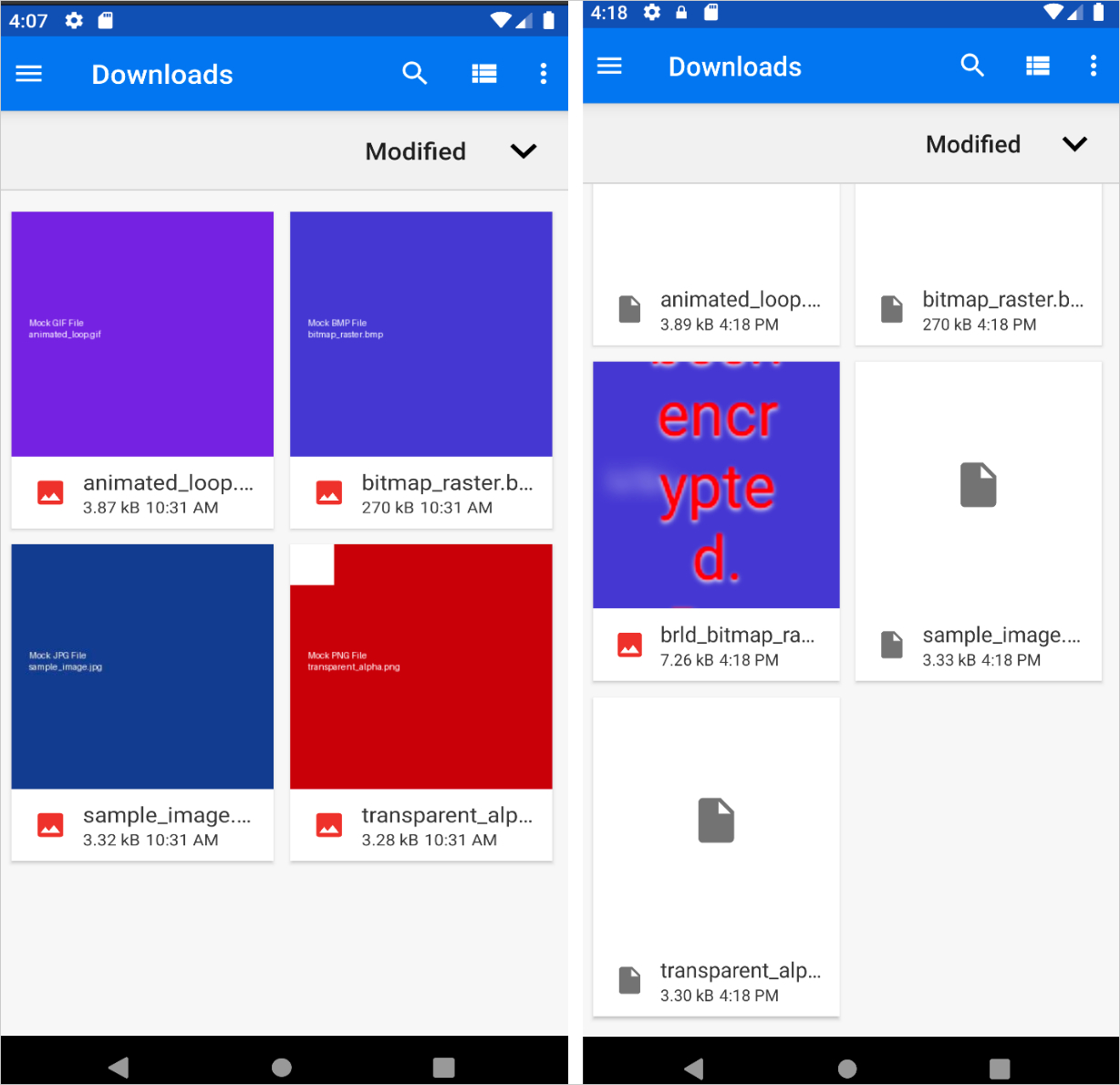
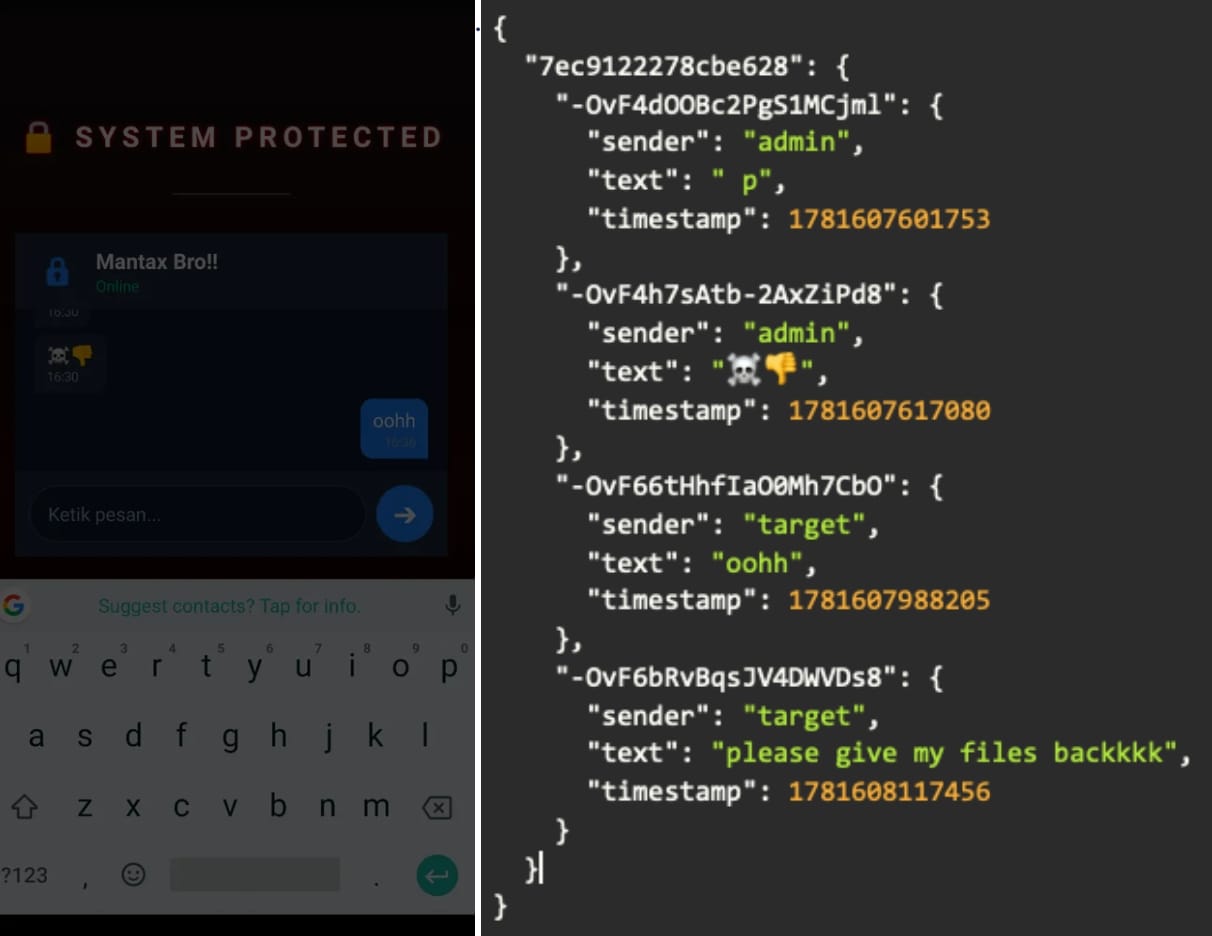
Beyond mere file encryption, Mantax Otax employs a more visible and distressing tactic: it replaces all local images on the device with prominent ransom notices. This not only serves as a direct communication channel for the attackers but also amplifies the psychological impact on the victim, transforming their personal photo gallery into a gallery of demands. To facilitate ransom payment negotiations, the malware also opens a full-screen chat interface, often hosted on Firebase, allowing for direct, albeit anonymous, communication between the victim and the perpetrators. This interactive negotiation channel is a common feature in modern ransomware operations, aiming to guide victims through the payment process and increase the likelihood of financial gain.
Intriguingly, security researchers analyzing Mantax Otax discovered a critical operational security flaw within the attackers’ infrastructure. A misconfiguration in their Firebase C2 server inadvertently exposed the chat logs between the threat actors and their victims. This oversight provided invaluable insights into the attackers’ methods, negotiation tactics, and potentially their identities or operational scale, offering a rare glimpse into the usually opaque world of cybercriminal communications.
The Espionage Framework: Pervasive Data Theft
Beyond its destructive ransomware capabilities, Mantax Otax operates as a potent spyware platform, meticulously designed to exfiltrate a wide array of sensitive personal data from compromised devices. Its extensive control, largely enabled by the abused Accessibility service, allows it to perform deep surveillance.
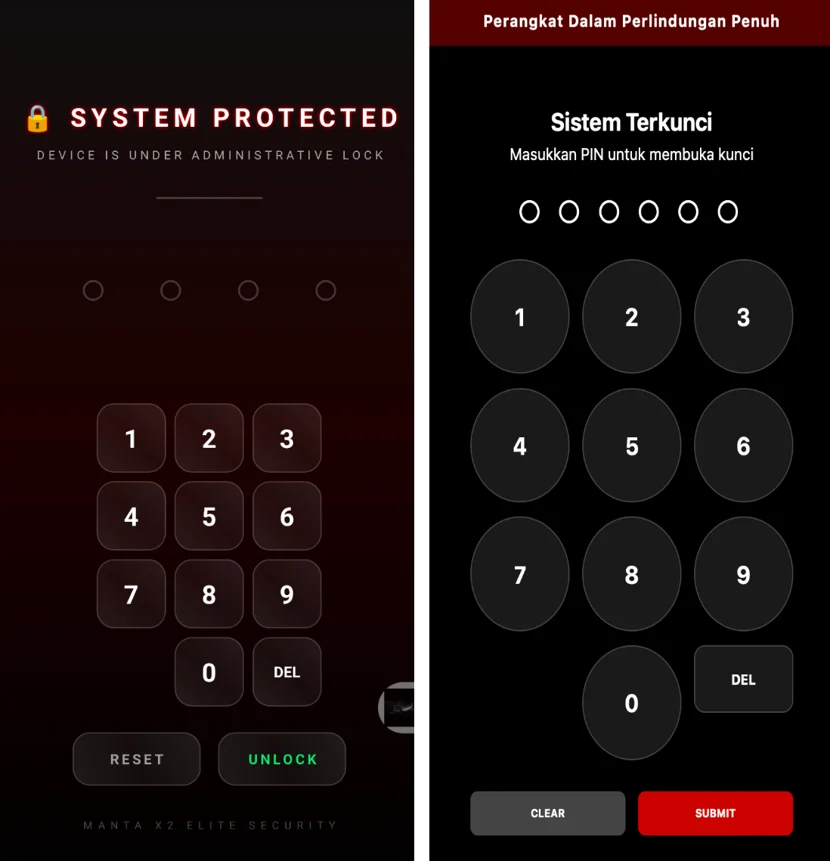
The malware can steal lock-screen PINs through deceptive overlays, ensuring persistent access even if the device is restarted. It is capable of intercepting and reading SMS messages, including crucial one-time passwords (OTPs) used for multi-factor authentication, posing a direct threat to financial accounts and online services. Call logs, contact lists, and browsing history are systematically extracted, providing attackers with a comprehensive profile of the victim’s social network and online activities. Furthermore, it enumerates installed applications and collects Google account information, potentially exposing access to cloud services and personal data stored within. The malware also continuously tracks and reports the victim’s geographical location.
A particularly concerning feature is Mantax Otax’s ability to exfiltrate data from popular messaging applications. By leveraging simulated user interactions via Accessibility services, it can extract WhatsApp profiles and messages, as well as Telegram chats. This capability transforms the victim’s private communications into an open book for the attackers, compromising not only the individual’s privacy but also the privacy of their contacts.
The spyware component extends to visual and auditory capture. Mantax Otax abuses Android’s MediaProjection API, a legitimate feature for screen sharing, to covertly capture screenshots and record MP4 videos of the device’s screen. These recordings can then be streamed in near real-time to the attackers via services like Catbox, a file hosting platform. This allows the threat actors to observe all user activity, including sensitive inputs like banking credentials or private messages, as they occur. Additionally, the malware can remotely activate the device’s cameras to capture photographs, further enhancing its surveillance capabilities and potentially gathering compromising imagery.
The Psychological Warfare Module: Harassment and Intimidation
In a notable escalation of malicious intent, later iterations of Mantax Otax (specifically Version 2) introduced a suite of harassment features designed to inflict psychological distress and exert extreme pressure on victims. These features go beyond mere technical compromise, aiming to terrorize and intimidate individuals into complying with ransom demands.
The harassment functions include:
- Repeated Dialog Boxes: The malware can incessantly display intrusive pop-up dialog boxes, disrupting normal device usage and creating a constant sense of frustration and helplessness.
- Full-Screen Videos: It can force the playback of full-screen videos, which could be disturbing, threatening, or simply disruptive, taking over the device interface.
- Rapid "Jumpscare" Image Overlays: Unexpected, full-screen image overlays, akin to "jumpscares," are deployed to startle and alarm the victim, creating an environment of constant anxiety and fear.
- Remotely Controlled Text-to-Speech Messages: The attackers can remotely trigger text-to-speech messages to be played through the device’s speakers. This direct auditory intrusion can be used to deliver threatening messages, taunts, or demands, making the attack feel incredibly personal and invasive.
These additional features are not merely an annoyance; they constitute a sophisticated intimidation mechanism. By combining data encryption with persistent psychological torment, Mantax Otax aims to break the victim’s resolve, accelerating the likelihood of ransom payment out of desperation and fear.
Broader Implications and Mitigation Strategies
The emergence of hybrid threats like Mantax Otax underscores the evolving sophistication of mobile malware. No longer content with single-vector attacks, threat actors are integrating multiple destructive and invasive capabilities to maximize their impact and financial gain. This trend poses significant challenges for individual users and the broader cybersecurity landscape.
For individuals, the risks are manifold: irreversible data loss, financial extortion, severe privacy breaches, and significant emotional distress. The blend of ransomware and spyware means that even if a victim manages to restore files, their personal data might already be compromised and potentially misused for identity theft, fraud, or further blackmail.
From a defensive standpoint, collaboration within the cybersecurity community is crucial. In this specific instance, the insights gathered by mobile security researchers have been instrumental. As a Google security partner through the App Defense Alliance (ADA), their findings ensure that up-to-date Android devices equipped with an active Play Protect service are already capable of detecting and blocking Mantax Otax. This highlights the importance of keeping operating systems and security services updated.
However, technology alone is not a panacea. User education remains a critical line of defense. General security best practices are paramount:
- Avoid Sideloading APKs: Users should strictly refrain from installing applications from sources outside the official Google Play Store. Unofficial app stores and direct APK downloads are primary vectors for malware distribution.
- Exercise Caution with Permissions: Granting Accessibility service permissions to unfamiliar or questionable applications should be avoided at all costs. Users should always scrutinize permission requests, understanding what each permission entails before granting access.
- Rely on Reputable Publishers: Only download applications from well-known, trusted developers and verify app authenticity through reviews and developer information.
- Maintain Software Updates: Regularly update the Android operating system and all installed applications to patch known vulnerabilities that malware might exploit.
- Implement Mobile Security Solutions: Utilize reputable mobile security applications that offer real-time threat detection and protection.
The Evolving Threat Landscape
Mantax Otax serves as a stark reminder of the escalating arms race between cybercriminals and security professionals in the mobile domain. The strategic targeting of older Android versions for encryption, while employing advanced spyware and harassment features that are effective across a wider range of devices, demonstrates adaptive tactics. The use of legitimate services like GitHub and Firebase for C2 further illustrates the criminals’ efforts to evade detection by blending into legitimate network traffic.
Looking ahead, it is highly probable that future mobile malware strains will continue to integrate hybrid capabilities, making them more potent and difficult to counter. The psychological element, particularly, may see increased adoption as attackers seek new ways to coerce victims. Continuous innovation in mobile threat defense, coupled with robust user awareness campaigns, will be essential to mitigate the impact of such sophisticated and invasive threats on the ever-expanding global population of Android users.



 Aura Kasih

 Lisa Mariana