Safa Marwah
Enterprise IT departments globally are confronting significant operational challenges following the deployment of Microsoft’s September 2026 cumulative security updates, which have been linked to widespread failures within Remote Desktop Services (RDS) on Windows Server 2019, 2022, and the nascent 2025 platforms. This critical malfunction is impeding user connectivity, disrupting established sessions, and, in numerous instances, necessitating drastic server restarts to temporarily restore functionality, thereby introducing considerable instability into crucial business infrastructure.
Remote Desktop Services (RDS) stands as a foundational component within modern enterprise computing environments, enabling organizations to deliver virtualized applications and desktops to end-users from a centralized server infrastructure. Its criticality spans various operational paradigms, from facilitating remote work and secure access to business-critical applications to powering Virtual Desktop Infrastructure (VDI) deployments. The seamless functioning of RDS is paramount for maintaining productivity, ensuring business continuity, and supporting distributed workforces. Therefore, any disruption to this service can have immediate and far-reaching consequences across an organization, impacting user access, data integrity, and overall operational efficiency.
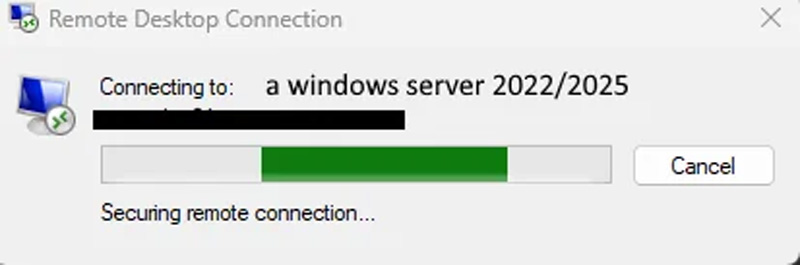
The issues manifest shortly after the installation of the monthly Patch Tuesday cumulative updates for September 2026. System administrators across various sectors have documented a consistent pattern: initially, RDS servers appear to operate without incident for a period ranging from a few hours to a full day. Subsequently, connection attempts begin to falter, with new sessions hanging indefinitely during the authentication or connection phase before ultimately failing. Concurrently, active Remote Desktop sessions may experience severe degradation, including an inability to properly disconnect or log off, trapping users in unresponsive states. This necessitates a forced server reboot, often an unscheduled hard reset, to temporarily clear the system and allow for new connections, a procedure that itself carries inherent risks to data and system integrity.
Reports detailing these disruptions have proliferated across professional IT forums and direct communications, highlighting a consistent set of symptoms. Administrators overseeing terminal server environments, for example, have observed all their critical servers succumbing to these issues within a day of applying the updates. The operational impact is severe: sessions abruptly drop, and the establishment of new connections becomes impossible, rendering the servers effectively inaccessible. The prevailing temporary solution identified by affected IT staff involves performing a hard reset of the affected server, an undesirable measure given its disruptive nature and the potential for data loss or corruption.
Further insights from administrators indicate that the problem’s onset can be particularly insidious. One documented scenario describes RDS functioning normally immediately after the September update installation. However, the service subsequently crashes after the first user logs out, preventing any further users from signing in. In such cases, a simple server restart proved ineffective, pointing to a deeper systemic issue rather than a transient glitch. The only reliable resolution observed by these administrators has been the complete rollback of the September cumulative updates, which consistently restored Remote Desktop functionality.
Preliminary technical investigations by some affected administrators have begun to shed light on the potential underlying mechanism of these failures. One detailed analysis of a Windows Server 2022 system indicated that the Remote Desktop Protocol (RDP) service becomes unresponsive specifically when users initiate log-off procedures. Debugging efforts in this instance pointed towards a deadlock situation occurring between the RDP service and the Local Session Manager (LSM). Specifically, the service was observed to hang indefinitely at a function identified as RDPSERVERBASE!WDLIB_Close, with no apparent timeout mechanism configured for this operation. This suggested deadlock effectively cripples the service, preventing proper session management and new connection establishment. It is crucial to note, however, that Microsoft has not yet officially confirmed this as the definitive cause of the widespread failures, and further investigation is undoubtedly ongoing by the vendor.
The scope of the problem is broad, affecting multiple generations of Windows Server operating systems. Administrators have corroborated similar issues across Windows Server 2019 (specifically linked to update KB5122876), Windows Server 2022 (KB5122882), and Windows Server 2025 (KB5122871). This wide impact across different server versions underscores the potential for a common underlying code change or interaction within the cumulative update package that affects core RDS components.
The immediate recourse for many organizations has been to revert the problematic September updates. While this action has proven effective in restoring Remote Desktop functionality, it introduces a critical security vulnerability. The September 2026 Patch Tuesday release was comprehensive, addressing a significant number of security flaws – reportedly 966 vulnerabilities, including two zero-day exploits. Rolling back these updates leaves servers exposed to these unpatched vulnerabilities, creating a difficult dilemma for IT decision-makers: prioritize operational stability by accepting increased security risk, or maintain security posture by enduring severe operational disruption. This trade-off is particularly acute given the nature of the vulnerabilities patched, which often include critical remote code execution flaws that could be exploited by malicious actors.
The implications of this widespread RDS failure are substantial. For businesses heavily reliant on remote access, virtual desktops, or centralized application delivery, the inability to maintain stable Remote Desktop Services translates directly into lost productivity, missed deadlines, and potential financial losses. IT departments face an immediate surge in support requests, increased workload for troubleshooting, and the complex task of devising temporary mitigations while awaiting an official resolution. The necessity of unscheduled server reboots further exacerbates the situation, potentially leading to data inconsistencies or prolonging downtime.
From a vendor perspective, such widespread issues following a critical security update can erode trust and confidence in the patching process. Organizations invest significant resources in maintaining up-to-date systems, and when these updates introduce critical operational failures, it complicates patch management strategies and can lead to hesitancy in deploying future updates.
As of the time of this report, Microsoft has not issued an official statement regarding the reported Remote Desktop Services problems, nor has it provided guidance on potential fixes or workarounds. The expectation within the IT community is for a rapid investigation and, if the reports are validated, the release of an out-of-band patch or a clear set of mitigation instructions. Until such official communication emerges, system administrators are left to navigate a precarious balance between maintaining essential remote access capabilities and protecting their infrastructure from known security threats.
The incident highlights the perennial challenge in software development and deployment: the intricate balance between introducing new features, addressing security vulnerabilities, and ensuring backward compatibility and system stability. Even with extensive testing, the sheer complexity of modern operating systems and their interactions with diverse hardware and software configurations means that unforeseen issues can occasionally arise post-release. For the IT community, this situation underscores the critical importance of robust patch management strategies, including comprehensive testing in staging environments before widespread deployment, as well as maintaining clear rollback plans. The ongoing situation with the September 2026 Windows Server updates serves as a stark reminder of the delicate equilibrium required to secure and operate critical enterprise infrastructure.




 Aura Kasih
 Ayu Aulia