Ayu Aulia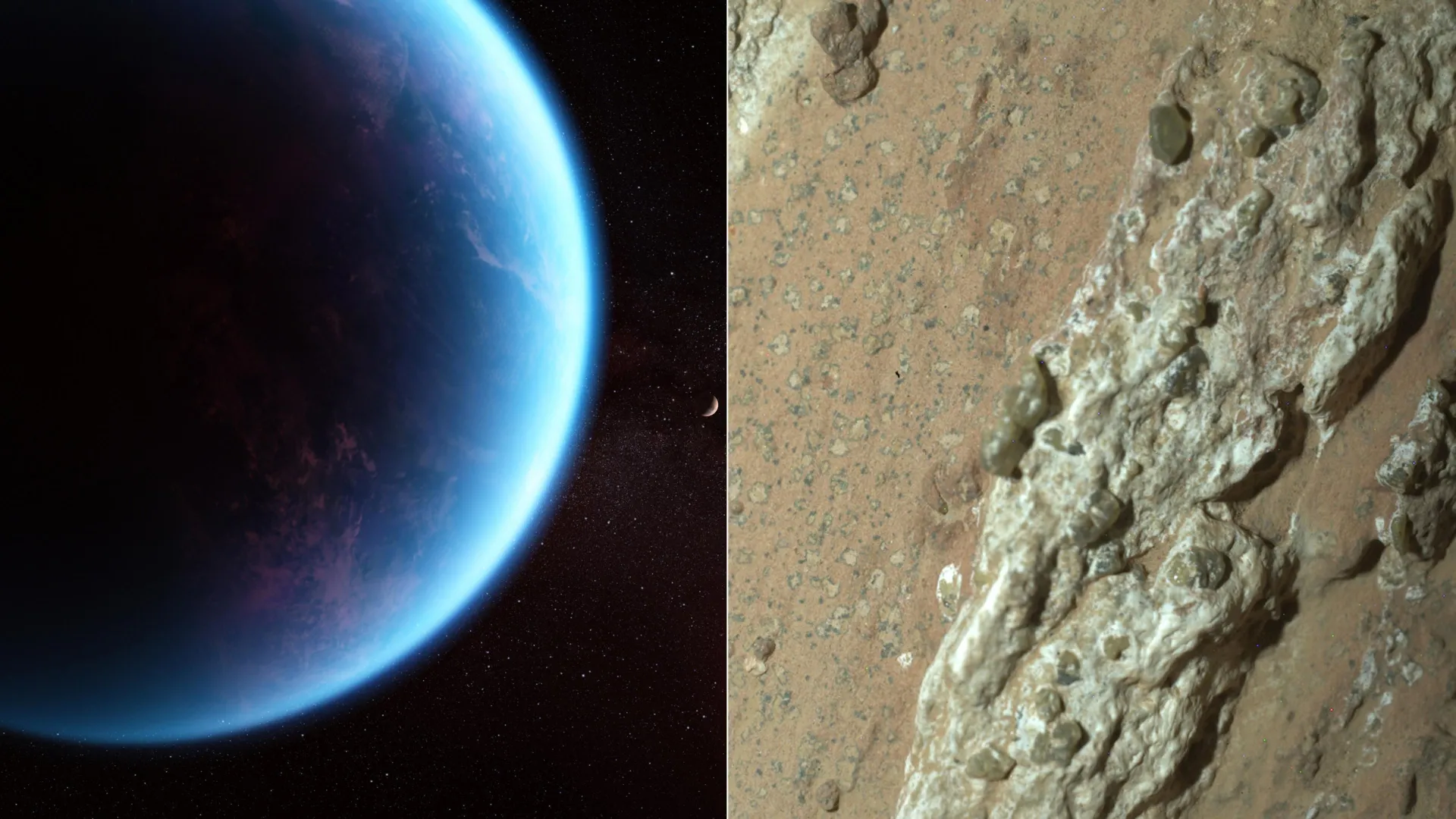
The pervasive notion that humanity stands on the precipice of confirming alien life has recently gained considerable traction, fueled by high-profile scientific announcements. In a notable development in 2025, a research release indicated the discovery of what were described as "the most compelling indicators yet" of biological processes on the exoplanet K2-18b. Concurrently, remarks from NASA Administrator Sean Duffy regarding geological samples from a Martian rock formation dubbed "Cheyava Falls" suggested an "unprecedented proximity" to substantiating life on the red planet. These pronouncements, naturally, captured significant public and media attention, igniting widespread speculation about the imminent verification of extraterrestrial biology.
Such moments, while undeniably captivating, invariably provoke a more profound inquiry into the actual scientific assessment of these claims. Beyond the immediate enthusiasm generated by press briefings and media reports, what is the collective professional judgment of the scientific community most directly involved in astrobiological research? This question often remains unanswered, as public discourse frequently relies on the interpretations of a select few experts or broad, unqualified statements about what "science says" or what "scientists believe." This approach often obscures the intricate and often provisional nature of scientific consensus, particularly in emergent fields characterized by inherent uncertainties and rapidly evolving data.
In the realm of scientific discourse, particularly concerning significant breakthroughs or contentious hypotheses, the prevailing practice of quoting a limited number of specialists, while offering valuable insights, rarely reflects the broader distribution of expert opinion. This selective representation can inadvertently create an impression of definitive consensus or deep division where a more complex reality exists. Phrases such as "the science dictates" or "the scientific community holds" often oversimplify the dynamic processes of scientific inquiry, implying a monolithic viewpoint that seldom aligns with the nuanced spectrum of professional judgments. Without systematic methods for gauging the collective perspectives of a research domain, public understanding of scientific progress risks becoming skewed, relying on anecdotal evidence rather than comprehensive data.
Recognizing this critical gap, a recent initiative sought to systematically map the expert judgment within the astrobiological community following the two aforementioned high-profile announcements in 2025. This study aimed to move beyond anecdotal evidence and provide empirical data on how specialists in the field evaluated the potential significance of these purported extraterrestrial biosignatures. By surveying astrobiologists shortly after these revelations, the research endeavored to illuminate the true extent of professional agreement, disagreement, and neutrality regarding the likelihood of discovering alien life.
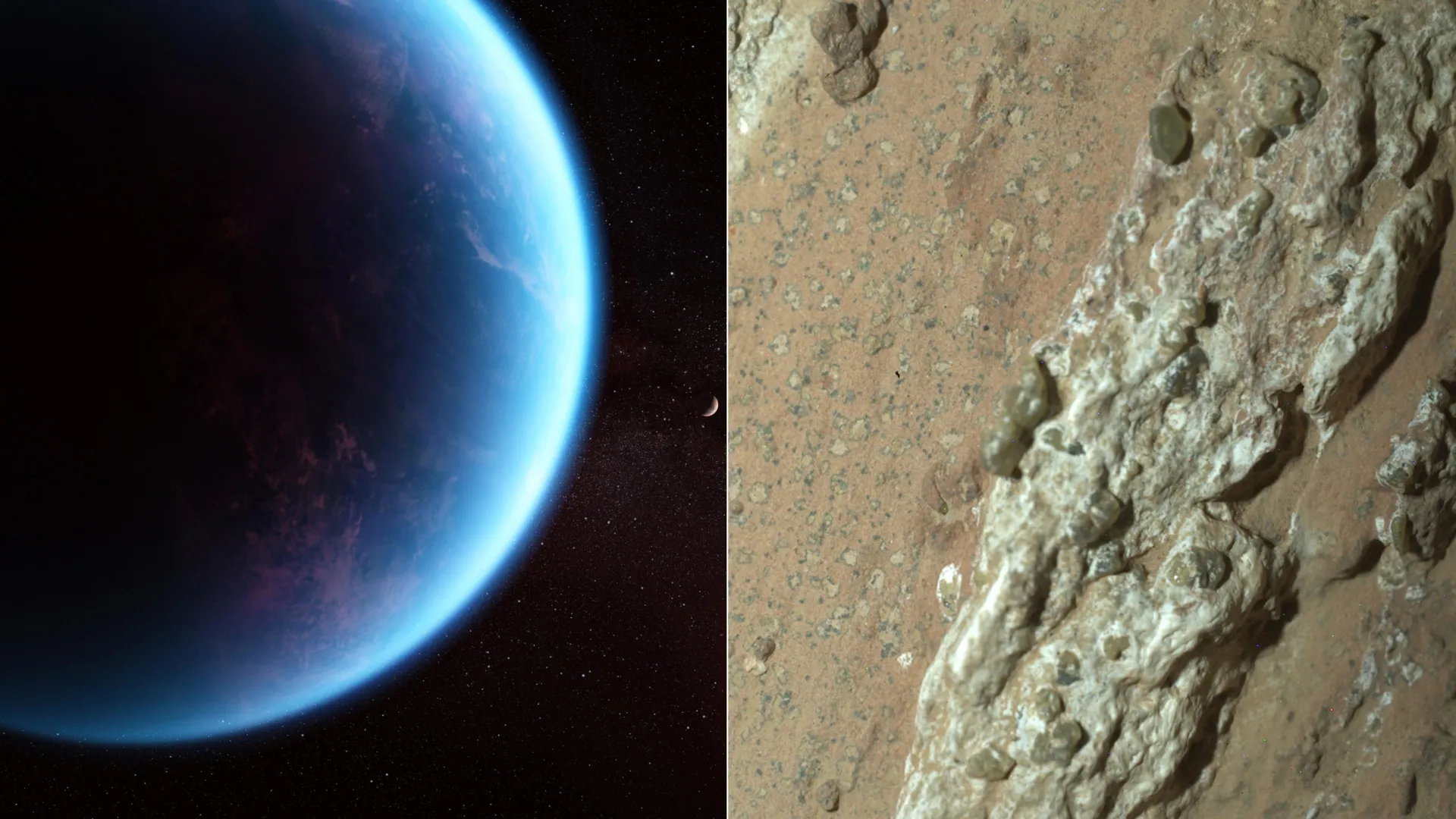
The first significant case involved the exoplanet K2-18b, an intriguing distant world that had been the subject of intense scrutiny. In April 2025, researchers unveiled findings suggesting the possible presence of specific molecules, namely dimethyl sulfide (DMS) and/or dimethyl disulfide (DMDS), within its atmosphere. On Earth, these compounds are predominantly associated with biological processes, particularly marine plankton activity. The ensuing media coverage was extensive, frequently framing these spectroscopic detections as a monumental leap forward in the quest for life beyond Earth, often implying a near-certainty of biological origin. The profound implications of detecting such compounds on an exoplanet, located light-years away, naturally captivated the global imagination, propelling K2-18b into the scientific and public spotlight.
The second case unfolded in September of the same year, shifting the focus much closer to home: Mars. NASA announced that its Perseverance rover had identified remarkable features within a rock sample designated "Cheyava Falls." These features, characterized as "leopard spots," manifested as distinct mineral rings. Crucially, analogous geological formations on Earth are frequently attributed to microbial activity, suggesting a potential biological origin for the Martian counterparts. Once again, official statements from NASA and subsequent media headlines underscored the potentially groundbreaking nature of these findings, suggesting that humanity was closer than ever to uncovering direct evidence of past or present Martian life. The tactile nature of a rock sample, potentially harboring fossilized biosignatures, presented a different kind of compelling evidence compared to atmospheric spectroscopic data from an exoplanet.
To ascertain the true sentiment within the astrobiological community, a comprehensive survey was rapidly deployed to hundreds of specialists globally within days of each announcement. The central question posed was direct and unambiguous: based on the presented evidence, did the scientists believe that extraterrestrial life had "probably" been discovered? This methodology aimed to capture immediate expert reactions, minimizing the influence of prolonged media cycles or subsequent analyses. The rapid deployment and broad reach ensured a representative snapshot of the collective professional judgment at the crucial moment of the news breaking.
The aggregated survey results painted a distinctly more circumspect picture than the public narrative often suggested. Regarding the K2-18b findings, a mere 6.6% of the surveyed astrobiologists concurred with the assertion that extraterrestrial life had "probably" been found. A substantial majority, nearly two-thirds, expressed disagreement with this proposition, while 28.0% adopted a neutral stance, indicating either genuine uncertainty or a perception that the evidence was too preliminary for a definitive judgment. For the Martian Cheyava Falls case, the level of confidence exhibited a modest increase, with 15.1% of experts agreeing with the "probable discovery" statement. Concurrently, disagreement decreased to 44.6%, and the proportion of neutral responses rose significantly to 40.3%.
However, a simplistic analysis focusing solely on agreement versus disagreement overlooks a critical subtlety in the distribution of expert opinion. A more granular examination revealed a substantial shift in the intensity of skepticism. Specifically, the proportion of astrobiologists who "strongly disagreed" with the notion of a probable discovery plummeted from 35.1% for the K2-18b case to a considerably lower 11.1% for the Martian findings. This significant reduction in strong rejection indicates that much of the attitudinal change was not a direct conversion from outright dismissal to full endorsement, but rather a migration from firm skepticism towards more tentative or open-minded positions.
This nuanced movement underscores that scientific opinion rarely operates on a binary "yes/no" spectrum. The shift from K2-18b to the Martian samples illustrated a structured evolution in expert judgment. The community became demonstrably more receptive to the possibility of biosignatures in the Cheyava Falls case, without, however, transitioning to widespread outright acceptance. This highlights the sophisticated nature of scientific evaluation, where varying degrees of certainty and skepticism are continuously recalibrated as new evidence emerges and methodologies evolve.
One plausible explanation for this differential response lies in the distinct nature of the evidence presented in each case. The claim surrounding K2-18b was predicated on indirect atmospheric spectral signatures, detected across vast interstellar distances. Such observations, while powerful, are inherently subject to complex interpretations and potential confounding factors, requiring sophisticated models and assumptions about exoplanetary environments. Conversely, the Martian case involved geological formations from a rock that could potentially be studied directly, with the prospect of detailed laboratory analysis upon sample return. The ability to directly analyze a physical sample offers a level of evidentiary detail and verification not yet attainable for distant exoplanets.
Simultaneously, astrobiologists are acutely aware of the phenomenon of "false biosignatures"—features that mimic biological activity but arise through purely abiotic geological or chemical processes. The scientific challenge frequently transcends merely imagining how life could produce a particular signal; it critically involves exhaustively understanding all potential non-biological pathways that might yield a similar outcome. The history of Mars exploration, in particular, is replete with instances where initial excitement over potential biosignatures was later tempered or refuted by abiotic explanations. This ingrained caution is a hallmark of rigorous astrobiological investigation.
The broader implication of this study extends far beyond the specific quest for extraterrestrial life, touching upon the fundamental dynamics of scientific communication and public engagement. Public discourse frequently simplifies scientific consensus into a binary state of "agreement" or "disagreement." However, the full distribution of opinion – encompassing strong agreement, agreement, neutrality, disagreement, and strong disagreement – provides a far richer and more accurate portrayal of how a scientific community processes and responds to novel claims. Each category offers distinct insights into the collective confidence level, perceived conclusiveness of evidence, and the potential for future shifts in understanding.
A significant proportion of neutral responses, for instance, can convey multiple meanings. It might indicate that experts genuinely assess the evidence as inconclusive, lacking sufficient data to commit to either acceptance or rejection. Alternatively, it could reflect an intermediate level of confidence, where the evidence is suggestive but not yet definitive. In some cases, neutrality may signify that a claim is considered too speculative to warrant a decisive endorsement or refutation at its current stage. Similarly, a movement from strong disagreement to ordinary disagreement, even if overall disagreement remains high, signals a measurable softening of attitudes and a greater openness to future evidence. Reducing these complex dynamics to a simple "for or against" framework risks oversimplifying the sophisticated mechanisms through which scientific knowledge progresses and consensus forms.
The insights gleaned from this astrobiology survey resonate across numerous scientific domains. In critical areas such as climate science, the ongoing response to pandemics, the rapid advancements in artificial intelligence, or cutting-edge medical research, public discussions frequently invoke the concept of "scientific consensus." However, the reality of this consensus, its strength, and its distribution are often assumed rather than systematically measured.
While strong agreement genuinely exists in certain established scientific areas, in many others, particularly those characterized by emerging evidence or substantial uncertainty, a robust, systematic assessment of expert opinion is conspicuously absent. Instead, public narratives often rely heavily on selective quotations from prominent individuals, the amplified voices of vocal advocates, or unsubstantiated assumptions about the collective views of entire research communities. This approach can lead to misunderstandings, exacerbate polarized debates, and undermine public trust in scientific institutions.
Efforts to address this methodological deficit are beginning to materialize. Research groups, such as C-Scope (the Centre for Scientific Community Opinion Polling and Evaluation) at Durham University, are dedicated to systematically studying the distribution of expert opinion and tracking its evolution over time. The objective of such initiatives is not to supplant empirical evidence with polling data, nor to equate majority opinion with scientific truth. Rather, the fundamental aim is to foster a more profound understanding of how scientific communities navigate and respond to inherent uncertainties, how knowledge claims are evaluated, and how consensus—or its absence—is formed and communicated.
Scientific knowledge is not static; it is a dynamic, iterative process characterized by constant questioning, internal disagreement, and gradual revision in light of new evidence. If public discourse, and consequently political will and resource allocation, are increasingly shaped by claims about the collective sentiment of scientists, then it becomes imperative to develop more rigorous and systematic methodologies for accurately ascertaining what scientists actually think. Such endeavors are crucial for fostering informed public understanding, facilitating effective policy-making, and strengthening the integrity of scientific communication in an increasingly complex world.


 Aura Kasih
 Safa Marwah