
 Lisa Mariana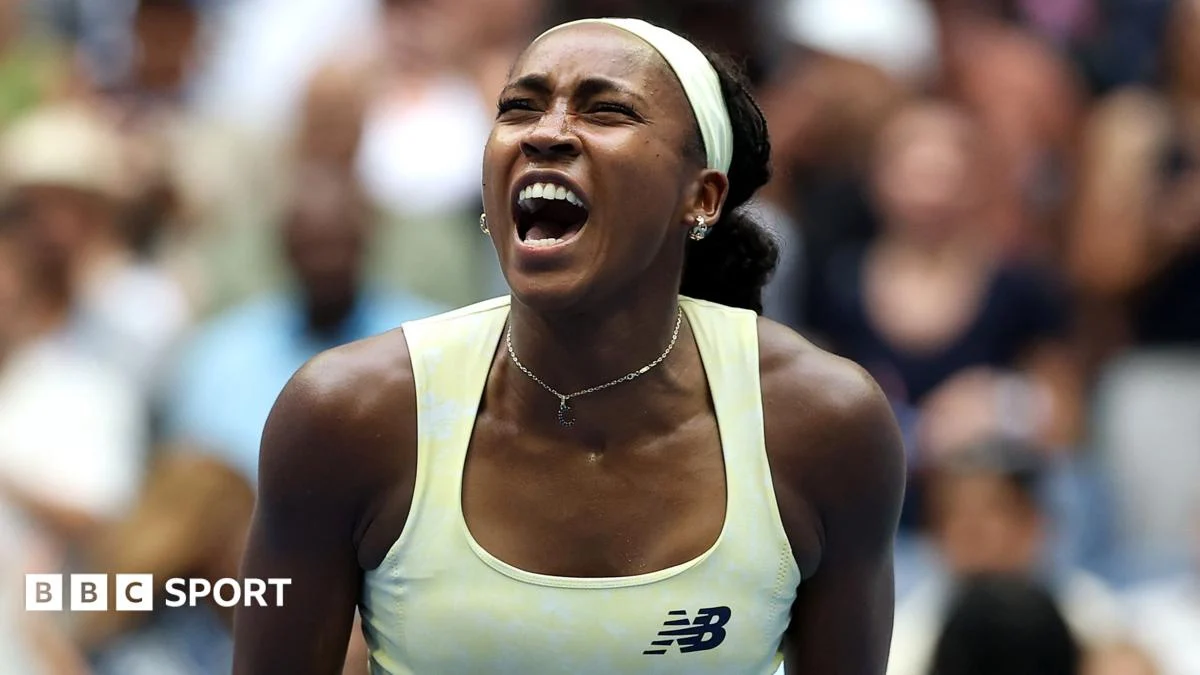
The 2026 US Open has delivered a compelling narrative of grit, strategic prowess, and the relentless pursuit of excellence, culminating in a highly anticipated semifinal clash between American sensation Coco Gauff and the tour’s newly minted world number one, Elena Rybakina. Both athletes navigated treacherous quarter-final encounters with remarkable fortitude, Gauff demonstrating extraordinary mental resilience to overcome multiple match points against the formidable Mirra Andreeva, while Rybakina solidified her claim to the sport’s pinnacle with a hard-fought victory over the resurgent Zheng Qinwen. These dramatic triumphs underscore the intense competitive landscape of contemporary women’s tennis and set the stage for an enthralling conclusion to the final Grand Slam of the season.
Coco Gauff’s path to the semifinals was a testament to her evolving maturity and unwavering determination. Facing the precocious talent of Mirra Andreeva, Gauff found herself in an unfamiliar and challenging position, struggling to find her rhythm in the initial stages of their quarter-final showdown. The opening set saw Andreeva execute a near-flawless performance, dominating rallies with precision and power that left Gauff visibly unsettled. The young Russian capitalized on Gauff’s uncharacteristic error count, which included a significant number of double faults, to sweep through the set in a mere twenty-six minutes. This early setback posed a critical psychological test for the reigning 2023 US Open champion, placing her on the brink of an early exit from a tournament where expectations run particularly high for the home favorite.
The second set unfolded as a tense, back-and-forth affair, characterized by numerous breaks of serve and a palpable shift in momentum. Gauff, buoyed by the fervent support of the partisan New York crowd, began to chip away at Andreeva’s lead, but struggled to consolidate her advantages. Twice she broke Andreeva’s serve, establishing leads at 4-2 and 5-3, only to be immediately pegged back by her tenacious opponent. This inability to close out games suggested a lingering vulnerability in Gauff’s game, yet it also highlighted her sheer refusal to yield. The set inevitably progressed to a tie-break, a high-stakes mini-match that often serves as a crucible for mental fortitude. Here, Gauff’s resolve was truly tested. Despite commencing the tie-break with another double fault, she maintained her composure through a grueling sixteen-point battle, ultimately saving two match points against Andreeva’s increasingly aggressive, albeit less consistent, play. The successful navigation of this critical juncture proved to be the turning point, infusing Gauff with renewed confidence and visibly impacting Andreeva’s self-belief.
The decisive third set saw a complete reversal of fortunes. Gauff, now operating with the momentum of a player who had escaped defeat, elevated her game significantly. Her movement sharpened, her groundstrokes found greater depth and consistency, and her serve, while still prone to occasional lapses, became a more potent weapon. Andreeva, by contrast, struggled to recapture the form of the first set. The pressure of the occasion, coupled with the frustration of squandered opportunities, began to manifest in her play. Her unforced error count surged, notably striking fourteen unforced errors to Gauff’s mere two in the final set. A moment of visible frustration, involving the flinging of her racquet after a crucial break of serve, underscored the mental toll the match was taking. Gauff’s ability to dominate these clutch moments in the decider showcased a profound mental strength, a trait that has become increasingly synonymous with her Grand Slam performances.
The post-match analysis lauded Gauff’s extraordinary comeback, drawing parallels to other notable displays of resilience witnessed earlier in the tournament. Her ability to transition from a subdued, defensive posture to a commanding, controlling presence on court was particularly striking. This victory not only secures Gauff’s second consecutive Grand Slam semi-final appearance but also marks her return to the final four at the US Open since her triumphant run in 2023. It reinforces her status as a consistent threat at the highest level and underscores the psychological fortitude that defines elite athletes. For Andreeva, while a painful defeat, it serves as an invaluable learning experience, exposing the areas where she must continue to develop her mental game and consistency under extreme pressure. Her talent is undeniable, but the capacity to close out matches against top-tier opponents, especially after holding match points, is a critical hurdle for any aspiring champion.
In parallel with Gauff’s dramatic escape, Elena Rybakina charted her own course to the semifinals, albeit with a different kind of historical significance attached to her victory. Her win over Zheng Qinwen secured not only a spot in the final four but also guaranteed her ascension to the coveted world number one ranking. This achievement marks a monumental milestone, making her the first Kazakhstani player, male or female, to reach the pinnacle of professional tennis. Rybakina, the second seed, entered the US Open trailing Aryna Sabalenka by a narrow margin, and her consistent performance throughout the tournament, culminating in this quarter-final triumph, validated her claim to the top spot.
Rybakina’s quarter-final match against Zheng Qinwen was a nuanced affair, showcasing both her immense power and her burgeoning mental fortitude. Zheng, whose journey through the tournament had been nothing short of spectacular, presented a formidable challenge. The reigning Olympic champion had navigated a challenging path, recovering from elbow surgery in July 2025 that saw her ranking plummet outside the top 100. Her remarkable comeback included battling through three qualifying rounds and subsequently stunning higher-ranked opponents such as 22nd seed Madison Keys – whom she famously trailed 5-0 in the third set and saved a match point against – and 8th seed Iga Swiatek. Ranked 121st at the start of the tournament, Zheng’s run to her third US Open quarter-final was a testament to her resilience and rediscovered form, propelling her to 52nd in the live rankings.
The match began with Zheng seizing the initiative, her aggressive play disrupting Rybakina’s rhythm. She secured a crucial break late in the first set and then staved off five break points to clinch the set, demonstrating remarkable composure under pressure. Momentum appeared to be with the 23-year-old Chinese player. However, Rybakina, known for her ice-cold demeanor and devastating serve, responded with characteristic authority. She completely dominated the second set, adjusting her strategy to put immense pressure on Zheng’s second serve and unleashing a barrage of powerful groundstrokes. The third set became a true test of wills. While Rybakina ultimately prevailed 3-6 6-1 6-4, Zheng had her opportunities. She earned a break point in the eighth game of the decider but missed a routine backhand pass, a moment that would prove costly. In the subsequent game, she bravely fought back from 0-40 to deuce, only to follow a loose backhand with a double fault, allowing Rybakina to consolidate her lead and close out the match.
Rybakina’s ascent to world number one is a fitting reward for a season that has seen her consistently perform at the highest level, including her triumph at the Australian Open in January. This achievement, her second major title of the season, places her in an elite category of players. Her powerful game, characterized by a potent serve and flat groundstrokes, is exceptionally well-suited to the fast courts of the US Open. For Zheng, despite the disappointment of not reaching her maiden US Open semi-final, her performance throughout the tournament offered a profound reminder of her talent and fighting spirit. Her ranking rebound and her ability to challenge top players after a significant injury lay-off signal a strong trajectory for the remainder of the season and beyond.
The convergence of these two compelling quarter-final narratives sets the stage for a truly blockbuster semifinal clash between Coco Gauff and Elena Rybakina. This encounter promises to be a strategic and physical battle between two of the sport’s most dominant forces. Gauff, with her exceptional athleticism, tenacious defense, and significantly improved forehand, will seek to neutralize Rybakina’s overwhelming power. Rybakina, in turn, will leverage her formidable serve and aggressive baseline game to dictate play and keep Gauff on the defensive. The contrast in their playing styles – Gauff’s defensive prowess and counter-punching against Rybakina’s offensive onslaught – ensures a fascinating tactical duel. The winner will earn a coveted spot in the US Open final, with the potential to add another Grand Slam title to their respective collections.
Beyond the individual storylines, the 2026 US Open has delivered a remarkable statistical anomaly: for the first time since Wimbledon in 2009, all top four seeds have reached the semifinals of the women’s singles draw. This rare occurrence, with top seed Sabalenka and third seed Jessica Pegula also progressing in their respective quarter-finals, speaks volumes about the current strength, consistency, and depth at the very pinnacle of women’s tennis. It signifies an era where the established elite are consistently performing at the highest level, fending off challenges from a talented cohort of rising stars and resilient veterans. This stability at the top ensures high-quality matches and compelling narratives, elevating the prestige of the sport. As the tournament progresses towards its climax, the anticipation for these semifinal battles and the ultimate championship match is immense, promising to deliver further moments of sporting drama and solidify the legacies of these exceptional athletes.


 Aura Kasih
 Ayu Aulia

 Safa Marwah