Ayu Aulia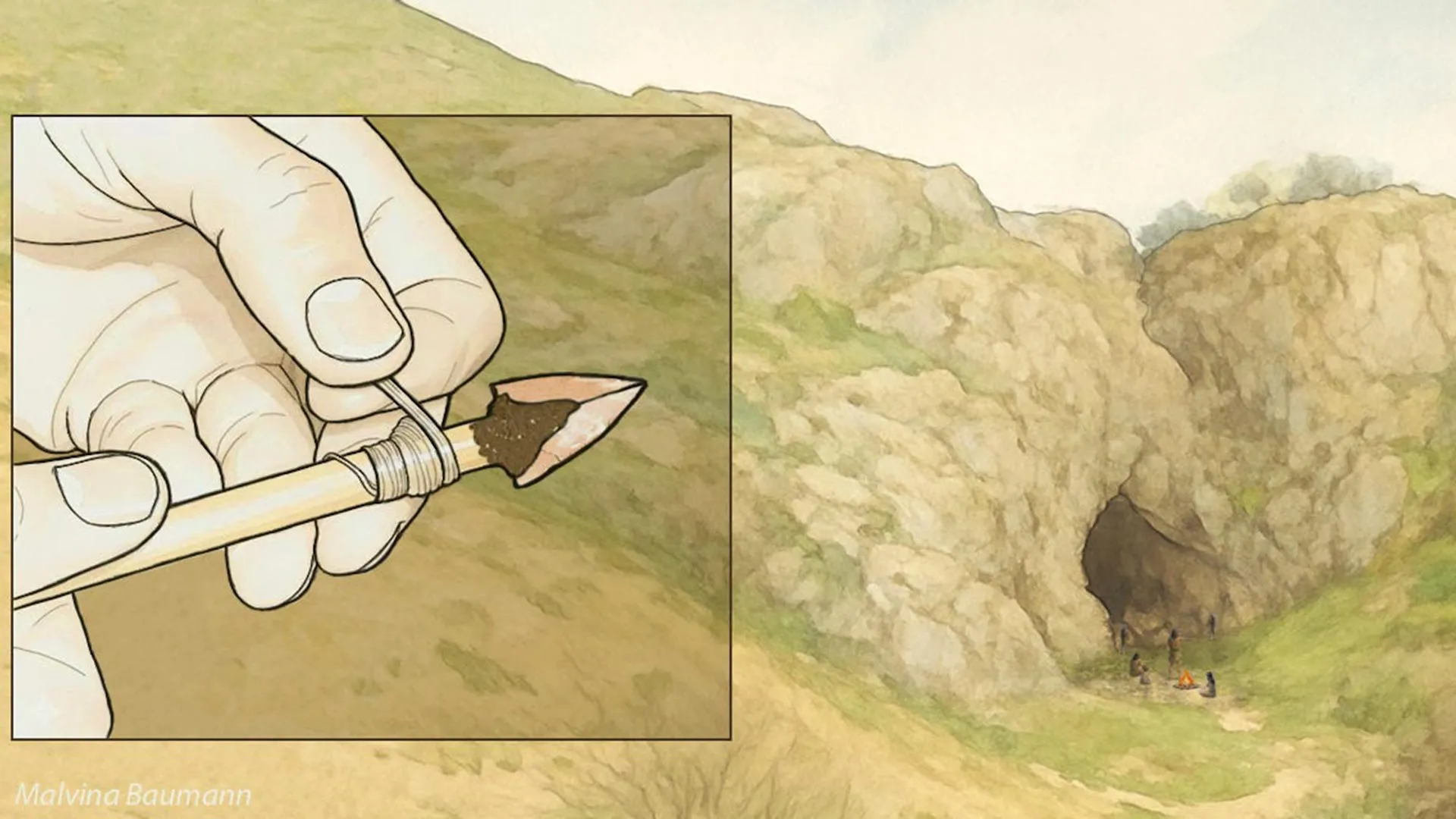
A groundbreaking archaeological discovery in Uzbekistan has unveiled sophisticated microlithic projectile points dating back 80,000 years, presenting compelling evidence that significantly challenges established timelines and pathways for Homo sapiens‘ initial expansion into Eurasia and their eventual presence in Europe. These meticulously crafted tools, identified by their distinct impact traces, are remarkably similar to those found 25 millennia later in a key European site, suggesting a previously unacknowledged technological continuum and a more complex migratory history for our species.
For over a century, the foundational understanding of human prehistory has been heavily influenced by a Eurocentric perspective, largely shaped by discoveries in Western Europe, particularly France, during the latter half of the 19th century. Early frameworks often depicted a linear progression from Neanderthals to Cro-Magnons (early modern humans in Europe), implicitly establishing a narrative of civilizational superiority. This paradigm began to shift significantly only in the 20th century, with the definitive recognition of Homo sapiens’ African origins and the complex technological and social innovations — such as symbolic art, extensive trade networks, and diverse toolkits made from stone and bone — that characterized the Upper Paleolithic.
Despite these revisions, the precise chronology and routes of Homo sapiens‘ global dispersion have remained subjects of intense debate. Evidence from Australia, for instance, places human presence there around 65,000 years ago, predating the earliest accepted European settlements by at least 10,000 years. The colonization of Western Eurasia, thought to have occurred more than 45,000 years ago, is particularly contentious. Archaeological data from the Levant, often considered the most typologically and technologically proximate to early European Upper Paleolithic sites, has frequently proven unsatisfactory due to either the age of excavations or its inability to fit into a clear, direct lineage. Even the origins of the Initial Upper Paleolithic in the Levant, despite its geographical proximity to Africa, are ambiguous. This persistent uncertainty underscores the growing interest in alternative hypotheses, such as the possibility of a Central Asian origin for certain aspects of early Homo sapiens technology and dispersal, as proposed by some archaeologists.
Central Asia: A Pivotal Corridor
Central Asia’s geographical position has historically rendered it a critical nexus, functioning either as a vital corridor for population movements between the eastern and western continents or as a crucial refuge zone, depending on prevailing climatic conditions. While the archaeological record for this vast region is still developing, it contains several significant Paleolithic sites that offer tantalizing glimpses into ancient human activities.
Among these, the Obi-Rakhmat rock shelter in Uzbekistan stands out. Discovered in 1962 and subject to recent excavation campaigns led by Andrei Krivoshapkin, this site is situated at an elevation of 1,250 meters within the Talassky Alatau range of the Tien Shan mountains. The shelter has yielded an exceptionally consistent lithic industry across a stratigraphic sequence exceeding 10 meters, encompassing a period from approximately 80,000 to 40,000 years ago. This industry, characterized by points, large blades, and bladelets, was initially classified within the Initial Upper Paleolithic. However, subsequent analysis suggests its derivation from the Levantine Early Middle Paleolithic, a cultural phase associated with archaic Homo sapiens at sites like Misliya cave, which largely disappeared from the Near East around 100,000 years ago. Adding further complexity to Obi-Rakhmat’s narrative is the discovery of child skull remains in a layer dating back approximately 70,000 years, exhibiting a mosaic of both Neanderthal and anatomically modern human features, hinting at potential hybridization events within this region.
Unraveling Microlithic Precision
Within the oldest stratigraphic layers of Obi-Rakhmat, an international multidisciplinary team made a pivotal identification: tiny, unretouched, triangular projectile points. These artifacts were meticulously distinguished from other lithic debris through their unique macroscopic and microscopic impact marks, which were cross-referenced with extensive experimental data. The diminutive size of these points – less than 2 cm in width and weighing only a few grams – combined with their inherent brittleness, renders them unsuitable for attachment to heavy spear shafts. Crucially, the width of their cutting edges aligns precisely with the known diameters of arrow shafts documented ethnographically for low-poundage bows. This consistency reflects transcultural invariants rooted in fundamental physical and ballistic constraints, suggesting a deliberate design choice rather than a default.
The mechanics of thrown piercing weapons are intrinsically complex, with components specifically engineered for distinct stress intensities and natures. A critical distinction exists between handheld or thrown spears and projectiles launched from a bow. Spears, relying on significant impact force, demand robustness for both effectiveness and hunter survival; mass is paramount for ensuring durability, impact force, and penetration. Conversely, the efficacy of light projectiles, launched from a distance, hinges on their extreme sharpness. Their kinetic energy, substantially lower than a spear’s, derives primarily from velocity, which dissipates rapidly along its trajectory and within the target. Such velocities cannot be achieved by human muscular extension alone, necessitating the use of a mechanical throwing instrument. Consequently, arrowheads and spearheads or javelin heads are designed according to fundamentally different criteria and cannot be mounted on the same shafts, whose dimensions and elasticity are also critical ballistic parameters. Just as paleontologists deduce an animal’s diet and locomotion from a tooth’s morphology, the specific characteristics of a projectile point offer definitive clues about the weapon system it served.
A Homo sapiens Signature?
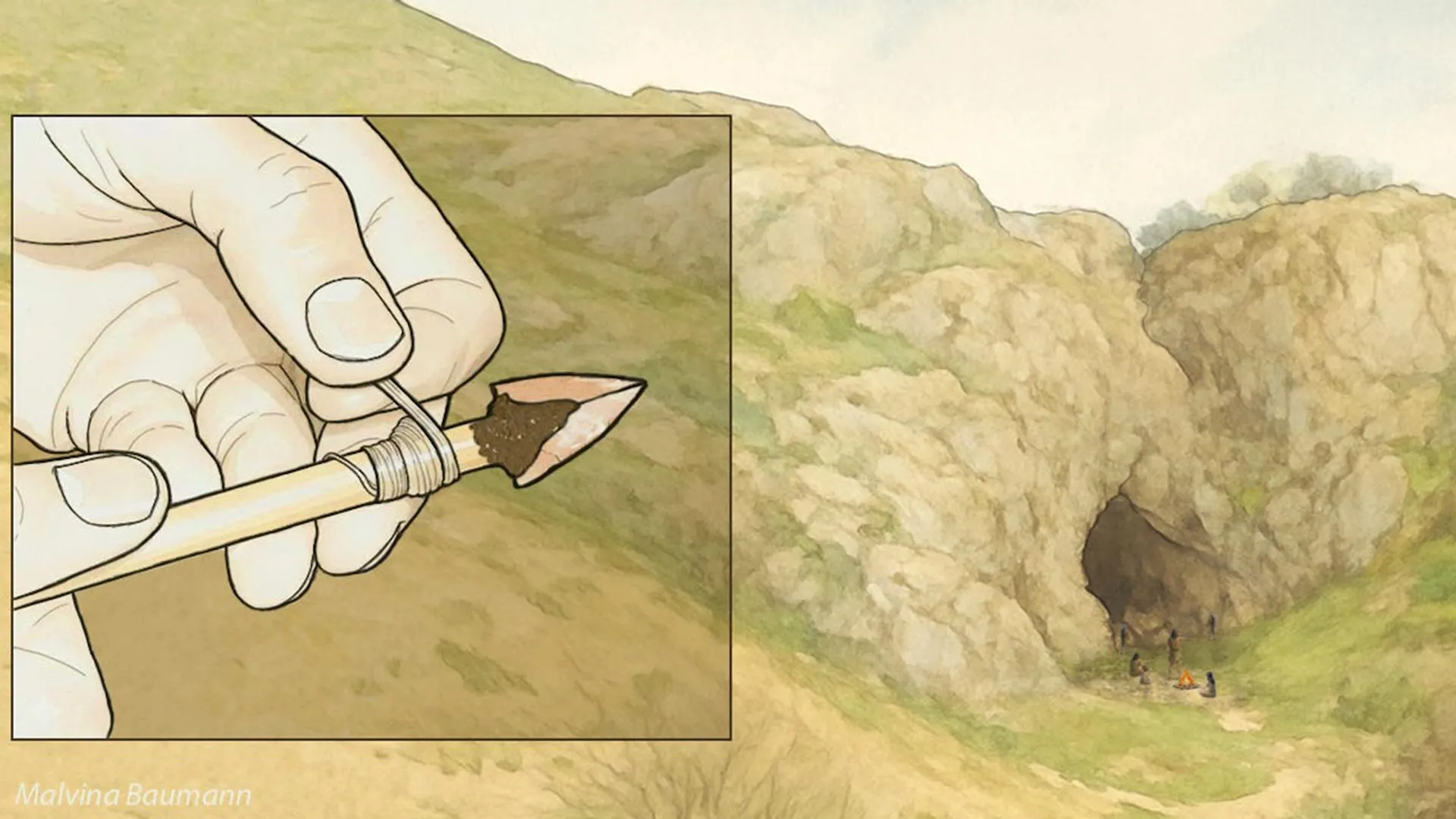
The miniature scale of the Obi-Rakhmat points was not a default dictated by resource scarcity; the site offers abundant, high-quality lithic raw material, from which much larger blades were also produced. Furthermore, microscopic analysis reveals the coexistence of these tiny points with much more robust, retouched points – 15 to 20 times heavier and 3 to 4 times thicker – consistent with spearheads or javelin heads, also bearing axial projectile impact marks. This deliberate co-occurrence of diverse projectile types within the same assemblage is highly significant.
Extensive review of existing literature and proprietary research on Middle Paleolithic toolkits indicates that the presence of various projectile point types and inserts, some specifically designed as microliths, is an exclusive characteristic of Homo sapiens sites. The oldest documented instances are found in the Pre-Still Bay and later cultural layers of Sibudu cave in South Africa, dating back over 77,000 years. In stark contrast, lithic points bearing damage from projectile use are rare within the Neanderthal archaeological record. When present, they are typically large and do not exhibit notable differences in size, manufacturing technique, or type from points used for non-hunting activities such as plant processing or butchery. This fundamental divergence in the conceptual design of tools and weaponry carries profound anthropological implications, suggesting distinct cognitive approaches and adaptive strategies between hominin species. Given the considerable geographical distance (14,000 km) and the differing manufacturing techniques (unretouched knapped stone points at Obi-Rakhmat versus shaped stone points or retouched inserts and shaped bone points at Sibudu), the hypothesis of independent centers of invention for this advanced weaponry appears most plausible.
From Central Asia to the Rhone Valley: A Transcontinental Link
The micro-points from Obi-Rakhmat currently possess no known equivalents in the broader Eurasian Middle Paleolithic, with one striking exception: identical projectile points identified by traceology expert Laure Metz at the Mandrin site in the Rhône Valley, France. These French artifacts date to approximately 54,000 years ago, predating the disappearance of local Neanderthal populations by roughly ten millennia. Notably, a Homo sapiens milk tooth was also recovered from the same stratigraphic layer at Mandrin. The astonishing similarity between the Obi-Rakhmat and Mandrin micro-points, despite their separation by more than 6,000 kilometers and 25 millennia, is such that they could be interchanged without any discernible difference other than the geological origin of the stone itself.
Recent paleogenetic research by Leonardo Vallini and Stéphane Mazières further enriches this picture. Their work identifies the Persian Plateau, on the northeastern periphery of which Obi-Rakhmat is situated, as a critical population hub. This region is theorized to have harbored the ancestors of all present-day non-Africans during the early phases of the "Out of Africa" expansion, long before the Upper Paleolithic, and preceding the widespread colonization of Eurasia. This resource-rich environment may have functioned as a refuge, conducive to demographic regeneration following the genetic bottleneck associated with the initial exodus from Africa. Such conditions would have fostered intensive interaction between groups, thereby accelerating technical innovations.
The remarkable congruence between Obi-Rakhmat and Mandrin strongly suggests that they represent two geographical and temporal markers within a singular, overarching process of dispersal, as previously posited by Ludovic Slimak. This process is characterized by the dissemination of a key technological innovation unique to Homo sapiens. Previously overlooked due to their unretouched nature, diminutive size, and fragmentary state, it is now anticipated that similar micro-projectile points, with newly established recognition criteria, will increasingly emerge at archaeological sites spanning the vast expanse between Central Asia and the western Mediterranean.
A New Blueprint for European Settlement
This discovery carries profound implications, stimulating a comprehensive re-evaluation of established narratives. It powerfully validates the meticulous research conducted at the Mandrin site, which initially proposed a brief incursion of Homo sapiens armed with bows into Neanderthal territories. While certain aspects of the Mandrin study faced initial critiques – a natural dynamic in scientific discourse when new propositions deviate significantly from entrenched knowledge – its predictive dimension, though initially unacknowledged, has now been remarkably substantiated.
The profound similarity between the Obi-Rakhmat and Mandrin micro-points transcends mere coincidence. It encompasses not only their identical morphology but also their sophisticated manufacturing technique, which demands considerable expertise, evident in the precise preparation of their striking platforms, and their unequivocal function. While the precise instrument for launching arrows tipped with such minute points can be debated – the bow, though implicit, allows for a cautious interpretation of "shooting" technology – this capability fundamentally contrasts with what is understood about Neanderthal hunting weaponry and their design principles.
A particularly compelling aspect of this research is the convergence and complementarity of data derived from material culture and genetic memory. Crucially, these distinct lines of inquiry were conducted independently, without mutual influence, given the respective dates of their studies and publications. Together, they begin to sketch a dramatically revised scenario for the arrival of Homo sapiens in Europe. The prevailing view had been a direct migration from Africa via the shortest route approximately 45,000 years ago. The new evidence, however, suggests a far more protracted and circuitous journey, indicating that Homo sapiens had established a long-term presence deep within the Eurasian continent, potentially for millennia, before embarking on wider expansions in search of new territories. This integrated understanding compels a fundamental reconsideration of the temporal, spatial, and technological dynamics that underpinned the remarkable global journey of our species.




 Aura Kasih
 Safa Marwah