Aura Kasih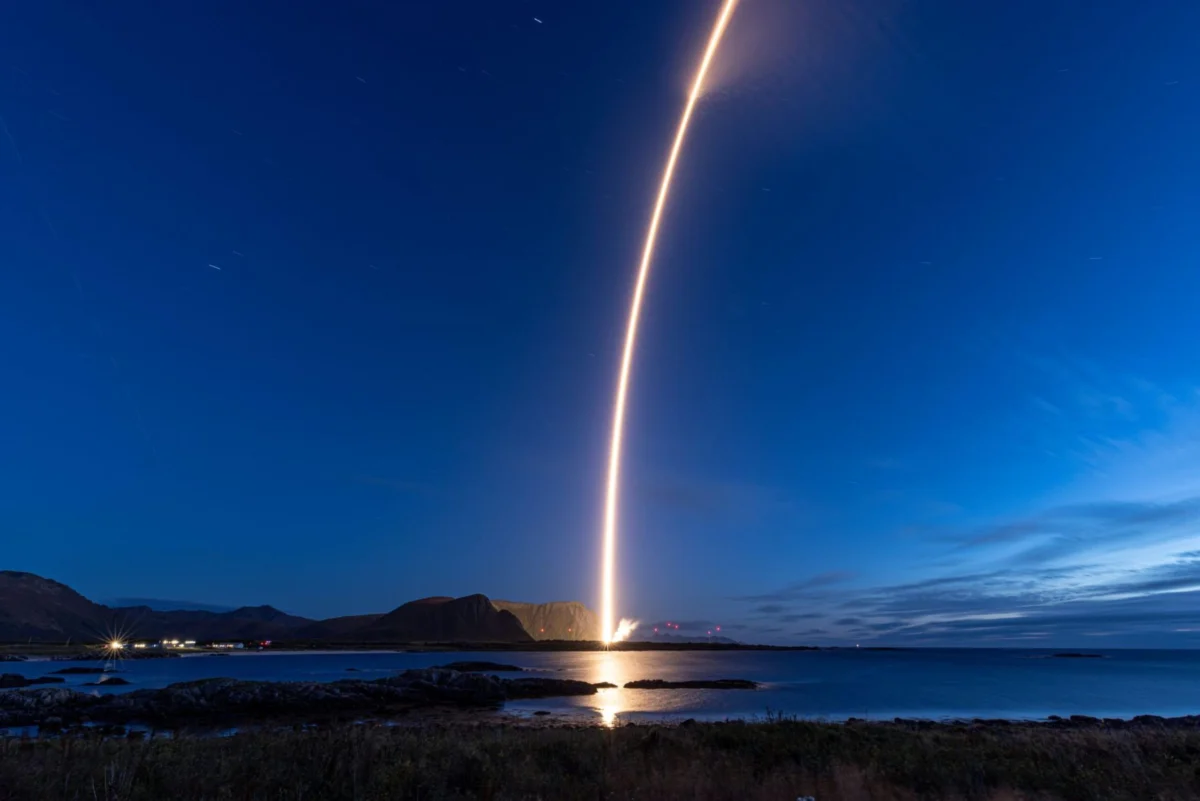
The European continent has taken a monumental leap forward in its spacefaring capabilities with the successful orbital launch of Isar Aerospace’s Spectrum rocket, marking a pivotal moment for independent European access to space. This achievement not only signifies a technological triumph for the German company but also profoundly reshapes the strategic landscape for European space ambitions, offering a crucial "buy European" option for satellite deployment and fostering greater continental autonomy in a rapidly evolving geopolitical climate.
For years, Europe’s access to orbit has been primarily facilitated by government-backed entities like Arianespace and Avio. While these organizations have served the continent admirably, the current global geopolitical climate, underscored by the ongoing conflict in Ukraine and its repercussions on international partnerships, has amplified the imperative for sovereign and commercially driven launch solutions. The exclusion of Russian Soyuz rockets, once a significant component of European launch capacity, has further underscored this need. In this context, Isar Aerospace’s successful mission represents more than just a commercial launch; it is a strategic enabler for European nations seeking to secure their own pathways to space.
The journey to this historic success was not without its challenges. Isar Aerospace’s initial attempt in March 2026 encountered a setback, with the Spectrum rocket experiencing an anomaly approximately 30 seconds into its flight, leading to its premature demise over the ocean. This early failure, however, served as a critical learning opportunity. The company’s dedication to analyzing the incident, refining its technology, and persevering in its mission has culminated in this resounding victory. The recent flight, originating from a spaceport in Norway, saw the two-stage Spectrum rocket perform flawlessly, carrying its payload to low Earth orbit and solidifying Isar Aerospace’s position as a key player in the European space sector.
Daniel Metzler, CEO and Co-Founder of Isar Aerospace, articulated the profound significance of this achievement in a company press release. "Today, Isar Aerospace opened space from Continental Europe," Metzler stated. "Launch continues to be the largest bottleneck for the global space industry, and from today on, there is a true alternative for commercial and institutional customers. Europe now has sovereign access to space. We have entered into a new chapter for European spaceflight." His words encapsulate the dual triumph: the technical mastery of achieving orbital insertion and the strategic impact of establishing independent European launch capabilities.
The European Space Agency (ESA) has long championed the concept of "buy European" as a cornerstone of its strategic policy. This initiative aims to bolster the continent’s indigenous space industry, fostering innovation, creating high-skilled jobs, and ensuring that European technological advancements remain within the continent’s economic and strategic sphere. Isar Aerospace’s success directly aligns with and accelerates this agenda. By providing a reliable and commercially viable launch service, the company empowers European governments and private entities to reduce their reliance on non-European launch providers, thereby enhancing national security, economic resilience, and technological sovereignty.

The implications of this development extend far beyond mere satellite deployment. The ability to launch from European soil, or with European-built rockets, offers several strategic advantages. Firstly, it reduces transit times and logistical complexities associated with transporting payloads to launch sites in other continents. This is particularly critical for time-sensitive missions, such as deploying constellations for Earth observation or communication services. Secondly, it provides a greater degree of control over launch schedules and mission parameters, minimizing potential disruptions caused by international political tensions or regulatory hurdles imposed by external powers.
Furthermore, the emergence of a robust European commercial launch sector is vital for the growth of the entire European space economy. Beyond satellite operators, this includes a burgeoning ecosystem of downstream service providers, data analytics companies, and technology developers who rely on consistent and affordable access to space for their innovations. Isar Aerospace’s success injects new dynamism into this ecosystem, potentially stimulating further investment and the development of next-generation space technologies.
The Spectrum rocket itself is a testament to modern engineering principles, designed for efficiency and flexibility. Its two-stage architecture, powered by advanced propulsion systems, is optimized for delivering payloads to a variety of orbits. The company’s focus on reusability, though not yet fully implemented in its commercial operations, hints at a future trajectory aimed at further reducing launch costs and increasing the sustainability of space access. This forward-looking approach is essential for remaining competitive in a global market that is increasingly driven by cost-efficiency and rapid deployment.
The significance of this achievement can also be viewed through the lens of international competition and collaboration. While Europe now possesses a stronger independent launch capability, the global space sector remains a highly interconnected arena. European companies will likely continue to engage with international partners, but the foundation of European autonomy provides a stronger negotiating position and a more secure base for future endeavors. This could lead to new forms of collaboration, where European expertise and infrastructure play a more prominent role in multinational space projects.
Looking ahead, Isar Aerospace’s success is likely to catalyze further investment and innovation within the European space sector. Other companies may be inspired to accelerate their own launch vehicle development programs, or to focus on complementary services such as in-orbit servicing, debris removal, or the development of specialized satellite technologies. The increased availability of launch capacity could also lead to a proliferation of small satellite constellations, enabling new applications in areas such as global internet connectivity, precision agriculture, environmental monitoring, and disaster management.
The path to orbital independence has been long and arduous, marked by technological hurdles, financial challenges, and geopolitical complexities. However, with the successful orbital insertion of Isar Aerospace’s Spectrum rocket, Europe has not only demonstrated its technological prowess but also its strategic foresight. This milestone is a clear signal that the continent is serious about its ambitions in space, and that it is committed to building its own capabilities to explore, utilize, and defend its interests in the final frontier. The era of truly independent European space access has unequivocally begun.




 Safa Marwah
 Ayu Aulia