Aura Kasih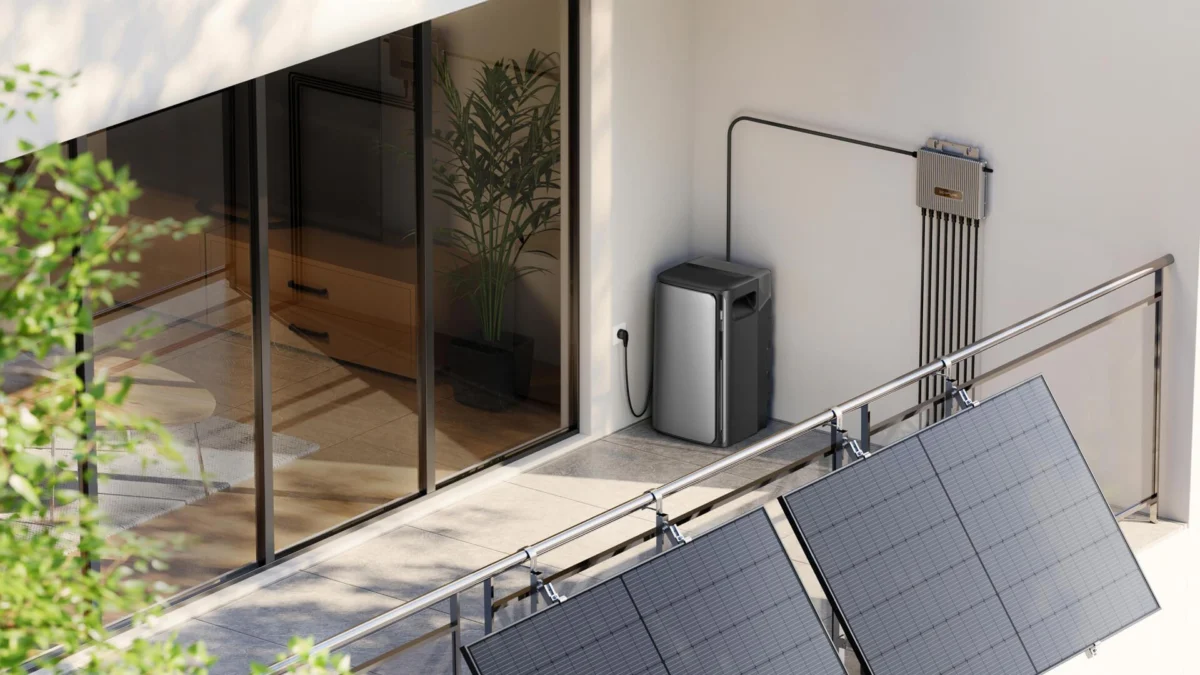
A significant shift is underway in the American energy landscape, as plug-in solar systems, a seemingly simple yet revolutionary technology, are rapidly gaining traction, democratizing renewable energy generation for a broader segment of the population. This innovative approach transforms the once-prohibitive cost and complexity of solar installation into an accessible consumer appliance, empowering individuals to generate their own clean electricity directly from their homes.
The genesis of this movement can be traced back to the growing desire for energy independence and the increasing affordability of renewable technologies. For years, the prospect of harnessing solar power was largely confined to homeowners with substantial financial resources and the willingness to navigate a labyrinthine process involving contractors, permits, and utility approvals. Traditional rooftop solar installations, often commencing at an investment of $15,000 or more, represented a significant capital expenditure, placing it out of reach for many. However, the emergence of plug-in solar kits fundamentally alters this paradigm. These systems, often referred to as "balcony solar," are designed for straightforward installation, allowing consumers to purchase them as readily as any other household appliance, with prices starting around $300. They typically comprise a compact microinverter coupled with a few solar panels, designed to seamlessly integrate with a home’s existing electrical grid. The microinverter’s crucial function is to convert the direct current (DC) generated by the solar panels into alternating current (AC) that can be utilized by household appliances, prioritizing this self-generated power before drawing from the utility grid.
A key enhancement to these systems is the optional integration of battery storage. These "power stations" enable users to store any surplus solar energy produced during daylight hours. This stored energy can then be fed back into the home during the evening or periods of low sunlight, further augmenting cost savings. Beyond their energy-saving capabilities, these battery systems also offer a crucial layer of resilience, capable of powering essential appliances like refrigerators and providing a vital backup during power outages. The cost of these power stations varies, with smaller units offering around 1 kilowatt-hour (kWh) of storage starting at approximately $500, while larger 3kWh units can be found for around $1,500.
The widespread adoption of plug-in solar systems has been particularly pronounced in Europe, where an estimated 1.5 million households, notably in Germany, have embraced this technology in recent years. The surge in popularity can be attributed to a confluence of factors, including volatile global energy prices, exacerbated by geopolitical conflicts, and a simultaneous decline in the cost of solar panels and battery technology. While European consumers can even find these systems available through major retailers like Ikea, American consumers have historically faced additional hurdles, including tariffs on imported solar components and the fluctuating availability of tax incentives. Nevertheless, the momentum is undeniable, with plug-in solar finally establishing a foothold in the American market.
Historically, utility regulations in the United States have treated even the smallest solar installations with the same regulatory scrutiny as large-scale, utility-grade solar farms. This has presented a significant barrier to the widespread adoption of smaller, distributed solar solutions. However, a paradigm shift is occurring, with over a dozen U.S. states enacting legislation or introducing bills to legalize the deployment of plug-in solar systems. These regulations, while varying by state, generally permit the installation of qualifying plug-in solar systems without the need for prior utility approval, provided they adhere to stringent safety requirements. These requirements typically include measures to prevent the overloading of individual circuits and an automatic shutdown mechanism during power outages to ensure the safety of utility line workers.
The practical impact of these systems is becoming increasingly evident through real-world usage. A typical 400-watt plug-in system, operating in a location with favorable sunlight, can generate a substantial amount of electricity over time. In one documented instance, a 400W system operating for 21 months produced 709 kilowatt-hours (kWh) of energy, resulting in savings of approximately $260. This figure is substantial enough to significantly offset the initial purchase price of the kit itself. While the payback period for the accompanying power station may be longer, the added utility of having reliable backup power and the ability to operate off-grid for extended periods adds considerable value, particularly for individuals with mobile lifestyles.
The efficiency and output of plug-in solar systems are further enhanced in sunnier climates and when integrated with larger solar arrays. European systems are capable of feeding up to 800 watts into a home’s electrical system, while regulations in many U.S. states now permit capacities of up to 1200 watts. Furthermore, many kits are designed to accommodate even higher solar capacities, provided the excess energy is directed to a battery storage system.
The legislative landscape in the United States is rapidly evolving to accommodate this burgeoning sector. States such as Virginia, Maine, Colorado, Maryland, New Jersey, Connecticut, Vermont, and New Hampshire have already legalized plug-in solar installations. Utah led this charge by reclassifying plug-in solar as a small household appliance last year. Currently, significant legislative developments are underway in California and New York, with bills awaiting gubernatorial signatures. Additionally, several other states have introduced similar legislation, signaling a nationwide trend towards embracing decentralized solar generation. In stark contrast, within the European Union, only Sweden and Hungary continue to prohibit plug-in solar devices, highlighting the progressive stance adopted by the majority of member states.
Looking ahead, the trajectory for plug-in solar adoption in the United States appears exceptionally promising. The continued decline in solar panel and battery prices, coupled with sustained high energy costs, creates a compelling economic case for consumers. The potential for exponential growth in the U.S. market is particularly acute, especially with the anticipated legalization in California, a state notorious for its high residential electricity rates. The passage of plug-in solar legislation in such a populous and influential state is poised to trigger a "hockey stick" moment of rapid expansion for the industry.
The growing recognition of plug-in solar’s potential has attracted the attention of leading companies in the home energy sector. Manufacturers such as EcoFlow, Bluetti, and Anker are actively developing and marketing a diverse range of plug-in solar kits, catering to a broad spectrum of consumer needs and budgets. Recent product launches include EcoFlow’s more advanced Stream 2 series and Bluetti’s Balco series, both of which feature modular architectures. This design philosophy allows users to progressively expand their solar energy systems over time, transitioning from entry-level solar generation to more comprehensive whole-home energy solutions. This modularity is a critical factor in making renewable energy accessible and scalable for individual households.
The appeal of plug-in solar often extends beyond mere financial savings. The experience of harnessing one’s own clean energy can be deeply empowering, fostering a sense of self-sufficiency and environmental stewardship. This initial foray into self-generation can often lead to a deeper engagement with energy consumption and optimization, creating a cycle of continuous improvement and adoption of cleaner technologies. The satisfaction derived from reducing one’s carbon footprint and contributing to a more sustainable future is an invaluable, intangible benefit that complements the tangible cost savings.
While plug-in solar systems are not intended to supplant large-scale utility solar farms or extensive rooftop installations, they play a crucial role in filling a vital gap in the clean energy transition. They represent the bottom layer of a distributed energy ecosystem, empowering individuals and communities to participate actively in the shift towards renewable energy. The increasing affordability, ease of installation, and growing regulatory support are converging to make plug-in solar a pivotal technology in the democratization of energy. The long-term implications extend beyond individual cost savings, contributing to grid resilience, reducing reliance on fossil fuels, and fostering a more sustainable and equitable energy future. Furthermore, policy shifts in future administrations could provide further impetus to this sector, fostering innovation and accelerating the adoption of clean energy technologies across the nation.




 Safa Marwah
 Ayu Aulia