
 Lisa Mariana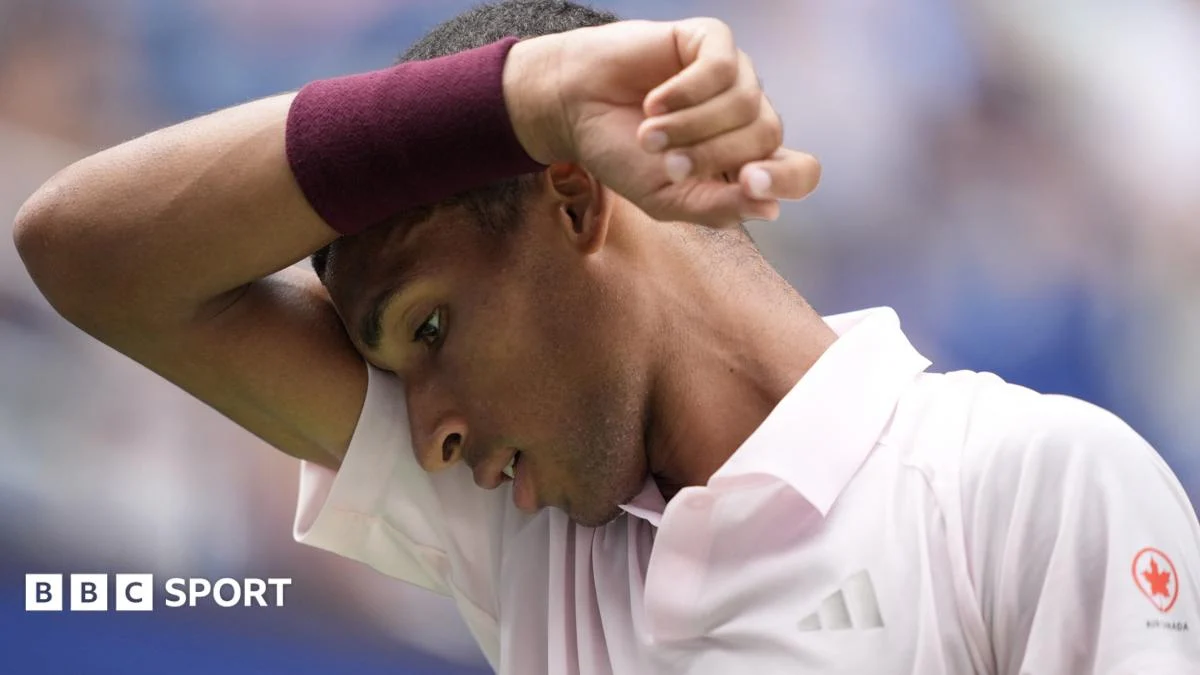
The competitive landscape of the US Open was dramatically reshaped by a significant second-round upset, as Canada’s Felix Auger-Aliassime, one of the tournament’s highest-ranked contenders, experienced an unexpected defeat at the hands of Russia’s unseeded Karen Khachanov. The match, which concluded with a scoreline of 6-7 (5-7), 6-3, 6-2, 6-2, was not merely a testament to Khachanov’s strategic prowess but was profoundly influenced by Auger-Aliassime’s pronounced physical struggles, symptoms he later described as debilitating dizziness and visual disturbances that emerged early in the contest. This early departure of a prominent seeded player underscores the inherent unpredictability and immense physical demands characteristic of Grand Slam tennis, particularly under the challenging environmental conditions prevalent in New York.
The encounter unfolded with an initial display of resilience from Auger-Aliassime, who managed to clinch the opening set in a tightly contested tie-break, signaling a potentially arduous battle ahead. However, as the match progressed into the second set, a noticeable decline in the Canadian’s performance became apparent. His movements appeared less fluid, his shot-making precision waned, and the formidable power typically associated with his game seemed diminished. It was during this period that the internal struggle began to manifest, as Auger-Aliassime later articulated, feeling a profound sense of unwellness that compromised his ability to compete effectively. The symptoms he described – a feeling of vertigo and "seeing spots" – are indicative of significant physiological stress, potentially related to heat exhaustion or other underlying issues, making continued high-level play virtually impossible.
For an athlete of Auger-Aliassime’s caliber, a former semi-finalist at this very tournament, such a precipitous decline in condition is highly unusual and deeply concerning. His post-match reflections provided critical insight into the severity of his experience, noting that these sensations were "abnormal" and unlike any fatigue or cramping he had encountered in previous high-pressure situations. The absence of any pre-match indicators, either in the preceding days or on the morning of the match, further complicated the situation, leaving him unprepared for the sudden onset of such debilitating symptoms. This situation highlights the precarious balance professional athletes maintain between peak physical conditioning and the sudden onset of unexpected medical conditions, especially in the grueling environment of a major championship. The physiological markers associated with dizziness, lightheadedness, and visual disturbances can range from dehydration and electrolyte imbalance to more serious conditions like heat stroke or even neurological issues. In a sport demanding sustained intense exertion, such symptoms can not only impair performance but also pose significant health risks.
Khachanov, while acknowledging the unusual circumstances, demonstrated commendable professionalism and strategic adaptability. Recognizing his opponent’s struggles, the Russian maintained his focus, capitalized on Auger-Aliassime’s diminished capacity, and executed his game plan with precision. His powerful groundstrokes and consistent serve, combined with an ability to extend rallies, ultimately wore down the ailing Canadian. In his post-match comments, Khachanov offered a gesture of sportsmanship, speculating on the possibility of his opponent’s physical issues and expressing wishes for a swift recovery. This measured response from Khachanov underscores the ethical considerations within professional tennis, where victories are sometimes achieved under less-than-ideal circumstances for the opponent, yet the competitive imperative remains. His advance to the next round, regardless of the circumstances, represents a significant boost for his own tournament trajectory and ranking aspirations, particularly as an unseeded player overcoming a top-tier opponent.
The broader context of this year’s US Open, particularly the challenging weather conditions, provides a crucial backdrop to Auger-Aliassime’s experience. Temperatures in New York had soared to 30 degrees Celsius on the day of the match, following a period characterized by several days of rain. This combination of high heat and humidity creates an exceptionally demanding environment for athletes, increasing the risk of heat-related illnesses and exacerbating the physical toll of competitive play. The transition from cooler, rain-affected conditions to sudden high temperatures can be particularly taxing on the body, requiring rapid acclimatization that not all athletes can achieve seamlessly. These environmental factors likely played a significant role in Auger-Aliassime’s distress, mirroring similar struggles faced by other competitors.
Indeed, Auger-Aliassime was not the sole high-profile player to contend with physical ailments during the tournament. Italy’s 13th seed, Lorenzo Musetti, also experienced considerable physical difficulties, leading to his defeat against Australian wildcard Dane Sweeny with a similar scoreline of 3-6, 6-1, 6-2, 6-2. Such incidents serve as stark reminders of the often-overlooked environmental pressures inherent in Grand Slam tournaments. This pattern of high-profile athletes struggling with the sport’s demands and conditions echoes past sentiments from other elite competitors who have grappled with the intense pressures of the tour and specific tournament environments. For instance, legendary figures like Novak Djokovic have, at times, expressed profound frustration with their own on-court experiences under challenging circumstances, famously stating after a particularly difficult match that he "despised every moment I spent on the court for that." While this specific quote refers to a past instance of Djokovic’s career struggles, it encapsulates the universal experience of even the most dominant players confronting moments of profound physical and mental duress in the sport. These narratives collectively highlight the thin margin between peak performance and physical breakdown, even for the world’s most rigorously conditioned athletes.
Auger-Aliassime’s 2023 season has been characterized by both moments of strong performance and concerning physical setbacks. He reached the quarter-finals at both the Wimbledon and French Open championships, demonstrating his capability to compete at the highest levels of the sport. However, his withdrawal from the Rogers Cup in Montreal in August due to a back injury casts a shadow over his preparation and overall physical readiness for the US Open. While the specific nature of his current symptoms ("dizzy and seeing spots") may not be directly linked to the back injury, any prior physical ailment can compromise an athlete’s overall resilience and capacity to withstand the rigors of Grand Slam competition. A back injury, in particular, can affect core stability and movement mechanics, potentially leading to compensatory strain or reduced energy reserves that might predispose an athlete to other forms of physical distress under extreme conditions.
The implications of this early exit for Auger-Aliassime are multifaceted. Beyond the immediate disappointment of a Grand Slam departure, there are considerations for his ranking, confidence, and the remainder of his season. A thorough medical evaluation will be paramount to identify the precise cause of his symptoms and to formulate a recovery plan that addresses both immediate health concerns and long-term athletic sustainability. For a player who has consistently been on the cusp of major breakthroughs, such a setback can be mentally taxing, requiring significant resilience to regain momentum and form. The competitive landscape of men’s tennis is unforgiving, and sustained health is a prerequisite for consistent success at the elite level.
In a broader sense, this upset reinforces the narrative of Grand Slams as ultimate tests of physical and mental fortitude, where even the most meticulous preparation can be undone by unforeseen circumstances. The phenomenon of "unseeded" players rising to challenge established hierarchies is a core element of the sport’s appeal, showcasing depth of talent and the potential for any competitor to seize an opportunity. Khachanov’s victory, while shaded by the circumstances of his opponent’s health, is nonetheless a testament to his own perseverance and ability to perform under pressure. His continued presence in the draw adds another layer of intrigue to a tournament already marked by unexpected turns.
The episode serves as a critical case study for sports science and player welfare. The detailed examination of environmental factors, individual physiological responses, and the efficacy of preventative measures against heat-related illness will undoubtedly be subjects of ongoing analysis. For the tour, ensuring optimal player safety and performance conditions, particularly in extreme weather, remains a perpetual challenge. As the US Open progresses, the shadow of Auger-Aliassime’s early exit and the physical struggles of other players will serve as a stark reminder of the brutal yet beautiful realities of professional tennis, where triumph and tribulation often unfold in the most unexpected ways.



 Aura Kasih
 Ayu Aulia

 Safa Marwah