
 Ayu Aulia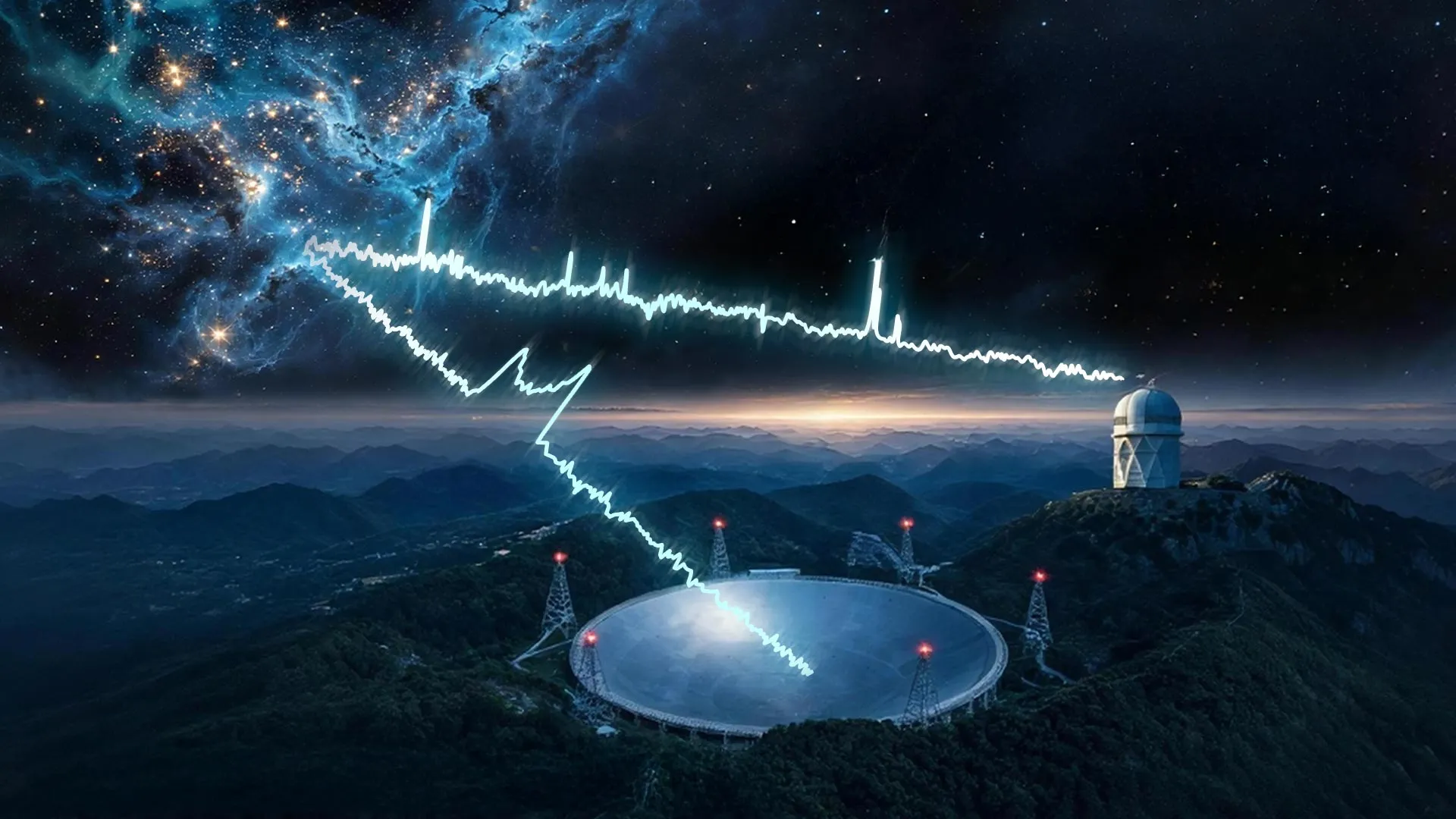
The cosmic engine of star formation has dramatically decelerated over the past 4.5 billion years, presenting a profound astrophysical puzzle: while the universe’s stellar nurseries are producing fewer "stellar babies," a crucial ingredient for their genesis—neutral atomic hydrogen—remains surprisingly plentiful. This striking discrepancy, recently illuminated by a groundbreaking international research effort leveraging advanced astronomical instruments, challenges long-held assumptions about the primary drivers of galactic evolution and suggests a fundamental shift in how galaxies process their abundant gaseous resources.
For billions of years, the universe has been a prolific constructor of stars, each born from vast clouds of collapsing gas and dust. This ongoing stellar creation is fundamental to cosmic evolution, enriching the cosmos with heavier elements essential for planets, life, and the very structure of galaxies. Astronomers have long observed that the rate of star formation peaked approximately 10 billion years ago, a period often referred to as "cosmic noon," and has since undergone a significant decline, falling to less than half its previous intensity. The prevailing hypothesis to explain this cosmic slowdown centered on a gradual depletion of the raw gaseous fuel required for stellar birth. However, new, highly precise measurements reveal that the universe’s most basic building block—neutral atomic hydrogen (HI)—has not diminished in proportion to the plummeting stellar birthrate, compelling scientists to rethink the mechanisms governing galactic vitality.
Hydrogen, the simplest and most abundant element, constitutes the primary fuel for stars. Within galaxies, hydrogen exists in various states: ionized, atomic (HI), and molecular (H2). Neutral atomic hydrogen serves as a critical intermediary reservoir, bridging the diffuse gas found in galactic halos and the intergalactic medium with the dense molecular clouds where stars ultimately ignite. The ability to accurately measure the cosmic density of HI across vast stretches of time is therefore paramount to understanding the universe’s star-forming history. Historically, such measurements have been fraught with observational challenges due to the extremely faint nature of the 21-centimeter radio emission line, the spectral signature characteristic of HI. Detecting this subtle signal from distant galaxies often meant battling overwhelming background noise, limiting either the sensitivity or the sky coverage of previous surveys.
A multinational scientific collaboration, spearheaded by researchers affiliated with the Chinese Academy of Sciences and integral to the Dark Energy Spectroscopic Instrument (DESI) project, has made a pivotal advancement in this field. By ingeniously combining the unparalleled radio sensitivity of China’s Five hundred meter Aperture Spherical radio Telescope (FAST) with the expansive optical spectroscopy dataset from DESI, the team bypassed previous observational hurdles. FAST’s immense dish offers a sensitivity that allows for the detection of incredibly weak radio signals, while DESI provides precise redshift measurements for millions of galaxies, enabling accurate distance and velocity information.
The innovative methodology employed by the researchers involved a technique known as HI spectral stacking. This process entails aligning and combining the extremely weak 21-centimeter radio signals from approximately 2.5 million galaxies, spanning nearly one-third of the celestial sphere. Individually, these signals would be far too faint to detect. However, by precisely knowing each galaxy’s redshift from DESI’s optical data, the team could align these faint whispers from the cosmos, effectively averaging them out to amplify the collective HI signal above the background noise. This statistical power, derived from an unprecedented sample size, allowed for the first direct and reliable determination of how the total HI mass in the universe has evolved across the low- to intermediate-redshift epochs, a period encompassing the past 4.5 billion years.
The findings from this extensive survey present a stark and unexpected contrast. The cosmic star formation rate approximately 4.5 billion years ago was nearly two and a half times higher than its current level. Yet, over the identical period, the average density of neutral atomic hydrogen within galaxies had only modestly declined, standing at merely 1.4 times its present value. This striking quantitative disparity profoundly challenges the simplistic "fuel depletion" model. If the universe’s declining stellar output were primarily driven by a scarcity of hydrogen, one would anticipate a far more dramatic reduction in the HI reservoir, mirroring the precipitous drop in star formation. The data unequivocally demonstrate that the rapid exhaustion of neutral hydrogen cannot, by itself, account for the pronounced slowdown in stellar genesis.
This revelation pivots the fundamental question guiding astrophysical inquiry. Rather than asking "Is the universe running out of gas?", the focus shifts to "Why is it becoming increasingly difficult for stars to form, despite seemingly abundant reserves of neutral hydrogen?" This deeper mystery points towards a more complex interplay of physical processes within galaxies. Stars do not directly coalesce from diffuse neutral atomic hydrogen; they are born within much denser, colder clouds of molecular hydrogen (H2). The HI reservoir, therefore, acts as a critical precursor, needing to be efficiently converted into molecular gas before star formation can commence.
The research team posits that the crucial changes in the more recent universe likely involve alterations in the efficiency of the galactic gas cycle, specifically the mechanisms governing the transformation of HI into molecular hydrogen, rather than the overall availability of HI. As the universe has aged and expanded, large-scale structures have become less dense, potentially leading to weaker inflows of fresh gas from the cosmic web into galaxies. This reduced accretion, coupled with potentially lower gas densities within galactic disks, could render galaxies less efficient at converting their substantial HI reserves into the dense molecular clouds required for star formation.
Several astrophysical mechanisms could contribute to this reduced efficiency. Lower gas densities might inhibit the necessary gravitational collapse and cooling required for HI to transition into H2. Changes in galactic environments, such as reduced merger rates, evolving stellar feedback (e.g., supernova explosions), or the activity of supermassive black holes (Active Galactic Nuclei, or AGN), could also play a significant role. AGN feedback, for instance, can heat and expel gas from galaxies, preventing it from cooling and forming stars, even if the total HI content remains high. Similarly, the metallicity of gas (the abundance of elements heavier than hydrogen and helium) influences cooling rates and dust formation, both of which are critical for molecular cloud formation. As galaxies evolve, their metallicity changes, potentially impacting the HI-to-H2 conversion efficiency.
The implications of these findings extend far beyond a simple accounting of cosmic hydrogen. They offer a vital new clue in unraveling the multifaceted reasons why the universe’s prodigious star-forming engines have progressively decelerated. This research refines our understanding of galaxy evolution, particularly the processes that lead to the "quenching" of star formation in galaxies, transforming vibrant blue galaxies into quiescent red ellipticals. It suggests that the fate of a galaxy is not solely determined by its gas supply, but critically by its ability to process that gas into a star-forming state.
This study provides an invaluable observational benchmark for future theoretical models and simulations aiming to accurately describe the cosmic gas cycle, the long-term decline in star formation, and the broader evolutionary pathways of galaxies. The synergistic power of combining highly sensitive radio observations from facilities like FAST with the vast optical spectroscopic capabilities of projects such as DESI heralds a new era in astrophysics. This international collaborative success underscores the immense scientific potential of multi-wavelength astronomy, paving the way for even deeper explorations into the universe’s most enduring mysteries. Future investigations will likely build upon this foundation, perhaps by directly tracing molecular hydrogen at cosmological distances or by scrutinizing the environmental factors that modulate gas conversion efficiencies, ultimately painting a more complete picture of how cosmic star formation has evolved and will continue to shape the destiny of galaxies.




 Lisa Mariana
 Aura Kasih


 Safa Marwah