
 Lisa Mariana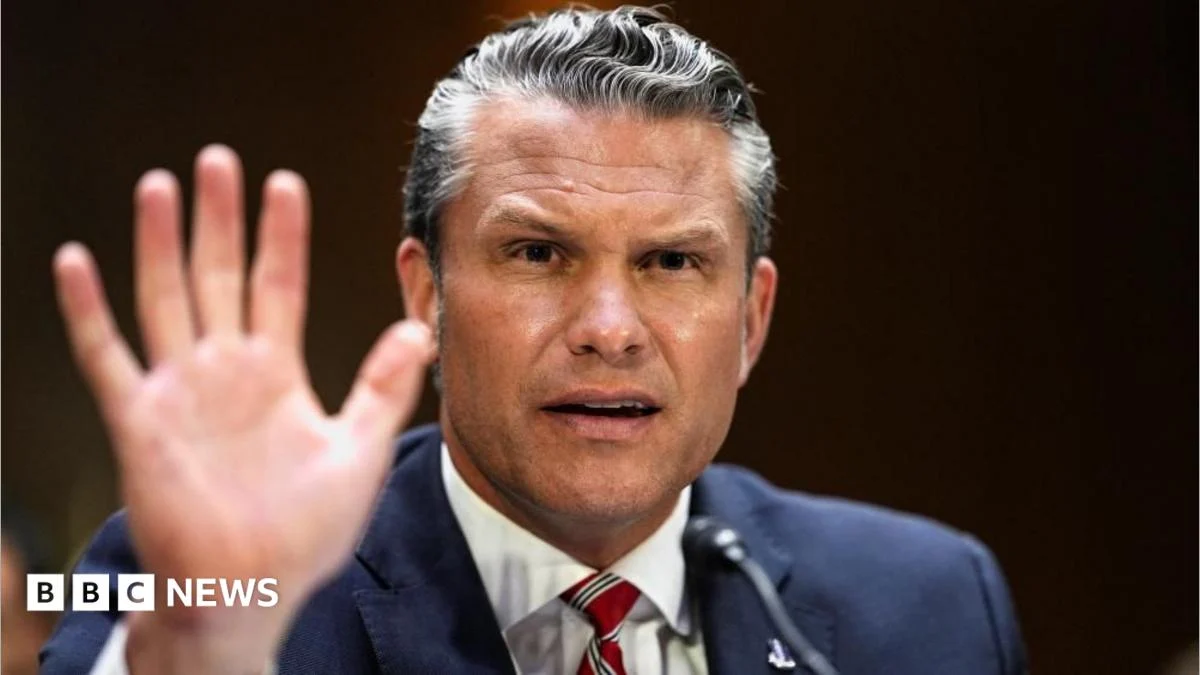
A contentious social media communication from the United States Secretary of Defense, Pete Hegseth, has triggered widespread condemnation and a severe diplomatic incident with Canada, after he appeared to deride members of a Canadian youth cadet program through an image posted online. The incident further exacerbates an already strained bilateral relationship, drawing sharp rebukes from high-ranking Canadian officials who characterized the action as a profound breach of official decorum and an unacceptable affront to young citizens, threatening to derail critical trade negotiations and undermine longstanding strategic alliances.
The focal point of the controversy was an image disseminated by Secretary Hegseth on a popular social media platform. The photograph, initially sourced from a local Canadian cadet training branch’s public account, depicted a young cadet in uniform receiving an award from her instructor. Hegseth’s repost included a Canadian flag emoji and the concise caption, "this is real." This seemingly innocuous commentary was widely interpreted in Canada as a deliberate attempt to mock the appearance of the individuals in the photograph, thereby disparaging the Canadian military and its foundational youth development initiatives. The perceived intent was to question the seriousness or capability of Canada’s armed forces by ridiculing its nascent participants.
Canadian Defence Minister David McGuinty was among the first senior officials to issue a strong rebuke, stating emphatically on Tuesday that Secretary Hegseth’s post fell "below the dignity of the office." This diplomatic language underscored the gravity of the transgression, implying a fundamental failure to uphold the standards of conduct expected from a high-ranking representative of an allied nation. The minister’s statement reflected a broader sentiment within Ottawa that the act was not merely a personal gaffe but a significant diplomatic affront.
The incident unfolds against a backdrop of escalating tensions between the two North American neighbors, primarily driven by an acrimonious trade dispute that has frequently devolved into a war of words. The administration in Washington has consistently accused Canada of relying disproportionately on American military strength for its national defense, a narrative that has often been perceived in Canada as dismissive and disrespectful of its sovereign contributions. This latest social media broadside, therefore, resonated deeply within an environment already charged with mutual recrimination.
Prime Minister Mark Carney, addressing the incident and a series of prior disparaging remarks from the US administration, articulated Canada’s firm stance on future trade discussions. He declared on Tuesday that any resumption of negotiations would only occur "when the Americans stop doing memes, stop throwing shade, stop trying to be tough and start being serious about having those discussions." This ultimatum signaled Canada’s increasing impatience with what it views as undiplomatic and unproductive rhetoric, insisting on a return to serious, substantive engagement rather than social media provocations. The Prime Minister’s comments elevated the social media incident from a mere gaffe to a significant impediment to critical bilateral economic dialogue.
The Pentagon, when pressed for a comment regarding Secretary Hegseth’s post, offered a terse and non-committal response, stating only that the post "speaks for itself." This official silence from the US Department of Defense was interpreted by many as an implicit refusal to either endorse or condemn the Secretary’s actions, thereby leaving the controversial content to stand without clarification or retraction, further aggravating Canadian officials who expected a more definitive diplomatic stance.
The Canadian cadet program, which was the subject of the offending post, is a national youth initiative overseen directly by the Canadian Armed Forces. It offers comprehensive leadership and skills training to young individuals aged 12 to 18, fostering civic responsibility, physical fitness, and an understanding of military values. The program is widely respected across Canada for its role in developing future leaders and contributing to community well-being. The Army Cadet League of Canada, a civilian organization dedicated to supporting the program, issued a robust statement condemning "any online harassment, or mockery of cadets’ achievements." The League emphasized that "directing derogatory commentary toward youth who are actively working to better themselves and serve their communities is unacceptable," highlighting the vulnerability of the targeted individuals and the inherent impropriety of a senior official engaging in such behavior.
General Jennie Carignan, Canada’s top military commander, confirmed in an interview with the Canadian Broadcasting Corporation (CBC) that the military was in direct contact with the cadets involved in the photograph. She indicated that the Canadian Armed Forces were "consulting with them on how they want to go about doing this," underscoring a commitment to supporting the affected youth and ensuring their well-being in the face of public scrutiny and ridicule. This proactive engagement reflects the military’s dedication to its members, even those in preparatory programs.
Beyond official channels, a diverse chorus of Canadian voices weighed in with condemnation. Scott Anderson, a Conservative Member of Parliament representing Vernon, British Columbia, and a former military reservist, directly challenged Secretary Hegseth in a public statement. Anderson accused the US Defense Secretary of failing to uphold the "responsibility and decorum" inherent in his distinguished title. He asserted, "You have chosen to set both aside and insult two female Canadian non-combatants, and to intentionally shame them before millions. You should be ashamed." Anderson’s remarks underscored the perceived gendered nature of the attack and the public humiliation inflicted upon young individuals. He further emphasized the deep, intertwined nature of the two nations: "Our economies, our continental defence and our cultures are irretrievably intertwined and yet we are two distinct nations. Canadians and Americans should have no problem with each other, but I have a problem with you," drawing a clear distinction between the enduring alliance and the specific conduct of a US official.
Numerous pundits and ordinary Canadians alike joined the condemnation, with many accusing the defense secretary of "body-shaming" the young cadets. This particular criticism added another layer of offense, highlighting the perceived cruelty and inappropriateness of a public figure targeting individuals based on their physical appearance, especially young people dedicating themselves to a public service program. The widespread nature of this accusation indicated a profound disconnect between Hegseth’s actions and public expectations of respectful conduct.
The diplomatic fallout from the social media post is magnified by the already precarious state of US-Canada trade relations. Trade talks had collapsed just last month, with both sides accusing the other of introducing last-minute demands that effectively torpedoed a tentative agreement. In the immediate aftermath, the United States proceeded to impose significant 50% tariffs on approximately $20 billion (C$28 billion) worth of Canadian imports, prompting Canada to announce plans for matching retaliatory countermeasures in the coming weeks. This tit-for-tat economic warfare has been accompanied by a consistent exchange of verbal barbs. Past incidents include the Premier of Ontario, Doug Ford, famously referring to the US president as a "loser," the US president reportedly exploring the idea of renaming Lake Ontario to "Lake America," and former US Transportation Secretary Sean Duffy controversially stating that Canada "doesn’t have a military." These previous rhetorical clashes set a precedent for the current incident, illustrating a pattern of provocative communication from the US administration.
Despite these recent antagonisms, Canada and the United States have historically maintained a robust and enduring defense partnership, exemplified by their collaborative efforts in various international security operations, including Canada’s unwavering support for the US in the war in Afghanistan. The two nations are cornerstones of NORAD (North American Aerospace Defense Command) and integral members of NATO, underscoring a shared commitment to continental and global security. Moreover, Canada has demonstrated a renewed commitment to its defense capabilities in recent months, significantly increasing its military spending after years of lagging behind NATO targets, thereby actively addressing past criticisms regarding its defense contributions.
Secretary Hegseth’s actions also emerge at a time when he faces considerable domestic pressure. A veteran himself, his tenure as Defense Secretary has been marked by a series of high-profile departures of senior military leaders from the Pentagon, as well as persistent questions regarding the US handling of the protracted conflict in Iran. Hegseth has long been a vocal proponent of emphasizing the physical appearance and fitness of US troops, advocating for what he frequently terms the "warrior ethos." This philosophical inclination, focused on a specific ideal of military strength and image, may offer some insight into his perspective, though it does not mitigate the diplomatic and ethical implications of his social media conduct regarding allied youth. The incident serves as a stark reminder of the challenges inherent in modern digital diplomacy, where personal commentary from high-ranking officials can instantaneously ignite international incidents and further complicate already fraught bilateral relations, potentially undermining decades of alliance-building and cooperation.



 Aura Kasih
 Ayu Aulia

 Safa Marwah