
 Ayu Aulia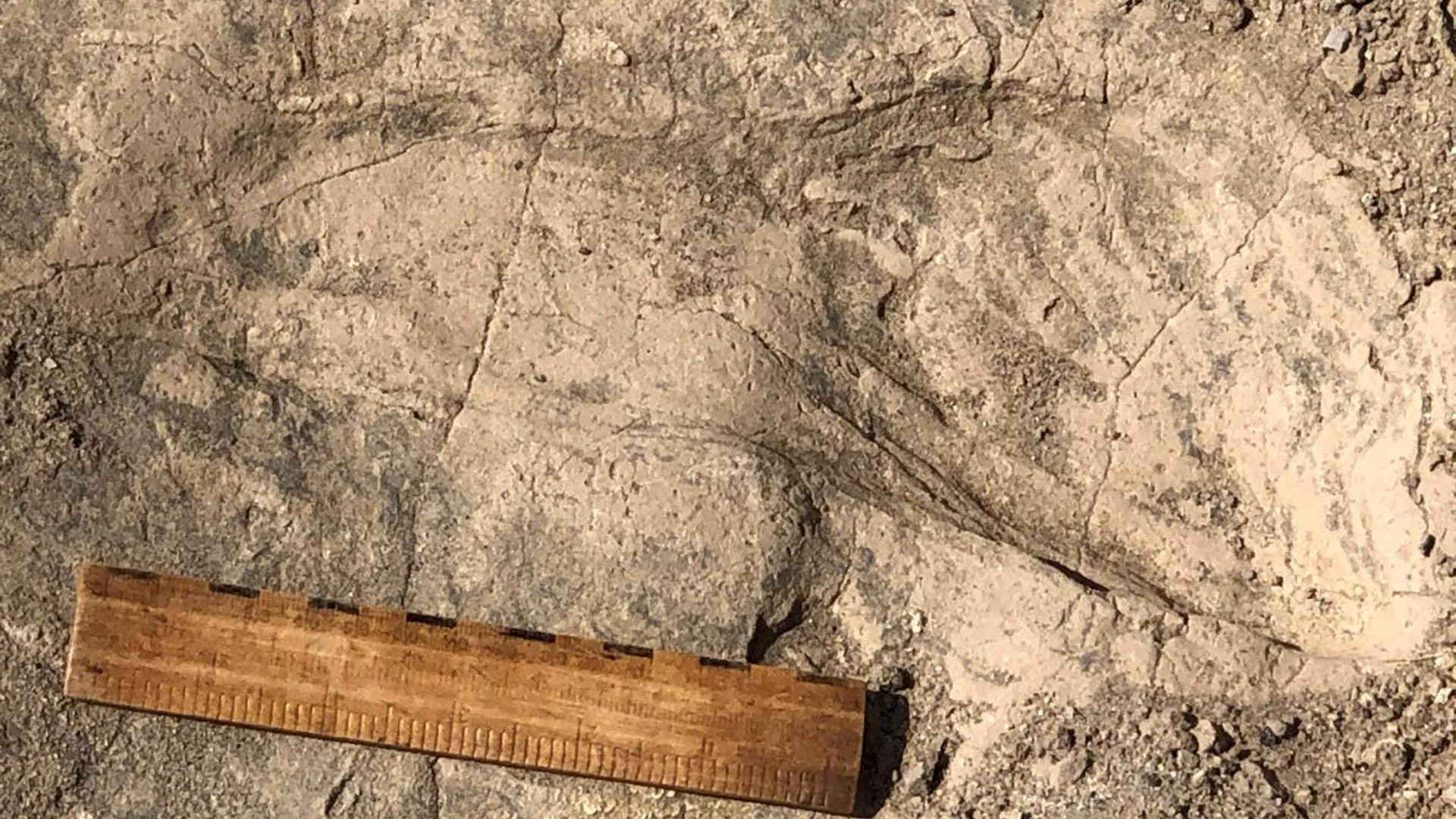
A pivotal paleontological discovery in northern Kenya has fundamentally altered scientific understanding of an extinct hominin species, offering unprecedented insights into its physical stature and social interactions approximately 1.4 million years ago. This extraordinary find, comprising a series of fossilized footprints, provides a rare, direct glimpse into the behavior and morphology of Paranthropus boisei, challenging long-held assumptions about this robust early human relative.
The meticulously preserved trackways, uncovered near what was once an ancient lakeshore, appear to document the simultaneous presence of at least eight Paranthropus boisei individuals. This unique assemblage offers a literal "snapshot" of ancient hominin life, a momentary record of movement and coexistence that skeletal remains, accumulated over vast stretches of time, cannot provide. Unlike isolated bones that might represent individuals from different eras, footprints capture a single, fleeting instance, making them invaluable for reconstructing behavior. The international research consortium, comprising experts from both American and Kenyan institutions, has confirmed that all eight trackmakers were likely fully grown adults. Remarkably, several of these individuals exhibited a significantly larger body size than previous estimates derived from the scarce skeletal fragments of Paranthropus boisei available in the fossil record.
Revisiting Paranthropus boisei: A Giant Among Contemporaries
For decades, the prevailing image of Paranthropus boisei has been largely shaped by its distinctive cranial features, particularly its massive jaws and formidable teeth, indicative of a specialized diet. However, post-cranial remains – bones from below the neck – have been exceedingly rare, leaving substantial gaps in our understanding of its overall body plan and locomotion. This paucity of limb and torso fossils led to a general consensus that P. boisei was of a more modest stature, perhaps somewhat smaller than its contemporary, Homo erectus, a species widely considered a direct precursor to modern humans.
The newly analyzed footprints directly contradict this long-standing hypothesis. Utilizing sophisticated analytical techniques, including methods specifically refined in 2024 for interpreting hominin foot anatomy and biomechanics, researchers confidently attributed the trackways to Paranthropus boisei. This identification was based on a meticulous examination of foot structure and gait characteristics evident in the impressions. The sheer scale of these ancient tracks proved to be a significant revelation. Lead author Kevin Hatala, affiliated with Chatham University and the Max Planck Institute for Evolutionary Anthropology, noted the surprising "human-like body sizes," with some individuals estimated to have stood up to 1.8 meters (approximately 5 feet 11 inches) tall and weighed around 75 kilograms (roughly 165 pounds). This challenges the established narrative, suggesting P. boisei was a considerably more imposing figure in the Early Pleistocene landscape than previously imagined. The implications extend beyond mere physical size; a larger body mass would have conferred distinct advantages in terms of foraging range, predator avoidance, and interspecies competition, potentially altering our understanding of its ecological niche alongside other hominins.
Unlocking Ancient Social Structures Through Trace Fossils
The true power of fossilized footprints lies in their capacity to transcend mere anatomical reconstruction and offer direct evidence of behavior. Because a walking surface is formed and preserved within a very brief temporal window, these trace fossils can provide unparalleled insights into movement patterns, group demographics, and even potential social interactions. In this particular instance, the coherent spacing and direction of the eight trackways strongly suggest that the individuals were moving together as a cohesive unit. A striking observation was the apparent composition of the group: the majority, if not all, appeared to be adult males, with no clear indications of females or juveniles among them.
This unusual demographic configuration presents a compelling, albeit speculative, window into the complex social organization of Paranthropus boisei. Co-author Neil Roach of Harvard University posited that such a grouping, predominantly of adult males traveling together without females or children, "hints at a complex social structure in this species." He further suggested that Paranthropus boisei might have lived in extensive social groups where males engaged in competition for reproductive opportunities but also exhibited a degree of tolerance, forming temporary alliances or bachelor groups for enhanced safety in a perilous environment. This perspective adds an entirely new dimension to paleoanthropological understanding of Paranthropus boisei, a species that, despite sharing its habitat with early members of the Homo genus, followed a distinct evolutionary trajectory characterized by specialized masticatory adaptations. The presence of such a male-dominated group could signify territorial patrolling, resource defense, or even a specific foraging strategy, mirroring behaviors observed in some modern primate species with complex social hierarchies. This direct behavioral evidence is exceedingly rare in the hominin fossil record, making this discovery particularly significant for modeling early hominin sociality.
The Enduring Allure of the Lakeshore: A Hub for Hominin Life
The current discovery is not an isolated incident but rather forms part of a much larger and growing collection of hominin footprints unearthed within ancient lakeshore environments surrounding Lake Turkana. This recurring pattern underscores the profound ecological significance of these riparian zones, suggesting they constituted vital habitats that consistently attracted various extinct human relatives over extended periods. Kay Behrensmeyer of the Smithsonian Institution highlighted the remarkable consistency of these findings, noting, "To me, it is amazing that we have the same kind of lake margin deposits in two areas of East Turkana that are 40 kilometers apart, at about the same age." This geographical spread and temporal synchronicity indicate that the environmental conditions facilitating both hominin presence and footprint preservation were widespread and recurrent across the region.
Lakeshore environments would have offered a multitude of critical resources: a reliable and accessible water source, diverse plant life for sustenance, and a rich array of fauna, including fish and aquatic birds, potentially forming part of their diet. Such areas also often provide natural pathways and clear sightlines, offering advantages for both foraging and predator vigilance. Researchers have now documented hundreds of hominin footprints across more than half a dozen sites within this expansive region. A deeper understanding of the specific geological and taphonomic conditions that allowed these delicate impressions to survive for 1.4 million years could, in turn, illuminate the enduring reasons behind hominins’ repeated visitation to these lakeshores over periods exceeding 100,000 years. This comprehensive understanding of the interplay between geology, climate, and hominin behavior is crucial for reconstructing the paleoenvironment and deciphering the selective pressures that shaped early human evolution. The cyclical nature of these visits suggests a deep reliance on these stable, resource-rich habitats, possibly influencing migratory patterns, territorial definitions, and social group dynamics.
Forging a Detailed Narrative of the Early Pleistocene
The research team is committed to returning to Kenya in the near future to continue their meticulous investigation of these invaluable fossil footprint sites. Each newly documented surface represents a distinct chronological slice of the distant past, furnishing researchers with direct evidence concerning hominin anatomy, walking patterns, social interactions, and prevailing environmental conditions—information that traditional skeletal fossils often fail to provide. Hatala eloquently described this ongoing endeavor: "Each site represents a snapshot of our past, and we are quickly building a photo album with several different windows to hominin anatomy, locomotion, behavior, and environments during the Early Pleistocene." This metaphor perfectly encapsulates the cumulative nature of these discoveries, each adding another layer of detail to the complex mosaic of early human life.
These groundbreaking discoveries further solidify the Lake Turkana region’s undisputed status as one of the world’s preeminent locales for studying the intricate tapestry of human evolution. Purity Kiura of the National Museums of Kenya underscored this profound significance, stating, "The discovery of these fossil footprints along the margins of Lake Turkana reinforces the region’s global importance in understanding human evolution, preserving remarkable evidence of how our ancient relatives lived 1.4 million years ago. It further strengthens Kenya’s position as one of the world’s leading paleoanthropological landscapes and highlights our responsibility to protect this irreplaceable heritage." The combined application of cutting-edge analytical methodologies with the fortuitous preservation of these ancient trackways is granting scientists unprecedented access to details that bones alone cannot convey. These ancient impressions are progressively revealing not only the physical constitution of extinct human relatives but also their modes of locomotion, their preferred habitats, and even the subtle intricacies of their social interactions, painting an increasingly vivid picture of life in the Early Pleistocene. The continued exploration of these sites promises to refine our understanding of the diverse strategies employed by different hominin lineages, including Paranthropus boisei, as they navigated and adapted to the dynamic environments of ancient East Africa.



 Lisa Mariana
 Aura Kasih


 Safa Marwah