Safa Marwah
A significant segment of Gitea server deployments, specifically those accessible from the public internet, remain dangerously susceptible to a critical security flaw that is presently being actively exploited in remote code execution (RCE) campaigns. Cybersecurity analysis from the Shadowserver Foundation indicates that thousands of these self-hosted Git service instances have yet to implement crucial security updates, leaving them vulnerable to complete system compromise by malicious actors. This widespread exposure represents a substantial risk to organizational data integrity, operational continuity, and the broader software supply chain.
The core of this unfolding cyber threat lies within CVE-2026-60004, a severe code injection vulnerability first identified and reported by Salesforce security researcher Shai Rod. This particular flaw enables authenticated attackers to execute arbitrary shell commands with the elevated privileges of the Gitea service account. The mechanism of exploitation hinges on the submission of carefully crafted, malicious patches via the platform’s diffpatch application programming interface (API) endpoint. Such a vulnerability, when successfully leveraged, grants adversaries deep control over the compromised system, allowing for data manipulation, system alteration, and the deployment of persistent malicious payloads.
While initial exploitation of CVE-2026-60004 nominally requires pre-existing repository write access, a critical configuration oversight in Gitea significantly amplifies the risk. The platform is configured by default with self-registration enabled, a setting that effectively neutralizes the authentication barrier. This default configuration allows any unauthenticated individual to register an account, subsequently create a new repository, and then exploit the vulnerability without needing any prior legitimate credentials. This design choice transforms what might otherwise be a contained threat into a broadly accessible attack vector, dramatically increasing the pool of potential attackers from internal malicious actors or compromised legitimate accounts to virtually anyone with internet access.
The Gitea security team has issued a clear warning regarding the diffpatch endpoint, explaining its susceptibility. "Gitea’s diffpatch endpoint can be abused to install and execute a Git hook from repository-controlled content. An attacker with ordinary write access to a repository can execute arbitrary shell commands as the Gitea OS user," the advisory states. Further compounding the issue, they emphasize, "With default open registration, an unauthenticated visitor can obtain the required write access by registering an account and creating a repository." This explicit detailing underscores the severity and ease of exploitation, highlighting a significant security oversight in the platform’s default setup.
In response to the critical nature of this vulnerability, Gitea developers released version 1.27.1 on July 27 of the specified year, specifically designed to address CVE-2026-60004. Users were strongly advised to upgrade their servers without delay to mitigate the immediate threat. However, despite the availability of a patch and the clear advisories, widespread inaction has persisted, leaving a vast number of installations exposed.
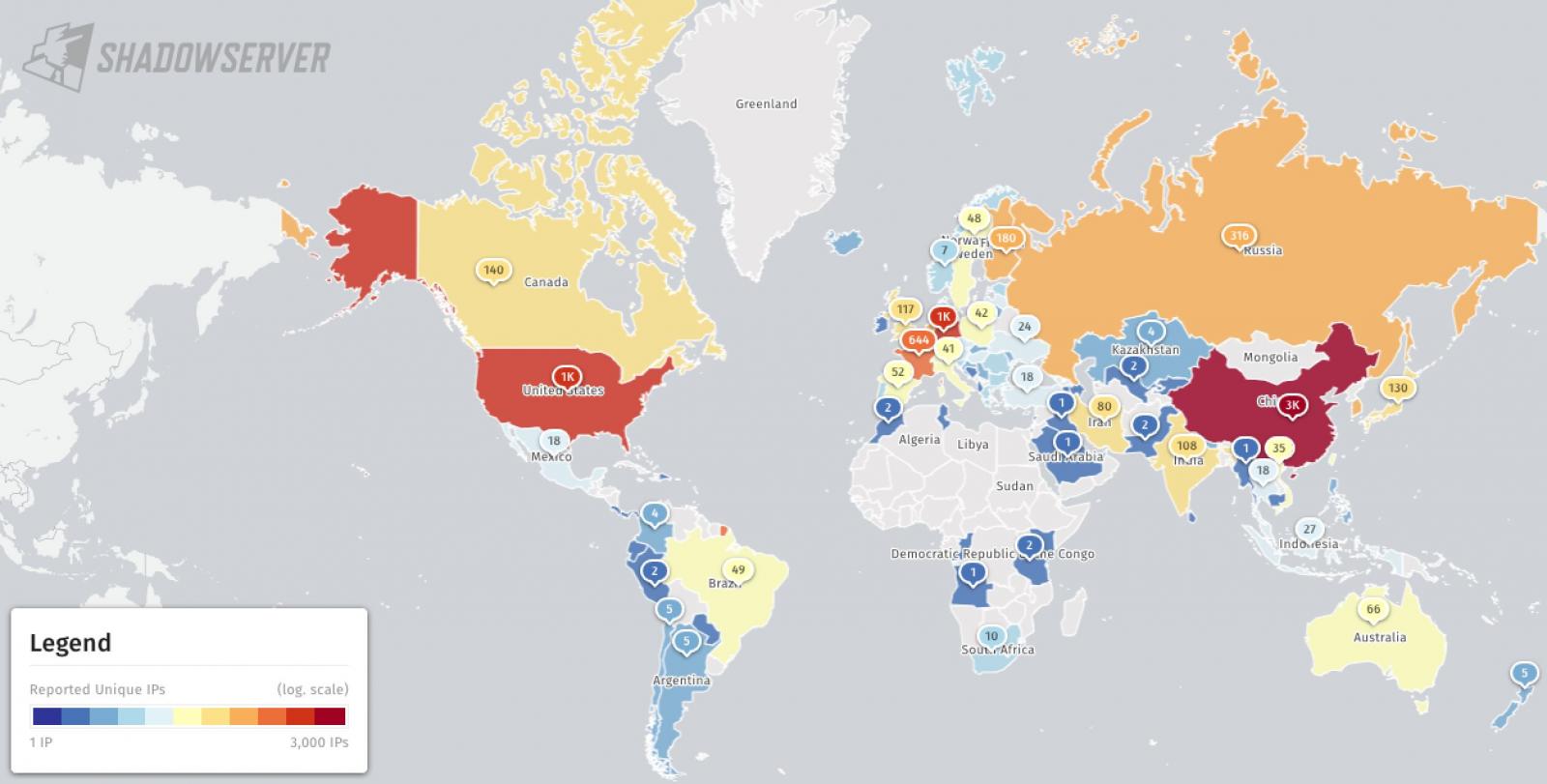
On Friday, August 27 of the same year, the Internet security watchdog group Shadowserver Foundation issued a stark warning. Their telemetry data indicated that an alarming number of Gitea servers exposed online remained unsecured and vulnerable to ongoing attacks. "We are scanning/reporting Gitea instances vulnerable to CVE-2026-60004 (code injection), with 8393 IPs found vulnerable on 2026-08-27," Shadowserver communicated, underscoring the pressing need for immediate action across the Gitea user base. The persistence of such a large number of unpatched systems nearly a month after a fix was released points to significant challenges in patch management, awareness, or resource allocation within organizations utilizing Gitea.
The implications of such a widespread vulnerability are far-reaching. Gitea, as a self-hosted alternative to major code hosting and DevOps platforms like GitHub, GitLab, and Bitbucket, serves a diverse user base ranging from individual developers and small teams to large enterprises and educational institutions. With over 400,000 installations globally and a vibrant community of nearly 1,500 contributors, its compromise carries significant potential for ripple effects across the software development ecosystem. The ability for attackers to gain remote code execution on these platforms means they can potentially tamper with source code, inject malicious components into software projects, steal intellectual property, or use the compromised servers as launchpads for further attacks against connected systems.

The United States Cybersecurity and Infrastructure Security Agency (CISA) recognized the extreme criticality of this flaw by adding CVE-2026-60004 to its authoritative catalog of actively exploited vulnerabilities. This action, taken on Tuesday, August 24, triggered a mandatory patching directive under Binding Operational Directive (BOD) 26-04, requiring U.S. Federal Civilian Executive Branch (FCEB) agencies to secure their vulnerable servers within a tight three-day window, setting the deadline for August 28. CISA’s prompt inclusion of this vulnerability in its KEV catalog signals its assessment of the immediate and severe threat posed by active exploitation campaigns targeting this specific flaw.
While CISA has not publicly disclosed specific details of the attacks it observed, the agency’s urgent action was likely prompted by credible reports of in-the-wild exploitation. These reports detail attackers leveraging the vulnerability to deploy cryptocurrency mining malware on unpatched Gitea servers. The deployment of cryptocurrency miners, while often perceived as less destructive than data breaches, consumes significant system resources, degrades performance, and can serve as a precursor to more damaging intrusions. It also indicates that the vulnerability is being actively exploited by financially motivated cybercriminal groups who often use easily exploitable flaws in internet-facing services to establish illicit revenue streams.
CISA further emphasized the broader danger: "This type of vulnerability is a frequent attack vector for malicious cyber actors and poses significant risks to the federal enterprise." This statement underscores the agency’s understanding that RCE vulnerabilities, particularly those that can be triggered with minimal or circumvented authentication, are prime targets for a wide array of cyber adversaries. The federal government’s directive serves not only to protect its own infrastructure but also acts as a strong warning to the private sector and other organizations about the critical need to address this specific vulnerability.
Beyond immediate patching, organizations deploying Gitea must implement a multi-layered security strategy. Disabling the default self-registration feature is a paramount step if not absolutely necessary for operational requirements, effectively re-establishing the authentication barrier for repository write access. Furthermore, robust access controls, including multi-factor authentication (MFA) for all user accounts, should be enforced. Network segmentation can isolate Gitea instances from sensitive internal networks, limiting the lateral movement of attackers in the event of a compromise. Regular security audits, penetration testing, and continuous vulnerability scanning are essential to proactively identify and address weaknesses. Monitoring for suspicious activities, such as unusual process execution, unexpected outbound network connections, or abnormal resource utilization on Gitea servers, is also crucial for early detection of exploitation attempts. Adherence to the principle of least privilege for the Gitea service account and underlying operating system user can also minimize the potential impact of a successful RCE attack.
This incident is not an isolated event in Gitea’s security history. In July of the specified year, threat actors were observed actively exploiting another critical flaw, CVE-2026-20896, an authentication bypass vulnerability affecting official Gitea Docker images configured with reverse proxy authentication headers. This prior incident involving a critical authentication bypass underscores a recurring pattern of severe vulnerabilities being discovered and exploited in Gitea deployments. Such a pattern necessitates heightened vigilance from both the Gitea development community and its extensive user base. The continuous emergence of critical, exploitable flaws in popular self-hosted development tools highlights the ongoing challenges in securing complex software environments and the imperative for developers to prioritize security-by-design principles and for users to maintain rigorous patch management and security hygiene.
The collective efforts of security researchers, developers, and organizations are vital in navigating this evolving threat landscape. The incident involving CVE-2026-60004 serves as a potent reminder of the inherent risks associated with internet-exposed services, particularly those central to software development. While the Gitea project has demonstrated responsiveness in issuing patches, the onus ultimately falls on individual organizations to implement these updates promptly and to adopt a comprehensive security posture. Failure to do so not only jeopardizes their own operations but also contributes to the broader proliferation of compromised systems, which can be leveraged for larger-scale cyber campaigns, impacting the trust and resilience of the digital infrastructure globally. Continuous vigilance, proactive defense, and rapid incident response are not merely recommendations but essential imperatives in safeguarding critical digital assets against persistent and sophisticated cyber threats.




 Lisa Mariana
 Aura Kasih
 Ayu Aulia