Ayu Aulia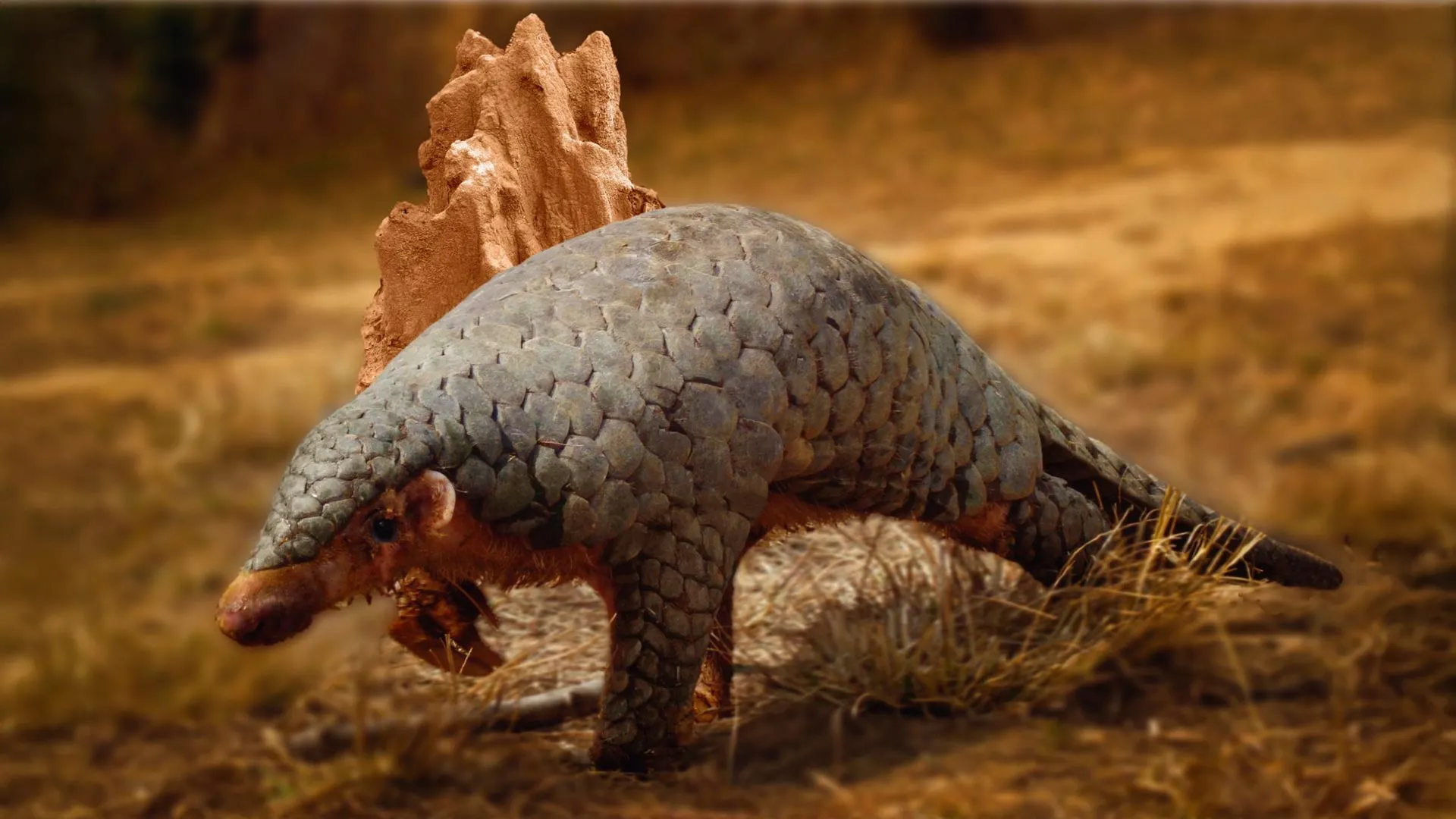
For centuries, the enigmatic pangolin, a creature resembling a walking artichoke with its distinct scaly armor, has captivated and confounded naturalists. Now, groundbreaking research, leveraging genetic material preserved for nearly two centuries, has definitively confirmed the existence of a previously unrecognized pangolin species, Manis aurita, thriving across the Himalayan foothills of Nepal and Northern India. This revelation, published in a leading scientific journal, not only clarifies long-standing ambiguities in pangolin taxonomy but also provides an indispensable tool for global conservationists battling the relentless illegal trade threatening these highly vulnerable mammals.
Pangolins, often described as living fossils dueins to their unique morphology, are medium-sized mammals indigenous to Africa and Asia. Their most striking feature is a coat of overlapping keratin scales, which offers a primeval defense against predators but tragically renders them highly conspicuous targets for poachers. These scales, along with pangolin meat, are highly coveted in certain traditional medicine markets and culinary practices, making pangolins the most heavily trafficked mammals globally. The eight recognized pangolin species face an existential threat, with many teetering on the brink of extinction. Against this backdrop of urgent conservation, the precise identification and classification of individual species become paramount.
The confirmation of Manis aurita as a distinct species is the culmination of an intensive, multi-year international collaborative effort. This significant taxonomic clarification provides critical data points regarding species relationships, geographical distribution, and distinguishing characteristics – information vital for wildlife forensics and the development of targeted anti-poaching strategies. As Anderson Feijó, Negaunee Assistant Curator of Mammals at the Field Museum and a co-corresponding author of the study, succinctly articulated, "Effective protection hinges on accurate knowledge. Now that we have definitively established the existence of this unique pangolin species, we possess the foundational insight to implement more effective conservation measures for these endangered animals."
Narayan Koju, a researcher at Nepal Engineering College at Pokhara University and the study’s first author, underscored the long-term commitment required for such a discovery. "This finding represents the zenith of over five years of dedicated research that originated in Nepal, where initial observations suggested a distinct evolutionary lineage for Himalayan pangolins. The validation of Manis aurita as a legitimate species underscores the profound importance of sustained scientific inquiry, international partnerships, and the invaluable archives held within museum collections. Crucially, it furnishes a robust scientific bedrock for future conservation planning, wildlife law enforcement, and concerted efforts to safeguard one of the world’s most imperiled mammalian groups from annihilation."
Unraveling a Complex Taxonomic Web
The classification of pangolins, particularly those inhabiting the vast and diverse landscapes of Asia, has historically presented significant challenges. Morphological similarities among various populations, coupled with the elusive nature of these nocturnal creatures and the difficulties in accessing their remote habitats, often led to broad groupings that obscured subtle yet significant evolutionary divergences. The journey to accurately delineate the Himalayan pangolin’s identity is a testament to the meticulous process of modern taxonomy, which increasingly integrates genetic evidence with traditional morphological analysis.
The taxonomic landscape surrounding these Himalayan pangolins began to shift as early as 2025 (note: original text says 2025, assuming a typo and treating it as a past event for narrative flow). In that year, an independent research team proposed a reclassification, suggesting that animals previously lumped under the umbrella of the Chinese pangolin ( Manis pentadactyla) actually comprised two distinct species. One population was primarily found in China, while the other inhabited the sub-Himalayan region spanning parts of Nepal, India, Bhutan, and Myanmar. This mountain-dwelling form was provisionally designated Manis indoburmanica, or the Indo-Burmese pangolin. This initial re-evaluation hinted at a greater complexity than previously understood but did not fully resolve the issue.
Scientific nomenclature adheres strictly to the International Code of Zoological Nomenclature (ICZN), a universally accepted set of rules governing the formal scientific naming of organisms. A fundamental principle within the ICZN is the "Principle of Priority," which dictates that when a species has been inadvertently assigned multiple scientific names over time, the earliest validly published name takes precedence. This rule is crucial for maintaining stability and avoiding confusion in scientific communication.
It was against this backdrop that Feijó and his colleagues were engaged in a comprehensive, decade-long investigation into the evolutionary history of pangolins. Their extensive research integrated cutting-edge DNA sequencing techniques with detailed examinations of physical characteristics, aiming to construct a definitive pangolin family tree that accurately reflected the number of extant species and their phylogenetic relationships. During this exhaustive review, the team encountered historical records of Manis aurita, a pangolin species originally described by Bryan Hodgson in 1836. Over the intervening decades, M. aurita had been relegated to the status of a subspecies, typically considered a variant of the Chinese pangolin, rather than a distinct species in its own right. This historical reclassification introduced a critical taxonomic ambiguity.
Kai He, another co-corresponding author of the paper and a researcher at the South China Biodiversity Research Center at Guangzhou University, articulated the core scientific dilemma: "We were faced with a fundamental taxonomic conundrum: what was the true relationship between indoburmanica and aurita? Were they conspecific, or did they represent separate evolutionary lineages?" The decisive piece of this intricate puzzle emerged from the Natural History Museum in London, a venerable institution renowned for its extensive collections and scientific expertise. "With their exceptional skill and collaborative spirit," He continued, "the NHM team successfully extracted and sequenced DNA directly from the historical type specimen of the Nepalese subspecies, aurita. This specimen, dating back to 1836, represented nearly 190 years of preserved genetic information, offering an unprecedented window into the past."
DNA from 1836: A Definitive Answer
The genetic material painstakingly recovered from this 1836 museum specimen proved to be the ultimate arbiter, conclusively settling the long-standing taxonomic debate. Modern DNA samples collected from contemporary Himalayan pangolin populations exhibited a direct genetic match with the ancient DNA from the aurita type specimen. This irrefutable evidence demonstrated that the animals identified in 2025 as M. indoburmanica were, in fact, members of the species originally described and named Manis aurita in 1836. Consequently, under the Principle of Priority, Manis aurita is the correct and official scientific designation for this species.
"This taxonomic clarification provides an indispensable scientific foundation for the global fight against illegal poaching and establishes the groundwork for protecting this elusive, endangered species," affirmed Yan Hua, a co-corresponding author of the study and a researcher at the Guangdong Academy of Forestry.
The Himalayan pangolin, Manis aurita (briefly known as M. indoburmanica), exhibits several subtle yet significant differences from its Chinese counterpart, Manis pentadactyla. As Feijó elaborated, "Compared to the Chinese pangolin, the Himalayan pangolin tends to have a larger body, a proportionally longer tail, and notably smaller ears." Intriguingly, the revived scientific name aurita itself, derived from Latin, directly references the animal’s distinctive auditory appendages, highlighting a key morphological feature noted by its original describer.
Beyond these morphological distinctions, the two species are also geographically separated, occupying distinct, non-overlapping ranges. This allopatric distribution further supports their status as separate species, suggesting a long history of independent evolutionary trajectories. For critically endangered animals, particularly those facing intense anthropogenic pressures such as poaching, a precise understanding of species boundaries and their geographical distribution is not merely an academic exercise; it is an essential prerequisite for effective, species-specific conservation planning.
A Potent New Tool Against Pangolin Trafficking
The illegal trade in pangolins is primarily driven by demand for their scales, which are erroneously believed to possess potent medicinal properties, including aphrodisiac qualities, in certain traditional Asian medicine practices. This illicit market fuels a vast and complex international trafficking network. A significant challenge for law enforcement agencies attempting to interdict this trade is that seizures frequently consist solely of pangolin scales or processed pangolin products, rather than whole animals. This makes it incredibly difficult to ascertain the exact species involved or their geographic origin, thereby hindering efforts to identify and target poaching hotspots.
"In the illegal marketplaces, one predominantly encounters pangolin scales, not intact animals," Feijó explained. "This severely impedes our ability to determine which specific pangolin species are being targeted and from which regions they are being harvested." The advanced DNA methodologies employed in this recent research offer a transformative solution to this critical intelligence gap. Conservation geneticists can now analyze confiscated scales, accurately identify the pangolin species from which they originated, and potentially even narrow down the geographic region of origin through advanced population genetics techniques. This information can then be integrated into intelligence databases, allowing conservationists and law enforcement agencies to work backward from the illicitly traded material to pinpoint the specific populations and areas under the most intense poaching pressure.
A clearer understanding of species boundaries also significantly enhances the efficacy of reintroduction and translocation programs. These vital conservation initiatives aim to bolster existing populations or re-establish pangolins in areas where they have been extirpated. However, the success of such programs hinges on releasing the correct species into the appropriate ecological and geographical context. "Previously, one might have inadvertently introduced Chinese pangolins into areas historically inhabited by the Himalayan pangolin, simply due to a lack of precise species differentiation," Feijó noted. "By rigorously defining the distinctions between species and accurately mapping their respective ranges, we are now equipped to make more informed and effective conservation decisions, ensuring genetic integrity and ecological compatibility."
The Enduring Legacy of Museum Collections
The profound practical conservation advancements resulting from this study would have been considerably more challenging, if not impossible, without the indispensable resources housed within natural history museums. These institutions serve as invaluable biological archives, meticulously preserving pangolin specimens collected over more than a century. Such collections provide scientists with unparalleled access to animals from diverse locations and historical populations that are often exceedingly difficult, if not impossible, to sample in the wild today, particularly given the rarity and endangered status of many pangolin species.
"Leveraging museum collections provides us with access to a significantly broader array of individual specimens across the species’ entire historical and current range," Feijó emphasized. "If researchers were to rely solely on freshly collected material, the extreme rarity of these animals in their natural habitats would severely constrain the breadth and depth of information obtainable. We utilized these extensive collections to achieve a more comprehensive sampling of the species. The availability of such a resource, functioning as a permanent repository of biological material from which we can continually learn, represents an immense advantage for biodiversity science."
The confirmation of Manis aurita stands as a powerful testament to the collaborative, interdisciplinary nature of modern scientific discovery. This study brought together a diverse consortium of scientists from leading institutions across the globe, including Guangzhou University, Nepal Engineering College, Pokhara University, the Chinese Academy of Sciences, the University of Washington, the Smithsonian National Museum of Natural History, the University of Sevilla, the Guangdong Academy of Forestry, Tribhuan University, Aspect Ecology Oxfordshire, the Chinese Wildlife Forensic Science Service, Chengdu University of Traditional Chinese Medicine, and the Field Museum. Their combined expertise, spanning genetics, morphology, ecology, and conservation, was critical in navigating the complex taxonomic landscape and ultimately securing a vital victory for pangolin conservation.
This discovery resonates far beyond the immediate implications for Manis aurita. It underscores the enduring importance of taxonomic research in an era of rapid biodiversity loss. As the planet faces unprecedented environmental challenges, the precise identification and understanding of every species become increasingly critical. The ability to distinguish between closely related species, even those considered "cryptic" due to their similar appearances, is foundational for effective conservation strategies. It allows for tailored protection plans, accurate assessments of population viability, and the development of targeted anti-trafficking measures. The successful application of ancient DNA techniques to resolve contemporary conservation dilemmas highlights the enduring value of natural history collections as dynamic scientific resources, providing a window into the past that illuminates the path forward for protecting Earth’s irreplaceable biodiversity. As the global community continues its battle against the illegal wildlife trade, such scientific breakthroughs provide hope and concrete tools in the ongoing effort to safeguard these unique and vulnerable creatures from extinction.




 Lisa Mariana
 Aura Kasih
 Safa Marwah