Aura Kasih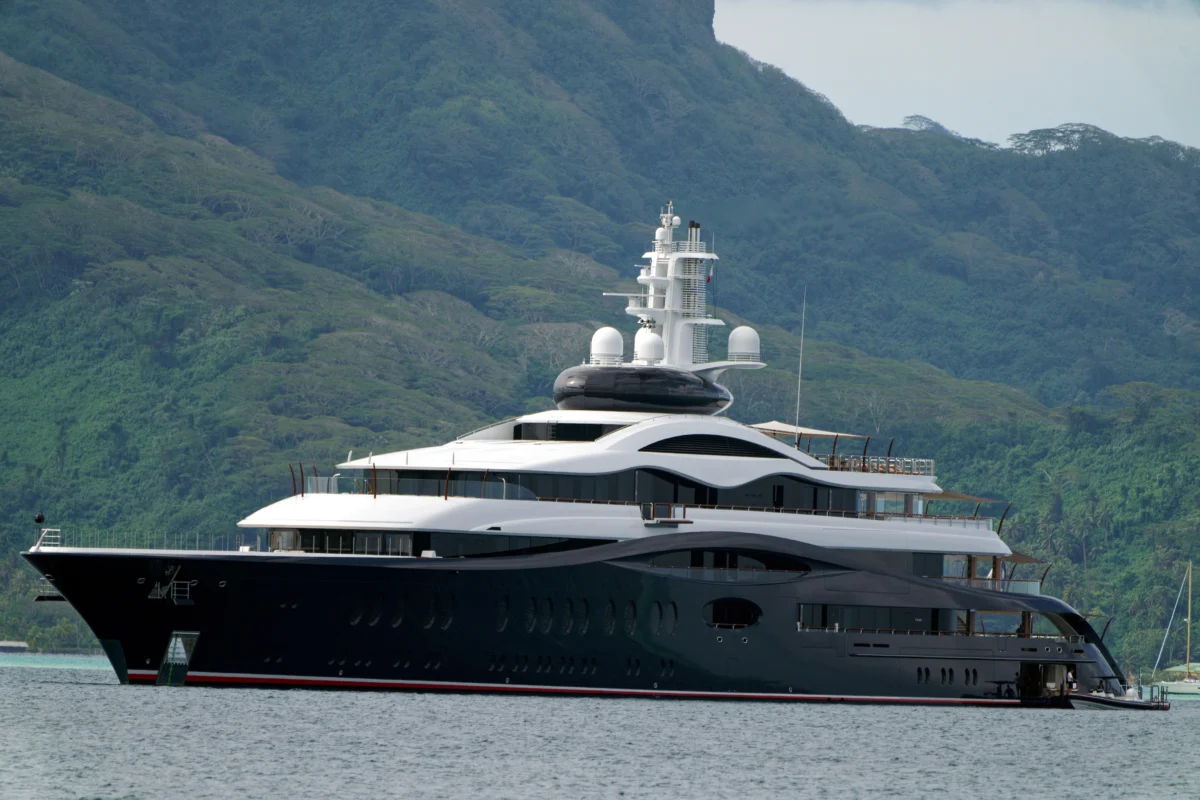
In a maritime incident unfolding off the coast of Alaska, a small vessel found itself adrift and in need of assistance, a situation that brought into sharp focus the proximity of a colossal luxury yacht belonging to a prominent tech mogul, yet it was a different, less ostentatious vessel that ultimately rendered aid.
The dramatic rescue of a stranded skiff, which had run out of fuel near Farragut Bay, was successfully executed by the crew of the cruise ship Wilderness Legacy. However, this act of seamanship was overshadowed by revelations, supported by vessel tracking data, suggesting that Mark Zuckerberg’s superyacht, Launchpad, was in closer proximity to the distressed craft at the time of the incident. The narrative that emerged paints a picture of a missed opportunity for immediate humanitarian intervention by one of the world’s most technologically advanced and financially capable vessels.
The sequence of events, as pieced together from eyewitness accounts and AIS (Automatic Identification System) data, suggests a significant disparity in response. Passengers aboard the Wilderness Legacy reported hearing their captain announce that the Launchpad was closer to the stranded skiff. This announcement, reportedly met with audible disappointment and booing from the cruise ship’s occupants, underscored a perceived lack of responsiveness from the superyacht. The AIS data, which publicly tracks the movements of maritime vessels, appears to corroborate these claims, indicating the Launchpad was indeed closer to the struggling skiff before its course altered, ultimately positioning it near the bay’s entrance. The Wilderness Legacy, in contrast, continued its mission, eventually overtaking the Launchpad and turning back to tow the stranded boat to safety.
This incident raises critical questions about the ethical responsibilities and practical considerations that accompany immense wealth and the advanced technological assets it commands. While the Launchpad is equipped with sophisticated communication and navigation systems, its apparent inaction in the face of a maritime assistance request, especially when positioned so advantageously, invites scrutiny. The US Coast Guard, when contacted for comment, stated that at approximately 9:56 p.m., they determined the skiff was not in immediate distress and consequently issued a marine assistance request broadcast on its behalf. This suggests that while the situation was not classified as a dire emergency by official channels, it was nonetheless a scenario where assistance was formally requested.
A spokesperson for Mark Zuckerberg and Priscilla Chan offered a clarification, stating that neither Mr. Zuckerberg nor his family were aboard the Launchpad at the time of the incident. Furthermore, the spokesperson emphasized that the boat was not in distress, aligning with the Coast Guard’s assessment. The explanation also posited that by the time the yacht’s crew reviewed the Coast Guard’s communication, which was reportedly on a different radio channel than their primary operational frequency, the Wilderness Legacy had already commenced its rescue operation. This explanation attempts to contextualize the yacht’s position and the crew’s actions within the operational realities of maritime communication and vessel management.

However, the narrative of proximity and potential inaction lingers. The Launchpad is not merely a private vessel; it represents a pinnacle of modern maritime engineering and luxury, often equipped with advanced communication suites, including satellite phones and dedicated bridge-to-bridge radio systems, capable of reaching authorities and other vessels instantaneously. Its sheer size and sophisticated crew complement would typically imply an immediate capacity to respond to any situation, regardless of the perceived level of distress, especially when a call for assistance has been broadcast. The fact that the Wilderness Legacy, a considerably smaller cruise ship, was able to not only reach the skiff but also successfully tow it, further amplifies the questions surrounding the Launchpad‘s response.
The incident also brings to the forefront the broader societal expectations placed upon individuals and entities of significant means. In an era where corporate social responsibility and philanthropic endeavors are increasingly scrutinized, the actions of the ultra-wealthy in situations that could be perceived as humanitarian are subject to intense public examination. The presence of such an opulent vessel, seemingly equipped to handle a wide array of maritime contingencies, juxtaposed with its apparent lack of immediate engagement in a rescue operation, creates a powerful symbolic contrast. It begs the question of whether the mere possession of such resources inherently carries an obligation to act, even in situations not officially deemed critical, especially when the response could be swift and decisive.
Analyzing this event through a lens of maritime protocol and ethics, the concept of "duty to assist" in maritime law, while complex and often contingent on specific circumstances, generally encourages mariners to offer assistance to those in peril at sea. While the skiff may not have been in immediate mortal danger, the request for assistance indicated a need for support. The proximity of the Launchpad and the reported refusal to respond, even if based on procedural nuances or the absence of the owner, invites debate about the spirit of this maritime tradition. The presence of advanced technology on board, while not automatically creating a legal obligation to intervene in every minor incident, does arguably elevate the expectation of proactive engagement when opportunities arise to prevent potential escalation or simply to offer support.
Furthermore, the incident highlights the inherent challenges of managing large, sophisticated vessels. The mention of communication channels and the delay in receiving information suggests a potential disconnect in real-time situational awareness, even for a vessel like the Launchpad. This raises broader implications for the operational protocols of such superyachts. In environments where swift decision-making can be crucial, redundancy in communication systems and immediate monitoring of maritime distress frequencies are paramount. The incident serves as a subtle reminder that technological sophistication, while impressive, requires diligent and proactive human oversight to be truly effective in all scenarios.
The narrative also touches upon the role of public perception and the power of social media in shaping public discourse. The passenger’s post on Bluesky, amplified by news outlets, quickly brought the situation to a wider audience, generating discussion and commentary. This underscores the modern reality where even seemingly private incidents involving prominent figures can become public matters, subject to immediate analysis and judgment. The accessibility of AIS data further empowers such scrutiny, providing an objective layer of information that can either corroborate or challenge official narratives.
Looking ahead, this incident may prompt a re-evaluation of operational procedures for high-profile maritime assets. While the Launchpad‘s crew acted within what they perceived as established protocols, the public and ethical implications of such events are undeniable. It suggests a need for enhanced vigilance regarding maritime assistance requests, perhaps through dedicated watch protocols or more integrated communication systems that ensure no broadcast goes unnoticed, regardless of the channel. The incident also implicitly calls for a greater understanding of the expectations placed upon those who command such immense resources, particularly in situations where a small act of assistance could make a significant difference, even if the immediate threat is not critical. The contrast between the Launchpad‘s proximity and the Wilderness Legacy‘s decisive action will likely continue to resonate, serving as a case study in the intersection of wealth, technology, and humanitarian responsibility at sea. The ultimate takeaway is that while technological capability is crucial, it is the human element – the decision to act, to assist, and to extend a hand when needed – that truly defines an individual’s or an organization’s commitment to the well-being of others, especially in the vast and often unforgiving expanse of the ocean.




 Lisa Mariana
 Safa Marwah
 Ayu Aulia