Ayu Aulia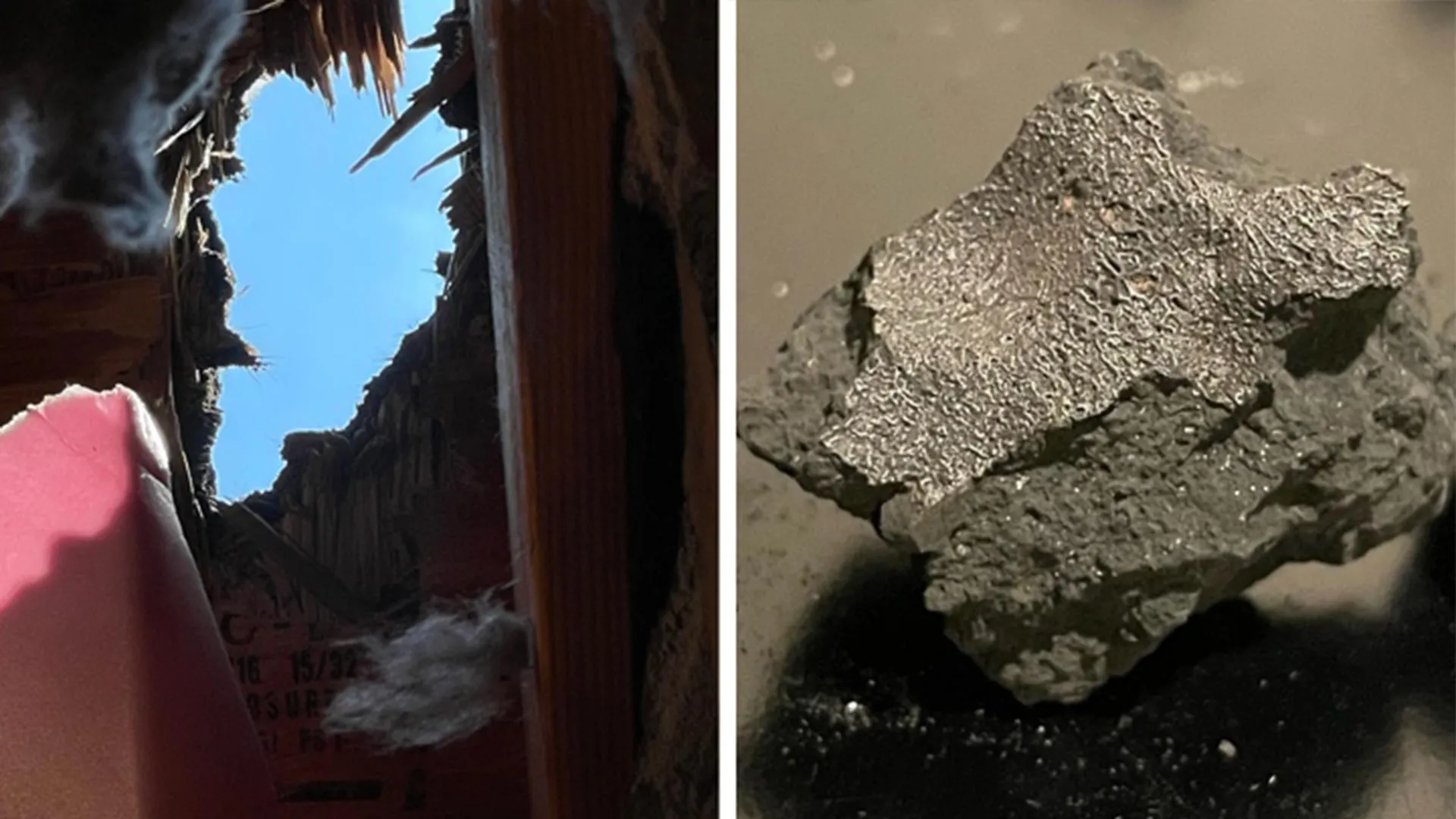
A dramatic celestial spectacle unfolded across the northeastern United States on July 16, 2024, culminating in the recovery of a rare meteorite in Hillsborough, New Jersey. This extraordinary extraterrestrial specimen, weighing over two pounds, penetrated the roof of a residential property, providing scientists with an unprecedented opportunity. Subsequent rigorous analysis by an international consortium of researchers has unveiled profound insights into the conditions prevalent on primordial asteroids within our solar system, specifically illuminating the pivotal role of concentrated saline fluids in fostering chemical processes fundamental to the genesis of life’s molecular building blocks. Their findings, detailed in the scientific journal Science Advances, underscore the meteorite’s exceptional significance as a pristine window into the early universe.
The lead investigator, Dr. Peter Jenniskens, a distinguished meteor astronomer affiliated with the SETI Institute and NASA’s Ames Research Center, highlighted the unique nature of the discovery. "A meticulous forensic examination of the recovered fragments has revealed the presence of exquisitely preserved materials originating from a region near the surface of a primitive asteroid. This area experienced significant exposure to highly concentrated salty fluids—a phenomenon not previously documented with such clarity in this specific class of early solar system bodies," Dr. Jenniskens explained. This revelation provides a novel perspective on the hydrological and chemical evolution of planetesimals.
The Trajectory of an Interstellar Visitor
The event commenced when an object, estimated to be comparable in size to a substantial carry-on bag, breached Earth’s atmosphere. Traveling at an astounding velocity of approximately 32,000 miles per hour (14.4 kilometers per second), its fiery descent was observed by dozens of individuals across five states, including New York, New Jersey, Connecticut, Rhode Island, and Pennsylvania. The celestial intruder’s passage generated a powerful sonic boom, distinctly felt by sixteen individuals in the New York and New Jersey metropolitan areas, underscoring the sheer energy of its atmospheric entry.
The American Meteor Society (AMS), a leading organization dedicated to meteor observation and tracking, played a crucial role in reconstructing the object’s path. Mike Hankey, operations manager for the AMS, detailed the tracking efforts: "Our network of specialized cameras, strategically positioned in locations such as Northford, Connecticut, and Douglassville, Pennsylvania, along with fortuitous capture by a residential doorbell camera in Wayne, New Jersey, allowed us to precisely triangulate the meteor’s trajectory. This data indicated an origin deep within the main asteroid belt, between Mars and Jupiter." This precise tracking was instrumental in narrowing down the potential impact zone.
The celestial body, characterized by its inherent fragility, underwent rapid fragmentation as it traversed the dense layers of Earth’s atmosphere. It dissipated from visual observation at an altitude of approximately 22 miles (35 kilometers). Shortly thereafter, advanced Doppler weather radar systems at Newark Airport serendipitously detected an elongated plume of descending particulate matter, extending from Staten Island into central New Jersey. Hillsborough, situated towards the furthest extent of this projected debris field, was precisely where larger fragments, having retained more momentum, were predicted to reach the ground. The singular recovery of a meteorite from this event was largely attributable to its unmistakable impact with a residential structure, circumventing the challenges of searching vast, unpopulated areas.
A Fortuitous Discovery and Exemplary Preservation
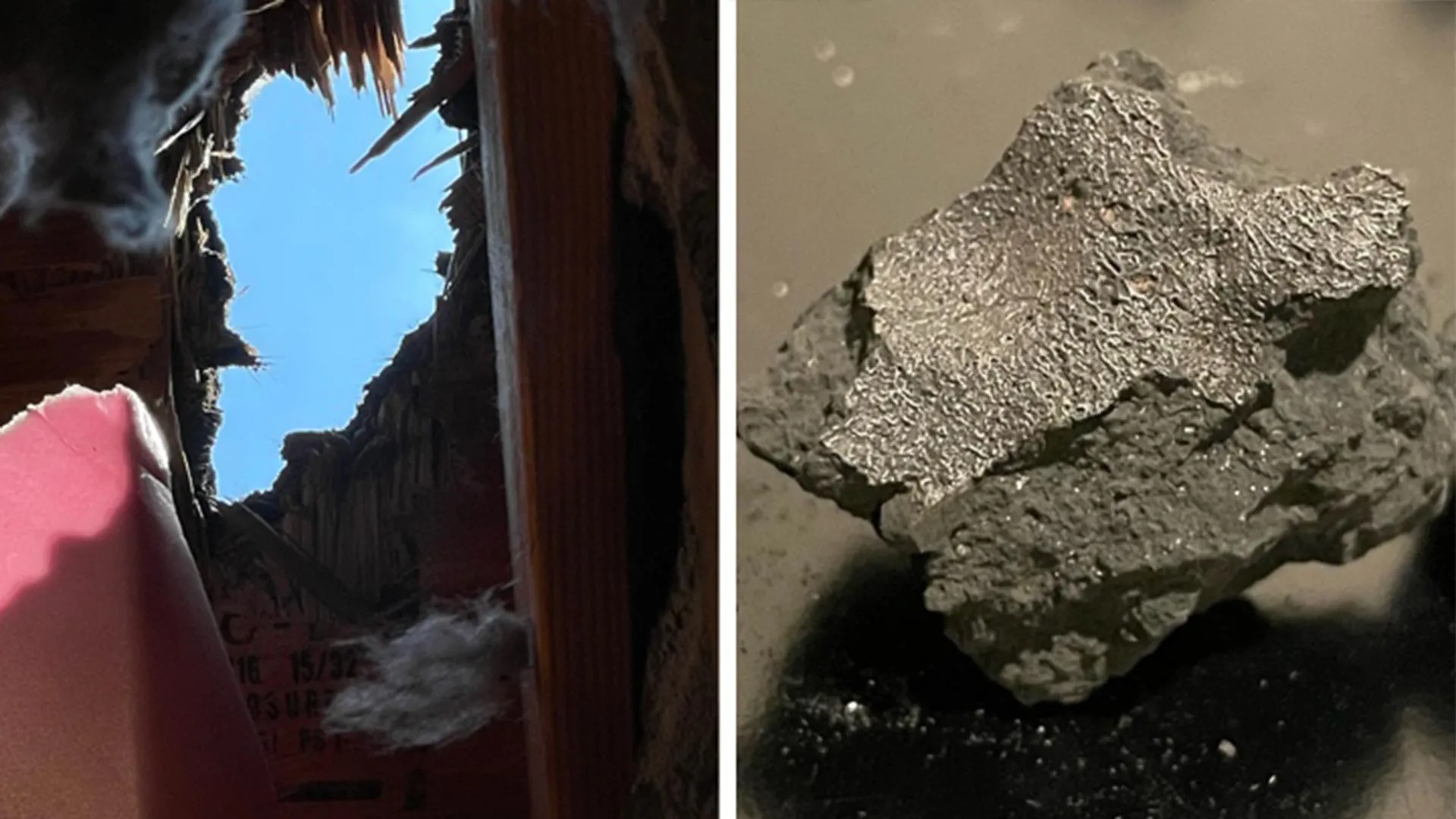
The homeowner recounted the extraordinary circumstances of the impact: "I was present in the residence at the time of the incident. A resounding crash immediately drew my attention, leading me to discover a gaping aperture in the ceiling of the master bedroom. An intense, pungent sulfur-like aroma permeated the air, and numerous fragmented, dark-colored materials, along with associated debris and fine black dust, were strewn across my bed, carpeting, and the surrounding vicinity." This vivid account underscores the dramatic nature of the event.
Recognizing the unusual nature of the intrusion, the homeowner demonstrated remarkable foresight and scientific acumen. He meticulously documented the scene with photographs and took immediate steps to safeguard the material from potential contamination. Employing disposable gloves to prevent the transfer of oils and biological material, he carefully collected the extraterrestrial fragments using aluminum foil and secured them within sterile glass jars. This swift and diligent action proved invaluable, ensuring the pristine condition of the samples for subsequent scientific scrutiny, a factor critical to the groundbreaking discoveries that followed.
An Exceptionally Rare Primitive Chondrite
Laboratory analyses unequivocally classified the recovered rock as belonging to the CM-type carbonaceous chondrite family, a designation derived from the Mighei meteorite that fell in Ukraine in 1889. Carbonaceous chondrites are revered by planetary scientists as some of the most primitive materials in the solar system, largely unaltered since their formation over 4.5 billion years ago. They are particularly rich in carbon compounds, water, and volatile elements, offering unparalleled insights into the conditions of the early solar nebula.
Dr. Mike Zolensky, a distinguished meteoriticist at NASA’s Johnson Space Center and a co-author of the research paper, observed that specific portions of the Hillsborough meteorite exhibited a more profound degree of aqueous alteration on its parent asteroid than typically encountered in CM2 carbonaceous chondrites. This finding led to its precise classification as a CM1/2 carbonaceous chondrite, positioning it uniquely between the petrographic CM1 and CM2 categories, representing a transitional state of water interaction.
The Hillsborough event marks only the 22nd documented fall of a CM-type meteorite in recorded history. More remarkably, it represents merely the second witnessed fall of a CM1/2 carbonaceous chondrite, the first being the Kolang meteorite which descended in North Sumatra, Indonesia, in 2020. All other observed CM falls have involved CM2 material, and no CM1 meteorite fall has ever been directly observed. This extreme rarity elevates the Hillsborough sample to an almost unparalleled status in meteorite research. "The homeowner’s prompt and meticulous preservation efforts have resulted in the most pristine CM1/2 meteorites known to science," affirmed Dr. Jenniskens, underscoring the invaluable contribution of the public to scientific discovery.
Unveiling Evidence of Ancient Asteroid Brines
A central focus of planetary science involves understanding the pervasive influence of water on the chemical evolution of primitive asteroids. Another significant group of primitive carbonaceous chondrites, known as CI-type, named after the Ivuna meteorite from Tanzania (1938), provides a crucial comparative dataset. These meteorites, and pristine samples returned directly from space, such as those from JAXA’s Hayabusa2 mission to asteroid Ryugu and NASA’s OSIRIS-REx mission to asteroid Bennu, consistently exhibit compelling evidence of briny fluids having once existed beneath the surfaces of their parent bodies.
In a pivotal discovery, Dr. Zolensky, collaborating with colleague JangMi Han, identified minute CM1 fragments within the Hillsborough meteorite that were exceptionally rich in various salts. This finding strongly suggests that these materials originated from a geological region near the surface of the meteorite’s parent asteroid. In this environment, liquid water would have undergone gradual evaporation, progressively concentrating dissolved salts into highly reactive brines. The research team is now meticulously working to identify the precise mineralogical composition of these salt species within the meteorite, a critical step towards direct comparison with similar materials recovered from the Ryugu and Bennu samples.
This distinctive salty chemistry holds profound implications for deciphering the chemical conditions that could have facilitated the formation of molecules essential for the emergence of life. Highly concentrated brines possess the remarkable ability to maintain phosphate, a crucial building block of DNA and RNA, in a dissolved state within solution. Furthermore, these hypersaline environments can actively promote and accelerate complex chemical reactions involving organic compounds and various minerals that precipitate from the solution, creating a dynamic crucible for prebiotic synthesis.
Organic Molecules: The Ingredients for Life
The Hillsborough meteorite is a treasure trove of organic chemistry. Cosmochemist Dr. Queenie Chan of Royal Holloway University of London and biogeochemist Dr. Nana Ogawa of the Biogeochemistry Research Center at the Japan Agency for Marine-Earth Science and Technology conducted extensive isotopic studies of carbon and nitrogen. Their analyses corroborated that primitive carbonaceous chondrites, including the CM-types, served as significant vectors for delivering organic matter to the nascent Earth. The Hillsborough specimen contained a substantial 1.8% carbon by weight and 0.07% nitrogen, with isotopic signatures consistent with other CM-type meteorites, reinforcing its primitive nature.
Beyond elemental composition, researchers identified a remarkably diverse array of soluble organic compounds within the meteorite. This broad spectrum of organic molecules provides compelling additional evidence that the Hillsborough material experienced a more extensive degree of aqueous alteration on its parent body compared to most other CM-type meteorites. Dr. Phil Schmitt-Kopplin, an organic mass spectrometry specialist at Technical University Munich, observed, "A substantial proportion of these compounds were clearly the products of intricate organic chemistry interacting with minerals." He further noted, "It remains an open question whether these magnesium organic compounds were generated by the unique brine chemistry or if they were residual artifacts from earlier impact shock processes, indicating a complex interplay of geological forces."
The presence of organometallic compounds is particularly noteworthy, given their indispensable roles in biological systems on Earth, such as the iron in hemoglobin for oxygen transport and magnesium in chlorophyll for photosynthesis. Scientists also detected numerous amino acids among the soluble organic compounds in the Hillsborough meteorite. These amino acids exhibited similarities to those previously identified in CM2 chondrites that had undergone more moderate levels of water alteration, further linking this meteorite to a broader family of extraterrestrial organic suppliers.
Astrobiologist Dr. Danny Glavin of NASA’s Goddard Space Flight Center, along with his team in Goddard’s Astrobiology Analytical Lab, concluded that CM-type celestial bodies were likely instrumental in provisioning early Earth with essential amino acids, carboxylic acids, and other soluble organic molecules. This sustained delivery mechanism could have significantly contributed to the complex pool of prebiotic organic material that existed prior to the emergence of life on our planet. Their meticulous analysis also strongly indicates that the meteorite’s intricate assortment of amino acids did not form merely through random processes, but rather developed within its parent body, with the briny fluids likely serving as a crucial catalyst for at least a portion of this sophisticated chemistry.
A Rare Asteroid Sample Preserved for Posterity
The scientific community recognizes the immense value of this extraordinary sample. Selected fragments of the Hillsborough meteorite are slated for permanent curation by the American Museum of Natural History in New York City. This strategic preservation ensures that this invaluable extraterrestrial material will be accessible for future generations of researchers, allowing for ongoing study with increasingly sophisticated analytical techniques.
Dr. Denton Ebel, a curator at the museum, expressed the collective excitement: "We are absolutely delighted that nature delivered such an incredibly precious asteroid sample directly to our doorstep. Its pristine condition and unique chemical signatures promise to unlock countless new understandings about the fundamental processes that shaped our solar system and potentially set the stage for life."
The Hillsborough meteorite, initially a fiery spectacle and then a domestic intrusion, has transformed into a profound scientific discovery. It offers an unparalleled glimpse into the dynamic, water-rich environments of ancient asteroids, reinforcing the hypothesis that these celestial wanderers were not merely inert rocks but active chemical factories capable of producing and delivering the essential organic ingredients that paved the way for life on Earth. As scientists continue to unravel its secrets, this small piece of cosmic debris promises to significantly advance humanity’s quest to comprehend its own origins within the vast expanse of the universe.


 Lisa Mariana
 Aura Kasih
 Safa Marwah