Lisa Mariana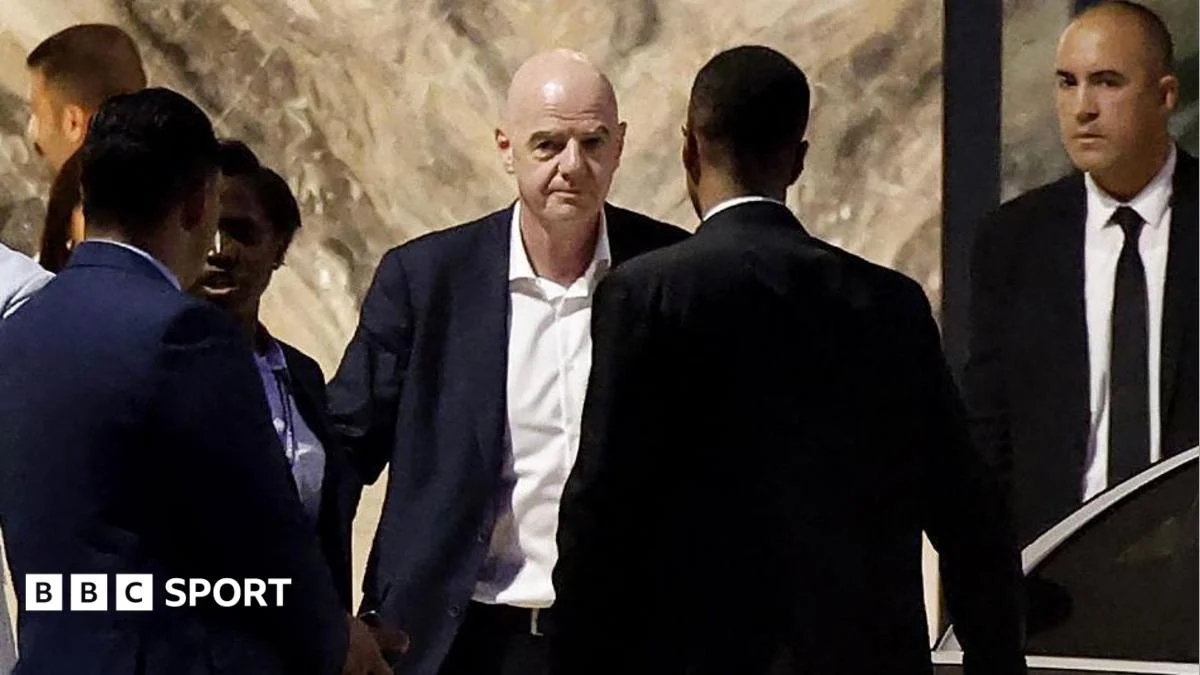
The Fédération Internationale de Football Association (FIFA) has issued a robust public statement, decrying what it characterizes as a systematic and persistent campaign designed to destabilize the organization and undermine the authority of its current president, Gianni Infantino. This assertive defense emerges amidst a period of intensified scrutiny and internal dissent, particularly from influential European football bodies, raising profound questions about the future leadership and strategic direction of the sport’s global governing entity. The current tensions highlight a deep-seated struggle for influence and ideological differences that threaten to fragment the unity of international football.
The immediate catalyst for FIFA’s strong rebuttal was a recent investigative report, which brought forward allegations concerning Infantino’s conduct during his previous tenure as General Secretary of the Union of European Football Associations (UEFA). The report specifically detailed claims of an alleged personal relationship, followed by a substantial severance payment purportedly made to an individual by UEFA. FIFA swiftly condemned these disclosures, dismissing them as "unsubstantiated assertions" and "demonstrably false claims," emphatically stating that "speculation and insinuation should not be presented as fact." This forceful rejection underscores the gravity with which the world governing body perceives the attempts to discredit its leadership, framing the situation as an orchestrated attack rather than legitimate inquiry. The organization’s response suggests a heightened sensitivity to reputational damage, particularly given the turbulent history of its immediate past.
Beyond these personal allegations, President Infantino has faced significant political headwinds, primarily originating from UEFA and a consortium of European national football associations. A central point of contention has been his ambitious, albeit ultimately aborted, proposal for the creation of the "Fifa Forward Enterprise" (FFE). This intricate commercial initiative envisioned the establishment of a novel corporate entity specifically tasked with managing FIFA’s substantial commercial and ticketing rights globally. Crucially, the plan involved divesting a 21% stake in this new enterprise to a private investment company, a move that ignited a firestorm of opposition within the European football establishment.
The FFE concept was framed by FIFA as a strategic imperative to unlock new revenue streams, modernize its commercial operations, and enhance the financial sustainability of football development worldwide. Proponents argued that such a partnership with private capital would inject commercial expertise and efficiency, ultimately benefiting all member associations through increased funding for grassroots programs and infrastructure development. However, critics, predominantly from Europe, viewed the proposal with profound skepticism and alarm. Their concerns centered on several critical areas: the potential for a loss of control over core football assets to external private interests, the transparency surrounding the selection of the private investment partner, the equitable distribution of future profits, and the overarching commercialization of the sport’s fundamental elements. There were fears that the pursuit of maximized profits might supersede the developmental and ethical responsibilities inherent in FIFA’s mandate. The perceived lack of consultation and the rapid pace at which the proposal was advanced further exacerbated mistrust, particularly from UEFA, which maintains a significant financial and political power base within global football.
The backlash against the FFE proposal escalated rapidly, culminating in explicit declarations of no confidence from UEFA. European football’s governing body not only expressed its profound dissatisfaction with Infantino’s leadership but also reiterated its standing threat to boycott future FIFA events should certain conditions regarding governance and strategic direction not be met. This represents a significant escalation, as a European boycott would severely diminish the prestige and commercial viability of major international tournaments, including the quadrennial World Cup. Further compounding the pressure, Lise Klaveness, the President of the Norwegian Football Federation (NFF), publicly called for Infantino’s resignation, an unusually direct challenge from a national federation to the global president. Such pronouncements from influential European voices underscore a deep schism that extends beyond mere policy disagreements, touching upon fundamental questions of leadership integrity and strategic vision.
FIFA, in its defensive posture, staunchly affirmed President Infantino’s legitimacy, emphasizing that he "was democratically elected by FIFA’s Member Associations and continues to serve with their mandate." The organization asserted that the escalating criticisms are part of a deliberate and sustained effort by certain factions to undermine its authority and that of its president. This narrative positions the current leadership as a bulwark against attempts by those who, lacking sufficient support within FIFA’s established democratic frameworks, resort to "allegation, insinuation or misinformation" to achieve their objectives. This counter-narrative frames the opposition as circumventing legitimate governance processes, rather than engaging in constructive criticism.
An analysis of the geographical distribution of support and opposition reveals a clear pattern: the most vociferous challenges to Infantino’s presidency emanate predominantly from Europe. This is not unprecedented in the history of global football governance, where the financially powerful and historically influential European confederation has often found itself at odds with FIFA’s central authority, particularly over issues of revenue distribution, competition formats, and the international match calendar. The current friction can be seen as a continuation of this long-standing dynamic, albeit with renewed intensity and specific points of contention.
In stark contrast to the European dissent, President Infantino enjoys substantial and vocal support from other key regions of global football. The Mexican Football Federation notably broke ranks with its regional governing body, Concacaf (the Confederation of North, Central America and Caribbean Association Football), to publicly declare its backing for Infantino. This move echoed a prior statement from Conmebol, the South American governing body, both of which explicitly stated their rejection of any attempts to remove Infantino without a comprehensive vote involving all 211 FIFA member countries. This united front from significant parts of the Americas underscores a strategic alignment that prioritizes the principle of global democratic representation over regional political pressures.
Furthermore, the Confederation of African Football (CAF), comprising 54 nations, has consistently demonstrated unanimous backing for Infantino. This broad-based support from two of the largest confederations, alongside pockets of support within Concacaf, provides a crucial counterweight to European opposition. The motivations for this robust support are multifaceted. Many developing football nations in Africa, South America, and parts of Asia and Concacaf view Infantino’s "FIFA Forward" development program as genuinely beneficial, providing much-needed financial assistance and expertise for infrastructure, youth development, and administrative capacity building. These nations often feel that their interests are better represented under Infantino’s leadership, which has emphasized inclusivity and the "one country, one vote" principle, thereby diluting the historical dominance of a few powerful European nations. For these federations, Infantino’s presidency represents a more equitable distribution of power and resources within the global football ecosystem. The principle of a global vote for presidential removal aligns with their belief in a truly democratic FIFA, where no single region can dictate leadership changes.
The current power struggle within FIFA bears echoes of past leadership challenges, particularly in the post-Sepp Blatter era. Infantino himself rose to power promising a new era of transparency, integrity, and reform following a period marred by widespread corruption scandals. The current allegations and political maneuvering threaten to reignite concerns about governance and trust, even as FIFA asserts its commitment to democratic processes. The Blatter era, characterized by a concentration of power and allegations of illicit dealings, left a lasting scar on the organization’s reputation. Infantino’s challenge is to navigate the current storm while upholding the reforms he pledged, demonstrating that FIFA has truly moved beyond its problematic past.
From an analytical perspective, this situation represents a complex geopolitical chess match within the world of sport. The "one country, one vote" system, while ostensibly democratic, can create a scenario where the collective voice of smaller nations, often reliant on FIFA’s development funding, can outweigh the significant financial and sporting influence of larger, wealthier federations. Europe’s concerns often revolve around the integrity of competitions, the financial viability of its elite club football, and the preservation of historical traditions, whereas other confederations may prioritize direct development aid, increased representation in global tournaments, and a greater share of FIFA’s overall revenues. This divergence of priorities fuels the current friction.
The implications of this ongoing conflict are substantial for the future trajectory of global football. For Infantino, successfully weathering this storm is critical to his ability to govern effectively and secure a potential future re-election. His presidency is at a pivotal juncture, requiring him to consolidate his base of support while attempting to bridge the chasm with his European detractors. Failure to do so could lead to a protracted period of internal strife, distracting from FIFA’s core mission of developing and promoting football worldwide.
For FIFA’s governance model, the challenge highlights the inherent difficulties in balancing the diverse interests of 211 member associations across vastly different economic and sporting landscapes. The current episode will test the resilience of FIFA’s democratic processes and its capacity to address serious allegations and significant policy disagreements transparently and equitably. The threat of boycotts and calls for resignation, while powerful political tools, also carry the risk of fragmenting the sport and undermining the spirit of global unity that FIFA is meant to embody.
Looking ahead, the resolution of this power struggle will depend on several factors: the evidentiary strength of any further allegations, the ability of Infantino to maintain his broad base of support, the potential for a compromise on contentious policy issues like commercialization and competition formats, and the willingness of all parties to engage constructively within FIFA’s established governance structures. The ultimate outcome will shape not only the leadership of FIFA but also the direction of global football for years to come, influencing everything from the allocation of resources to the format of its most prestigious tournaments. The current landscape suggests a period of continued political tension, demanding shrewd strategic maneuvering from all stakeholders to avoid a deeper and more damaging fragmentation of the sport. The world of football watches intently as FIFA attempts to reaffirm its authority and its president’s mandate against a backdrop of escalating internal pressures.



 Aura Kasih
 Safa Marwah
 Ayu Aulia