Ayu Aulia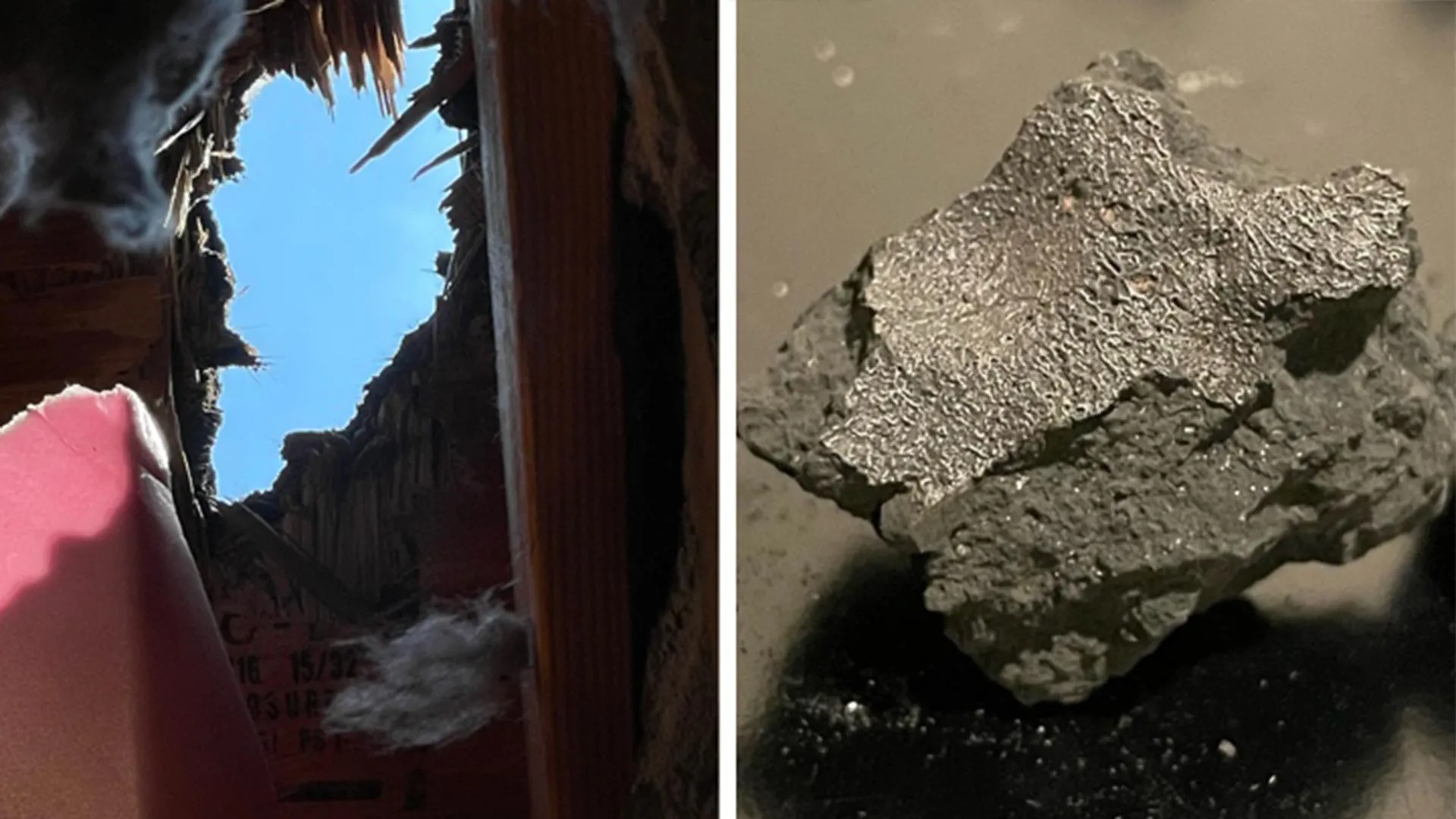
The unexpected arrival of an extraterrestrial rock in New Jersey has provided scientists with an unparalleled glimpse into the early solar system, revealing crucial insights into the role of liquid water and complex organic chemistry on primitive asteroids. On July 16, 2024, a meteor ignited the daytime sky over the New York City metropolitan area, generating a distinct sonic boom before a fragment, a meteorite weighing over two pounds, crashed through a residence in Hillsborough. Subsequent analysis by an international consortium of researchers, whose findings are detailed in Science Advances, indicates that this rare celestial artifact harbors a unique record of concentrated briny fluids and organic compounds, processes previously unobserved in such pristine condition from this specific type of ancient protoplanetary material.
The initial terrestrial encounter was a spectacle witnessed by scores across the Northeast. The progenitor object, estimated to be comparable in size to a substantial piece of carry-on luggage, entered Earth’s atmosphere at an astonishing velocity of approximately 32,000 miles per hour (14.4 kilometers per second). Its fiery descent was reported by sixty individuals spanning New York, New Jersey, Connecticut, Rhode Island, and Pennsylvania, as documented by the American Meteor Society. Additionally, sixteen residents in New York and New Jersey experienced the accompanying atmospheric shockwave. Specialized cameras deployed in Northford, Connecticut, and Douglassville, Pennsylvania, alongside a residential doorbell camera in Wayne, New Jersey, successfully captured the meteor’s trajectory. This data enabled scientists, including American Meteor Society operations manager Mike Hankey, to precisely calculate its inbound path, tracing its origin back to the asteroid belt’s inner regions. The friable nature of the incoming bolide led to its rapid fragmentation as it traversed the atmosphere, disappearing from visual observation at an altitude of 22 miles (35 kilometers). Shortly thereafter, Doppler weather radar at Newark Airport registered a transient, elongated plume of descending debris, stretching from Staten Island across into central New Jersey. Hillsborough, situated towards the periphery of this projected impact zone, was where larger fragments were anticipated to make landfall. Ultimately, only one meteorite was successfully recovered, its discovery facilitated by its dramatic collision with a residential structure.
The fortunate homeowner recounted the extraordinary event: "I was present in the house at the time, heard a significant impact, and discovered a perforation in the ceiling of the master bedroom. An intense sulfur-like aroma permeated the air, and numerous black fragments, accompanied by general debris and dark dust, covered my bed, carpeting, and surrounding areas." The homeowner’s prompt and discerning actions proved invaluable to the scientific community. Recognizing the unusual nature of the incident, they meticulously documented the scene and implemented measures to prevent contamination of the recovered material. Donning disposable gloves, the individual carefully collected the meteorite fragments using aluminum foil and secured them within glass jars, preserving their pristine state for subsequent scientific investigation. This rapid, responsible intervention ensured the integrity of what would soon be identified as an exceptionally rare and scientifically significant sample.
Laboratory examinations subsequently confirmed the recovered specimen’s classification as a CM-type carbonaceous chondrite, a primitive meteorite family. The designation "CM" refers to the Mighei meteorite, which impacted Ukraine in 1889, serving as the archetype for this category. These chondrites are particularly prized by scientists because they represent some of the most ancient and unaltered materials from the solar system’s genesis, offering direct clues about the conditions present during planetary formation. Dr. Mike Zolensky, a distinguished meteoriticist at NASA’s Johnson Space Center in Houston and a coauthor of the research paper, observed that specific regions within the Hillsborough meteorite exhibited a more pronounced degree of aqueous alteration on its parent asteroid than typically encountered in CM2 carbonaceous chondrites. Consequently, the meteorite was categorized as a CM1/2 carbonaceous chondrite, placing it uniquely between the petrographic CM1 and CM2 classifications. This subtle distinction carries profound implications for understanding the extent of water-rock interactions in the early solar system.
The Hillsborough event represents only the twenty-second documented observed fall of a CM-type meteorite in recorded history. More remarkably, it is merely the second witnessed fall of a CM1/2 carbonaceous chondrite. The inaugural observed fall of this specific subclass was the Kolang meteorite, which descended in North Sumatra, Indonesia, in 2020. All other witnessed CM falls have exclusively involved CM2 material, and, tellingly, no CM1 meteorite fall has ever been directly observed. This makes the Hillsborough sample extraordinarily rare, offering a pristine snapshot of a type of material that is otherwise exceedingly difficult to study. As Dr. Peter Jenniskens, lead author and meteor astronomer from the SETI Institute and NASA’s Ames Research Center, emphasized, "Thanks to the homeowner’s quick reaction, these are the most pristine CM1/2 meteorites we know of." The uncontaminated nature of the sample is critical, as terrestrial exposure and handling can rapidly degrade or alter the delicate organic compounds and mineral structures that hold clues to their extraterrestrial history.
Scientists maintain a particular interest in the profound influence of water on the geochemistry of primitive asteroids. Another significant grouping of primitive carbonaceous chondrites is known as CI, with the "I" referencing the Ivuna meteorite, which impacted Tanzania in 1938. Unlike CM chondrites, CI chondrites are typically even more water-rich. Recent advancements in space exploration have provided direct access to pristine samples related to this type. The Japan Aerospace Exploration Agency’s (JAXA) Hayabusa2 mission successfully retrieved material from asteroid Ryugu, while NASA’s OSIRIS-REx mission returned samples from asteroid Bennu. Both sets of samples contain compelling evidence indicative of the past existence of briny fluids just beneath the surfaces of their respective parent asteroids. The discovery within the Hillsborough meteorite, made by Dr. Zolensky and his colleague JangMi Han, of small CM1 fragments replete with salt, provides a critical parallel and expansion of this understanding. Their findings strongly suggest that this material originated from a region near the surface of its parent asteroid where liquid water underwent evaporation, leading to the progressive concentration of dissolved salts. This process, akin to the formation of evaporites on Earth, offers direct evidence of a dynamic hydrological cycle on these ancient cosmic bodies.
Researchers are currently engaged in precisely identifying the specific salt minerals present in the Hillsborough meteorite. This detailed characterization will enable direct comparisons with similar materials identified in the samples returned from Ryugu and Bennu, fostering a more comprehensive understanding of the shared and distinct hydrological histories of various primitive asteroids. This salty chemistry holds profound implications for unraveling the chemical conditions conducive to the genesis of molecules essential for life. Highly concentrated brines possess the unique capacity to maintain phosphate in solution, a critical but often insoluble element, and to catalyze a range of chemical reactions involving organic compounds and minerals that precipitate from these solutions. This environment could have served as a primordial chemical reactor, fostering the complex molecular interactions necessary for prebiotic evolution.
Further investigation into the meteorite’s composition revealed a treasure trove of organic molecules and potential ingredients for life. Cosmochemist Dr. Queenie Chan of Royal Holloway University of London and biogeochemist Dr. Nana Ogawa of the Biogeochemistry Research Center at the Japan Agency for Marine-Earth Science and Technology, noted that "Isotope studies of carbon and nitrogen suggest that primitive carbonaceous chondrites, including CM-types, delivered organic matter to the early Earth." Their analysis of the Hillsborough meteorite confirmed these expectations, finding it comprised 1.8% carbon by weight and 0.07% nitrogen, with carbon and nitrogen isotopic signatures characteristic of CM-type meteorites. These isotopic ratios act as cosmic fingerprints, tracing the material’s journey and origin within the solar nebula.
Beyond elemental composition, researchers detected a broad and diverse spectrum of soluble organic compounds within the meteorite. The sheer variety of these compounds provides compelling corroboration that the Hillsborough material underwent more extensive aqueous alteration than most other CM-type meteorites. Dr. Phil Schmitt-Kopplin, an organic mass spectrometry specialist from Technical University Munich, commented on the complexity: "A high fraction of compounds were the product of organic chemistry with minerals. We do not know if these magnesium organic compounds were contributed by brine chemistry or were simply left over from earlier impact shock processes." The presence of organometallic compounds is particularly intriguing, given their vital roles in terrestrial biological systems, including their involvement in critical processes such as blood oxygen transport and photosynthesis. Furthermore, scientists identified numerous amino acids among the soluble organic compounds in the Hillsborough meteorite. These amino acids exhibited similarities to those previously detected in CM2 chondrites that experienced more moderate degrees of water alteration, yet their specific context within a CM1/2 sample with evidence of concentrated brines offers new avenues for understanding their formation pathways.
Dr. Danny Glavin, an astrobiologist at NASA’s Goddard Space Flight Center in Greenbelt, Maryland, and his colleagues in Goddard’s Astrobiology Analytical Lab, concluded that CM-type celestial bodies could have served as crucial suppliers of amino acids, carboxylic acids, and other soluble organic molecules to the nascent Earth. This delivery mechanism is hypothesized to have significantly contributed to the pool of prebiotic organic material that accumulated on our planet prior to the emergence of life itself. Their detailed analysis further indicated that the meteorite’s intricate array of amino acids formed internally within its parent body, strongly suggesting that briny fluids were instrumental in driving at least some of these complex chemical reactions. This finding reinforces the notion that the building blocks of life may not have originated solely in Earth’s early oceans but were also "seeded" from extraterrestrial sources, with asteroids acting as cosmic nurseries for these essential compounds.
The profound scientific value of the Hillsborough meteorite underscores the importance of its preservation. A portion of the fragments will eventually be accessioned into the permanent collection of the American Museum of Natural History in New York City. This curatorial decision ensures the long-term safeguarding of this extraordinary material, making it accessible for future generations of researchers to apply new analytical techniques and address emerging scientific questions. Dr. Denton Ebel, a curator at the museum, expressed the collective excitement of the scientific community: "We are thrilled that nature delivered such a precious asteroid sample on our doorstep." This unexpected cosmic delivery provides an invaluable, pristine sample that complements the meticulously collected materials from asteroid missions, offering a unique opportunity to cross-reference and deepen our understanding of the solar system’s chemical evolution and the potential pathways to life beyond Earth. The Hillsborough meteorite serves as a potent reminder that even seemingly random events can yield profound scientific breakthroughs, pushing the boundaries of our knowledge about the universe and our place within it.



 Lisa Mariana
 Aura Kasih
 Safa Marwah