Ayu Aulia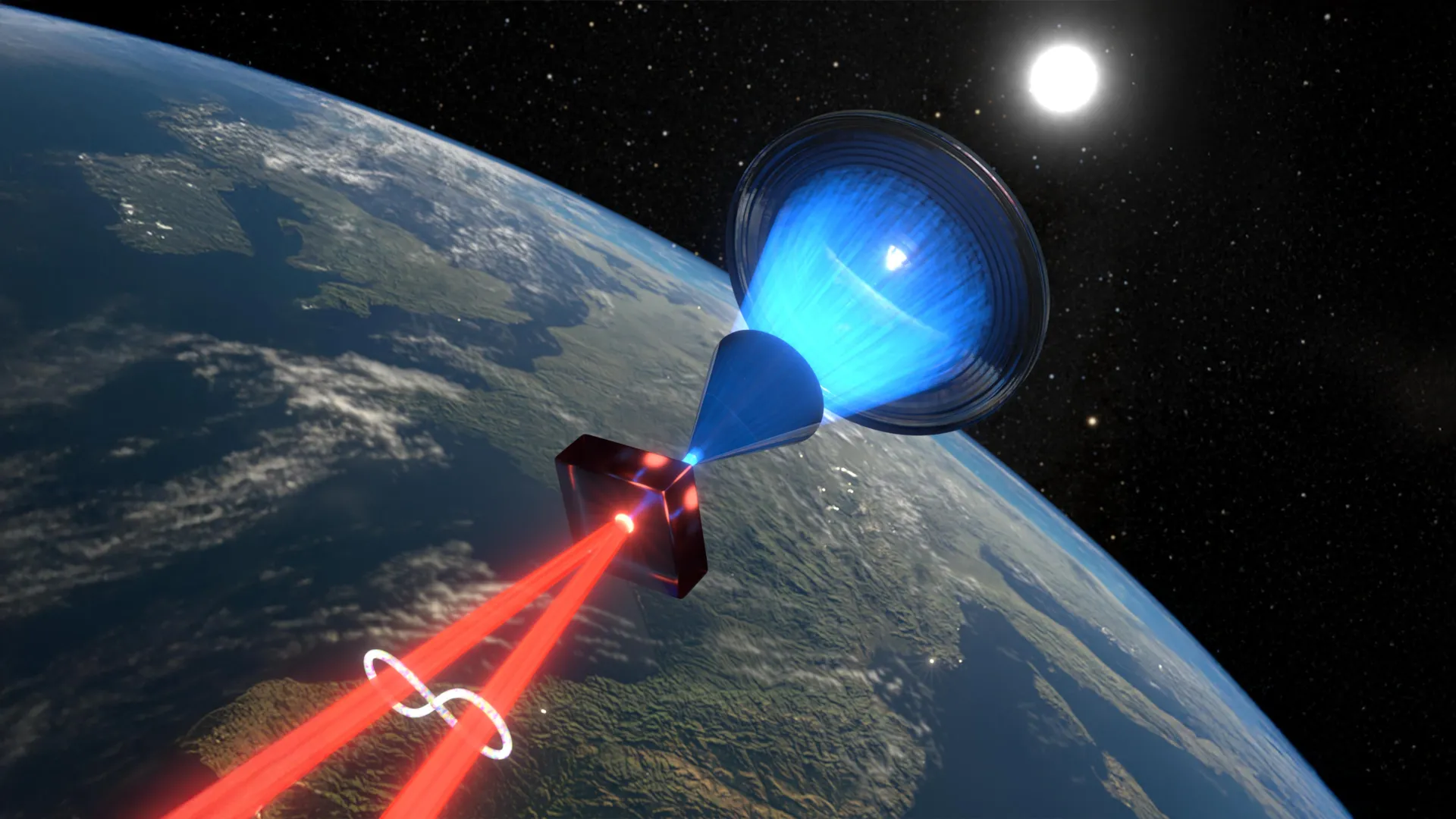
The burgeoning field of quantum technology, while promising revolutionary advancements in computation, communication, and sensing, faces a significant challenge in its reliance on energy-intensive infrastructure. Current methodologies often necessitate powerful, precisely controlled laser systems, whose substantial energy demands pose a potential barrier to widespread adoption and scalability. A groundbreaking development now offers a compelling alternative: the demonstration that naturally occurring sunlight can effectively generate quantum entanglement between photons. This innovation represents a profound conceptual departure from conventional approaches, potentially paving the way for more sustainable, accessible, and energy-efficient quantum systems by leveraging an ubiquitous, renewable energy source.
Quantum entanglement, a phenomenon where particles become intrinsically linked regardless of spatial separation, forms the bedrock of numerous quantum applications. Its practical manifestations include inherently secure communication protocols, ultra-sensitive measurement devices, and the foundational principles for advanced quantum computing architectures. Historically, the generation of this delicate quantum correlation has been predicated on the use of highly coherent light sources, such as lasers, which emit synchronized electromagnetic waves concentrated within a narrow spectral band. The prevailing scientific consensus maintained that such a high degree of orderliness was indispensable for establishing the strong correlations requisite for entanglement.
However, recent investigations have begun to unravel this long-held assumption. Prior theoretical and experimental work had already challenged the necessity of perfect coherence, demonstrating that even incoherent light, specifically from a light-emitting diode (LED), could produce polarization-entangled photons. This earlier research established a critical principle: a light source can exhibit disorder in certain characteristics, such as the spatial distribution of its propagation, while still enabling entanglement through other characteristics, like photon polarization. This conceptual breakthrough underscored that the specific nature of the light’s disorder did not preclude the formation of quantum correlations if the entanglement mechanism was appropriately isolated from the disordered degrees of freedom.
The recent advancement pushes this understanding to an unprecedented level by substituting an LED with unfiltered sunlight. Sunlight presents a far more complex and demanding scenario than an LED, characterized by its broad spectral distribution, diffuse spatial spread, and inherently incoherent nature across multiple dimensions. Overcoming these inherent challenges required a sophisticated integration of theoretical insights and advanced optical engineering. The core of the technique involved adapting spontaneous parametric down-conversion (SPDC), a well-established nonlinear optical process, to operate under solar illumination. In conventional SPDC, a high-energy "pump" photon, typically from a laser, interacts with a nonlinear crystal, spontaneously splitting into two lower-energy "daughter" photons that are quantum-entangled. The innovation here lies in replacing the coherent laser pump with sunlight.
The critical insight was to recognize that while sunlight is globally incoherent in terms of its spectral composition and spatial propagation, it can exhibit a high degree of order in other specific characteristics, such as its oscillation direction or polarization. The research team meticulously engineered an experimental setup to exploit this property. By focusing on generating polarization entanglement, which is insensitive to variations in photon color or propagation direction, they could leverage the directional orderliness of polarized sunlight. The experimental design ensured that any differences introduced by the varied colors and multitude of propagation paths inherent to sunlight did not interfere with the polarization state of the generated photons. This strategic decoupling allowed for the production of high-quality polarization entanglement even from a light source as spatially and temporally incoherent as natural sunlight.
A significant practical hurdle in utilizing sunlight for SPDC is the minuscule interaction volume of the nonlinear crystal, typically on the order of a millimeter. Direct illumination with diffuse sunlight would not provide sufficient photon density to drive the down-conversion process efficiently. This challenge necessitated an innovative approach to light collection and concentration. The solution materialized in the form of a novel all-glass solar concentrator, developed specifically for this application. This ingenious device incorporates a large Fresnel lens, comparable in size to a standard household window, to efficiently gather sunlight over a broad area. The collected light is then channeled into an optical fiber with a diameter similar to a human hair, effectively concentrating the diffuse solar energy onto the tiny nonlinear crystal with the intensity required for the SPDC process. This engineering feat bridged the gap between the vastness of solar energy and the microscopic scale of quantum optical components.
The efficacy of this pioneering approach was rigorously validated through an outdoor experiment. The quantum state of the photons generated by sunlight-driven SPDC was thoroughly analyzed using quantum state tomography, a technique that allows for the complete characterization of a quantum state. The results were compelling: the entanglement produced exhibited a remarkable 94% similarity to a perfectly entangled state, indicating a high fidelity of the generated quantum correlations. Furthermore, the photons displayed correlations that unambiguously violate Bell’s inequality, a foundational test in quantum mechanics. A violation of Bell’s inequality is particularly significant as it provides irrefutable empirical evidence that the observed correlations cannot be explained by classical physics and are instead a genuine manifestation of quantum entanglement. This robust validation moved the concept from a theoretical possibility to a demonstrated reality.
The implications of this breakthrough are far-reaching, particularly concerning the sustainability and scalability of quantum technologies. Current quantum systems are often tethered to laboratory environments due to the stringent requirements for laser power, stability, and cooling. By replacing energy-intensive lasers with ambient sunlight, this research offers a pathway to drastically reduce the energy footprint of quantum devices. This energy efficiency is not merely an operational advantage; it directly addresses a critical challenge for the widespread deployment of quantum technologies, particularly in remote or space-based applications where power generation is a primary constraint.
Consider the potential for secure quantum communication. Satellites in Earth orbit are ideal platforms for establishing global quantum key distribution networks, but they are severely limited by onboard power budgets. The ability to generate encryption keys using the abundant sunlight in space, rather than dedicated lasers and their associated power supplies, could revolutionize space-based quantum communication, making it more feasible, lighter, and more resilient. Similarly, in quantum computing, scaling up the number of qubits often entails a proportional increase in energy consumption. A sunlight-driven entanglement source could provide a crucial ingredient for larger-scale quantum processors without exacerbating the energy burden, contributing to a more sustainable growth trajectory for this transformative field.
Beyond energy efficiency, this research enhances the accessibility of quantum technologies. By leveraging a ubiquitous natural resource, it democratizes the potential for quantum experimentation and application, potentially reducing the financial and infrastructural barriers to entry. This could foster innovation in regions with limited access to advanced laboratory facilities or reliable power grids. The modular nature of the solar concentrator and the SPDC setup also suggests possibilities for more robust and portable quantum systems, extending their utility beyond controlled laboratory settings to diverse field applications.
The successful proof-of-principle experiment marks a critical juncture. Future efforts are now directed towards enhancing the brightness of the entangled photon source and further refining the quality of the entanglement. Increasing brightness is crucial for practical applications, as it dictates the rate at which entangled photon pairs can be generated, directly impacting data throughput in communication or processing speed in computation. The underlying conceptual approach, while demonstrated with SPDC, is not limited to this specific nonlinear optical technique. The researchers anticipate that similar principles could be applied to other nonlinear optical processes, such as four-wave mixing, thereby broadening the scope of this energy-efficient entanglement generation method across the entire spectrum of quantum photonics.
This achievement also stands as a testament to the perseverance of scientific inquiry in the face of skepticism. The initial proposition that incoherent sunlight could drive nonlinear optical processes, let alone generate entanglement, was met with considerable doubt within the scientific community. Many established experts questioned the feasibility of detecting any photons from such a process, let alone entangled pairs. The empirical validation, however, unequivocally confirmed the theoretical predictions and the meticulous experimental design, proving that what was once considered highly improbable is not only possible but demonstrably effective. This journey from conceptual skepticism to a working experimental setup underscores the importance of challenging established paradigms and pursuing novel avenues of research, ultimately opening up entirely new frontiers for quantum technology development. The harnessing of ambient light for quantum entanglement signifies not merely an engineering triumph but a fundamental re-evaluation of the resources available for building the quantum future.




 Lisa Mariana
 Aura Kasih
 Safa Marwah