Aura Kasih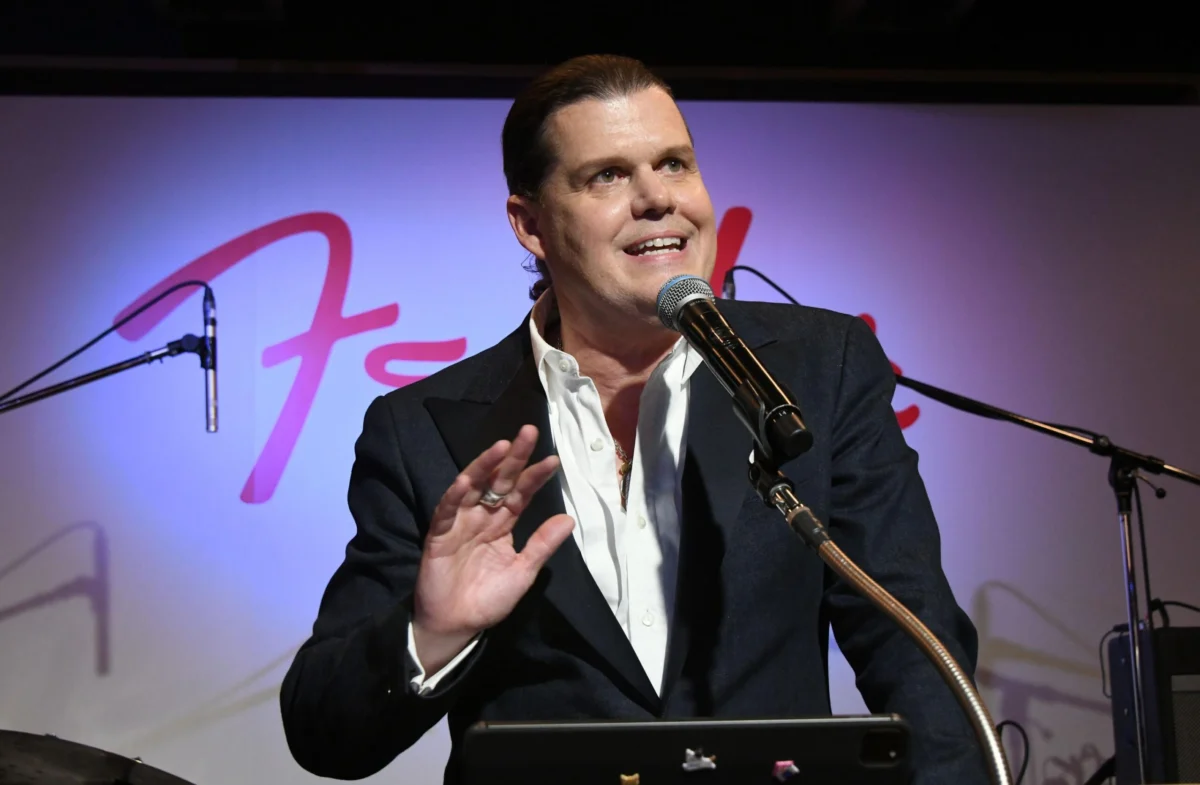
In a recent interview discussing the enduring legacy of the Telecaster, Fender CEO Edward "Bud" Cole ignited a fresh wave of controversy within the music community, particularly among guitarists and songwriters. His commentary, which drew parallels between human musical collaborators and artificial intelligence, has amplified existing discontent stemming from Fender’s recent aggressive copyright enforcement actions. These remarks, initially published in an interview with T3, have since circulated widely, exacerbating the company’s public relations challenges and prompting vocal dissent from influential figures in the guitar world.
The roots of this amplified friction can be traced to Fender’s recent assertive legal stance, which saw the company issue cease-and-desist letters to independent builders concerning the design of the Stratocaster body shape. This move was widely perceived as heavy-handed and detrimental to the independent luthier community, alienating a significant portion of the brand’s loyal customer base. The fallout from these legal actions has been palpable, with prominent guitar-focused content creators expressing disillusionment and declaring a boycott of Fender products. Against this backdrop of existing grievances, Cole’s remarks about AI and musical creation have landed with particular force, further eroding goodwill among a demographic known for its passionate engagement with the brand.
Within the T3 feature, much of Cole’s discourse was presented through paraphrasing, and Fender has not yet offered an immediate official statement or clarification. However, the substance of his observations on AI and musical composition has become a focal point of discussion. Cole posits that artificial intelligence, in a broad sense, is not a novel concept within the realm of music, asserting that "AI has existed in music as long as there’s been recorded music." He identifies the time investment required to master an instrument as the primary hurdle for aspiring musicians, but shifts his focus to the secondary challenge: songwriting. It is in this creative domain that Cole believes AI plays a significant, albeit analog, role.
Cole’s central thesis revolves around the concept of "analog AI," which he applies to both the practice of performing cover songs and the collaborative dynamic within musical ensembles. He suggests that individuals who have not yet developed their songwriting prowess often turn to playing music created by their favorite artists. Cole’s personal experience, citing his formative years listening to bands like R.E.M., U2, The Smiths, and The Cure, illustrates this point. He recounts a progression from passive consumption to active engagement, driven by a desire to “play it” rather than merely “just listening to them.” This journey, he implies, represents a form of human-driven learning and creative synthesis analogous to AI processes.
Furthermore, Cole extends this "analog AI" framework to encompass the role of bandmates in the initial stages of song development. He posits that a nascent idea, such as a chorus or a riff, can be expanded and refined through the contributions of other musicians, such as a drummer or bassist, ultimately leading to the birth of a complete song. In this context, Cole views human collaborators as performing a function akin to AI, facilitating the creative process. He expresses optimism that this understanding of collaborative creation, empowered by AI, will enable musicians to transcend the limitations of relying solely on existing cover material and engage more deeply in original composition, mirroring the collaborative workflows of bands.
The CEO’s analogy draws a direct comparison between a human’s learning process through absorbing a limited repertoire of cover songs and an AI’s ingestion of vast datasets of copyrighted material. This interpretation suggests that by internalizing influences and subsequently synthesizing them into novel expressions, individuals engage in a process fundamentally similar to that of AI. This perspective is demonstrably flawed, indicating either a misunderstanding of AI principles or a disregard for the fundamental contributions of human artists. The sheer scale of data processed by contemporary generative AI models, potentially numbering in the millions for platforms like Suno, far exceeds any human capacity for direct assimilation and replication.
Moreover, this viewpoint significantly understates the inherent human element in the songwriting process. The millions of minute decisions, both conscious and subconscious, that an artist makes are driven by a complex interplay of emotional responses, spontaneous discoveries, and adaptive strategies for overcoming creative limitations. These artistic choices are profoundly personal and unique to the individual creator. This stands in stark contrast to AI-generated outputs, which are the product of algorithmic processes based on prompts and extensive data correlations. As articulated by Steve Onotera, known as Samurai Guitarist, the physical nuances of human performance and the inevitable minor imperfections inherent in human execution prevent precise replication of another artist’s work. This serendipitous quality, deeply embedded in human creativity, is currently beyond the scope of large language models.
The same principle applies to the dynamics within a band. Human collaborators, each drawing upon their unique life experiences, learned skills, and personal limitations, represent a far more complex and nuanced creative engine than an AI. An AI lacks the subjective taste, intuition, and deeply ingrained aesthetic sensibilities that a musician, such as a bassist with a background in jazz composition, might possess. The notion that a drummer could be considered no different from an AI model is not only inaccurate but would likely be met with justifiable offense.
Cole further elaborates on his vision, suggesting that AI will foster a new generation of guitar players who will leverage these tools to enhance their connections with fellow musicians and improve their overall productivity. He envisions AI as a bridge, enabling individuals to transition from novice songwriters to accomplished masters. This assertion, however, is highly questionable. Mounting evidence suggests that an over-reliance on AI tools can lead to a phenomenon known as "deskilling," where individuals fail to develop and refine their core competencies. Employing AI to generate rhymes or metaphors, for instance, does not substitute for the rigorous practice and iterative development required for genuine songwriting proficiency.
The AI has no lived experience of heartbreak, no personal struggle over the perfect lyrical transition. The adage that one must write a considerable number of imperfect songs – often cited as a hundred, a thousand, or even ten thousand – before achieving mastery underscores the importance of sustained effort and experiential learning. This process is crucial for transcending cliché and cultivating the discernment necessary to recognize genuine creative breakthroughs. Therefore, Cole’s prediction of AI serving as a direct conduit to songwriting mastery overlooks the fundamental role of human endeavor, iteration, and emotional investment in the creative arts. The future of music creation, particularly within the guitar community, appears to hinge on a more nuanced understanding of how technology can augment, rather than replace, the deeply human elements of artistic expression and collaboration. The implications of Cole’s perspective extend beyond mere public relations; they touch upon the very definition of creativity and the future of musical artistry in an increasingly technologically integrated world. The industry will be closely watching how Fender navigates this discourse and whether its leadership can bridge the perceived gap between technological advancement and the enduring value of human artistic input.




 Safa Marwah
 Ayu Aulia