Safa Marwah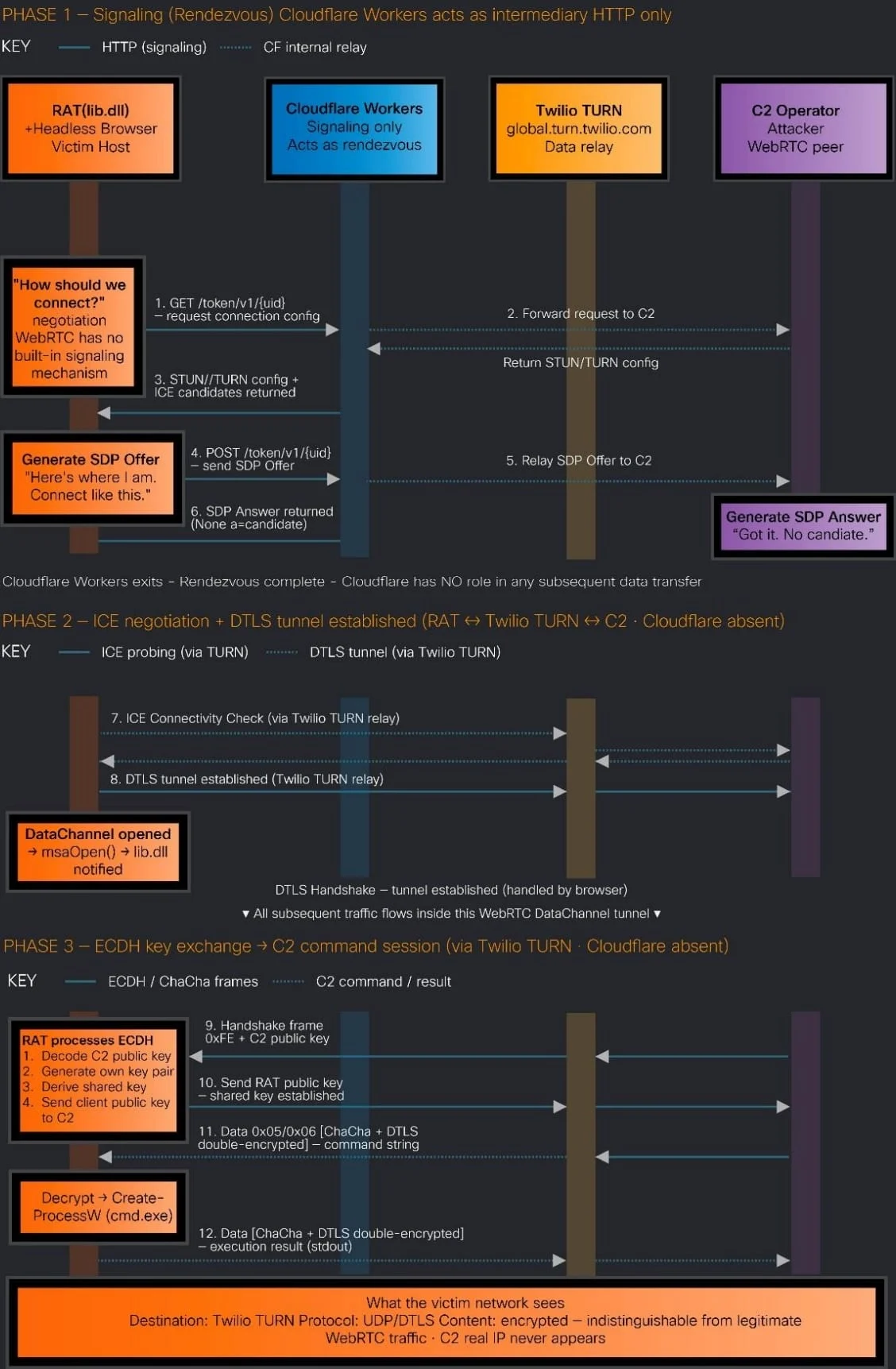
A newly identified remote access Trojan (RAT), dubbed msaRAT, is being leveraged by the Chaos ransomware syndicate to establish highly evasive command-and-control (C2) channels by ingeniously routing communications through standard web browsers such as Chrome and Microsoft Edge. This innovative approach significantly complicates detection efforts, as malicious traffic is seamlessly integrated into legitimate web activity, circumventing many traditional network security defenses.
The Evolving Landscape of Evasive C2 Communications
The threat landscape continually evolves, with adversaries developing increasingly sophisticated methods to maintain persistence and evade detection. The emergence of msaRAT marks a significant shift, showcasing a new frontier in stealthy C2 operations. This malware, engineered in the Rust programming language, distinguishes itself by abstaining from direct network connections to its C2 infrastructure. Instead, it weaponizes widely used web browsers, turning them into proxies for its illicit communications. By exploiting the Chrome DevTools Protocol (CDP), msaRAT effectively transforms a victim’s browser into an intermediary, allowing it to control a headless browser session and establish a connection to the attacker’s server without triggering conventional network security alerts. This technique blurs the lines between benign web traffic and malicious data exfiltration, presenting substantial challenges for incident responders and network defenders.
Technical Ingenuity: Abusing Browser Functionality

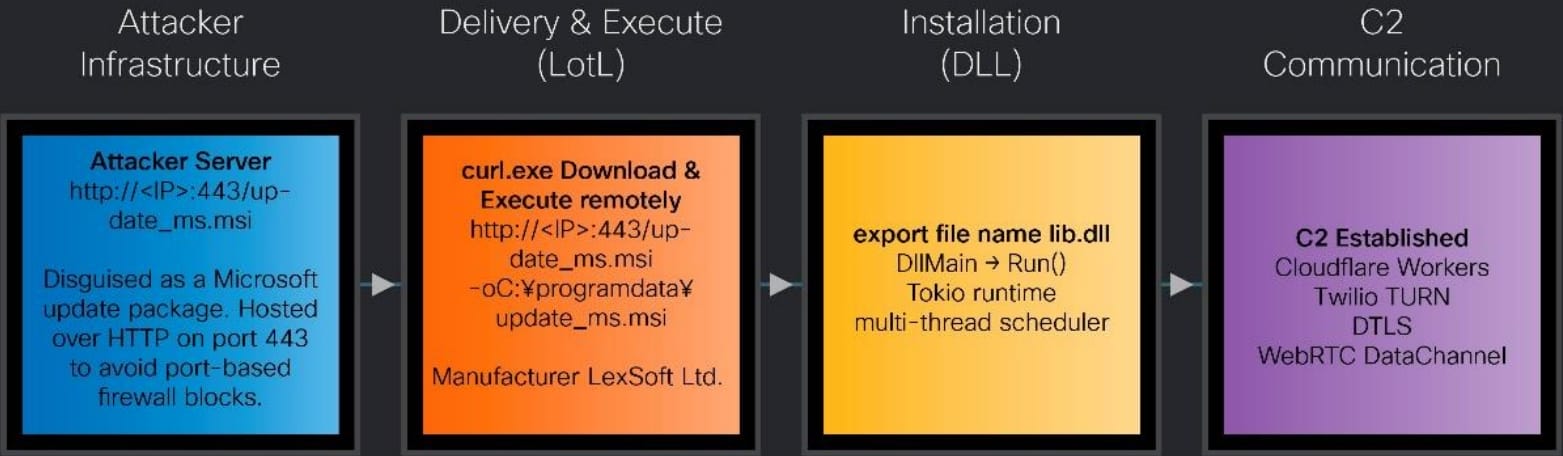
The operational mechanics of msaRAT reveal a meticulous design focused on stealth and resilience. The infection chain typically commences through common vectors such as targeted email phishing or voice phishing campaigns. Upon successful initial compromise, attackers often deploy remote management software to establish initial persistence within the victim’s environment. Subsequently, an MSI installer, cleverly disguised as a routine Windows update, is downloaded and executed. This installer then loads msaRAT, often as a dynamic-link library (lib.dll), directly into system memory, a technique known as "fileless" or "living off the land," which further complicates detection by avoiding disk-based indicators.
Once active, msaRAT initiates its browser-hijacking routine. It first identifies and launches either Google Chrome or Microsoft Edge in "headless mode." In this state, the browser operates without a visible graphical user interface, running silently in the background. The malware then enables the browser’s remote debugging interface and establishes a connection using CDP. This powerful protocol, typically used by developers for debugging web applications, grants msaRAT comprehensive control over the browser’s functions.
Following the CDP connection, msaRAT opens a new, invisible browser tab. Within this tab, it injects custom JavaScript code via CDP commands. This injected script is pivotal; it is responsible for constructing the secure communication channel, bypassing any existing Content Security Policies (CSPs) that might otherwise restrict its actions, and registering several CDP bindings necessary for subsequent communications.
Multi-Layered Obfuscation and Encryption

The communication channel established by msaRAT is a testament to its advanced evasion capabilities. Once the initial setup is complete, the compromised browser contacts a Cloudflare Workers endpoint (e.g., is-01-ast[.]ols-img-12[.]workers[.]dev) to retrieve WebRTC connection information. WebRTC (Web Real-Time Communication) is an open-source project that enables real-time communication capabilities in web browsers. By leveraging WebRTC, msaRAT can establish an encrypted channel that benefits from two distinct layers of encryption. The first layer is the WebRTC Datagram Transport Layer Security (DTLS), which is automatically provided by the browser as part of the WebRTC standard. The second, more robust layer is implemented by msaRAT itself, utilizing ChaCha20-Poly1305 for symmetric encryption combined with Elliptic Curve Diffie-Hellman (ECDH) for key exchange. This dual-layered encryption significantly enhances the confidentiality and integrity of the C2 traffic, making it exceedingly difficult for security analysts to decrypt and understand the content of the communications.
Furthermore, the data relay mechanism is designed to obscure the attacker’s true origin. Communication is routed through Twilio TURN (Traversal Using Relays around NAT) servers. TURN servers are legitimate services designed to facilitate peer-to-peer communications, especially when direct connections are hindered by network address translation (NAT) or firewalls. msaRAT exploits this legitimate service with a specific configuration: it intentionally omits the Interactive Connectivity Establishment (ICE) candidates that are typically present in standard WebRTC communications. This deliberate omission prevents direct peer-to-peer connections from being established, forcing all communications to be routed exclusively through the Twilio TURN servers.
This strategic maneuver ensures that the real IP address of the attacker’s C2 server never appears in the network traffic observed by the victim’s organization. By routing traffic through Twilio’s legitimate, high-volume service, combined with the Cloudflare Workers endpoint for signaling, msaRAT creates an infrastructure that is exceptionally difficult to trace back to its origin. The Cloudflare Workers endpoint acts as a critical signaling relay, further insulating the attacker’s infrastructure. Since the destination IP address for these signaling requests is assigned to Cloudflare’s vast network, it will readily pass firewall and allowlist automatic verification, blending seamlessly with legitimate Cloudflare-hosted services. Moreover, Cloudflare’s *.workers.dev free subdomain, widely used by developers, presents a dilemma for network administrators; blocking it outright would disrupt numerous benign services, making it an impractical defensive measure.
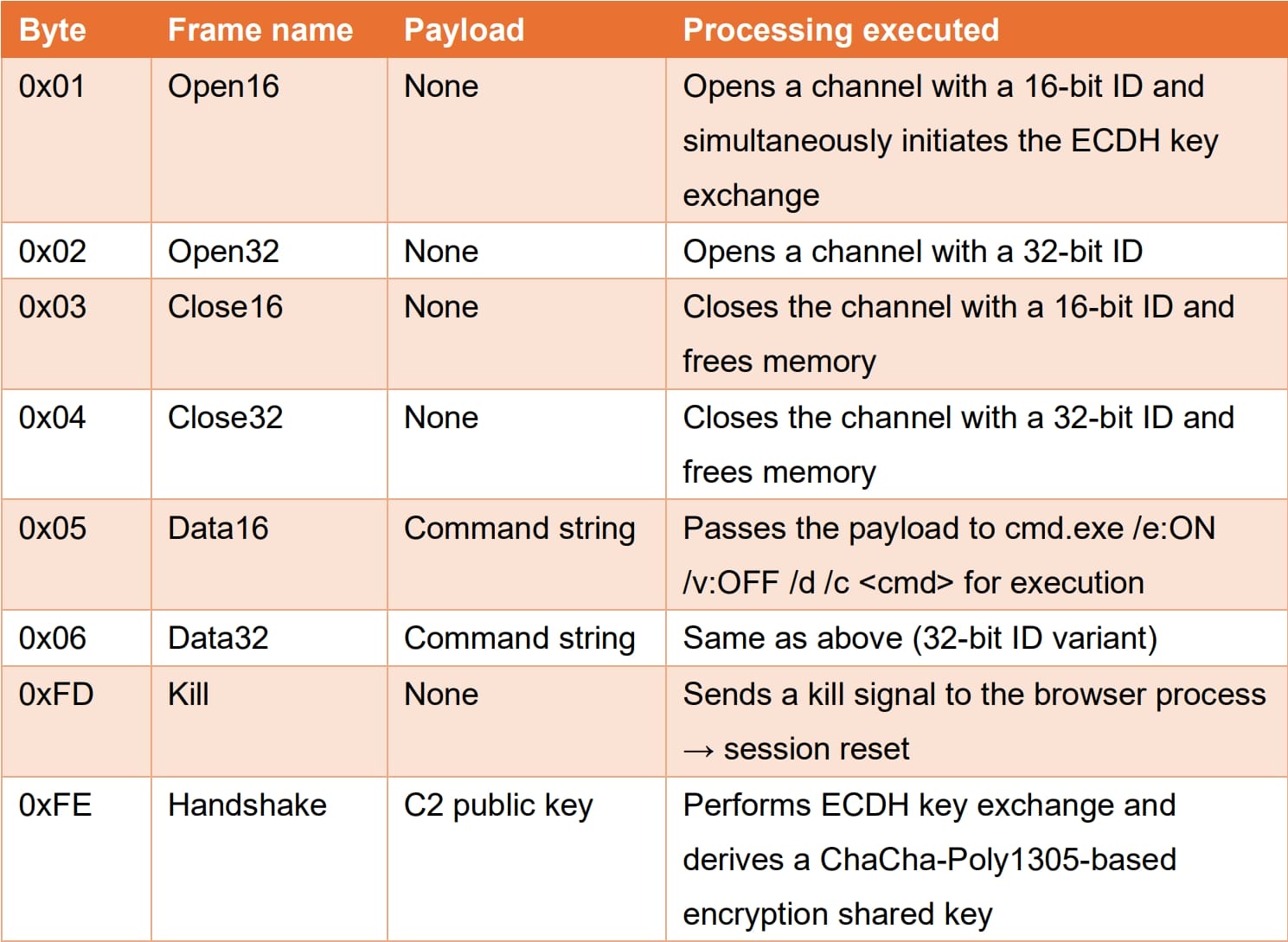
Data exchange between msaRAT and its C2 is meticulously structured into "frames." These frames encapsulate various command types, including key exchanges, channel opening and closing requests, session resets, and critically, commands for executing arbitrary Windows commands on the compromised system. This granular control allows the threat actors to maintain a flexible and potent foothold within the victim’s environment, capable of further reconnaissance, data exfiltration, or deploying additional malicious payloads.
Attribution and Broader Threat Context
The msaRAT backdoor is attributed to the Chaos ransomware group, a relatively recent entrant to the cybercrime landscape, emerging in early 2025. It is important to distinguish this iteration of Chaos from an earlier ransomware family bearing the same name that existed since 2021, as they are unrelated in their operational infrastructure and tactics.
The activities of the Chaos ransomware group have drawn the attention of multiple cybersecurity research entities. Earlier analyses by Rapid7 researchers revealed a particularly concerning trend: Chaos ransomware was leveraged by Iranian state-backed hackers, notably the "MuddyWater" group, as a deceptive front. In these instances, what appeared to be financially motivated ransomware attacks were, in fact, sophisticated cyber-espionage operations. This tactic of using common cybercrime tools as a smokescreen allows state-sponsored actors to obfuscate their true intent and origin, making attribution more challenging and potentially misdirecting defensive efforts. The deployment of msaRAT by Chaos further underscores the group’s evolving sophistication and its potential ties to or collaboration with more advanced persistent threat (APT) actors. This blurring of lines between state-sponsored and financially motivated threats represents a growing challenge for the cybersecurity community, requiring a more nuanced understanding of adversary motivations and capabilities.
Implications for Cybersecurity and Detection Challenges
The deployment of msaRAT presents significant challenges for conventional cybersecurity defenses. Traditional network security appliances, such as firewalls and intrusion detection/prevention systems (IDS/IPS), are primarily designed to identify and block suspicious traffic patterns, known malicious IP addresses, or unusual protocol usage. However, msaRAT’s technique of encapsulating C2 traffic within legitimate browser processes and routing it through trusted, high-volume services like Cloudflare and Twilio renders many of these traditional defenses ineffective. The traffic appears as regular web browsing activity, making it exceedingly difficult to differentiate malicious C2 from benign user interaction.
Endpoint Detection and Response (EDR) solutions, while more granular, also face hurdles. While EDRs can monitor process activity, the execution of browser processes, even in headless mode, is inherently legitimate. Detecting the subtle anomalies of a browser being controlled by CDP for malicious purposes, especially when the injected JavaScript and the resulting WebRTC traffic are encrypted, requires highly sophisticated behavioral analysis capabilities. IP-based blocking and DNS filtering, often effective against known malicious infrastructure, are largely circumvented because the C2 communication pathways leverage legitimate service provider IP addresses and widely used subdomains.
Adaptive Defensive Strategies and Future Outlook
To effectively counter threats like msaRAT, organizations must adopt a multi-layered and adaptive security posture. Key defensive strategies include:
- Enhanced Endpoint Monitoring and Behavioral Analytics: Moving beyond signature-based detection, security teams need advanced EDR and Extended Detection and Response (XDR) solutions capable of monitoring process integrity, detecting unusual browser activity (e.g., headless browser launches without user interaction, unexpected CDP connections), and analyzing deviations from normal browser behavior.
- Deep Packet Inspection (DPI) with SSL/TLS Decryption: While challenging due to privacy and performance implications, organizations with the capability to perform SSL/TLS decryption can gain visibility into encrypted traffic, potentially identifying anomalies within WebRTC streams or injected JavaScript.
- Threat Intelligence Integration: Rapid integration of Indicators of Compromise (IoCs) shared by research entities, such as those provided by Cisco Talos for msaRAT, is crucial for timely detection and blocking.
- Application Control and Whitelisting: Strict controls on the execution of unauthorized software, particularly remote management tools and MSI installers from unverified sources, can prevent initial compromise and payload delivery.
- User Awareness Training: Continuous and effective training against phishing and social engineering tactics remains a fundamental defense, as initial compromise often relies on human interaction.
- Network Segmentation and Zero Trust Principles: Segmenting networks and implementing zero-trust access models can limit the lateral movement of malware even if an initial compromise occurs, restricting its ability to communicate with C2.
- Proactive Threat Hunting: Security teams should proactively hunt for unusual CDP activity, particularly on non-developer workstations, and analyze logs for connections to known-abused legitimate services in suspicious contexts.
The emergence of msaRAT underscores a broader trend in cyber warfare: the increasing sophistication of adversaries in leveraging legitimate tools and services to achieve their objectives. This "living off the land" approach makes detection exponentially harder, as malicious activities are camouflaged within the noise of normal enterprise operations. As threat actors continue to innovate, adapting to and weaponizing everyday technologies, the cybersecurity community must respond with equally innovative and adaptive defensive strategies, focusing on behavioral anomalies, comprehensive visibility, and proactive threat intelligence to stay ahead in this perpetual arms race. The battle against malware like msaRAT necessitates a shift from purely reactive, signature-based defenses to a more predictive and intelligence-driven security paradigm.




 Aura Kasih
 Ayu Aulia