Safa Marwah
A recently identified sophisticated remote access trojan, dubbed Dolphin X, is reportedly deploying an innovative artificial intelligence-driven profiling system designed to assess and prioritize compromised systems. This advanced capability aims to streamline the targeting process for malicious actors, enabling them to efficiently discern and exploit the most valuable victims within an infected network. The emergence of Dolphin X marks a significant evolution in the cyber threat landscape, signaling a shift towards more intelligent, automated, and strategically focused post-compromise operations.
The advent of Dolphin X underscores a growing trend within the cybercriminal underworld: the integration of artificial intelligence not merely for initial attack vectors, but for the optimization of exploitation following a successful breach. Historically, threat actors faced the arduous task of manually sifting through vast quantities of exfiltrated data to identify high-value assets. This labor-intensive process often limited the efficiency and scalability of their operations. Dolphin X’s innovative approach seeks to mitigate this challenge, providing an automated intelligence layer that transforms raw stolen data into actionable insights for targeted exploitation.
The Genesis of Dolphin X and its Market Presence
The discovery and initial analysis of Dolphin X were conducted by Daniel Kelley, a researcher at Varonis Threat Labs. His investigation brought to light this new malware, which was actively being advertised and promoted on various illicit cybercrime forums. The vendor, operating under the pseudonym "Kontraktnik," marketed Dolphin X as a comprehensive, all-in-one remote access trojan, positioning it as a cutting-edge tool for nefarious activities. This public advertisement within underground communities highlights the perceived value and advanced capabilities that Dolphin X purports to offer its prospective users.
The marketing material and operator panel for Dolphin X boast an extensive suite of functionalities, categorizing them into ten distinct groups and totaling an impressive 329 features. This sheer breadth of advertised capabilities suggests a highly modular and versatile toolkit designed to cater to a wide array of cybercriminal objectives. Among these numerous features, a primary focus appears to be on credential exfiltration, with claims of targeting over 300 different applications. This comprehensive credential-stealing capability forms the foundational data collection layer upon which the more advanced AI profiling system operates.
Unpacking the AI Profiler: A Paradigm Shift in Victim Selection
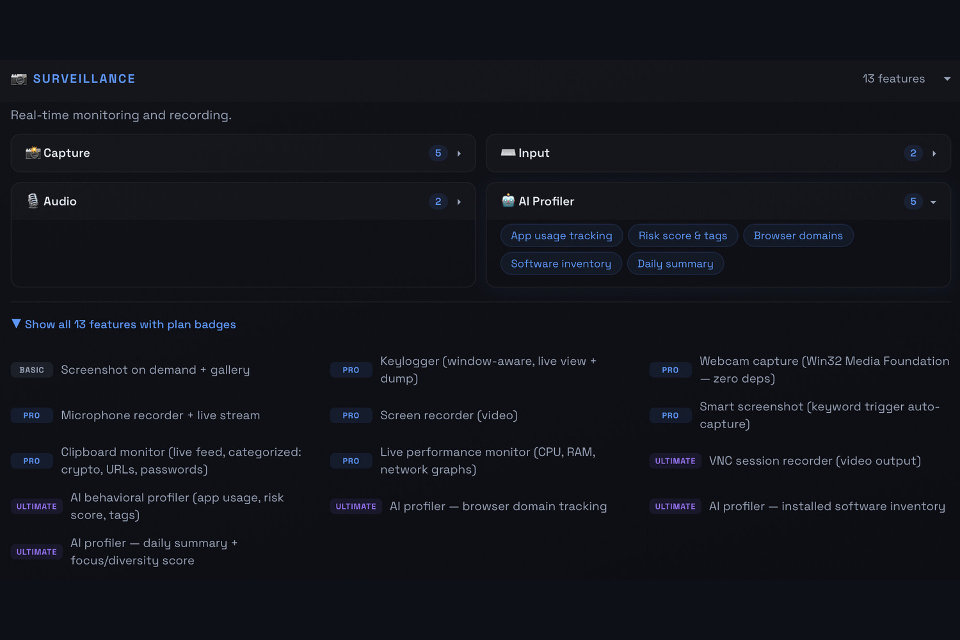
The most distinguishing and arguably most concerning feature of Dolphin X is its integrated "AI Profiler." This component represents a significant strategic enhancement for threat actors, moving beyond brute-force data collection to an intelligent selection process. The AI Profiler is designed to analyze the voluminous data harvested from compromised machines, subsequently assigning each victim a "risk score." This score is not indicative of the victim’s security posture, but rather their potential value to the attacker.

According to the developer’s descriptions within the operator panel, the AI Profiler functions as an "AI behavioral profiler with app usage tracking, risk score, and daily summary." This indicates a sophisticated mechanism that scrutinizes various facets of a compromised system. Specifically, it processes application usage patterns, assigns risk factors and tags, examines browser domains visited, and inventories installed software. By correlating these diverse data points, the system generates ranked profiles of infected machines. This automated triage system allows cybercriminals to quickly identify and prioritize machines that are most likely to yield access to valuable accounts, cryptocurrency holdings, corporate network infrastructure, sensitive cloud environments, or critical production systems.
The operational benefit of such a system is profound. In scenarios where a single malware campaign might infect hundreds or even thousands of machines, the manual review of each compromised endpoint for high-value assets is often impractical and time-consuming. The AI Profiler automates this critical step, acting as an intelligent filter that highlights the most lucrative targets. This significantly reduces the overhead for attackers, increasing their efficiency and ultimately, their return on investment from a successful campaign. The daily summaries containing these ranked victim profiles provide threat actors with an almost real-time intelligence feed, enabling agile and strategic decision-making in their post-compromise activities.
Technical Insights and Analytical Confirmation
Varonis Threat Labs undertook a meticulous analysis of Dolphin X, focusing primarily on its operator panel, malware builder, and associated network traffic. It is crucial to note that the researchers deliberately avoided executing a live Dolphin X agent on an infected computer during this phase of their investigation. This methodological choice, while limiting full dynamic analysis, allowed them to confirm the existence and described functionality of the AI Profiler directly from the malware’s control infrastructure.
Researcher Daniel Kelley confirmed the explicit presence of the AI Profiler within the operator panel. Furthermore, his analysis uncovered specific technical strings embedded within the malware’s components that directly support the profiling workflow. These strings include "Auto-Start AI Profiler," "ProfilerStart," "ProfilerGetData," "risk_score," "risk_factors," and "categoryusage." The identification of these internal commands and data parameters provides strong evidence that the profiling mechanism is not merely a marketing claim but an integral, functional component of the Dolphin X platform, capable of processing the necessary data to rank victims.
However, the precise artificial intelligence engine or algorithms employed by Dolphin X to generate these rankings could not be definitively identified without a full dynamic analysis of a live malware sample executing within a controlled environment. While the existence of the profiling workflow and its data processing capabilities are confirmed, the specifics of its underlying AI architecture remain a subject for further investigation. This distinction highlights the challenges in fully understanding novel malware capabilities when access to live samples is restricted.

Beyond Profiling: Dolphin X’s Extensive Data Exfiltration Capabilities
While the AI Profiler stands out as Dolphin X’s signature feature, the malware also functions as an exceptionally potent credential stealer, capable of siphoning a vast array of sensitive information. The operator panel meticulously details its extensive targeting capabilities, which include:
- Browser Data: Information from at least nine different Chromium and Gecko-based web browsers. This typically encompasses saved passwords, browsing history, cookies, and autofill data.
- Cryptocurrency Assets: A staggering 100 cryptocurrency wallet extensions and 65 distinct desktop cryptocurrency wallets are listed as targets, indicating a significant focus on digital currency theft.
- Password Managers: Credentials from at least ten popular password manager applications, which could provide attackers with access to a victim’s entire digital footprint.
- Cloud Tools and Developer Credentials: Over 30 cloud command-line tools,
.envfiles, SSH keys, cloud access tokens, and various other developer credentials. This capability suggests a deliberate targeting of developers, system administrators, and organizations with cloud infrastructure, aiming for broader network infiltration and data exfiltration.
The comprehensive nature of these exfiltration capabilities, coupled with the AI Profiler, transforms Dolphin X into a highly efficient and potent tool for financial gain, intellectual property theft, or further network penetration. The advertised breadth of data collection underscores the potential for severe and wide-ranging compromise across various digital domains. It is important to reiterate that, as Varonis’s analysis focused on the operator panel and builder rather than a live sample, these specific collection claims have not been independently confirmed through active malware execution. However, the sophistication of the overall platform suggests a high likelihood of these features being implemented.
The Broader Implications of AI in Cybercrime
The emergence of Dolphin X is not an isolated incident but rather a clear indicator of a broader trend: the increasing adoption of artificial intelligence and machine learning technologies by threat actors. This integration is reshaping the landscape of cybercrime, moving beyond rudimentary attacks to more sophisticated, automated, and targeted operations.
Previously, AI applications in cybercrime were observed in areas such as "SpamGPT," where large language models were leveraged to craft highly convincing phishing emails, improving the success rates of social engineering campaigns. Another notable example includes AI agents capable of conducting autonomous cyberattacks, as seen with ransomware variants like JadePuffer, which utilized AI to automate various stages of an attack lifecycle.
Dolphin X, however, represents a distinct application of AI. Instead of generating attack content or automating attack execution, its AI component solves a critical operational challenge: post-compromise data analysis and victim prioritization. By automating the sifting and ranking of vast amounts of stolen data, Dolphin X empowers threat actors to operate with unparalleled efficiency. This shift means that attackers can dedicate less time to manual reconnaissance and more time to exploiting the most valuable targets, thereby maximizing their impact and profitability. This strategic application of AI transforms the economics of cybercrime, making large-scale, high-value exploitation more feasible for a wider range of malicious actors.
Future Outlook and Defensive Strategies
The development of malware like Dolphin X signals a pivotal moment in cybersecurity. The integration of AI into the core functionality of remote access Trojans and other malicious tools suggests a future where cyberattacks are not only more frequent but also significantly more intelligent and adaptable. This evolution necessitates a corresponding advancement in defensive strategies.
Organizations must recognize that the traditional "perimeter defense" model is increasingly insufficient. The focus must shift towards robust, multi-layered security architectures that emphasize proactive threat intelligence, continuous monitoring, and rapid response capabilities. Key defensive measures include:
- Enhanced Endpoint Detection and Response (EDR): Advanced EDR solutions capable of detecting anomalous behaviors and identifying indicators of compromise associated with sophisticated malware like Dolphin X.
- Robust Identity and Access Management (IAM): Implementing strong multi-factor authentication (MFA) across all critical systems and applications to mitigate the impact of stolen credentials. Regular review of access privileges is also essential.
- Security Awareness Training: Continuous and updated training for employees to recognize phishing attempts, social engineering tactics, and the dangers of downloading suspicious files, which are common initial vectors for RATs.
- Proactive Threat Intelligence: Subscribing to and actively utilizing threat intelligence feeds to stay abreast of emerging malware trends, attack methodologies, and indicators of compromise (IoCs) related to threats like Dolphin X.
- Network Segmentation: Implementing strict network segmentation to limit lateral movement within an organization’s infrastructure, thereby containing the impact of a breach.
- Data Loss Prevention (DLP): Deploying DLP solutions to monitor and prevent the exfiltration of sensitive data, even if a system has been compromised.
- Continuous Monitoring and Auditing: Implementing comprehensive logging and monitoring solutions to detect unusual network traffic, unauthorized access attempts, and suspicious system activities that could indicate an active infection.
- "Assume Breach" Mentality: Adopting a cybersecurity posture that anticipates potential breaches and focuses on rapid detection, containment, and recovery strategies to minimize damage.
In conclusion, Dolphin X represents a benchmark in the evolving landscape of cyber threats, showcasing how artificial intelligence is being weaponized to optimize post-compromise exploitation. Its AI Profiler significantly enhances the efficiency and strategic effectiveness of threat actors, moving them beyond manual data sifting to intelligent, automated victim prioritization. As cybercriminals continue to leverage advanced technologies, the imperative for organizations to invest in sophisticated defensive mechanisms and maintain an adaptive security posture has never been more critical. The arms race between offensive and defensive AI in cybersecurity is clearly accelerating, demanding constant vigilance and innovation from all stakeholders.




 Aura Kasih
 Ayu Aulia