Ayu Aulia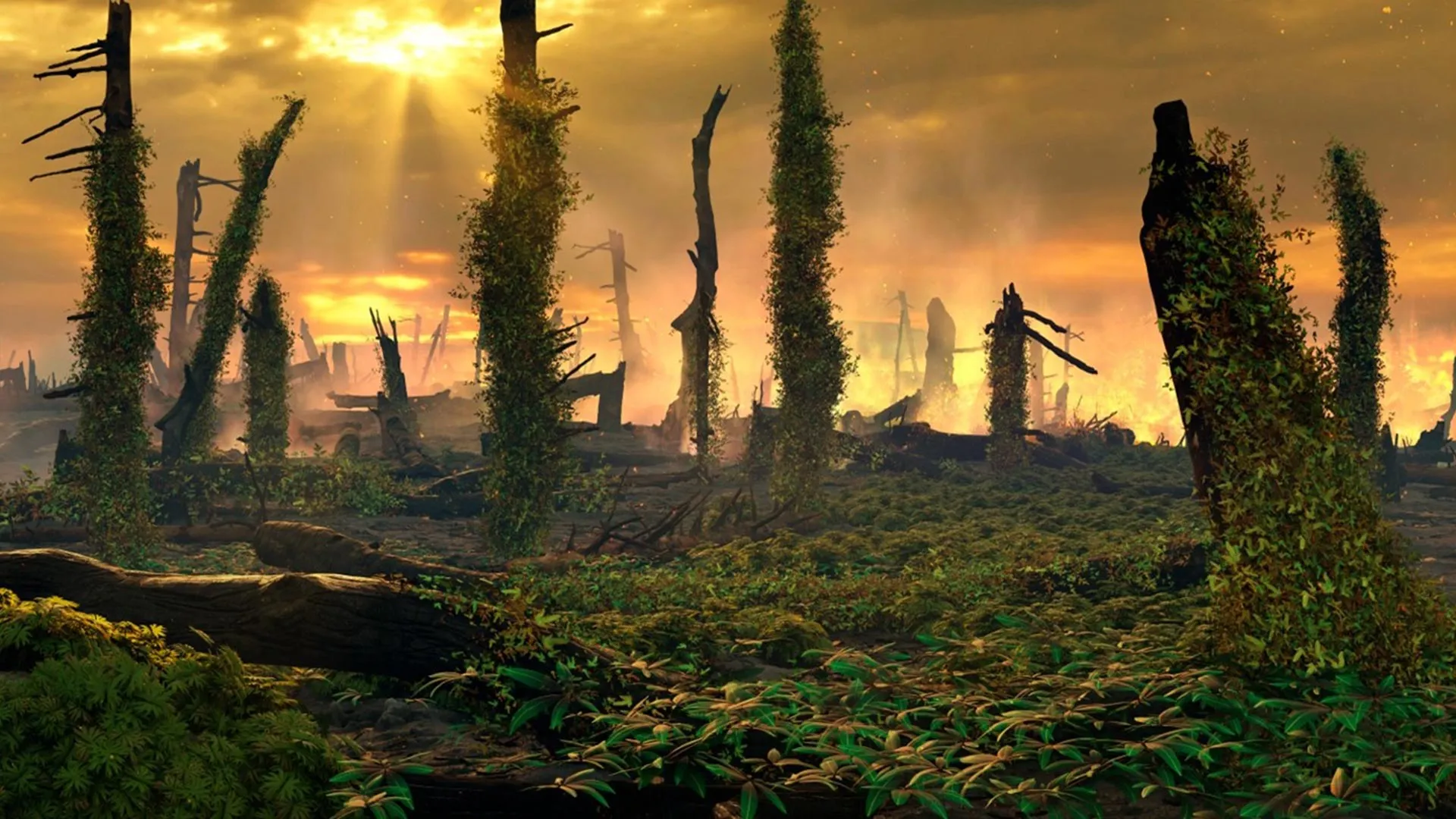
A groundbreaking paleoclimatological investigation reveals that colossal volcanic eruptions approximately 201 million years ago, which initiated the End-Triassic mass extinction, not only triggered profound global warming but also set the stage for widespread, persistent wildfires across ancient Northwest Europe, exacerbated by the proliferation of resilient fern ecosystems. This extensive analysis, spearheaded by researchers from Utrecht University, demonstrates that as global temperatures soared by an estimated 5 to 10 degrees Celsius, forest biomes collapsed, giving way to vast fern-dominated landscapes that paradoxically became both a consequence of environmental collapse and a potent fuel source for an unprecedented period of infernal conflagrations.
The End-Triassic mass extinction represents one of the five most severe biotic crises in Earth’s history, marking a pivotal transition in life’s evolution. This cataclysmic event is intricately linked to the voluminous outpouring of flood basalts associated with the Central Atlantic Magmatic Province (CAMP) – a colossal igneous province formed during the initial rifting and breakup of the supercontinent Pangea. The sustained volcanic activity liberated immense quantities of carbon dioxide (CO2) and other greenhouse gases into the atmosphere, triggering a rapid and intense period of global warming. This dramatic climatic shift profoundly impacted terrestrial ecosystems, leading to the demise of numerous plant and animal species and fundamentally reshaping the planet’s biosphere.
In the wake of this ecological upheaval, where established arboreal forests struggled and ultimately succumbed to the altered conditions, a distinct shift in vegetation dominance occurred. Resilient fern species, known for their opportunistic and adaptive nature, rapidly colonized the denuded landscapes across what is now Northwest Europe. These pioneering plants formed extensive, savannah-like environments, transforming the continental interior into vast expanses of fern monocultures. The new research, published in Nature Geoscience, posits that these newly established fern ecosystems were exceptionally susceptible to fire, and, critically, the ferns themselves may have provided the critical biomass necessary to sustain these widespread and protracted infernos.
Unraveling Ancient Pyrology: Novel Methodologies for Deep-Time Fire Reconstruction
To meticulously reconstruct the wildfire activity from this remote geological epoch, the international research consortium undertook a comprehensive examination of exceptionally well-preserved sediment cores. The study leveraged data from four distinct drill cores, including a recently acquired 640-meter-long core extracted from the United Kingdom, providing an unparalleled stratigraphic record of the period.
Traditional paleofire indicators, such as fossil charcoal and polycyclic aromatic hydrocarbons (PAHs), were initially employed. Charcoal fragments, the carbonized remains of burnt biomass, offer direct evidence of fire events. PAHs, organic compounds generated during the incomplete combustion of organic matter, can be preserved in sedimentary archives and serve as molecular proxies for past fire activity. When these conventional indicators were analyzed in conjunction with records of fossil pollen and spores, they revealed a pronounced escalation in wildfire activity precisely coinciding with the main phase of the extinction event and, crucially, with the dramatic expansion of fern populations.
However, the interpretation of these traditional proxies is not without inherent limitations, which the researchers carefully addressed. Large charcoal pieces are prone to fragmentation during transport and burial, potentially leading to an overestimation of fire frequency or intensity. PAHs, being airborne compounds, can be transported significant distances from their source fires before deposition, blurring spatial resolution. Furthermore, the long-term diagenetic processes within the geological record can degrade certain PAH molecules, compromising their fidelity as a quantitative fire proxy. Recognizing these challenges, the research team innovated a novel, complementary methodology to track fire activity in deep time, enhancing the robustness of their findings.
"The true novelty of this study stemmed from our analysis of subtle color changes in organic microfossils," explained Dr. Bas van de Schootbrugge from Utrecht University, a senior author of the pivotal paper. "We developed a simple, yet highly effective and low-cost technique that quantifies the ‘darkness’ of fossilized pollen and spores, which we termed the Palynomorph Darkness Index (PDI)."
The Palynomorph Darkness Index: A Window into Ancient Heat Exposure
The fundamental principle underlying the Palynomorph Darkness Index relies on the diagenetic alteration of organic matter. As sediments are buried deeper within the Earth’s crust, they are subjected to increasing pressure and temperature. This geothermic maturation process typically causes organic microfossils, such as pollen and spores, to progressively darken due to carbonization and aromatization of their constituent organic compounds. In most geological contexts, therefore, greater burial depth correlates directly with darker fossil coloration.
"However, in this specific context, we observed a remarkably anomalous pattern," Van de Schootbrugge elaborated. Intriguingly, the oldest and deepest pollen and spores within the cores retained their relatively light coloration, consistent with typical burial history. Yet, fossils specifically from the End-Triassic extinction interval exhibited a distinct and progressive darkening, eventually reaching an extremely dark brown hue. Strikingly, once the peak extinction period concluded, the coloration of the fossils reverted to their original pale yellow.
This unusual phenomenon initially posed a significant interpretive challenge. "We were quite puzzled by this observation, particularly because it manifested simultaneously across all four cores, despite these four basins experiencing vastly different geological histories," Van de Schootbrugge stated. This synchronous darkening across disparate geological settings effectively ruled out burial depth or localized geological processes as the primary driver of the color change. The widespread, coeval nature of the darkening strongly suggested a pervasive, regional environmental factor at play.
The Palynomorph Darkness Index precisely quantifies this color change by utilizing the RGB (Red, Green, Blue) spectrum. A high-resolution camera integrated with a light microscope captures images of the microfossils. The acquired color information is then converted into an average grayscale value, providing a standardized, objective metric of darkness. This quantitative approach allowed the scientists to rigorously compare samples not only from different stratigraphic layers within a single core but also to conduct cross-basin comparisons of samples retrieved from geographically distinct locations.
The research team performed an astonishing 15,000 individual measurements on pollen and spores derived from plant species that thrived before, during, and after the extinction event. To further validate their hypothesis, they meticulously compared the darkening patterns observed in arboreal tree pollen with those from fern spores. This comparative analysis was crucial in ascertaining whether the darkening was an intrinsic biological characteristic of specific plant groups or an extrinsic environmental effect. "Crucially, all plant groups analyzed exhibited the identical darkening effect, which serves as a powerful indication that it was the result of an external environmental force," Van de Schootbrugge confirmed.
When these comprehensive fossil color change data were meticulously correlated with the established charcoal and PAH levels, the perplexing pattern solidified into a clear and compelling narrative. The distinctive "Dark Zone" identified by the PDI precisely coincided with an extended period of severe and widespread wildfire activity, which, in turn, perfectly overlapped with the pronounced "fern spike." "The darkening perfectly aligns with the fern spike, the principal extinction interval, and elevated concentrations of both charcoal and PAHs," affirmed the lead researcher, establishing the PDI as a robust and independent proxy for ancient wildfire intensity.
The Rise of the "Disaster Species" and the Feedback Loop of Fire
The rapid and widespread proliferation of ferns during the main End-Triassic extinction interval was not a singular phenomenon but rather the culmination of several interconnected ecological and environmental forces. These included extensive deforestation caused by the initial volcanic devastation, widespread soil erosion in the absence of stabilizing tree roots, intense greenhouse warming that favored thermophilic species, and the recurring cycles of wildfires themselves.
"Ferns are truly remarkable and resilient plants, having successfully navigated numerous ecological crises throughout Earth’s long history," Van de Schootbrugge remarked. "Certain species possess an extraordinary capacity to adapt and thrive in some of the most extreme and disturbed environments, rightfully earning them the moniker of ‘true disaster species’."
Many pioneer fern species exhibit an exceptional ability to rapidly colonize damaged ground, particularly where pre-existing vegetation has been obliterated. Fire, paradoxically, can act as a powerful accelerator of this colonization process. While the above-ground fronds of ferns are combustible, many species possess subterranean rhizome systems that are remarkably resistant to fire. This allows them to regrow with astonishing speed post-fire, often outpacing and outcompeting other plant species, thereby expanding their territorial dominance even further.
This inherent resilience and rapid regenerative capacity likely played a critical role in sustaining the fern spike for an extended duration. Researchers estimate that this interval of fern dominance and intensified wildfire activity persisted for at least 40,000 years, and potentially for as long as 300,000 years – an epochal period of environmental instability and recurring infernos.
A Truly Hellish World: Ferns as Fuel and the Perfect Storm Analogy
"When these extensive fern mats dry out, they form a thick, highly combustible biomass that acts as an ideal fuel, readily igniting and sustaining massive wildfires," Van de Schootbrugge explained. The fast-spreading pioneer and weeding ferns created vast, homogeneous fern savannahs, lacking the structural diversity and moisture retention of more complex forest ecosystems. Furthermore, certain fern species, with their erect fronds and dense growth habits, may have acted as "fire ladders," facilitating the vertical and horizontal spread of flames across the landscape, simultaneously smothering and displacing any nascent recovery of other vegetation.
"The ferns were both a direct response to the environmental crisis and, crucially, a prolific supplier of the fuel that fanned the flames, triggering repeated, massive wildfires," Van de Schootbrugge summarized, painting a vivid picture of "a truly hellish world."
The scientific findings illuminate a destructive positive feedback cycle. The initial climate warming and widespread deforestation created expansive, open landscapes ripe for colonization. Ferns, being highly opportunistic and fire-adapted, rapidly filled these ecological niches. These dense fern ecosystems then supplied an abundant, highly flammable biomass, providing the perfect fuel for subsequent wildfires. Following each conflagration, the resilient ferns rapidly regrew from their underground rhizomes, outcompeting other less-adapted species, thus perpetuating and even expanding the fern-dominated, fire-prone landscape.
Implications and Future Outlook
This research significantly enriches our understanding of the complex interplay between climate change, vegetation dynamics, and fire regimes during periods of profound environmental upheaval. It highlights that the direct effects of volcanic outgassing and global warming are not the sole drivers of mass extinction, but that ecosystem responses, such as the proliferation of opportunistic species and the establishment of novel fire-prone landscapes, can act as powerful amplifiers, exacerbating environmental stress and prolonging periods of biotic crisis. The development of the Palynomorph Darkness Index also represents a significant methodological advancement, offering a robust and cost-effective tool for reconstructing paleofire activity in deep time, with potential applications for studying other geological periods and extinction events.
The insights gleaned from this ancient Triassic inferno carry profound relevance for understanding contemporary environmental challenges. "The overarching lesson we can draw from this ancient catastrophe," Van de Schootbrugge concluded, "is that the synergistic combination of rapid climate change, widespread deforestation, and the subsequent spread of opportunistic or invasive species can collectively provide all the ingredients necessary for a ‘perfect storm’ scenario, leading to cascading ecological collapse and prolonged periods of environmental instability." As humanity confronts its own era of accelerating climate change and ecosystem transformation, studying Earth’s deep past offers invaluable cautionary tales and critical frameworks for predicting and mitigating future environmental risks.



 Aura Kasih
 Safa Marwah