Lisa Mariana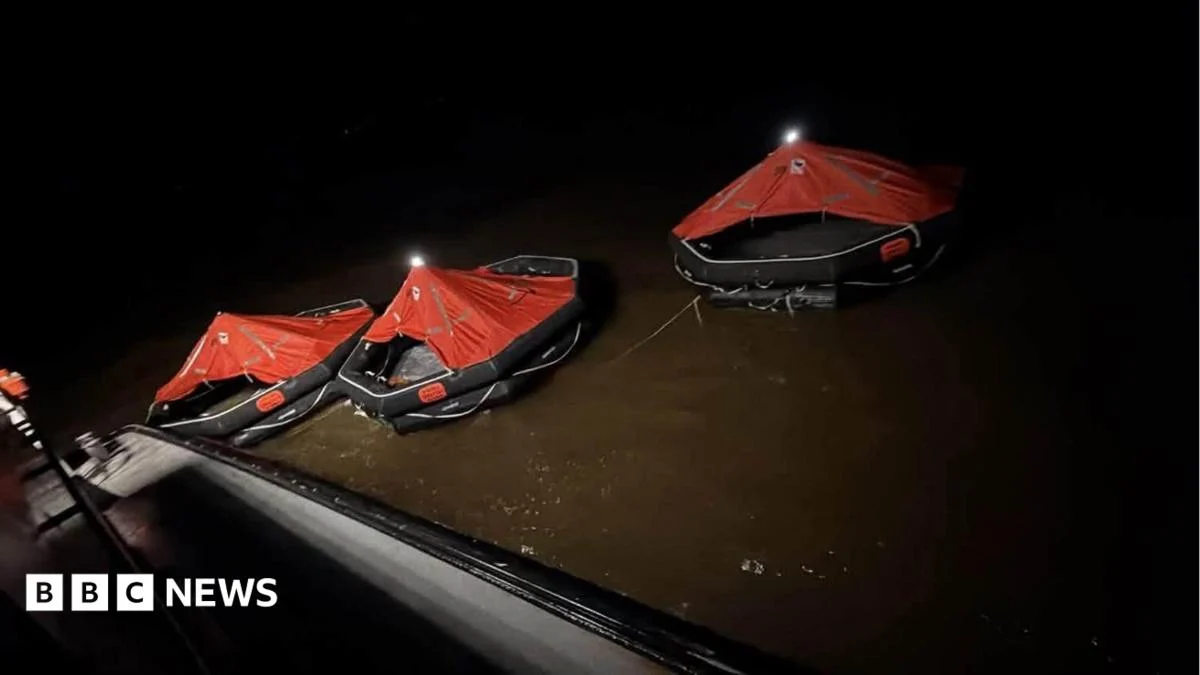
An aged passenger vessel, carrying a manifest of 116 individuals, has tragically foundered off the Guyanese coastline, precipitating an urgent and large-scale maritime emergency response that has, to date, accounted for the rescue of 53 individuals from the waters. The incident, involving the MV Barima, occurred in the vicinity of Iron Punt, a remote stretch along the vessel’s established transit corridor connecting Georgetown, the nation’s capital, with the northwestern mining town of Port Kaituma. The unfolding situation has underscored the inherent vulnerabilities within regional maritime transportation networks and triggered a comprehensive government-led initiative to ascertain the fate of all aboard.
The distress signal, logged at precisely 23:01 local time, corresponding to 03:01 BST on the subsequent day, initiated a rapid mobilization of assets. This immediate activation of emergency protocols involved a coordinated deployment of both state-operated and privately owned vessels, converging on the reported capsizing location. Public Works Minister Juan Edghill provided initial statements regarding the nascent stages of the rescue operation via official channels, emphasizing the gravity of the unfolding events and the concentrated efforts underway. As the search continues, the precise operational status remains fluid, and official pronouncements have yet to confirm the anticipated prospects for locating and recovering the outstanding passengers. The MV Barima, a venerable vessel constructed in 1939 and measuring approximately 40 meters (131 feet) in length, was documented to be equipped with a comprehensive array of life-saving apparatus, including 250 life jackets, two rigid life crafts, and six inflatable life rafts, resources now critical to the survival of those immersed in the maritime environment. The nation’s Prime Minister, Mark Phillips, has assumed direct oversight of the government’s multi-faceted response, signaling the highest level of executive attention to this significant national calamity.
This incident casts a stark light on the critical role of maritime transport within Guyana and the broader Caribbean basin, where waterways frequently serve as indispensable arteries for commerce, passenger movement, and access to remote communities. The extensive network of rivers, estuaries, and coastal areas necessitates a robust and reliable ferry system, often comprising vessels of varying ages and operational capabilities. The MV Barima’s advanced age, exceeding eight decades of service, immediately raises questions pertinent to the longevity of maritime infrastructure and the rigorousness of maintenance regimes. While vessels of such vintage can be maintained to high standards, their inherent design, material fatigue, and susceptibility to evolving environmental conditions or unforeseen stressors warrant constant vigilance and potentially higher operational scrutiny. The immediate aftermath of such an event invariably triggers a multifaceted investigation, delving into mechanical integrity, operational procedures, crew competence, and prevailing environmental conditions at the time of the casualty.
The challenges inherent in a nocturnal search and rescue operation in a potentially remote coastal area are substantial. Limited visibility, coupled with the vastness of the maritime environment and the unpredictable nature of currents, significantly complicates the efforts to locate individuals in the water. The coordination required between various governmental agencies—including the Coast Guard, local police, medical services, and civilian volunteer groups—is immense. Furthermore, the psychological impact on both the survivors and the rescue personnel cannot be overstated. Survivors often endure profound trauma, exposure to the elements, and the emotional burden of witnessing loss, while rescuers face the immense pressure of racing against time in perilous conditions. The provision of immediate medical and psychological support for those rescued, as well as for the families awaiting news, becomes an urgent priority.
From an analytical perspective, several potential contributing factors to such a capsizing event typically warrant thorough examination. Firstly, the structural integrity of an aging vessel like the MV Barima is paramount. While routine inspections are mandated, the cumulative effects of decades of service, exposure to corrosive saltwater environments, and continuous operational stress can lead to material fatigue or unforeseen structural weaknesses. Secondly, prevailing weather and sea conditions, even if not immediately categorized as severe, can present significant challenges to older vessels. Sudden squalls, strong currents, or unexpected swells can compromise stability, particularly if the vessel is operating at or near its load capacity. Thirdly, issues related to vessel stability, including potential overloading of passengers or cargo, or improper distribution of weight, are frequent culprits in marine casualties. Adherence to manifest limits and proper stowage procedures are fundamental to maritime safety. Fourthly, human factors, encompassing potential navigation errors, inadequate crew training, or failures in emergency response protocols by the ship’s personnel, often play a role. A comprehensive investigation will meticulously assess each of these domains to establish a definitive cause.
The broader implications of this incident extend beyond the immediate humanitarian crisis. Economically, the disruption of a vital transport link between Georgetown and Port Kaituma will undoubtedly impact trade, supply chains, and the mobility of residents in the region. Port Kaituma, a gateway to Guyana’s interior mining districts, relies heavily on this maritime connection for goods and personnel. The psychological toll on communities that depend on these services, now potentially harboring anxieties about their safety, is also a significant consideration. Reputational damage to Guyana’s maritime administration, if systemic safety deficiencies are identified, could also have long-term repercussions for international perceptions of its regulatory oversight and commitment to safety standards. This incident will almost certainly precipitate an intensive review of national maritime safety policies, including the age limits for commercial vessels, the frequency and stringency of safety inspections, and the efficacy of emergency response mechanisms.
Looking forward, the aftermath of this tragedy will likely catalyze several critical developments. An official board of inquiry will be established, tasked with conducting an exhaustive investigation into the circumstances surrounding the capsizing. This inquiry will delve into all aspects, from the vessel’s maintenance records and certification history to crew qualifications, operational practices, and the environmental conditions at the time of the incident. Its findings will be crucial for informing future policy and regulatory adjustments. Furthermore, there will undoubtedly be calls for accelerated fleet modernization initiatives within Guyana’s public transportation sector. Investing in newer, more technologically advanced vessels equipped with enhanced safety features and navigation systems could significantly mitigate future risks.
The incident also highlights the imperative for continuous improvement in emergency preparedness and response capabilities. This includes not only the availability of search and rescue assets but also the training of personnel, the coordination of multi-agency efforts, and the integration of advanced communication and tracking technologies. Community engagement and public awareness campaigns on maritime safety, including the importance of wearing life jackets and understanding emergency procedures, will also be vital. Guyana, in collaboration with regional and international maritime organizations, may seek expert assistance to enhance its regulatory framework and operational standards. The International Maritime Organization (IMO) and other bodies offer guidelines and technical cooperation programs that can support nations in strengthening their maritime safety regimes.
In conclusion, the capsizing of the MV Barima represents a profound tragedy with far-reaching consequences for Guyana. Beyond the immediate anguish for those affected, it serves as a critical inflection point for re-evaluating and fortifying the nation’s maritime transportation infrastructure and safety protocols. The comprehensive investigation, subsequent policy adjustments, and renewed commitment to safety will be paramount in ensuring the future resilience and security of Guyana’s vital waterways. The nation’s response to this crisis will define its dedication to safeguarding its citizens and ensuring the integrity of its critical transportation lifelines.



 Aura Kasih
 Safa Marwah
 Ayu Aulia