Lisa Mariana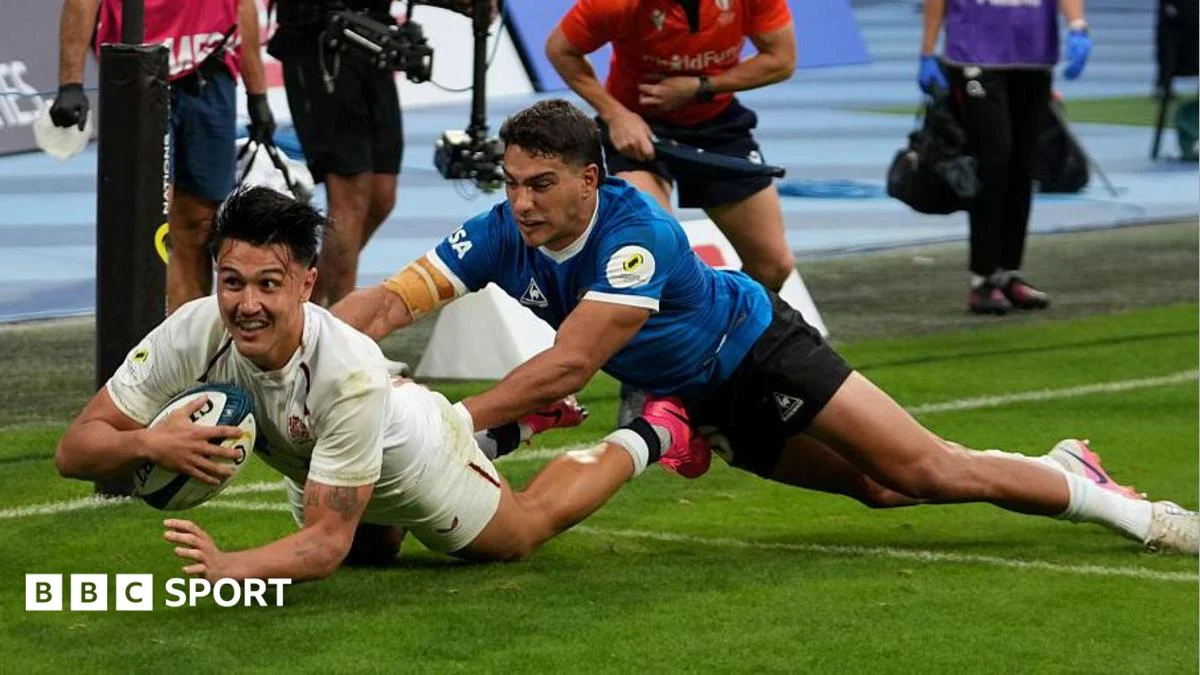
In a highly tumultuous conclusion to their Nations Championship encounter, England secured a narrow 31-24 triumph over Argentina, with a late, potential game-tying try by the Pumas controversially nullified by the Television Match Official (TMO) following a protracted review in Santiago del Estero. The incident marked a dramatic denouement to a fixture characterized by intense physical exchanges, fluctuating momentum, and an unprecedented number of disciplinary sanctions, ultimately leaving the home side, and their fervent supporters, in a state of profound frustration.
The third round of the Nations Championship delivered a spectacle of raw rugby, albeit one marred by a contentious officiating decision that will undoubtedly fuel debate across the global rugby landscape. England, under the stewardship of Head Coach Steve Borthwick, weathered a storm of their own making, navigating periods with a significant numerical disadvantage due to multiple yellow cards, to clinch a crucial away win. The victory, however, was overshadowed by the decisive intervention of the TMO, Brett Cronan, who overruled referee Angus Gardner’s on-field try award to Argentina’s Bautista Delguy in the dying seconds, deeming the winger to have been in touch. This pivotal moment, occurring as England led by a solitary score, prevented Argentina from attempting a conversion that could have secured an improbable draw, leaving the Pumas to rue what they perceived as an unjust outcome.
Contextualising the Encounter: Stakes and Trajectories
The Nations Championship, designed to inject renewed competition and structure into the international rugby calendar, provided a significant platform for both nations. For England, this summer series, following a challenging Six Nations campaign that yielded their worst performance since the tournament’s expansion in 2000, was critical for validating Borthwick’s long-term vision and demonstrating tangible progress. A demanding tour schedule, including an expectedly tough defeat against reigning world champions South Africa at Ellis Park, placed immense pressure on the squad to deliver positive results against Fiji and Argentina. The Pumas, playing on home soil, sought to assert their dominance and build momentum within the new championship format, leveraging the passionate support of their Santiago del Estero faithful. The unique decision by Argentina to don replica jerseys of their national football team’s iconic 1986 World Cup kit added a layer of cultural significance and national pride to the contest, further elevating the emotional intensity of the occasion.
A Match of Shifting Fortunes and Disciplinary Lapses
The initial phase of the match saw England establish a commanding position, exhibiting a clinical edge in attack that belied the chaotic nature that would later define the game. Early tries from Tommy Freeman and a brace from dynamic flanker Ben Earl propelled Borthwick’s side to a substantial 16-point advantage by the half-time whistle, signaling a potential comfortable victory. However, the Pumas, renowned for their resilience and never-say-die attitude, initiated a spirited comeback. Their resurgence was significantly aided by a series of English disciplinary infringements, which saw the visitors reduced to 13 men at various points.
The sheer volume of yellow cards – a staggering seven distributed across both teams – transformed the tactical landscape of the match. While England initially capitalized on Argentina’s own periods of numerical disadvantage, notably Marcus Smith’s try occurring while Joaquin Oviedo was in the sin-bin, their own ill-discipline threatened to unravel their early good work. The consecutive sin-binning of replacements Henry Pollock and Emmanuel Iyogun in the latter stages proved particularly detrimental, creating a period of intense pressure where England found themselves stretched defensively against a resurgent Pumas outfit.
Despite the defensive challenges, England demonstrated moments of individual brilliance. Marcus Smith’s try in the corner, executed with precision and agility, showcased his attacking instincts. Immanuel Feyi-Waboso’s individual effort, cutting through the Pumas’ defense, temporarily silenced the partisan home crowd and provided a vital buffer. Yet, the persistent infringements and subsequent yellow cards meant England could never truly settle into a rhythm, constantly adapting to personnel changes and defensive reorganizations.
The Decisive TMO Intervention: A Point of Contention
The final moments of the game unfolded with breathtaking drama. Justo Piccardo’s late try brought Argentina within striking distance, setting the stage for a frantic, last-gasp assault on the English try line. With time expired and England defending desperately with 13 men, Argentina launched one final, desperate attack. Bautista Delguy received the ball out wide, diving for the corner under immense pressure. Referee Angus Gardner, positioned close to the action, initially awarded the try, believing Delguy had grounded the ball cleanly.
However, the decision was immediately referred to the TMO, Brett Cronan, for review. The subsequent dialogue between Gardner and Cronan, audible to the stadium and television audience, revealed a significant divergence of opinion. Gardner repeatedly expressed his difficulty in finding "clear and obvious" evidence to overturn his on-field call, a fundamental principle of TMO protocols. Yet, Cronan remained insistent, highlighting a specific angle that, in his interpretation, showed Delguy’s foot brushing the touchline before the ball was grounded. After a prolonged and increasingly tense deliberation, Gardner, despite his initial reluctance and stated lack of clear evidence, was ultimately persuaded to reverse his decision, ruling out the try.
This decision ignited a firestorm of protest from the Argentinian players and coaching staff, who surrounded Gardner at full-time, their frustration palpable. The incident reignites perennial debates within rugby regarding the application of TMO protocols, particularly the subjective interpretation of "clear and obvious error." While technology aims to enhance accuracy, such contentious calls often underscore the inherent difficulties in achieving absolute certainty in high-speed, dynamic situations, leaving a lingering sense of injustice for the aggrieved party. Henry Slade’s covering tackle, though ultimately deemed insufficient to prevent the dive, was retrospectively highlighted as a critical defensive effort, with Noah Caluori also contributing to the scramble that just kept the ball from being grounded legally, from the officials’ final viewpoint.
Analytical Deep Dive: Performance and Strategy
From a tactical perspective, England’s ability to secure victory despite the disciplinary challenges speaks to a growing resilience within the squad. The early dominance, particularly the incisive attacking play from the backline and the tireless work of players like Ben Earl, showcased their potential. Earl’s two tries were a testament to his impressive work rate and predatory instincts, embodying the modern openside flanker’s role in both attack and defense. The composure shown by players like Marcus Smith and Finn Smith under pressure, particularly in managing the game during periods of numerical disadvantage, was also noteworthy.
However, the recurring issue of ill-discipline remains a significant concern for Steve Borthwick. Seven yellow cards across two matches (including the South Africa fixture) suggest a pattern that needs addressing. While some infringements might be attributed to the intensity of the contest, others, such as high tackles or repeated team penalties, are areas that must be refined for England to compete consistently at the highest level. The introduction of young talents like Henry Pollock and Emmanuel Iyogun, while providing valuable experience, also highlighted the fine line between aggression and control that emerging players must learn.
For Argentina, the match represented a missed opportunity. Their fightback, fueled by national pride and a relentless attacking spirit, was commendable. Tries from Carreras, a penalty try (indicating English defensive pressure leading to an infringement), and Piccardo demonstrated their offensive capabilities. However, their own disciplinary lapses, though fewer than England’s, also hindered their ability to capitalize fully on England’s vulnerabilities. The Pumas’ strategy of leveraging their powerful forward pack and dynamic back three posed significant problems for England, and their ability to score late tries underscored their dangerous attacking potential. The heartbreak of the TMO decision will undoubtedly be a bitter pill to swallow, but their performance showcased a team capable of challenging the sport’s elite.
Implications and Future Outlook
This victory provides a crucial morale boost for Steve Borthwick and his England squad. After the challenging Six Nations, securing back-to-back wins against Fiji and Argentina, particularly an away triumph in such circumstances, will reinforce belief in the team’s direction. It suggests that Borthwick’s emphasis on developing a robust defensive system and empowering attacking creativity is beginning to bear fruit, even if the disciplinary record requires immediate attention. The Nations Championship fixtures in November will now serve as a further litmus test, building on this summer’s experiences. The integration of newer, younger players alongside established internationals is a clear strategy for England’s long-term development, and their exposure to high-pressure environments like Santiago del Estero is invaluable.
For Argentina, while the immediate sting of defeat will be profound, their performance against a Tier One nation, particularly their spirited comeback and sustained pressure, offers encouragement. The Pumas demonstrated their capacity to compete intensely and entertainingly. The focus for Michael Cheika’s side will be on maintaining their attacking verve while addressing the moments of ill-discipline and ensuring they learn from the fine margins that define top-tier international rugby. The Nations Championship provides multiple opportunities for redemption and progression, and Argentina will be keen to demonstrate that this result was an anomaly rather than a reflection of their true capabilities.
Ultimately, the match between Argentina and England will be remembered for its dramatic, controversial conclusion. While England celebrates a hard-earned victory that signifies progress in their rebuilding phase, the debate surrounding the TMO decision will continue to resonate, underscoring the delicate balance between human judgment and technological intervention in the modern game. As the Nations Championship progresses, both teams will carry the lessons and emotions from this tumultuous encounter into their subsequent fixtures, shaping their respective trajectories in this evolving global competition.




 Aura Kasih
 Safa Marwah
 Ayu Aulia