Ayu Aulia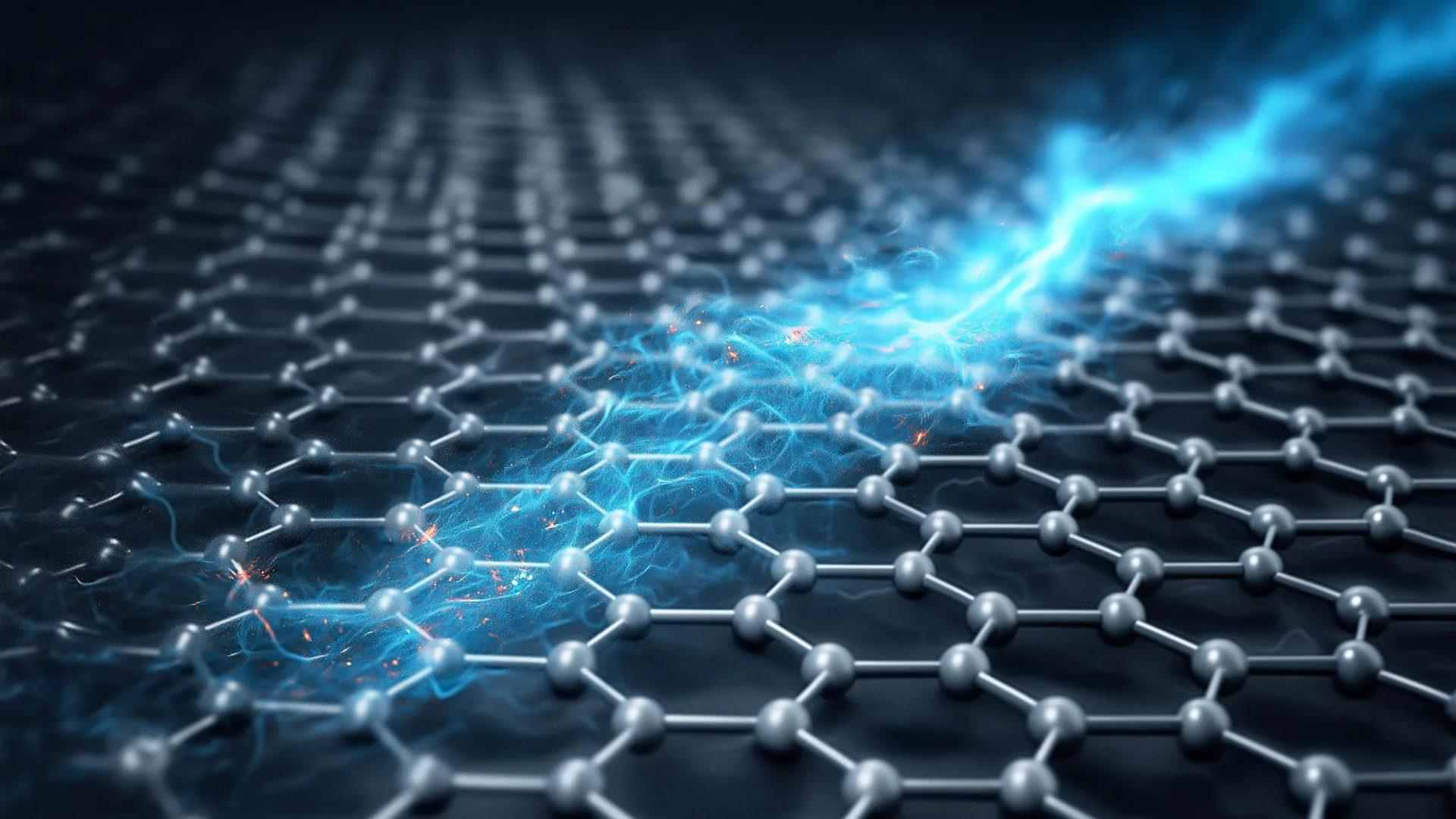
For decades, theoretical physicists have contemplated the existence of an ideal electronic fluid, a state where electrons move with perfect coherence and minimal friction, governed by fundamental quantum principles. This elusive behavior, analogous to the frictionless flow of superconductors or superfluid helium, has remained largely hypothetical in ordinary materials, perpetually obscured by atomic imperfections and thermal disruptions. The challenge of observing such a pristine quantum fluid in real-world systems has been a significant barrier to understanding fundamental electron dynamics. However, recent groundbreaking research has provided compelling evidence for this extraordinary state, not in exotic high-energy environments, but within the readily accessible two-dimensional material, graphene.
A collaborative team of scientists from the Indian Institute of Science (IISc) and the National Institute for Materials Science in Japan has definitively identified this long-sought quantum fluid within precisely engineered samples of graphene. Their findings, published in a leading scientific journal, not only establish graphene as an unparalleled platform for probing advanced quantum phenomena but also open up unprecedented avenues for exploring theoretical concepts previously confined to extreme laboratory conditions or astrophysical models. This discovery marks a pivotal moment in condensed matter physics, demonstrating that even after years of intensive study, graphene continues to yield profound insights into the quantum world.
The Enduring Quest for Perfect Electron Flow
The concept of electrons flowing as a collective, viscous fluid rather than individual particles has captivated physicists for over half a century. In conventional metals, electrons are typically described as an "electron gas," where individual particles scatter off impurities, lattice vibrations (phonons), and each other, leading to electrical resistance. This scattering mechanism underpins the classical understanding of electrical and thermal transport. However, theoretical models, particularly in the realm of strongly correlated electron systems, have long predicted scenarios where electron-electron interactions become dominant, leading to a hydrodynamic regime where electrons behave less like a gas and more like a classical fluid.
Achieving this fluidic state experimentally has been notoriously difficult. The delicate quantum coherence required for such collective behavior is easily destroyed by structural defects, impurities, and thermal noise present in most materials. The challenge lies in creating samples of extraordinary purity and controlling environmental parameters to minimize these disruptive influences, allowing the intrinsic quantum dynamics to emerge. The breakthrough in graphene owes much to the meticulous material science involved in preparing samples clean enough to reveal these subtle effects.
Graphene, a single atomic layer of carbon atoms arranged in a hexagonal lattice, possesses unique electronic properties that make it an ideal candidate for exhibiting exotic quantum states. Its electrons behave as "Dirac fermions," particles that are effectively massless and travel at extremely high velocities, akin to photons. This relativistic-like behavior, coupled with the strong electron-electron interactions inherent in a two-dimensional system, makes graphene a natural laboratory for observing phenomena typically associated with high-energy physics.
Contradicting a Cornerstone of Physics: The Wiedemann-Franz Law
The experimental confirmation of this quantum fluid was achieved by meticulously measuring both the electrical and thermal conductivity of exceptionally pristine graphene samples. The researchers observed a startling phenomenon: as electrical conductivity increased, thermal conductivity decreased, and vice versa. This inverse relationship stands in direct contradiction to the Wiedemann-Franz law, a fundamental principle in solid-state physics that dictates a direct proportionality between electrical and thermal conductivity in metals at a given temperature.
The Wiedemann-Franz law, established in 1853, posits that the ratio of a metal’s thermal conductivity (κ) to its electrical conductivity (σ) is proportional to temperature (T), with the proportionality constant being the Lorentz number (L). This law is a direct consequence of the kinetic theory of electrons, where both heat and charge are primarily carried by the same mobile electrons. The underlying assumption is that the scattering mechanisms that impede charge flow also impede heat flow in a similar manner. Deviations from this law typically indicate more complex transport mechanisms, such as inelastic scattering or the involvement of different types of charge carriers.
The magnitude of the observed deviation in graphene was staggering, exceeding 200 times the expected value at low temperatures. This dramatic decoupling of charge and heat transport unequivocally signals a departure from the conventional electron gas model. It implies that the entities responsible for carrying electrical current are distinct in their behavior from those carrying thermal energy, or that their interactions are fundamentally different from what the Wiedemann-Franz law predicts. This profound violation highlights a breakdown of the classical quasiparticle picture, where electrons are treated as independent entities with well-defined momentum and energy. Instead, it points towards a collective, hydrodynamic flow where energy and charge are transported via highly correlated excitations.
A Universal Quantum Signature
Despite the pronounced divergence from the Wiedemann-Franz law, the observed transport properties were not arbitrary. Both the electrical and thermal conduction exhibited a remarkable adherence to a universal constant. This universality implies that the underlying physics governing these transport phenomena is deeply rooted in fundamental quantum mechanics, rather than being dependent on the specific material parameters or microscopic details of graphene.
This universal constant is intimately linked to the quantum of conductance, a fundamental unit (e²/h, where ‘e’ is the elementary charge and ‘h’ is Planck’s constant) that describes the conductance of a single quantum channel. The appearance of such a universal constant in the context of transport anomalies suggests that the electrons are operating at the very limits of quantum efficiency, where their collective behavior is dictated by the most fundamental constants of nature. This connection provides strong evidence that the observed phenomena are not merely classical anomalies but are manifestations of deeply quantum mechanical processes.
The Emergence of the Dirac Fluid: A Relativistic Electron Plasma
The extraordinary behavior was observed at a specific electron density known as the "Dirac point." In graphene, the Dirac point represents a unique state where the material transitions from being a p-type semiconductor to an n-type semiconductor, effectively behaving like a zero-bandgap semiconductor or a "semimetal." At this critical juncture, electrons and holes merge, and the material’s charge carriers behave as massless Dirac fermions. By precisely tuning the gate voltage, researchers can access this delicate state, where the electron-electron interactions become dominant.
At the Dirac point, individual electrons cease to behave as independent particles. Instead, they coalesce into a collective, liquid-like state, flowing with minimal resistance. This "Dirac fluid" exhibits properties strikingly similar to those of an ideal classical fluid, but with crucial quantum mechanical underpinnings. The term "fluid" here is not merely an analogy; it describes a regime where momentum is conserved through electron-electron collisions, leading to a hydrodynamic transport rather than diffusive transport.
Perhaps the most compelling analogy drawn by the researchers is the comparison of the Dirac fluid to the quark-gluon plasma. The quark-gluon plasma is an exotic state of matter that existed moments after the Big Bang and is momentarily recreated in particle accelerators like CERN. It consists of highly energetic quarks and gluons, the fundamental constituents of protons and neutrons, moving as a nearly perfect, frictionless fluid. The fact that a similar hydrodynamic behavior, characterized by extremely low viscosity, can be observed in a benchtop experiment using graphene is profoundly significant. The measured viscosity of the Dirac fluid was found to be exceptionally low, making it one of the closest experimental realizations of a "perfect fluid" ever observed in condensed matter.
Graphene: A Gateway to Extreme Physics in the Lab
The establishment of graphene as a platform for observing a Dirac fluid carries profound implications for various fields of physics. Traditionally, phenomena linked to extreme environments—such as those found in high-energy particle accelerators, black holes, or the early universe—have been inaccessible for direct laboratory investigation. Graphene now offers an accessible and cost-effective system to simulate and explore these concepts.
For instance, the relativistic nature of electrons in graphene allows researchers to investigate analogues of black-hole thermodynamics, where the material’s properties can mimic the event horizon and other gravitational phenomena. Similarly, the study of entanglement entropy scaling, a measure of quantum entanglement in many-body systems and a critical concept in quantum gravity, can now be probed in a controllable laboratory setting. This capability bridges a significant gap between condensed matter physics and high-energy or astrophysical theories, potentially leading to novel insights into the fundamental laws governing the universe.
Furthermore, this discovery provides an unparalleled opportunity to advance our understanding of strongly correlated electron systems. These systems, where electron-electron interactions play a dominant role, often exhibit exotic phases of matter, including high-temperature superconductivity and quantum criticality, which are still poorly understood. Graphene’s Dirac fluid offers a new lens through which to study the emergent properties of such complex quantum systems.
Future Horizons: Quantum Sensing and Beyond
Beyond its immense scientific importance, the identification of a Dirac fluid in graphene holds considerable promise for practical applications, particularly in the realm of quantum technology. The unique transport properties, characterized by ultra-low dissipation and collective electron flow, could enable the development of highly sensitive quantum sensors.
Such devices could potentially amplify extremely weak electrical signals with unprecedented fidelity, crucial for applications ranging from advanced medical diagnostics to fundamental scientific instrumentation. The ability to detect faint magnetic fields, a hallmark of high-sensitivity magnetometers, could also be dramatically enhanced. This would open doors to new frontiers in precision measurement, enabling technologies that can probe subtle biological processes, detect minute changes in material properties, or even contribute to the development of novel quantum computing architectures.
However, translating these fundamental insights into practical technologies will require overcoming significant engineering challenges. Maintaining the ultra-clean conditions necessary for the Dirac fluid to manifest, operating at the low temperatures where these effects are most pronounced, and scaling up the production of such high-quality graphene devices are crucial hurdles. Nevertheless, the profound implications for both fundamental physics and potential technological innovation ensure that the study of graphene’s Dirac fluid will remain a vibrant and rapidly evolving field for years to come. This breakthrough not only challenges long-held assumptions about electron transport but also firmly positions graphene as a cornerstone material for the next generation of quantum science and engineering.




 Lisa Mariana
 Aura Kasih
 Safa Marwah