Lisa Mariana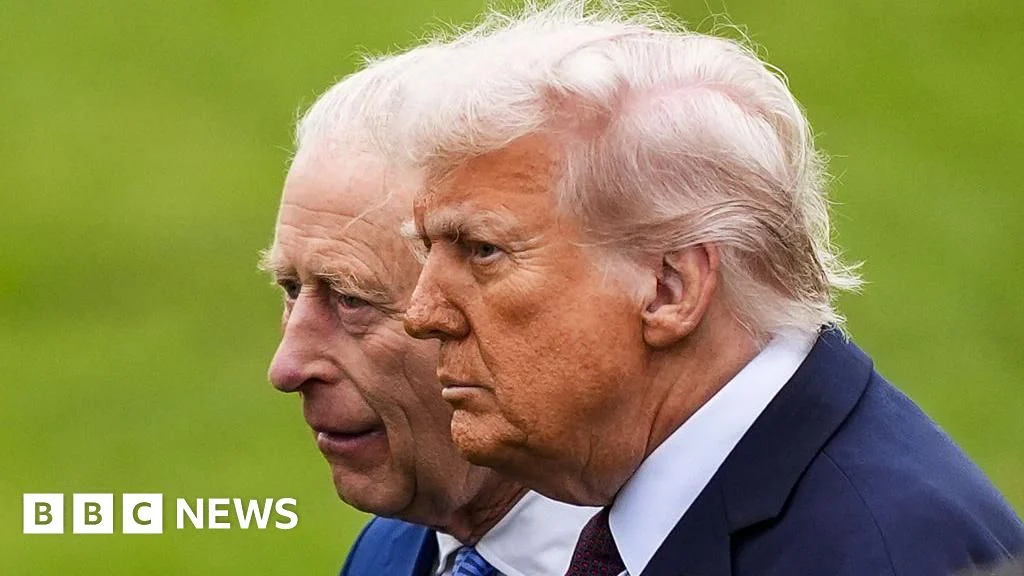
The impending state visit by King Charles III and Queen Camilla to the United States represents a critical juncture for Anglo-American relations, fraught with significant geopolitical complexities and domestic sensitivities, presenting both profound challenges and strategic opportunities for the nascent monarchy. Scheduled for next week, this diplomatic undertaking is widely perceived within royal and political circles as a high-stakes endeavor, transcending the typical ceremonial engagements of a royal tour. Its success, or indeed its missteps, could significantly impact the perception of the King’s reign and the future trajectory of the enduring, albeit currently strained, "special relationship" between the two nations.
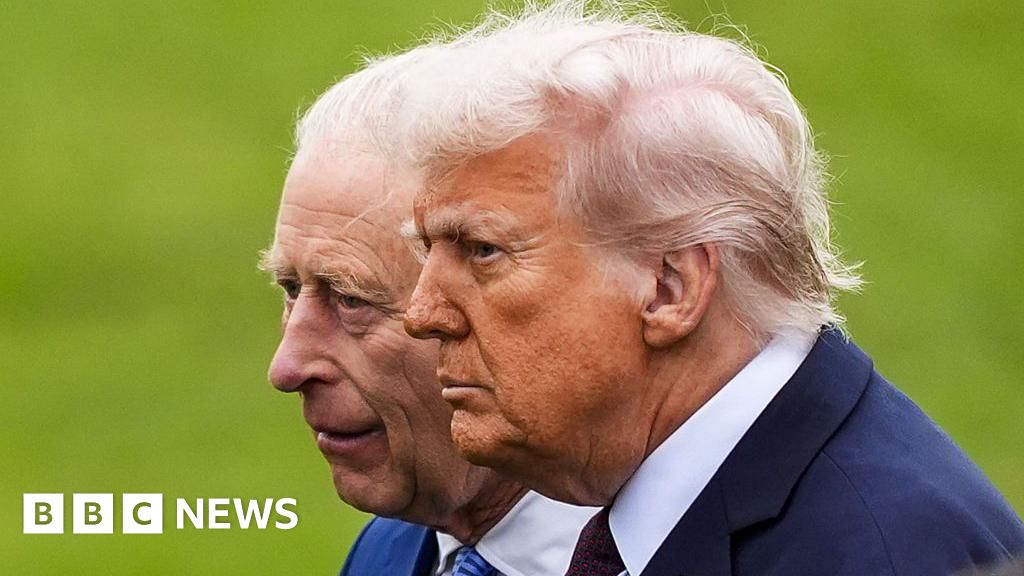
This isn’t merely a series of photo opportunities or cordial exchanges; the visit unfolds against a backdrop of the most profound crisis in Anglo-American diplomatic ties in a century, according to prominent royal biographer Andrew Lownie. At its core lies the formidable challenge of engaging with President Donald Trump, a figure renowned for his unpredictable nature and unconventional approach to international diplomacy. The King, as a symbol of continuity and traditional values, is tasked with navigating this volatile landscape, with some observers suggesting he is uniquely positioned to exert influence over the American leader.
Royal historian Ed Owens underscores the extraordinary political tensions defining this moment, predicting the visit will draw immense global attention. He posits that it offers King Charles a crucial platform to reaffirm and champion the foundational principles of democracy, liberty, and freedom that traditionally underpin Western alliances. Indeed, the confluence of ongoing international conflict, lingering internal scandals, and the contrasting personalities of the two leaders creates a potent mix, setting the stage for what may prove to be the most demanding diplomatic test of King Charles’s nascent reign.
A Volatile Geopolitical Landscape
The visit’s timing is particularly precarious, coinciding with a deeply unstable geopolitical environment. An intense, "ugly conflict" in Iran and the broader Middle East currently holds under a fragile ceasefire, with global powers anxiously monitoring developments. The United Kingdom and the United States, traditionally aligned on matters of international security, have found themselves at odds over various aspects of this and other global crises, contributing to a perceptible weakening of their alliance. This divergence extends beyond the Middle East, encompassing broader concerns about NATO cohesion and the collective Western response to emergent threats.
President Trump’s recent public statements have further exacerbated these tensions. His perceived diminishment of UK armed forces’ contributions, particularly concerning their involvement in Afghanistan, has caused considerable friction. Such remarks, coupled with his previous dismissals of UK naval capabilities as mere "toys," touch a raw nerve, especially given the King’s constitutional role as Head of the British Armed Forces. The political relationship between Washington and London, and indeed between the US and its other NATO allies, is widely regarded as being at an exceptionally low ebb.
The Enigma of President Trump
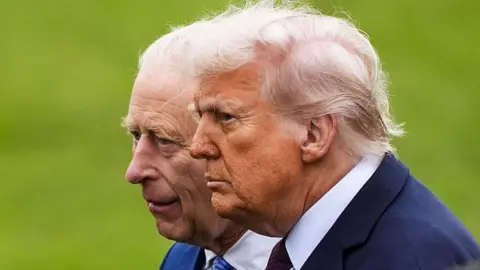
The host president himself presents a unique diplomatic challenge. Donald Trump’s presidency has been characterized by a distinctive, often provocative, communication style that frequently blurs the lines between political rhetoric and personal expression. A recent incident, where the president faced criticism for an AI-generated image depicting him in a biblical robe, casting him in a quasi-religious light, exemplifies this. While he later clarified it was intended to resemble a doctor, the episode highlights his propensity for spectacle and disregard for traditional decorum. This presents a delicate situation for King Charles, who, as the Supreme Governor of the Church of England, embodies a distinct form of spiritual and moral authority.
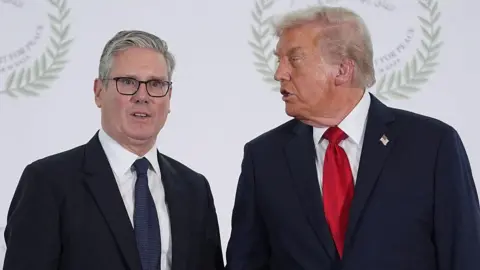
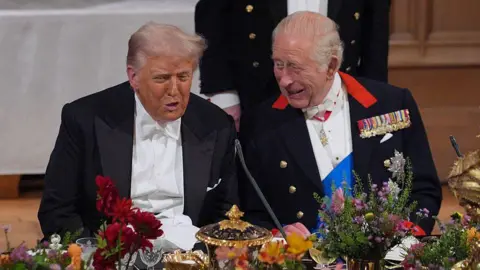
Despite these potential clashes, President Trump has consistently expressed admiration for the British monarchy and King Charles personally. He recently described the King as "a brave man, and he’s a great man," reflecting a personal regard that could prove invaluable. However, this admiration does not necessarily translate into political alignment or predictable behavior. Max Bergmann, a former senior US State Department adviser under the Obama administration, cautions against underestimating Trump’s unwavering persona: "The Trump show doesn’t get turned off because the King is in town." This observation underscores the inherent risk of unscripted moments or politically charged pronouncements from the American president during the visit, which could easily overshadow the carefully planned agenda. Royal officials are reportedly anxious about the possibility of Trump publicly criticizing UK Prime Minister Sir Keir Starmer during their interactions, despite efforts to structure the itinerary to minimize such opportunities.
The King’s Enduring Values and Personal Pressures
King Charles III, throughout his public life, has consistently championed a set of core values that often stand in stark contrast to the populist currents sweeping across parts of the globe. He is a steadfast advocate for post-war liberal democracy, a defender of the rules-based international order, and a proponent of global cooperation. In his tribute to his late mother, Queen Elizabeth II, he articulated a vision for a better world founded on "peace, justice, prosperity, and security." These principles will undoubtedly inform his address to the US Congress and his public statements, even as he navigates the complex political currents.
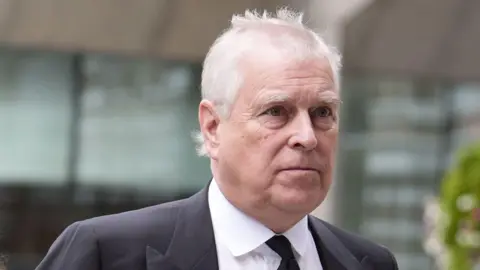
Beyond the geopolitical stage, the King faces significant personal pressures. The lingering scandal involving his brother, Andrew Mountbatten-Windsor, and his ties to convicted sex offender Jeffrey Epstein, casts a shadow over the royal family. It is highly anticipated that survivors of Epstein’s abuses will seek to engage with the royal visitors, potentially giving interviews and staging protests to demand accountability and a meeting with the King. Sky Roberts, brother of the late Virginia Giuffre, who accused Mountbatten-Windsor of sexual assault, has publicly called for the King "to stand up and show his unity with survivors," expressing a desire for a brief meeting for symbolic acknowledgment. His sister-in-law, Amanda Roberts, emphasized the need for an "olive branch" and a commitment to justice. This issue represents a significant domestic challenge that could impact the monarchy’s reputation and global standing, even as Queen Camilla is scheduled to meet with campaigners against domestic abuse during her engagements, a move that could be seen as a strategic gesture.
Compounding these challenges is the King’s own health. At 77, and having lived with cancer for more than two years, he faces a grueling four-day schedule packed with demanding engagements across multiple cities. This physically taxing itinerary adds another layer of complexity to an already intense diplomatic mission.
A Delicate Balancing Act: Diplomatic Strategy and Objectives
The carefully curated itinerary reflects the "delicate balancing act" acknowledged by royal sources. The visit will include high-profile events in Washington, D.C., such as an address to a joint session of Congress and a state dinner at the White House. A poignant stop at the 9/11 Memorial in New York will underscore shared historical traumas, followed by a glitzy reception. The tour will also incorporate a visit to a national park in Virginia, perhaps signaling a softer, less overtly political engagement.
These state visits, undertaken on behalf of the British government, are designed to reinforce the long-term bonds between the US and UK. Royal sources emphasize that while current challenges are undeniable, the visit aims to celebrate historic ties and cultivate conditions for a sustained partnership. This strategy involves leveraging President Trump’s professed admiration for the monarchy. The King’s ability to engage on a personal level, drawing on his "deep well of experience, insight, and judgment," is seen as a crucial asset. Andrew Lownie notes that despite being a "complete antithesis" to the King, Trump is a "pro" who will likely find common ground, allowing the King to pursue broader objectives.
The King’s address to both houses of the US Congress on Tuesday will be the diplomatic centerpiece. This pivotal speech, the first by a UK monarch since his mother, Queen Elizabeth II, in 1991, will be meticulously prepared. Every nuance will be scrutinized by the Foreign Office, aiming to subtly press for continued support for NATO, assistance for Ukraine, and progress on UK-US trade agreements. It is expected to weave in references to wartime solidarity, perhaps allusions to Trump’s Scottish heritage, and even jocular nods to George III’s historical loss of the American colonies, all designed to foster goodwill while advancing strategic interests.
Historical Echoes and Soft Power Dynamics
Historical precedents offer insights into the impact and challenges of such visits. Queen Elizabeth II’s 1991 address to Congress, delivered in a more relaxed era, famously began with a lighthearted joke about her visibility. Her speech, which eloquently defended consensus politics and the futility of force, would resonate today as a subtle rebuke to the rise of populism and starkly contrast with Trump’s more confrontational rhetoric. The King’s speech, however, will be delivered in an environment where the "elephant in the room" of the Epstein scandal, and demands for royal accountability, are a palpable concern, as historian Owens points out.
Royal visits have long served as potent instruments of soft power. The late Queen’s easy rapport with Ronald Reagan, epitomized by images of them riding together in 1982, or Princess Diana’s iconic dance with John Travolta at the White House in 1985, created enduring positive impressions. Francesca Jackson, a researcher at Lancaster University, highlights how past visits, such as the Queen’s attendance at the 200th anniversary of US independence in 1976 (despite initial official reservations following Watergate), underscore the monarchy’s capacity to transcend political turbulence.
Shannon Felton Spence, a director at the Harvard Kennedy School and organizer of a previous visit by then-Prince Charles, emphasizes the unparalleled influence of the royals in the US. "The royals are the UK’s number one soft power tool, and nowhere is that more evident than in the US," she states. For the UK, grappling with a "fraught" relationship and attempting to act as a "bridge between the US and Europe" while "sanding down the edges of the Trump administration," this long-planned visit arrives at a fortuitous moment. Spence concludes that this engagement could be a crucial "lucky break," allowing the UK to deploy its most effective diplomatic asset precisely when it is most needed.
Ultimately, King Charles III’s journey to the United States is more than a ceremonial duty; it is a meticulously orchestrated diplomatic gambit. The success of this endeavor will hinge on the King’s ability to maintain his personal gravitas and embody the enduring values of his nation, even as he navigates the unpredictable currents of American politics and the complex personal dynamics with President Trump. The visit will not only shape the immediate future of Anglo-American relations but will also cast a defining light on the diplomatic acumen and resilience of the new monarch’s reign.



 Aura Kasih
 Safa Marwah
 Ayu Aulia