Lisa Mariana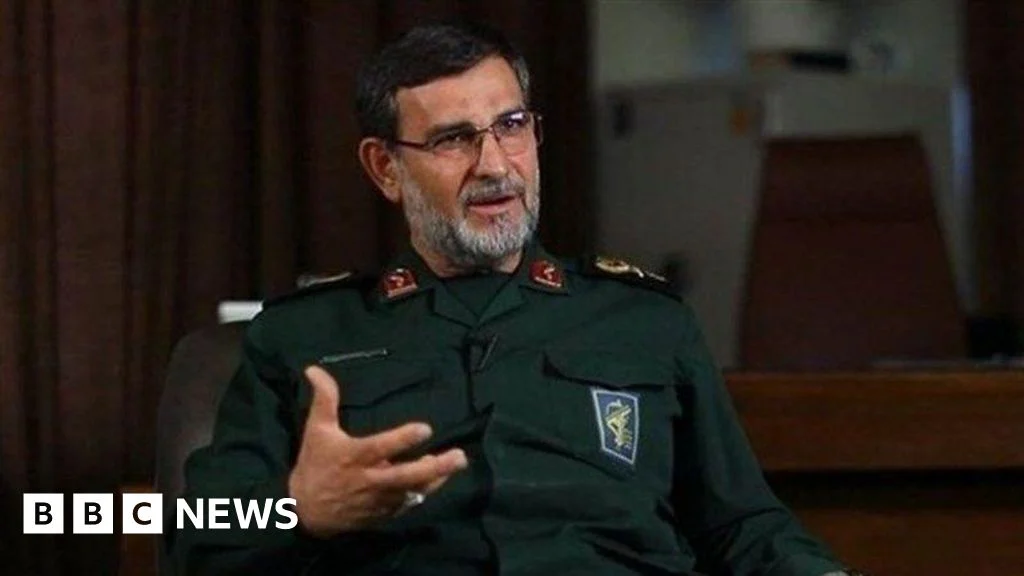
Israel has announced the successful elimination of a pivotal figure within the Islamic Revolutionary Guard Corps (IRGC) Navy, alleging the death of its commander, Alireza Tangsiri, who was reportedly instrumental in orchestrating a near-complete blockade of the strategically vital Strait of Hormuz. This purported operation marks a significant intensification of the ongoing, undeclared conflict between the two regional adversaries, striking at the heart of Iran’s maritime command responsible for projecting power and disrupting global shipping in one of the world’s most critical waterways.
The dramatic claim, disseminated by Israeli Defense Minister Israel Katz, asserts that Tangsiri was "blown up" due to his direct involvement in "terrorist acts" related to the naval blockade. Katz further indicated that several other high-ranking naval officials were also killed in the strike, signaling a broader targeting of Iran’s maritime leadership. Tehran has yet to issue an official statement regarding these assertions, a silence that itself carries significant implications in the fraught geopolitical landscape of the Middle East.
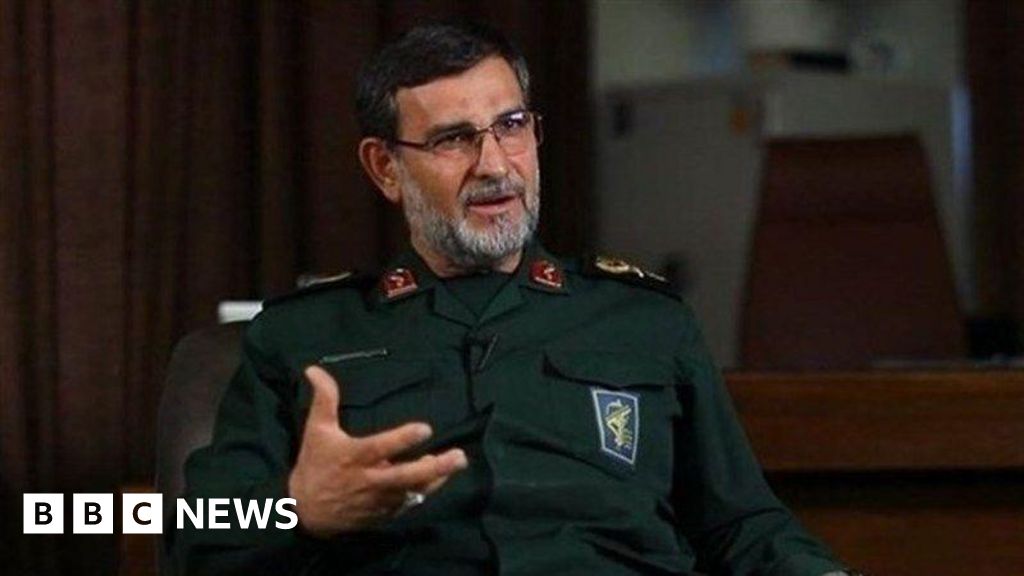
The individual at the center of this alleged strike, Alireza Tangsiri, held the formidable position as head of the IRGC Navy, a branch distinct from Iran’s conventional navy and renowned for its ideological commitment and asymmetric warfare capabilities. Appointed to this role in 2018, following a tenure as deputy commander since 2010, Tangsiri was a deeply entrenched figure within Iran’s military establishment. His public image, often captured in interviews, such as the one where he is seen gesturing in a dark green military uniform, wearing glasses, with a greying beard and short dark hair, projected an image of stern command. His career was marked by a steadfast commitment to Iran’s revolutionary principles and a confrontational stance against perceived adversaries, particularly in the Persian Gulf. In 2019, his aggressive posture led to sanctions by the United States Treasury, alongside other IRGC commanders, following Iran’s downing of a U.S. surveillance drone near the Strait of Hormuz, underscoring his direct involvement in contentious maritime incidents.
The Strait of Hormuz, a narrow passage connecting the Persian Gulf to the open ocean, stands as an indispensable artery for global energy markets. Approximately 20% of the world’s oil and a substantial portion of its liquefied natural gas (LNG) traverse this chokepoint daily. Iran’s strategy of imposing an effective blockade, a tactic frequently threatened and now reportedly implemented, aims to exert maximum economic pressure and leverage in its regional confrontations. This disruption has already reverberated across the globe, contributing to a sharp increase in international oil prices and imposing a direct financial burden on consumers worldwide, including in the United States and Israel. The economic ramifications underscore the far-reaching impact of military actions in this volatile region.
Tangsiri’s public pronouncements, often conveyed through social media accounts attributed to him and widely cited by Iranian media, consistently emphasized the IRGC Navy’s resolve to enforce the blockade. These posts frequently declared that "no vessel associated with the aggressors against Iran has the right to pass through" the Strait, signaling a defiant and uncompromising stance. Such statements highlight the IRGC Navy’s central role in Iran’s broader strategy of maritime deterrence and its readiness to challenge international shipping in defense of its perceived national interests. The alleged targeting of Tangsiri, therefore, represents a direct challenge to this strategic pillar.
This incident is not isolated but rather fits within a discernible pattern of high-profile assassinations attributed to Israel since the commencement of what is described as a "war" from late February. Previous reported targets have included senior Iranian officials, such as Supreme Leader Ayatollah Ali Khamenei and security chief Ali Larijani, indicating a sustained campaign to dismantle Iran’s leadership structure and strategic capabilities. Such operations reflect a calculated and aggressive approach by Israel to counter perceived Iranian threats, particularly those related to its nuclear program, regional proxy networks, and now, its maritime assertiveness. The precision and reach of these alleged strikes suggest sophisticated intelligence gathering and operational capabilities.
Israeli Prime Minister Benjamin Netanyahu publicly lauded Tangsiri’s death, characterizing him as an individual with "a great deal of blood on his hands." Netanyahu further emphasized that the assassination served as "yet another example of the co-operation between us and our friend, the United States, toward the common goal of achieving the objectives of the war." This statement not only claims success but also highlights the purported strategic alignment and intelligence-sharing between Israel and the United States in their efforts to contain Iranian influence. The explicit mention of cooperation underscores the broader international dimensions of this regional conflict.
The United States Central Command (CENTCOM) echoed a similar sentiment, issuing a statement that declared Tangsiri’s death "makes the region safer" and asserted that the IRGC Navy "is on an irreversible decline." This strong endorsement from a key U.S. military command in the region lends significant weight to Israel’s claims and reinforces the narrative of a concerted effort to weaken Iran’s military capabilities. CENTCOM also took the unusual step of calling on serving members of the IRGC to abandon their posts and return home, urging them "to avoid further risk of unnecessary injury or death." This direct appeal could be interpreted as psychological warfare aimed at eroding morale within the IRGC ranks and potentially fostering internal dissent.
Further details released by the Israeli military via social media platforms indicated that Behnam Rezaei, the head of the IRGC Navy’s intelligence directorate, was also "eliminated" in the same operation. The targeting of a senior intelligence chief alongside the overall naval commander suggests a deliberate effort to decapitate the IRGC Navy’s leadership and disrupt its command-and-control capabilities. Such a coordinated strike would severely impair the organization’s ability to plan and execute complex maritime operations, at least in the short term. The implications for Iran’s naval intelligence gathering and operational security could be profound.
The broader context of the Strait of Hormuz’s significance cannot be overstated. Beyond its economic role, it has historically been a flashpoint for regional tensions, witnessing numerous confrontations and incidents involving Iranian forces and international navies. The IRGC Navy’s primary mission in this area involves safeguarding Iran’s maritime borders, but also, critically, employing asymmetric tactics to challenge superior naval powers and disrupt shipping as a form of strategic leverage. These tactics often involve fast attack craft, anti-ship missiles, mines, and increasingly, drone technology, posing a persistent threat to commercial and military vessels navigating the narrow channel. The alleged removal of Tangsiri and his intelligence chief therefore targets the very architects of this asymmetric strategy.
The silence from Tehran is a critical element in understanding the immediate aftermath. While it could indicate a period of verification and internal assessment, it could also signal a deliberate strategic decision to delay a response, allowing for careful planning of retaliation or maintaining ambiguity to complicate adversaries’ calculations. Iran’s history suggests that such high-profile assassinations are rarely left unanswered, and the nature and timing of any potential response will be closely scrutinized by international observers. Possible avenues for retaliation could include heightened activity by proxy groups in the region, cyberattacks, or further escalations in the Strait of Hormuz itself, potentially targeting commercial shipping or regional U.S. military assets.
The long-term implications of this alleged strike are multifaceted. From a strategic perspective, it tests the efficacy of targeted assassinations as a tool for achieving geopolitical objectives. While such strikes can disrupt command structures and instill fear, they also carry significant risks of escalation, potentially leading to a broader, more direct conflict. The "irreversible decline" proclaimed by CENTCOM is a strong assertion, but the IRGC is a deeply institutionalized force with established succession plans. While the loss of experienced leaders is undoubtedly a blow, the organization’s resilience and capacity to adapt should not be underestimated. New leaders will likely emerge, potentially with even more hardened anti-Western sentiments.
Furthermore, the incident places renewed focus on maritime security in the Persian Gulf. International shipping companies and navies operating in the region will undoubtedly heighten their vigilance, anticipating potential retaliatory actions from Iran. The global energy market, already sensitive to geopolitical instability, will continue to monitor developments closely, as any further disruption in the Strait of Hormuz could send oil prices soaring even higher, creating ripple effects for global inflation and economic stability.
In conclusion, Israel’s claim of eliminating Iran’s IRGC Navy chief and his intelligence directorate represents a bold and highly provocative move within an already volatile region. It underscores the intensifying nature of the Israel-Iran conflict, demonstrating a willingness to conduct deep, targeted strikes against critical Iranian command figures. While Israel and the United States frame this as a necessary step to enhance regional security and degrade Iranian capabilities, the absence of an Iranian response leaves open the significant question of what form Tehran’s inevitable retaliation might take, and whether this latest escalation will push the region closer to an even more dangerous and unpredictable confrontation. The world watches with bated breath as the strategic chessboard of the Middle East undergoes yet another dramatic shift.




 Aura Kasih
 Safa Marwah
 Ayu Aulia