Aura Kasih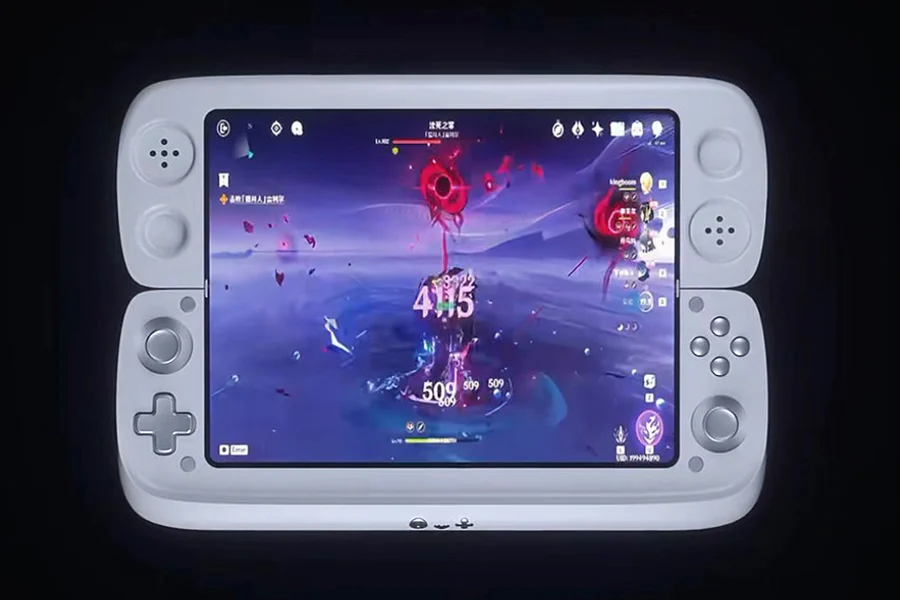
A groundbreaking fusion of portable gaming and cutting-edge display innovation has arrived with the unveiling of the OneXSugar Wallet, a device poised to redefine the handheld gaming experience by integrating the sophisticated technology of a folding OLED screen. This pioneering device, developed by One-Netbook, eschews the dual-screen approach seen in previous iterations, opting instead for a single, expansive display that dramatically enhances visual immersion.
The landscape of personal technology has witnessed a steady evolution of foldable display applications, primarily within the premium smartphone and laptop segments. Devices like Samsung’s Z series smartphones and Huawei’s MateBook Fold have demonstrated the potential for flexible screens to offer novel form factors and enhanced user experiences. Now, One-Netbook is extending this transformative technology into the realm of portable gaming with the OneXSugar Wallet. This new handheld represents a significant departure from its predecessor, the OneXSugar Sugar 1, which featured two distinct screens. Instead, the Wallet unfolds to reveal a singular, generously sized 8.01-inch OLED panel, boasting an aspect ratio of 4:3. This strategic choice in screen configuration suggests a focus on maximizing the viewing area for gaming, potentially evoking the classic proportions of retro arcade and console titles, while simultaneously offering a more expansive canvas for modern applications.
The initial announcement of the OneXSugar Wallet on China’s Weibo platform provided a glimpse into its ambitious design, though specific technical specifications remain somewhat veiled. The centerpiece of this innovative device is its foldable OLED screen, which delivers a sharp resolution of 2,480 x 1,860 pixels. This high pixel density promises incredibly detailed visuals, bringing games to life with vibrant colors and deep contrasts, hallmarks of advanced OLED technology. Underpinning the gaming performance is an undisclosed "Qualcomm gaming platform flagship processor." The implications of this choice are substantial, as Qualcomm’s mobile chipsets are renowned for their powerful graphics capabilities and efficient power management, crucial for delivering smooth gameplay on a portable device. However, without further details on the specific chipset and its accompanying architecture, a definitive assessment of its performance, particularly concerning its emulation prowess across a broad spectrum of gaming platforms, remains premature. The integration of a top-tier Qualcomm processor suggests an aspiration to handle demanding modern games and complex emulation scenarios, positioning the OneXSugar Wallet as a contender for serious mobile gamers and retro enthusiasts alike.

Visualizing the device through images and video released by One-Netbook, the OneXSugar Wallet appears to meticulously integrate gaming controls into its foldable design. The lower portion of the unfolded screen is flanked by a comprehensive array of input options. Prominently featured are asymmetrical thumbsticks, providing precise analog control, complemented by a traditional D-pad for directional input. Four tactile action buttons are strategically placed for quick access to in-game commands. This arrangement is a familiar and functional layout for handheld gaming, designed to cater to a wide range of game genres. Further enhancing the control scheme are shoulder buttons and triggers located on the rear of the device, offering additional layers of input for more complex games. The upper section of the unfolded screen is elegantly framed by a pair of front-facing speakers. This placement is advantageous for delivering immersive audio directly towards the user, contributing to a more engaging gaming experience without the need for external accessories. The thoughtful integration of these physical controls suggests a device engineered with the practicalities of gaming in mind, aiming to provide a comfortable and responsive playing experience.
The introduction of foldable screen technology into the gaming handheld market invariably raises questions about pricing and market reception. The cost of foldable displays, with their intricate engineering and specialized manufacturing processes, has historically placed them in the premium segment of the consumer electronics market. Devices such as the Google Pixel Fold and Samsung Galaxy Z Fold series, which incorporate similar flexible screen technologies, typically command prices in the vicinity of $2,000. This pricing bracket positions them as aspirational products, appealing to early adopters and those seeking the pinnacle of mobile technology. The OneXSugar Wallet’s classification as a “Wallet” may be a deliberate nod to its potential price point. Given the substantial cost associated with foldable OLED panels, it is plausible that the OneXSugar Wallet could also fall into a higher price tier, potentially exceeding the $1,000 mark that some high-end gaming handhelds already occupy. The success of the OneXSugar Wallet will likely hinge on its ability to justify its premium cost through a compelling combination of innovative features, robust performance, and a user experience that transcends the novelty of its folding screen. Gamers’ willingness to invest in such a device will be a critical factor in its market penetration and long-term viability.
The strategic adoption of a folding OLED screen by One-Netbook for the OneXSugar Wallet signifies a bold step forward in portable gaming hardware. This technology, once confined to the realm of high-end smartphones and laptops, now offers the potential for an entirely new paradigm in handheld gaming. The primary advantage of a folding screen lies in its inherent versatility. When closed, the device likely presents a more compact and portable form factor, akin to a traditional clamshell phone or a small gaming device. Upon unfolding, it transforms into a larger, more immersive display, ideal for extended gaming sessions. This dual nature allows users to enjoy the convenience of portability without sacrificing screen real estate when they are ready to play. The 8.01-inch diagonal measurement of the OLED panel is significant, offering a viewing area that rivals some smaller tablets, thus providing a more expansive and detailed visual experience than most conventional handheld gaming devices.
The implications of this display technology extend beyond mere screen size. OLED panels are renowned for their self-emissive pixels, which allow for perfect blacks, infinite contrast ratios, and exceptionally vibrant colors. For gaming, this translates into visuals that are more lifelike and engaging. Deep shadows will appear truly black, enhancing the atmospheric effects in games, while bright highlights will pop with intensity. The rapid response times inherent in OLED technology also contribute to a smoother gaming experience, minimizing motion blur during fast-paced action sequences, a critical factor for competitive or action-intensive titles. Furthermore, the 4:3 aspect ratio, while less common in contemporary widescreen displays, holds nostalgic appeal for many gamers and is perfectly suited for emulating classic games designed for older consoles and arcade machines. This aspect ratio can also be advantageous for certain types of content, potentially offering a more comfortable viewing experience for text-heavy applications or productivity tasks.

The choice of a "Qualcomm gaming platform flagship processor" is a critical determinant of the OneXSugar Wallet’s capabilities. Qualcomm’s Snapdragon processors have long been a dominant force in the mobile computing space, and their gaming-focused iterations are engineered to deliver powerful graphical performance. These chipsets typically feature advanced integrated GPUs capable of rendering complex 3D environments, applying sophisticated visual effects, and supporting high frame rates. The inclusion of such a processor suggests that the OneXSugar Wallet is not merely designed for casual gaming or basic emulation but aims to provide a robust platform for demanding mobile titles and a wide array of retro gaming experiences. The efficiency of these processors is also paramount for a portable device, as it directly impacts battery life and thermal management. A flagship processor, when optimized correctly, can offer a balance between raw power and energy conservation, allowing for extended play sessions without excessive heat buildup.
The control scheme integrated into the OneXSugar Wallet appears to be a well-considered blend of modern and retro gaming ergonomics. The inclusion of both asymmetrical thumbsticks and a D-pad addresses the diverse control preferences of gamers. Thumbsticks are essential for 3D navigation and analog control in modern games, offering nuanced movement and aiming capabilities. The D-pad, on the other hand, remains indispensable for precise digital input, particularly in 2D platformers, fighting games, and retro titles. The placement of these controls on either side of the screen, a common and effective layout for handhelds, ensures comfortable hand positioning during gameplay. The addition of shoulder buttons and triggers further expands the control vocabulary, allowing for a more comprehensive gaming experience that can accommodate a wider range of game genres and complexities. The front-facing speakers, positioned to frame the upper portion of the display, are a practical design choice that enhances audio immersion without obstructing the user’s view or hand placement. This attention to the physical interface suggests a device that prioritizes user comfort and intuitive interaction, crucial elements for any successful gaming handheld.
The market positioning of the OneXSugar Wallet will be a significant factor in its success. The handheld gaming market is a competitive space, with established players offering a range of devices from budget-friendly options to high-performance machines. The unique selling proposition of the OneXSugar Wallet lies in its folding screen technology. However, this innovation comes with inherent challenges, primarily related to cost and durability. Foldable screens, while technologically advanced, can be more susceptible to damage than traditional rigid displays. The long-term durability of the hinge mechanism and the screen itself will be critical considerations for consumers. Furthermore, the price point will dictate the target audience. If the device is priced comparably to premium smartphones, it will likely appeal to a niche market of early adopters and tech enthusiasts who are willing to pay a premium for cutting-edge technology. If One-Netbook can find a way to offer this foldable experience at a more accessible price point, it could disrupt the market and attract a broader range of gamers.
The future outlook for the OneXSugar Wallet is intrinsically linked to the broader adoption and refinement of foldable display technology. As manufacturing processes become more efficient and costs decrease, foldable screens are likely to become more prevalent across various consumer electronics categories. For gaming handhelds, this could usher in an era of devices that offer unparalleled flexibility and portability. Imagine a handheld that can shrink down for pocketability and then unfold into a tablet-sized screen for a more immersive experience. The OneXSugar Wallet represents a pioneering step in this direction. Its success will not only depend on its own merits but also on its ability to pave the way for future innovations in foldable gaming hardware, potentially influencing how we interact with and experience portable digital entertainment for years to come. The integration of such advanced display technology into a dedicated gaming device signifies a commitment to pushing the boundaries of what is possible in portable computing and entertainment.




 Safa Marwah
 Ayu Aulia