 Lisa Mariana
Polish authorities have intensified their efforts to reclaim institutional integrity, culminating in a dramatic confrontation at the nation’s highest constitutional body, the Constitutional Tribunal. The deployment of law enforcement personnel amidst a leadership dispute underscores the escalating battle over judicial independence, pitting the reformist government against entrenched appointees from the previous administration, with profound implications for Poland’s democratic foundations and its standing within the European Union. This unprecedented situation marks a critical juncture in a long-running constitutional crisis, with both sides asserting the absolute legality of their positions and accusing the other of undermining the state’s very fabric.
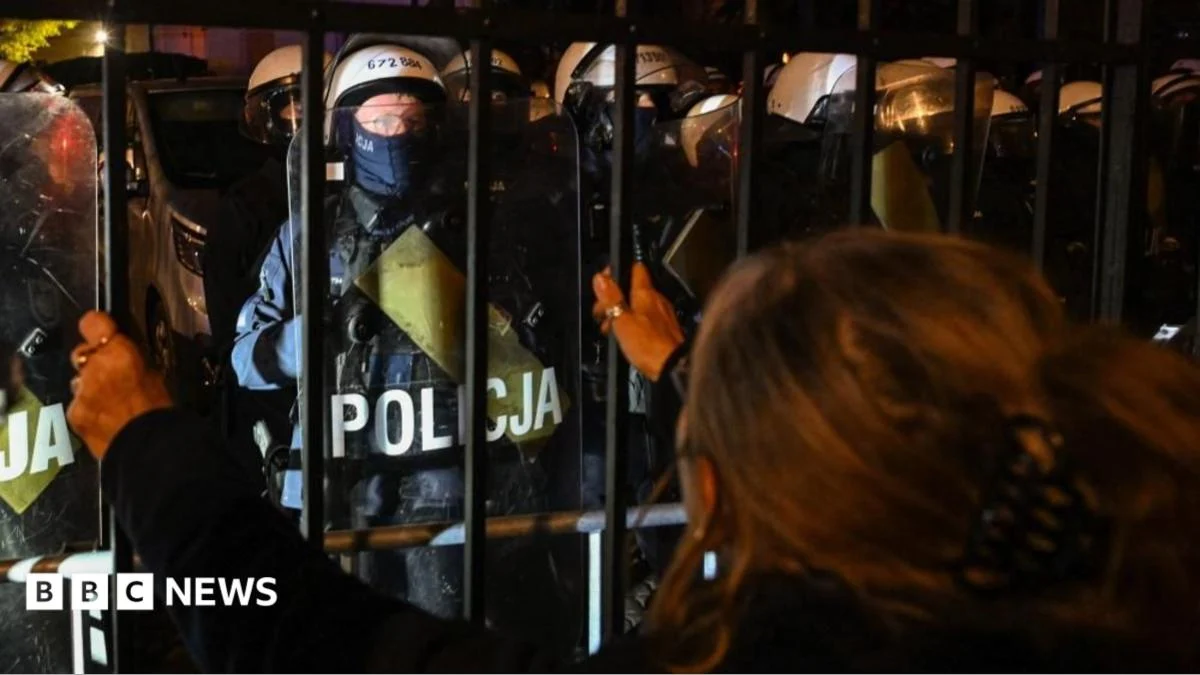
The immediate catalyst for the current high-stakes stand-off was the dramatic arrival of law enforcement officers at the Constitutional Tribunal, a move signaling a forceful assertion of governmental authority. This action coincided with the government’s attempts to install new leadership at the court, directly challenging the tenure of the incumbent senior justices. In response, the Constitutional Tribunal, through its official social media channels, issued a stark warning, asserting that its two presiding justices remained the legitimate and legally appointed leaders of the institution. The tribunal’s statement did not mince words, declaring unequivocally that "all persons participating in these actions are committing the crime of a coup d’etat," an accusation of the gravest nature, implying an illegal seizure of state power. This extraordinary charge highlights the profound depth of the constitutional chasm that has opened within Poland.
For Prime Minister Donald Tusk and his governing coalition, the deployment of police and the subsequent actions are framed as a necessary, albeit challenging, step towards restoring the integrity of Poland’s legal system. Tusk articulated his government’s resolve in a public statement, emphasizing that "restoring the rule of law is our duty." He acknowledged the arduous nature of this undertaking, describing it as "a difficult, sometimes painful process that requires decisive action," but ultimately concluding that "there is no other way." This rhetoric underscores the Tusk administration’s conviction that the previous government systematically dismantled judicial independence, and that radical measures are now required to reverse those changes and align Poland with European democratic standards.
The escalating crisis immediately drew in President Karol Nawrocki, a figure widely perceived as politically aligned with the former ruling Law and Justice (PiS) party. Nawrocki, who was en route to Senegal to participate in the Summer Youth Olympic Games, abruptly ordered his presidential aircraft to turn back to Warsaw. This decisive action by the head of state signaled his deep concern and likely intent to intervene in the unfolding constitutional drama. His swift return underscores the gravity of the situation and the potential for a direct confrontation between the executive and the judiciary, further complicated by the political allegiances of the presidency.
To fully grasp the current volatility, it is essential to revisit the genesis of Poland’s protracted rule of law dispute. The Constitutional Tribunal itself became the epicenter of this conflict shortly after the PiS-led government assumed power in 2015. Almost immediately, the PiS parliamentary majority moved decisively to reshape the court’s composition, appointing judges in a manner widely criticized as circumventing established legal procedures. The strategic importance of gaining control over the Tribunal was paramount for PiS, as this body possesses the ultimate authority to determine the legality and constitutionality of legislative acts. By securing a majority within the court, PiS aimed to effectively neutralize any judicial checks on its legislative agenda, thereby consolidating its power and advancing its policy objectives without significant judicial oversight.
This aggressive restructuring of the judiciary did not go unnoticed by international legal bodies. Leading European courts, including the European Court of Human Rights (ECHR) and the Court of Justice of the European Union (CJEU), subsequently issued damning rulings concerning the legitimacy of PiS’s appointments. These rulings determined that the PiS majority had improperly elected three of the judges, specifically because their appointments duplicated positions that had already been validly filled by the preceding parliament. The European courts’ conclusions were unequivocal: Poland’s Constitutional Tribunal, under these circumstances, could no longer be considered an "independent and impartial tribunal." This loss of legitimacy, as determined by supranational judicial bodies, has since served as a fundamental justification for the Tusk government’s subsequent actions, including its controversial decision to cease publishing the tribunal’s rulings, effectively denying them legal force.
Upon taking office in late 2023, Donald Tusk pledged a comprehensive depoliticization of the judiciary, a cornerstone of his electoral platform. However, the path to undoing the extensive PiS-era changes has proven exceptionally arduous. A significant obstacle has been the Polish presidency. Both President Nawrocki and his PiS-backed predecessor, Andrzej Duda, have consistently utilized their presidential veto powers to block legislative attempts by Tusk’s government aimed at reversing the judicial reforms. This presidential obstructionism has created a constitutional stalemate, effectively handcuffing the government’s ability to implement its mandate through conventional legislative means. Further exacerbating the situation, President Nawrocki has steadfastly refused to swear in five Constitutional Tribunal judges who were duly elected by parliament since March, citing alleged flaws in their selection procedure. This refusal has left crucial judicial positions vacant and underscored the profound institutional deadlock.
In a move that epitomizes the current governmental strategy to circumvent these obstacles, Anna Korwin-Piotrowska, one of the judges whose swearing-in was blocked by President Nawrocki, has now been placed in temporary charge of the court. This appointment, made outside traditional protocols, represents a direct challenge to the existing leadership and the presidential prerogative, signaling a more assertive approach by the Tusk administration to overcome the institutional logjam.
The international community has also weighed in on these developments. Earlier this month, the Council of Europe’s advisory body on constitutional matters, the Venice Commission, issued a clear recommendation urging President Nawrocki to swear in the elected judges, emphasizing the importance of allowing them to assume their rightful positions on the court’s bench. This international call for adherence to constitutional norms highlights the widespread concern over the erosion of democratic principles in Poland. Adding another layer of legal pressure, Zurek (presumably a reference to a prominent legal figure, possibly Waldemar Żurek, a judge and vocal critic of PiS’s reforms) publicly stated that the incumbent president of the Constitutional Tribunal, Julia Przyłębska, and her vice-president should face criminal charges for their alleged refusal to allow legitimately appointed judges to adjudicate, further escalating the legal battle.
Domestically, Tusk’s actions have elicited a mixed response. While many of his supporters applaud his decisive stance, some have voiced criticism, accusing him of failing to act with sufficient speed and determination to reverse the PiS-era reforms. With parliamentary elections scheduled for the following year, some observers interpret Tusk’s recent aggressive moves as a strategic attempt to bolster his popularity among those voters who are demanding a swift restoration of judicial independence. However, Tusk’s methods have also drawn sharp censure from other quarters. In a move that sparked controversy in September, Tusk nominated Maciej Berek, a lawyer who had served as a minister in his cabinet, as a candidate for a judicial position on the court. Critics argued that this appointment, reminiscent of PiS’s own practices, risked undermining the very principle of judicial depoliticization that Tusk vowed to uphold.
Perhaps the most trenchant criticism has come from prominent legal scholars, notably Professor Marcin Matczak, a staunch critic of the PiS-era judicial reforms. Matczak, who has consistently expressed his view that the current president of the Constitutional Tribunal, Julia Przyłębska, is the court’s worst leader, vehemently argued that her recent suspension lacked any legal foundation, citing "a million reasons" for its invalidity. Prof. Matczak took to social media to express his profound alarm, stating that "Today’s action at the Constitutional Tribunal, in my opinion, buries this body and the issue of the rule of law for two decades." He further warned of severe long-term repercussions, cautioning that "Images of armed police and legal interpretations according to which the minister of justice can remove the president of the Constitutional Tribunal by decree will have a powerful, anti-rule of law backlash for years to come." Matczak’s analysis highlights the perilous precedent that such actions might set, potentially eroding public trust in legal institutions and fostering a climate where political expediency trumps constitutional principles.
The current stand-off at the Constitutional Tribunal is not merely a legal dispute; it is a profound political and constitutional crisis with far-reaching implications for Poland’s democratic future. The Tusk government, armed with rulings from European courts and a mandate to restore the rule of law, is confronting a judiciary that it views as illegitimate and politicized. Conversely, the incumbent leadership of the Tribunal, backed by the president and remnants of the PiS establishment, accuses the government of unlawful interference and an attack on constitutional order. The deployment of police, the controversial interim appointment, and the competing legal interpretations underscore the profound lack of consensus on fundamental legal principles.
The implications for Poland are multifaceted. Domestically, this confrontation could further polarize the political landscape ahead of upcoming elections, with each side leveraging the crisis to mobilize its base. It risks deepening the public’s cynicism towards state institutions, eroding the very foundations of democratic trust. Internationally, Poland’s standing within the European Union is once again under intense scrutiny. While Tusk’s government aims to restore relations and unlock frozen EU funds, the methods employed in this judicial overhaul could draw new criticism from Brussels, particularly if they are perceived as undermining due process or the independence of the judiciary, even if the ultimate goal is to restore it. The long-term damage to the Constitutional Tribunal, an institution designed to be the ultimate arbiter of legal disputes, is perhaps the most concerning. If its legitimacy is irrevocably fractured by political interventions and conflicting legal interpretations, its ability to effectively function as a check on executive and legislative power will be severely compromised, leaving Poland’s democratic system vulnerable to future abuses. The path forward remains fraught with peril, with no easy resolution in sight for a nation grappling with the very definition of its constitutional identity.


 Aura Kasih