 Lisa Mariana
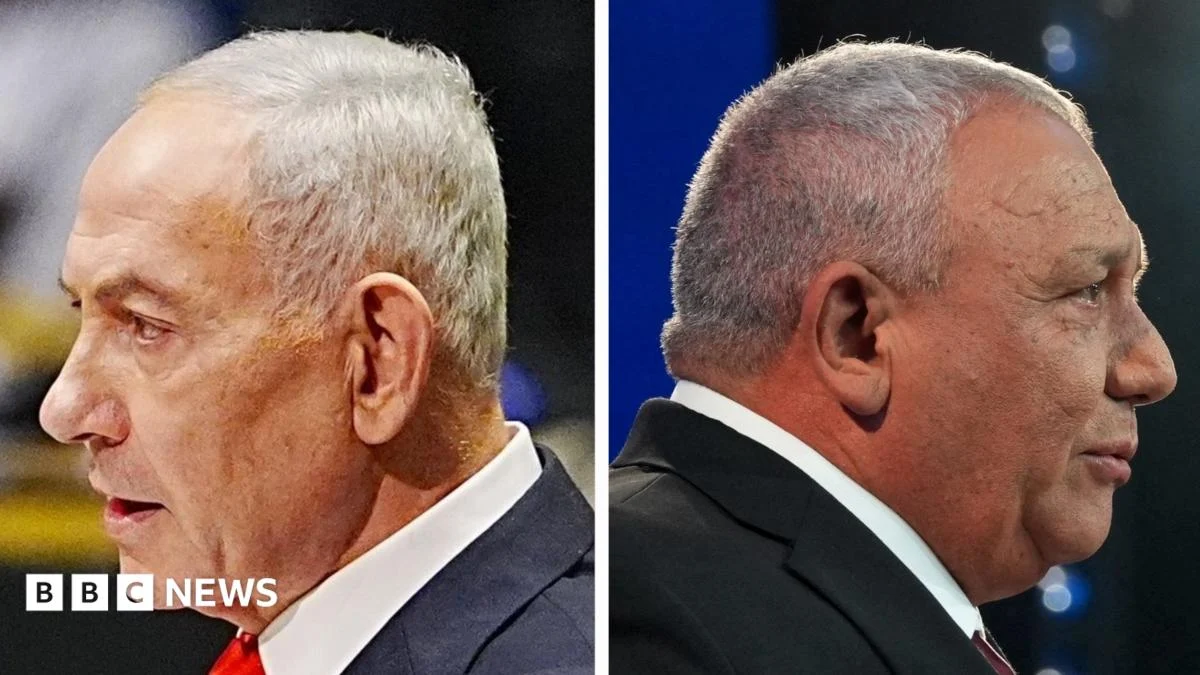
The recent electoral outcome in Israel, characterized by an absence of a clear governing majority, underscores profound and potentially widening schisms within the nation’s body politic, presenting an unprecedented challenge to its democratic stability and future trajectory. This latest inconclusive election, following a series of similar results in recent years, reflects not merely a transient political deadlock but rather the crystallization of fundamental disagreements that permeate Israeli society, demanding a rigorous examination of the forces shaping its internal cohesion.
Israel’s democratic framework, established amidst extraordinary regional complexities, has long relied on a system of pure proportional representation. This design, while ensuring broad representation across diverse factions, inherently necessitates the formation of coalition governments. Since its inception, Israel has never been governed by a single party, with alliances and compromises being the customary path to power. However, what was once a pragmatic necessity has, in recent cycles, evolved into a chronic state of instability, with political fragmentation increasingly impeding effective governance and threatening to normalize cycles of electoral repetition. The recent election saw a notable surge in voter participation, with citizens, both Jewish and Arab, engaging actively, some even traveling internationally to cast their ballots. This robust civic engagement, lauded by figures such as President Isaac Herzog as a "badge of honor" for Israeli democracy, paradoxically occurred within a landscape of intense polarization, where the electorate’s passion was channeled into reinforcing existing divisions rather than forging new consensus.
The core of the current impasse lies in the inability of either of the two primary political blocs—one largely aligned with the former Prime Minister Benjamin Netanyahu and his right-wing and religious allies, the other a heterogeneous coalition of centrist, left-wing, and Arab parties—to secure a decisive parliamentary majority. This persistent deadlock, far from being "business as usual," has prompted widespread concern among political analysts who contend that it illuminates growing fissures within the nation that extend beyond conventional ideological disagreements.
These societal divisions are multi-layered and increasingly entrenched. Firstly, the long-standing ideological chasm between the political left and right has become more rigid, particularly concerning core issues such as the Israeli-Palestinian conflict, national security doctrines, and the country’s geopolitical orientation. Secondly, and perhaps most significantly, is the escalating tension between religious and secular segments of the population. The growing political influence of ultra-Orthodox parties, whose platforms often advocate for enhanced religious observance in public life and preferential treatment for their communities, frequently clashes with the aspirations of secular Israelis who champion a more liberal and pluralistic society. This dynamic manifests in disputes over issues ranging from military conscription and public transportation on the Sabbath to budgetary allocations for religious institutions.
Thirdly, the ethno-national divide between Jewish and Arab citizens of Israel remains a critical fault line. While Arab political parties have historically operated largely outside mainstream coalition negotiations, recent elections have highlighted their potential kingmaker role, particularly for the anti-Netanyahu bloc. However, the prospect of Arab parties participating directly in a governing coalition, or even lending external support, evokes strong reactions across the Jewish political spectrum, particularly among nationalist factions who view such alliances with suspicion or outright hostility. This sentiment underscores the profound challenge of integrating Arab political representation into the highest echelons of government, despite their significant demographic presence.
Beyond these traditional cleavages, other factors contribute to the current state of disunity. Socio-economic disparities, particularly between different geographic and demographic groups, fuel resentment and shape voting patterns. Furthermore, the protracted debate surrounding judicial reform and the balance of power between the executive, legislative, and judicial branches has exposed deep-seated disagreements over the fundamental character of the state and the rule of law. The enduring presence and divisive influence of charismatic political personalities, particularly that of Benjamin Netanyahu, have also contributed to a highly personalized political landscape, where the choice for many voters becomes less about policy and more about allegiance or opposition to a specific individual.
The immediate consequence of this electoral deadlock is the arduous and often protracted process of coalition negotiation. The President of Israel is tasked with inviting party leaders to form a government, a process that becomes exponentially more complex when no single bloc commands a clear majority. The choices facing the various political actors are stark and fraught with ideological peril. For the right-wing and religious bloc, forming a government necessitates maintaining the loyalty of ideologically distinct partners, some of whom hold extreme positions on social and religious issues. For the opposition bloc, the path to power requires unprecedented levels of compromise among parties spanning the political spectrum, including those with fundamentally divergent views on national security, economic policy, and state-religion relations. The prospect of cooperating with Arab parties, while strategically advantageous for achieving a majority, presents significant political liabilities for some Jewish-led parties, potentially alienating parts of their base. Conversely, Arab parties face the difficult decision of whether to risk joining a potentially unstable government, which could lead to a rapid collapse and further elections, or to remain outside, thus ceding influence.
Such an environment of prolonged political uncertainty carries significant implications for Israel’s domestic and foreign policy. Domestically, a weak or caretaker government struggles to address pressing national challenges, including budget approvals, social legislation, judicial appointments, and long-term infrastructure projects. The inability to form a stable government can paralyze decision-making, impede necessary reforms, and undermine public confidence in the efficacy of the political system.
On the international stage, governmental instability can project an image of internal disarray, potentially affecting Israel’s standing with key allies, particularly the United States. Consistency in foreign policy, whether concerning the Iranian nuclear program, the Israeli-Palestinian conflict, or regional diplomatic initiatives such as the Abraham Accords, becomes difficult to maintain without a cohesive and stable leadership. Economic stability is also vulnerable, as protracted political uncertainty can deter foreign investment and impact national credit ratings, creating a ripple effect across various sectors.
The current situation also brings into sharp focus a more profound existential question for Israel: what are the unifying elements that bind its complex and diverse population into a coherent polity? For decades, external threats have often served as a powerful, albeit sometimes uncomfortable, unifier. However, as the internal divisions become more pronounced, the nation faces the challenge of identifying and nurturing common ground from within. Autocratic regimes, which are growing in number globally, frequently criticize democratic systems for their perceived inefficiencies, their tendency to produce fragile coalitions, and their susceptibility to political gridlock. Israel’s current predicament risks playing into this narrative, underscoring the vulnerability of democratic structures to internal fragmentation if fundamental disagreements become unmanageable.
The risk of another election, often termed the "nightmare scenario" by political leaders, looms large if coalition negotiations fail. President Herzog’s direct appeal to avoid another electoral round highlights the fatigue and potential damage to democratic institutions caused by repeated campaigns and governmental instability. The challenge extends beyond merely forming a government; it is about reinforcing the very fabric of national unity.
Historically, political thinkers have warned that the resilience of a democracy is tested not only by external adversaries but also, and perhaps more acutely, by internal schisms. Can Israel’s democratic institutions, designed for compromise and coalition, adapt to manage these deeply entrenched and potentially widening divisions? The current political impasse is more than a momentary deadlock; it is a critical juncture that demands a re-evaluation of national priorities and a concerted effort from its political leadership to bridge the widening chasms. The path forward will undoubtedly require unprecedented levels of flexibility, a willingness to compromise on long-held positions, and a renewed commitment to finding commonalities that can transcend the currently divisive political landscape. The ability of Israel’s democracy to navigate these internal perils will ultimately determine its long-term stability and its capacity to address the multifaceted challenges that lie ahead.



 Aura Kasih

 Ayu Aulia