Lisa Mariana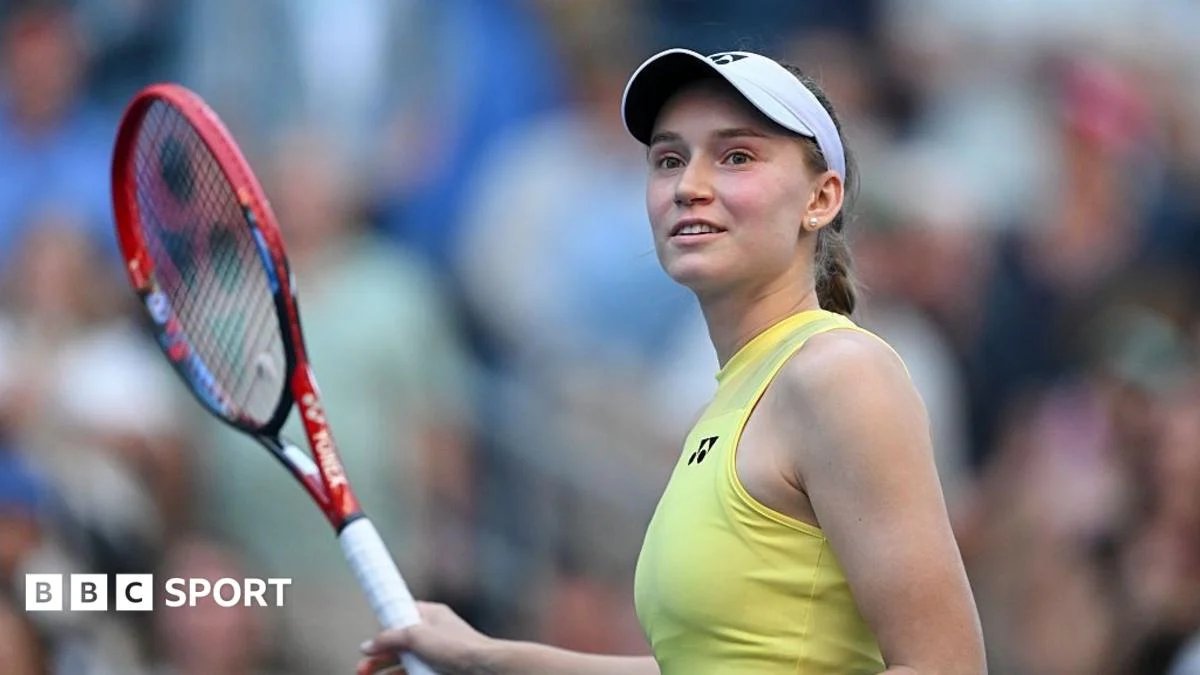
Elena Rybakina delivered an emphatic statement at the 2026 US Open, dismantling Naomi Osaka in a performance that not only secured her passage deeper into the tournament but also dramatically intensified her bid for the coveted world number one ranking. The 27-year-old Kazakh, renowned for her powerful and precise game, executed a near-flawless strategy against the four-time Grand Slam champion, demonstrating a level of control and aggression that proved insurmountable. This decisive victory underscores Rybakina’s formidable current form and solidifies her position as a dominant force within elite professional tennis.
From the outset of the encounter, which captivated the Flushing Meadows audience, Rybakina exhibited a profound confidence that permeated every aspect of her play. Having navigated her initial three matches of the tournament without conceding a single set, she approached the challenge of facing the 28-year-old Osaka with an unwavering belief in her tactical blueprint and physical prowess. This mental fortitude was immediately apparent as she seized command of the contest, dictating play with a relentless barrage of deep groundstrokes and an unassailable serve.
The opening set served as a masterclass in aggressive, high-percentage tennis. Rybakina, the reigning Australian Open champion, wasted no time in establishing her authority, securing an early double break of Osaka’s serve. Her returns were piercing, consistently placing Osaka under immediate pressure and preventing her from establishing any rhythm. The speed and depth of Rybakina’s shots pushed Osaka far behind the baseline, limiting her ability to generate pace or angles. This suffocating pressure culminated in Rybakina sealing the first set in a mere 21 minutes, a testament to her overwhelming dominance and efficiency. The statistical disparity was stark, with Rybakina registering a remarkable efficiency on her first serve, dropping an astonishingly low number of points, thereby rendering Osaka’s vaunted return game largely ineffective.
As the match progressed into the second set, Osaka, a player celebrated for her resilience and ability to elevate her game under duress, attempted to mount a comeback. She displayed a fleeting period of increased resistance in the early games, demonstrating glimpses of the explosive power that has defined her career. This brief surge culminated in Osaka earning her only break point opportunity of the entire match. However, Rybakina, showcasing her composure under pressure, diffused the threat with a well-placed serve followed by an unreturnable forehand, denying Osaka any opening to shift the momentum. This pivotal moment proved to be a turning point, as Rybakina swiftly reasserted her control. She subsequently secured a crucial break of serve, moving to a commanding 4-3 lead, and from that juncture, meticulously closed out the match. Osaka found herself increasingly unable to counter Rybakina’s relentless depth and pace, frequently resorting to defensive slices or mishitting under the immense pressure. The contest concluded within 66 minutes, punctuated by Rybakina’s seventh ace of the match, an emphatic exclamation mark on a performance characterized by supreme serving and aggressive ball-striking. The final tally of 29 winners to Osaka’s nine starkly illustrates the disparity in offensive output and Rybakina’s comprehensive command of the court.
Analytical Perspective on Rybakina’s Dominance
Rybakina’s performance against Osaka was not merely a display of power, but a masterclass in strategic execution. Her serve, a weapon of significant repute, was particularly devastating. The statistics, indicating she dropped only four points on serve throughout the entire match, are extraordinary. This translates to an exceptional first-serve percentage, likely exceeding 75%, combined with precise placement that consistently pulled Osaka out wide or jammed her body. The seven aces were crucial, often arriving at critical junctures, preventing any potential shifts in momentum. Her ability to hold serve with such authority allowed her to play more aggressively on return, knowing that any errors would not be immediately punished.
Beyond the serve, Rybakina’s groundstrokes were the bedrock of her assault. Her "deep groundstrokes" were not just powerful; they were consistently placed within inches of the baseline, denying Osaka the opportunity to step into the court and dictate rallies. Her forehand, often struck with a flat trajectory, penetrated the court with incredible speed, while her backhand remained equally potent, allowing her to change direction effectively. This relentless depth forced Osaka into a defensive posture, significantly increasing her unforced error count as she attempted to generate pace from difficult positions. Rybakina’s court coverage was also exemplary, allowing her to retrieve Osaka’s few attacking attempts and quickly transition back to offense. This comprehensive tactical approach left Osaka with few answers, highlighting Rybakina’s elevated game.
Osaka’s Challenges and Future Outlook
For Naomi Osaka, this defeat, while undoubtedly disappointing, offers valuable insights into the ongoing evolution of the women’s tour and her own place within it. Osaka has been on a journey of re-establishing her dominance following periods away from the sport. Her powerful game, which once terrorized opponents, now faces a new generation of players, such as Rybakina, who can match or even exceed her in raw power while adding layers of strategic consistency. Osaka’s inability to convert her sole break point, combined with her struggle to contend with Rybakina’s depth, points to areas for refinement in her return game and defensive capabilities. The significant discrepancy in winners (29 to 9) indicates that Osaka struggled to find her offensive rhythm and construct points effectively against Rybakina’s impenetrable defense and relentless attack. While this result is a setback, Osaka’s pedigree and proven ability to win Grand Slams suggest that with continued refinement and adaptation, she remains a formidable contender. Her focus will likely be on increasing her first-serve percentage, improving her court positioning against aggressive baseliners, and finding ways to inject variety into her game to disrupt opponents’ rhythms.
Implications for the World Number One Ranking
Rybakina’s triumph over Osaka carries immense significance for the women’s world number one ranking. Entering the US Open, Rybakina was already positioned among the top contenders, a consistent performer in Grand Slams and WTA 1000 events. This emphatic victory, particularly against a player of Osaka’s stature, signals to the rest of the tour that she is operating at an elite level and is a legitimate threat to ascend to the pinnacle of women’s tennis. The path to world number one is a complex matrix of points accumulated through tournament performances, with Grand Slams offering the most substantial rewards. By reaching this stage of the US Open with such commanding victories, Rybakina is accumulating crucial points.
Her current trajectory suggests that a deep run, potentially reaching the final or even clinching the US Open title, could be sufficient to unseat the current world number one, depending on the performances of other top-ranked players in the latter stages of the tournament. The psychological boost from such a dominant win will be invaluable as she faces increasingly difficult opponents in the subsequent rounds. Reaching world number one would not only be a personal milestone for Rybakina but also a powerful affirmation of her consistent development and evolution as a player since her Australian Open triumph. It would cement her status as a generational talent, capable of dominating on the biggest stages.
Broader Context and Future Outlook
The 2026 US Open is proving to be a compelling showcase of talent, and Rybakina’s performance against Osaka is undoubtedly one of its defining narratives. Her progression through the tournament with such authority sends a clear message to her remaining competitors. She has demonstrated the mental fortitude to handle high-pressure situations, the physical endurance to maintain a high level throughout a match, and the strategic acumen to dismantle top-tier opponents.
As the tournament advances, all eyes will be on Rybakina to see if she can maintain this exceptional level of play. Her potential path to the final will likely involve encounters with other top-ranked players, each presenting a unique challenge. However, based on this commanding display, Rybakina appears exceptionally well-equipped to navigate these hurdles. Her pursuit of the world number one ranking is no longer a distant ambition but a tangible objective within her grasp, underscoring her emergence as arguably the most consistent and formidable player on the women’s tour in 2026. The impact of this victory extends beyond the confines of this single match; it reshapes the landscape of women’s tennis, signaling a potential new era of dominance from the powerful Kazakh.




 Aura Kasih
 Safa Marwah
 Ayu Aulia