Safa Marwah
A sophisticated and widespread cybercriminal operation has come to light, revealing a novel approach to malware distribution that exploits blockchain technology to enhance resilience and evade detection. This campaign has infiltrated more than 5,400 small to medium-sized business websites, predominantly built on WordPress and PrestaShop platforms, transforming them into conduits for delivering dynamic and evolving malicious payloads, initially observed as "ClickFix" lures and subsequently shifting to advanced WebRTC-based stagers, all orchestrated through smart contracts on the BNB Smart Chain (BSC).
The scale of this malicious endeavor underscores a significant evolution in cyberattack methodologies, where threat actors are increasingly adopting decentralized infrastructure to bolster their operational security and persistence. Researchers monitoring this activity have tracked a steady escalation over several months, observing thousands of compromised digital storefronts and online portals injected with a preliminary script. This script’s primary function is to retrieve the subsequent stage of the attack chain not from a traditional command-and-control (C2) server, but from a smart contract deployed on the BSC Testnet. This innovative technique, often referred to as "EtherHiding," represents a formidable challenge for conventional cybersecurity defenses, as it leverages the inherent properties of blockchain networks to conceal, modify, and distribute malicious components.
The Strategic Imperative of Blockchain for Malicious Operations
The decision by these threat actors to utilize the BSC Testnet, a development environment designed for blockchain developers, is a calculated move. While the Testnet mirrors the functionality of the main production blockchain, it offers a crucial advantage to attackers: it is free to use. This eliminates infrastructure costs and provides a robust, globally distributed, and highly available platform that is exceptionally difficult for security researchers or law enforcement to disrupt. Unlike traditional C2 servers, which can be identified, blocked, and taken down through conventional means, a smart contract on a blockchain testnet presents no single point of failure. Its immutable and distributed nature ensures that the malicious code or configuration data, once deployed, remains accessible and resistant to censorship or removal. This architectural choice grants the attackers an unprecedented level of resilience, allowing them to maintain control over their payloads for extended periods and adapt their tactics without fear of immediate decapitation.
The EtherHiding technique itself involves embedding arbitrary data, in this case, malicious code or instructions, within the data fields of blockchain transactions or directly within smart contract code. When a compromised website’s injected script executes, it interacts with the specified smart contract on the BSC Testnet. This interaction fetches the latest malicious payload, ensuring that even if the initial compromise method is patched or detected, the delivery mechanism remains active and capable of pushing new malware variants. This dynamic capability is a significant departure from static malware delivery, offering unparalleled agility in response to defensive measures or evolving campaign objectives.

The Evolution of Payloads: From Deception to Covert Channels
The initial phase of the campaign primarily utilized a "ClickFix" lure. Upon a user visiting a compromised website, the injected script would display a deceptive CAPTCHA prompt, designed to trick the visitor into executing a malicious PowerShell command. This command, explicitly instructed to be pasted into the Windows Run dialog, would then download and execute the final payload onto the victim’s machine. The flexibility afforded by the blockchain-based delivery mechanism was immediately evident: the attackers could instantaneously update the payload stored in the smart contract. This dynamic update capability allowed them to switch out their malware as needed, making it harder for signature-based detection systems to keep pace.
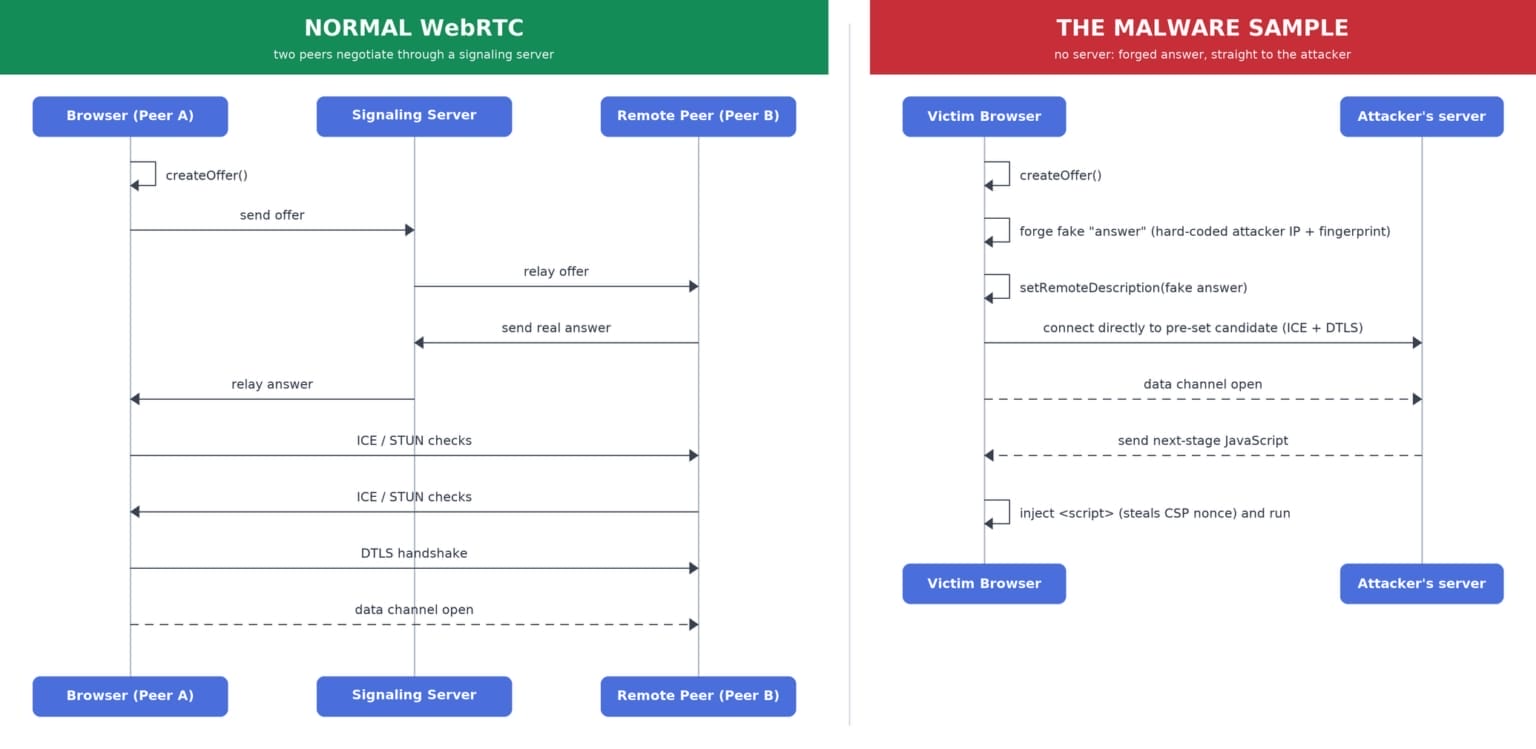
A significant shift observed in later stages of the campaign highlights the attackers’ continuous adaptation and sophistication. The "ClickFix" payload was replaced with a WebRTC data-channel stager. This transition marks a move towards more covert and advanced persistence mechanisms. WebRTC (Web Real-Time Communication) is a legitimate technology enabling real-time communication capabilities directly within web browsers, often used for video conferencing or peer-to-peer data transfer. The attackers ingeniously repurposed this technology to establish an encrypted, out-of-band communication channel to their infrastructure.
The WebRTC stager operates by initiating a peer connection and a data channel, mimicking a standard WebRTC handshake. However, instead of engaging in a genuine negotiation with a remote peer, the malicious script "hand-writes" the session description answer itself and feeds it back into the connection. This ingenious manipulation allows a data channel to the cyberattacker to open without a true, observable handshake, thereby creating a highly stealthy and encrypted communication pathway. Through this covert channel, the stager receives JavaScript code from a hardcoded command-and-control (C2) address. This code is then buffered in the browser’s memory and executed dynamically, typically when the channel closes or after a predefined delay, without ever being saved to the disk. The absence of a physical file on the system further complicates forensic analysis and traditional endpoint detection. The execution in the browser’s DOM (Document Object Model) head also ensures that the malicious activities are deeply integrated into the legitimate web browsing process, making them exceptionally difficult to distinguish from benign operations.
Operational Scale and Defensive Imperatives
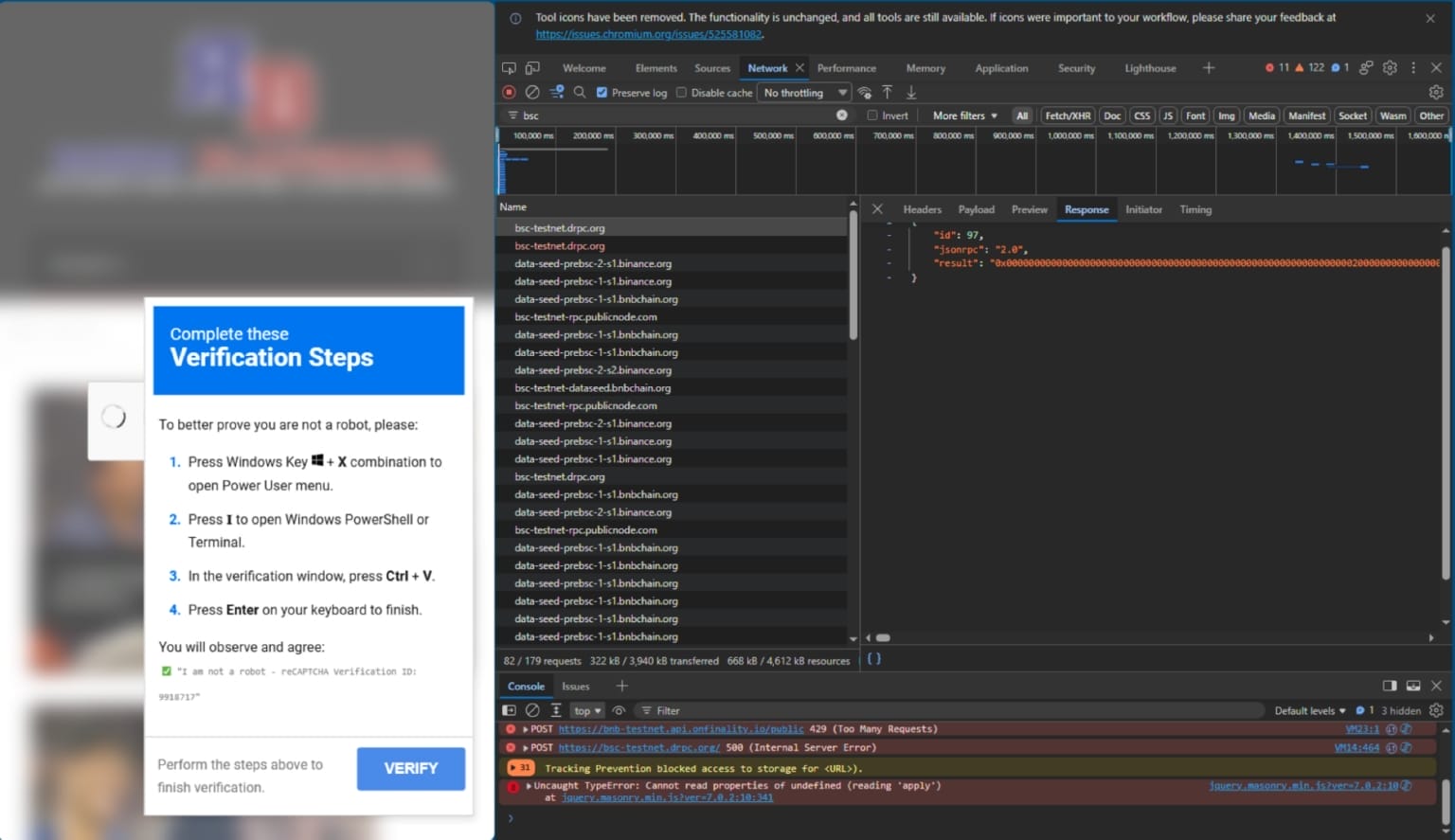
The sheer operational scale of this campaign is a critical concern. Telemetry data indicates a consistent and alarming growth in the number of compromised websites interacting with BSC Testnet RPC endpoints. Since spring, the daily count of infected sites actively calling these endpoints has steadily climbed, reaching nearly 400 unique websites daily in August, with an all-time peak recorded at 536. This sustained level of activity across thousands of compromised digital assets signifies a highly organized and resourced threat actor group, capable of maintaining broad access and adapting their attack infrastructure.
The implications for small and medium-sized businesses (SMBs) are particularly severe. Many SMBs lack the robust security infrastructure and dedicated personnel of larger enterprises, making their websites attractive and vulnerable targets. A compromise can lead to significant reputational damage, potential blacklisting by search engines and security vendors, loss of customer trust, and even regulatory penalties if customer data is exposed. For end-users, visiting these compromised sites poses a direct threat, potentially leading to system infection, data theft, financial fraud, or the further propagation of malware.
Defenders face a complex challenge. Traditional network security measures, designed to block known malicious domains or IP addresses, are less effective against blockchain-based C2. The decentralized nature of the BSC Testnet means there isn’t a single IP to block, but rather a pool of RPC (Remote Procedure Call) endpoints that facilitate interaction with the blockchain. Therefore, a proactive and comprehensive defensive strategy is paramount. Cybersecurity intelligence firms recommend that organizations block the entire pool of BSC Testnet RPC endpoints at the network perimeter. Furthermore, monitoring network traffic for anomalies, specifically non-web UDP traffic associated with WebRTC, can help detect the covert communication channels established by the stager. Behavioral analysis and endpoint detection and response (EDR) solutions capable of identifying suspicious process behavior and in-memory execution are also crucial.
Broader Implications and Future Outlook
This campaign serves as a stark warning about the evolving threat landscape. The adoption of blockchain technology by cybercriminals signifies a new frontier in cyber warfare, offering unparalleled resilience, anonymity, and agility. As blockchain infrastructure becomes more ubiquitous and accessible, it is highly probable that more threat actors will explore its potential for hosting malicious content, coordinating attacks, and even facilitating payment for illicit services. The "Web3" paradigm, while promising for legitimate innovation, also opens new avenues for exploitation by those seeking to operate outside conventional regulatory and security frameworks.
The increasing sophistication of malware delivery mechanisms, moving from simple drive-by downloads to multi-stage, blockchain-backed, and covert communication channels, necessitates a paradigm shift in defensive strategies. Security professionals must move beyond signature-based detection towards advanced behavioral analysis, threat intelligence integration, and continuous monitoring. The ability to detect anomalies in network traffic, identify unusual process execution patterns, and understand the intricate interplay between web-based threats and decentralized technologies will be critical.
Furthermore, the vulnerability of small business websites highlights the need for improved security hygiene across the digital ecosystem. Regular patching, strong access controls, robust web application firewalls, and employee security awareness training are foundational defenses that can significantly mitigate the risk of initial compromise. As cybercriminals continue to innovate, the cybersecurity community must respond with equally innovative and adaptive defense mechanisms, fostering collaborative intelligence sharing and developing advanced detection capabilities that can anticipate and neutralize these emerging threats before they inflict widespread damage. The battle for digital security is increasingly being fought on new technological fronts, and understanding these shifts is paramount for effective protection.




 Aura Kasih
 Ayu Aulia