
 Aura Kasih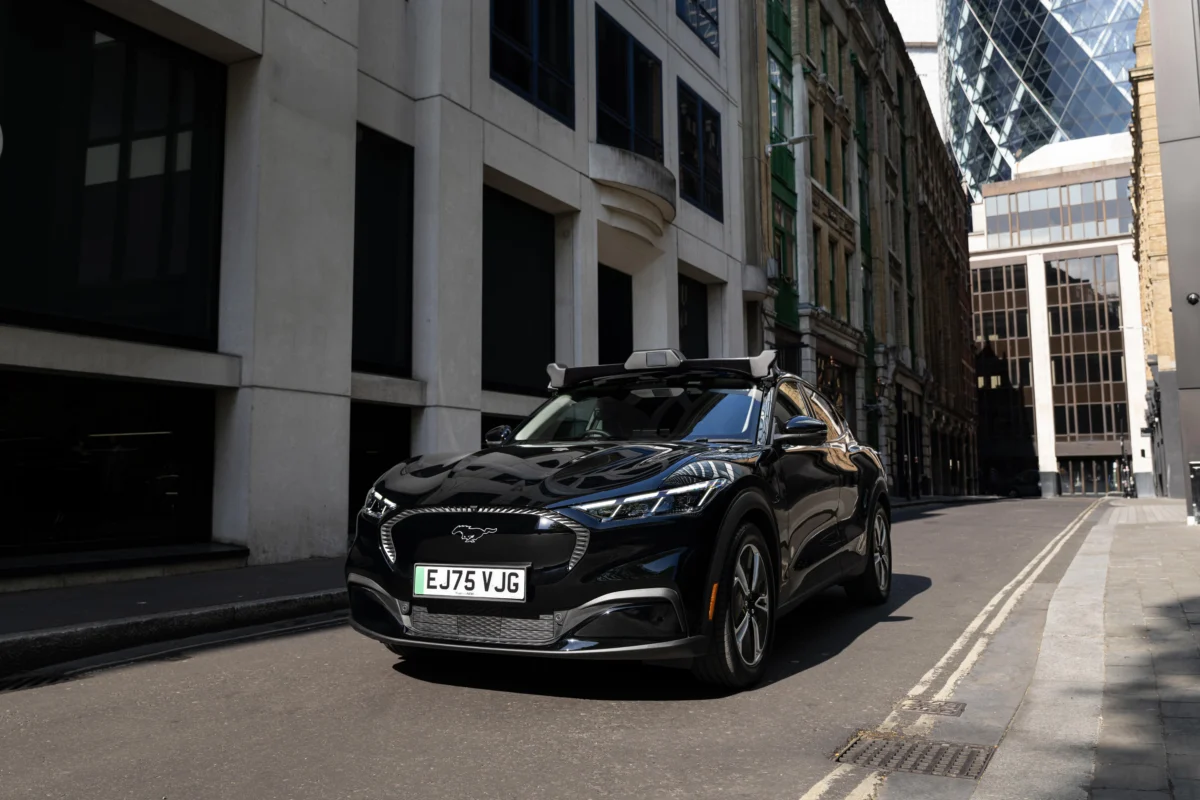
In a significant stride for urban transportation, Uber has officially inaugurated London’s inaugural commercial robotaxi service, securing a first-mover advantage over rival Waymo. This groundbreaking deployment utilizes advanced autonomous driving technology developed by Wayve, a prominent UK-based artificial intelligence startup. Initially, these self-driving vehicles will operate with a safety driver at the helm, a crucial interim measure to ensure passenger confidence and regulatory compliance as the technology matures. This launch marks a watershed moment for Uber, signifying the culmination of years of strategic planning and collaboration with Wayve for a UK market entry. By establishing an early presence, Uber is positioned to shape the nascent robotaxi experience for countless Londoners, while simultaneously testing the global appetite for driverless ride-hailing services beyond the established strongholds of the United States and China, with nascent developments also observed in the Middle East.
For London-based Uber customers eager to experience this pioneering form of mobility, the opportunity is now available through the application’s settings. By opting into specific ride types, such as UberX, Uber Comfort, or Uber Electric, passengers may find themselves assigned to a Wayve-equipped autonomous vehicle, although this pairing is not guaranteed at this initial stage. The current fleet consists of Ford Mustang Mach-Es, with plans to integrate the Nissan Leaf in the near future, reflecting a strategic choice of popular and adaptable electric vehicles. The presence of safety drivers, who are licensed by Transport for London, underscores the commitment to a phased and secure introduction of autonomous technology within the complex urban environment of the capital. These trained professionals will closely monitor the vehicle’s operation from the front seat, providing an essential layer of oversight and reassurance. Uber has indicated a clear trajectory towards the gradual phasing out of these safety drivers as the autonomous system gains further proficiency and public trust, ultimately paving the way for fully driverless operations.
A key differentiator in this London launch is the absence of a geofence, a virtual boundary typically programmed to restrict the operational area of autonomous vehicles. This departure from convention is enabled by Wayve’s innovative AV2.0 system, engineered to transcend the limitations of traditional autonomous driving frameworks. Wayve articulates its AV2.0 approach as a paradigm shift from the legacy AV1.0 methodology. The latter relies on meticulously hand-engineered software stacks, high-definition maps, and rule-based decision-making, inherent limitations that hinder scalability and the capacity to swiftly adapt to novel environments or intricate driving scenarios. In contrast, Wayve’s AV2.0 embraces a singular, learned AI driver. This sophisticated neural network is trained to comprehend its surroundings, proactively identify potential risks, and fluidly adjust to new driving conditions and environments. This marks a departure from the more rigid, map-dependent systems, suggesting a more adaptable and generalizable approach to autonomous navigation.

The operational and maintenance infrastructure for this new fleet will be managed by Uber, in collaboration with Otto Car, a seasoned UK fleet operator. This partnership ensures that the physical aspects of the robotaxi service, including vehicle upkeep and deployment, are handled by established entities within the transportation sector. Wayve, meanwhile, will retain primary responsibility for the advancement and oversight of the autonomous driving system itself, maintaining a focus on the core AI technology that powers the vehicles.
Wayve, established in 2017 by two machine learning PhD candidates from the University of Cambridge, has positioned its autonomous driving system as one capable of continuous learning and adaptation. This allows the vehicles to dynamically adjust to evolving road conditions, diverse weather patterns, and unpredictable driving scenarios, mirroring the learned behaviors of human drivers. The perception system of these vehicles relies on a combination of cameras and radar, a notable departure from the laser-based LiDAR sensors predominantly employed by Waymo and numerous other autonomous vehicle developers. This sensor suite places Wayve in a technological alignment with companies like Tesla, which also eschews LiDAR in its approach to autonomous driving. This sensor strategy emphasizes a camera-centric, AI-driven interpretation of the environment, a choice that has been the subject of considerable debate within the autonomous vehicle industry.
The company asserts that its AV2.0 system is hardware-agnostic, a testament to its flexible software architecture that can be integrated with a variety of sensors and processing units chosen by automotive manufacturers. While the incorporation of additional sensors, such as LiDAR, is technically feasible should an automaker opt for them, Wayve’s foundational design for AV2.0 prioritizes autonomous operation without the necessity of HD maps or prohibitively expensive sensor arrays. Beyond its collaboration with Uber, Wayve is actively engaged with Stellantis, a global automotive group, on the development of advanced hands-free driving technologies. Earlier this year, Wayve successfully secured a substantial $1.2 billion funding round, drawing investment from major players including Uber, Nvidia, Stellantis, Nissan, and Mercedes-Benz, underscoring significant industry confidence in its technological trajectory.
While Uber has made its debut, Waymo has publicly stated its intention to introduce its robotaxi fleet to London before the conclusion of the current year. Furthermore, Lyft is reportedly collaborating with Chinese technology giant Baidu on its own autonomous ride-hailing initiative within the city, with initial operations slated for the Brent neighborhood. This growing constellation of players highlights London’s emergence as a critical proving ground for autonomous mobility solutions on a global scale.

Uber’s strategic vision for autonomous deployment centers on a hybrid model, integrating both human-driven vehicles and robotaxis into its operational network. This approach contrasts with Waymo’s stated preference for a purely driver-free, rider-only service. While Uber and Waymo continue to cooperate in several other cities, such as Austin and Atlanta, their diverging philosophies on autonomous fleet composition have fueled speculation about a potential future separation of their commercial interests. Uber’s commitment to building a comprehensive robotaxi business is underscored by its substantial investment plans, projecting an expenditure exceeding $10 billion over time. This ambitious outlay reflects a clear intent to be a dominant force in the future of autonomous ride-hailing, actively forging partnerships with a diverse array of autonomous vehicle technology providers, including Zoox, Avride, Nuro, Motional, Waabi, and, notably, Wayve. The company’s multi-pronged strategy aims to leverage various technological approaches and partnerships to accelerate the adoption and scalability of its autonomous services.
The introduction of robotaxis in London represents more than just a technological advancement; it signifies a fundamental shift in how urban populations will experience mobility. The implications extend to urban planning, traffic management, and the broader economic landscape. As autonomous vehicles become more prevalent, cities will need to adapt their infrastructure to accommodate these new modes of transport, potentially leading to redesigned streets, dedicated lanes, and sophisticated communication systems between vehicles and city infrastructure. The integration of safety drivers, while a necessary transitional phase, also raises questions about the future of professional driving roles and the potential for job displacement, necessitating proactive strategies for workforce retraining and adaptation.
The competitive landscape in London is intensifying, with each player aiming to capture market share and establish technological dominance. Waymo’s impending launch, alongside Lyft’s partnership with Baidu, suggests a fierce race to attract early adopters and gather invaluable real-world operational data. The success of these ventures will hinge not only on technological prowess but also on public acceptance, regulatory frameworks, and the ability to navigate the complexities of a densely populated and dynamic urban environment. The data collected from these initial deployments will be crucial for refining algorithms, improving safety protocols, and ultimately demonstrating the viability and benefits of robotaxi services to a wider audience.
The long-term vision for autonomous mobility in London and beyond hinges on a delicate balance between innovation and public trust. The phased introduction, beginning with safety drivers, is a prudent strategy designed to build confidence and address potential concerns. As the technology matures and regulatory bodies become more comfortable with its capabilities, the transition to fully driverless operations will likely accelerate. This evolution promises to reshape urban commuting, offering potentially safer, more efficient, and more accessible transportation options for all residents. The ongoing developments in London serve as a crucial barometer for the future of autonomous transportation, providing critical insights into the challenges and opportunities that lie ahead for this transformative industry. The successful integration of robotaxis into the fabric of daily life in one of the world’s most iconic cities will undoubtedly set a precedent for other global metropolises grappling with the opportunities and challenges of next-generation mobility.




 Lisa Mariana
 Ayu Aulia

 Safa Marwah