
 Ayu Aulia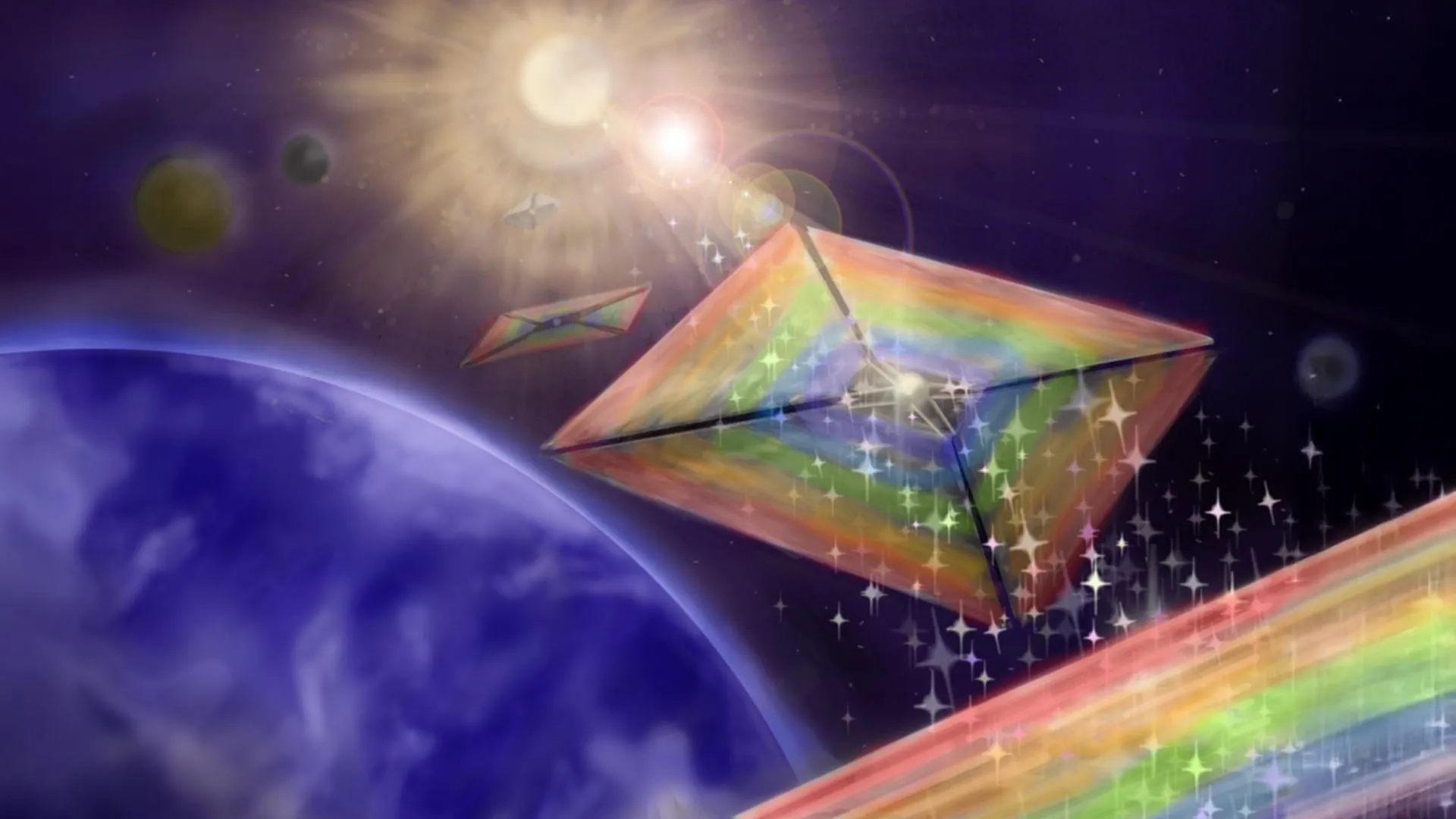
The monumental endeavor of interstellar travel necessitates propulsion systems radically more advanced than conventional chemical rockets, with solar sails emerging as a prime candidate, leveraging the minuscule yet persistent pressure of light for propulsion. While immensely powerful ground-based lasers could theoretically accelerate these vast, reflective structures to a significant fraction of the speed of light, recent theoretical investigations indicate that these ambitious craft may encounter an unexpected drag effect once they approach approximately 75% of the cosmic speed limit. This discovery presents a complex challenge for the engineering and physics required to realize humanity’s long-held dream of reaching other star systems within a practical timeframe.
The Foundational Principle: Harnessing Photonic Momentum
At its core, a solar sail operates on the principle of momentum transfer from photons. Light, despite being massless, carries momentum. When photons strike a surface, they impart a tiny push. Over vast distances and with sufficiently large and reflective sails, this cumulative force can accelerate a spacecraft to extraordinary velocities, far exceeding what can be achieved with chemical propellants, which are limited by the rocket equation and the mass of their fuel. The concept envisions massive laser arrays on Earth or in orbit beaming concentrated light onto a sail, providing continuous acceleration. This direct conversion of light energy into kinetic energy for the spacecraft bypasses the need to carry propellant, offering a scalable and potentially unlimited source of thrust.
Researchers typically categorize the forces exerted by photons on a solar sail into distinct components. The primary and most substantial contribution stems from the incident light, representing the raw momentum imparted by photons directly striking the sail’s surface. A secondary, yet significant, component is derived from specular reflection, where photons bounce off the sail in a perfectly mirrored fashion, imparting additional momentum as their direction of travel is reversed relative to the sail’s surface. The third, and weakest, force arises from diffuse scattering. In this process, photons are absorbed by the sail material and subsequently re-emitted in random directions. While individually weak, the aggregate effect of these re-emitted photons also contributes to the overall thrust at lower velocities. For conventional space travel, operating at velocities far below relativistic speeds, all these effects cumulatively contribute to propelling the sail forward, steadily increasing its velocity. However, the dynamics become considerably more intricate as the spacecraft accelerates into the relativistic regime.
The Onset of Relativistic Effects: Doppler Shift and Diminished Thrust
As a light sail accelerates away from its laser source, the very nature of the light interacting with it begins to change due to relativistic phenomena. The most immediate and impactful of these is the relativistic Doppler effect. Analogous to how the pitch of an ambulance siren drops as it moves away, the frequency of light reaching the receding sail undergoes a significant decrease, shifting towards the red end of the spectrum. Since the energy of a photon is directly proportional to its frequency (E=hf, where h is Planck’s constant and f is frequency), this redshifting implies a reduction in the energy of individual photons. Consequently, the momentum carried by each photon also diminishes.
This reduction in photon energy and momentum directly impacts the thrust generated by all three categories of photon-sail interaction: incident light, specular reflection, and diffuse scattering. The effect is cumulative; the faster the sail travels, the more pronounced the Doppler shift becomes, and the less effective the laser propulsion system becomes at imparting further acceleration. This leads to a progressively less efficient thrust-to-power ratio. While the laser continues to push the sail forward, the rate of acceleration declines, making the final stages of reaching ultra-high velocities increasingly challenging from an energy perspective. The continuous expenditure of vast amounts of laser energy yields diminishing returns in terms of speed increase.
The Unexpected Twist: Diffuse Scattering Transforms into Relativistic Drag
The situation undergoes an even more dramatic transformation once the lightsail reaches approximately 75% of the speed of light (0.75c). At this extreme velocity, another critical relativistic phenomenon, relativistic light aberration, becomes dominant. To an observer stationary relative to the laser source, light scattered diffusely from the sail begins to be predominantly directed forward, aligned with the sail’s direction of travel.
This forward-directed re-emission of photons, while seemingly innocuous, has a profound consequence. According to Newton’s third law of motion – for every action, there is an equal and opposite reaction – the momentum imparted by these forward-directed scattered photons generates a reactive force in the opposite direction of the sail’s motion. In essence, the diffuse scattering, which previously contributed a minor forward thrust, transitions into a source of drag once the spacecraft exceeds roughly 75% of the speed of light. Although diffuse scattering is the weakest of the three primary forces acting on the sail, its transformation into a drag component means that the overall efficiency of the propulsion system experiences a substantial and unexpected reduction at these extreme velocities. It is crucial to note that the incident and specularly reflected light still provide a net forward push, so the total force on the sail does not become negative, meaning the sail continues to accelerate, albeit at a significantly reduced rate and with far greater energy input required per unit of acceleration.
Implications for Interstellar Mission Design
This theoretical finding has significant implications for the conceptual design and feasibility studies of future interstellar probes. The added drag effect at 0.75c means that achieving target velocities for interstellar travel, often envisioned to be between 0.1c and 0.2c for missions like Breakthrough Starshot, might be more complex than previously modeled. While 0.75c is considerably higher than these initial targets, the understanding of such relativistic effects is crucial for future iterations of interstellar propulsion systems that aim for even higher speeds, potentially reducing transit times to decades rather than centuries.
Engineers and physicists must now factor in this relativistic drag when calculating energy budgets, acceleration profiles, and total travel times. It underscores the need for highly sophisticated sail materials that minimize diffuse scattering or, ideally, re-direct it for thrust. The cumulative effect of diminished thrust due to the Doppler shift combined with the onset of relativistic drag from diffuse scattering paints a picture of increasingly arduous acceleration beyond a certain velocity threshold, demanding even greater power from the laser source and more robust sail designs.
Challenges Beyond Radiative Dynamics: A Multifaceted Problem
The current theoretical framework primarily focuses on the pure radiative dynamics of light-sail interaction. However, real-world interstellar solar sails would face an array of additional, non-radiative challenges that further complicate their journey:
- Interstellar Medium Interaction: The vast emptiness of space is not entirely empty. A light sail traveling at relativistic speeds would constantly collide with atoms (primarily hydrogen and helium) and dust grains constituting the interstellar medium. Even a sparse medium can exert significant drag at these velocities, potentially causing erosion, damage, and further slowing the spacecraft.
- Thermal Management: The immense power required from ground-based lasers to accelerate a sail to relativistic speeds would inevitably generate substantial heat. Real sail materials have finite thermal limits; they could overheat, warp, or even melt under such intense laser bombardment. Efficient heat dissipation or extreme thermal resistance would be paramount.
- Material Science Limitations: Current sail models often idealize the material as a perfect mirror. In reality, no material achieves 100% reflection. Imperfections, absorption, and non-uniformities would all reduce efficiency. Developing ultra-light, ultra-strong, ultra-reflective, and thermally resilient materials is a monumental materials science challenge.
- Beam Focusing and Stability: Maintaining a precisely focused laser beam on a small, distant, and rapidly accelerating sail over interstellar distances is an engineering feat of unprecedented scale. The sail would also need mechanisms for self-stabilization and trajectory correction to remain centered within the laser beam.
- Spacetime Curvature: While often simplified out in initial models, the subtle curvature of spacetime due to massive objects within our galaxy could also have minute, yet cumulative, effects on a trajectory over light-year distances, necessitating precise navigation.
Advanced Materials and Mitigation Strategies
Fortunately, the very physics revealing these challenges might also offer pathways to solutions. Engineers are actively exploring advanced materials such as metamaterials and photonic crystals. These engineered materials possess unique optical properties not found in nature, allowing for precise manipulation of light at specific wavelengths. In principle, such materials could be designed to:
- Minimize Diffuse Scattering: By tailoring the material’s surface at the nanoscale, it might be possible to significantly reduce diffuse scattering, thereby mitigating the relativistic drag effect.
- Re-direct Scattered Light: More ambitiously, metamaterials could potentially be engineered to re-direct what would normally be diffusely scattered light into a direction that still contributes to forward thrust, effectively turning a drag source back into a propulsive force.
- Enhanced Reflection: Optimize reflection efficiency to near-perfect levels, maximizing thrust from incident and specularly reflected light.
- Thermal Resilience: Develop materials with superior thermal emissivity or intrinsic resistance to extreme temperatures, allowing them to withstand powerful laser pulses without degrading.
- Self-Correction and Stability: Photonic crystal structures could potentially be integrated into the sail design to automatically correct its orientation and stabilize its trajectory by subtly altering the light pressure distribution across its surface, keeping it centered within the laser beam.
The Long Horizon of Interstellar Flight
The development of a fully operational interstellar solar sail remains a distant prospect, necessitating breakthroughs across multiple scientific and engineering disciplines. Understanding these complex high-speed relativistic effects, however, represents a crucial step in the long and arduous journey toward achieving interstellar flight. This theoretical work provides invaluable insights into the fundamental physical limits and challenges that must be overcome.
If humanity is ever to dispatch probes to other star systems, or perhaps even crewed missions, engineers will require an exhaustive and detailed comprehension of every conceivable force, both propulsive and resistive, that could influence a spacecraft’s journey across the vast cosmic ocean. This latest research underscores the profound complexity of pushing the boundaries of physics and engineering to reach for the stars, highlighting that even the very light intended to propel us forward can, under extreme conditions, present an unforeseen obstacle. It reinforces the scientific imperative for continued theoretical investigation and experimental validation as we collectively endeavor to transform the dream of interstellar travel into a tangible reality.



 Lisa Mariana
 Aura Kasih


 Safa Marwah