Aura Kasih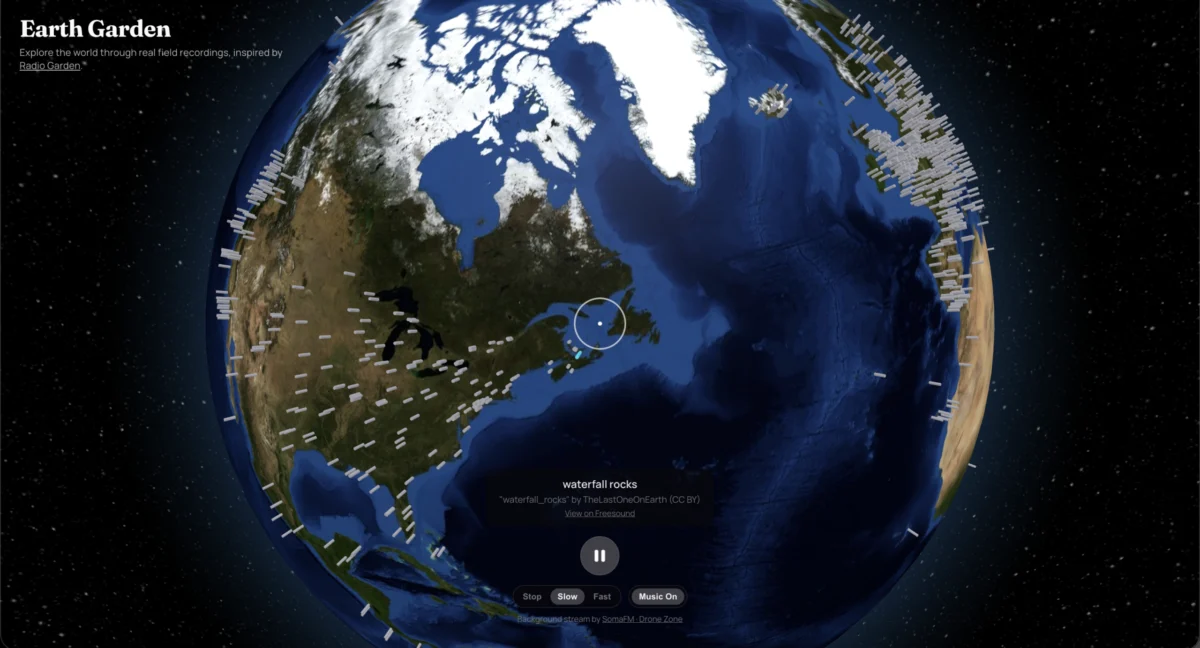
A revolutionary digital platform, aptly named Earth Garden, is ushering in a new era of global exploration, not through visual landscapes, but through the rich tapestry of environmental soundscapes. This innovative project leverages the vast archives of Freesound, a community-driven repository of audio samples, to curate an interactive, globe-spanning auditory experience, allowing users to traverse continents and climates solely through the power of recorded sound.
Earth Garden emerges as a captivating testament to the power of environmental audio, offering a unique lens through which to perceive the world. Moving beyond the limitations of traditional travelogues and visual documentaries, the platform invites users to embark on immersive sonic odysseys, virtually transporting them to diverse locales through meticulously collected field recordings. From the gentle murmur of Atlantic waves caressing secluded island shores to the vibrant symphony of crickets in the heart of Tanzania, or the percussive rhythm of rainfall on the bustling streets of Manhattan, Earth Garden provides an auditory passport to the planet’s most evocative sound environments.
The genesis of Earth Garden can be traced to a burgeoning appreciation for the nuanced power of ambient sound. Field recordings, long cherished by musicians and sound designers for their ability to imbue creative works with authenticity and depth, have increasingly found their way into broader cultural appreciation. They serve not only as atmospheric backdrops for work or relaxation but also as potent tools for active, focused listening. The subtle variations in a babbling brook, the complex cacophony of an urban environment – these sonic details offer a profound connection to place and moment. Earth Garden capitalizes on this burgeoning interest, transforming a collection of individual sounds into a cohesive, explorable atlas.
The platform draws its extensive audio library from Freesound.org, a collaborative database that has become an indispensable resource for creators across various disciplines. Freesound’s open-access model, which encourages users to upload and share sound recordings under Creative Commons licenses, has fostered an unparalleled diversity of auditory content. This democratized approach to sound archiving is precisely what fuels Earth Garden’s expansive reach. By tapping into this global repository, Earth Garden effectively democratizes access to the planet’s sonic heritage, making it accessible to anyone with an internet connection.
The inspiration behind Earth Garden’s interactive map interface is clearly drawn from the success of platforms like Radio Garden, which revolutionized the way users discover and engage with global radio broadcasts. Earth Garden applies a similar principle to environmental audio, creating a dynamic visual representation of the world that is intrinsically linked to its sonic output. As a digital reticle gracefully navigates the globe, the audio environment seamlessly transitions, immersing the listener in the distinct soundscape of each new region encountered. This intuitive design fosters a sense of serendipitous discovery, encouraging users to explore beyond their immediate sonic familiarity.
While the vastness of Freesound provides an extraordinary foundation, it is important to acknowledge the inherent variability in recording quality and volume that can accompany such a large, user-generated dataset. This can sometimes lead to inconsistencies in playback experience. Furthermore, the current concentration of recordings tends to favor regions with more active Freesound communities, such as North America and Europe, particularly the United Kingdom. However, the platform’s ongoing growth and the increasing global participation in sound archiving suggest that this geographic distribution will continue to evolve, offering a more balanced representation of the world’s soundscapes over time.

Earth Garden’s commitment to user experience extends to optional enhancements. For those seeking an even deeper immersion, the platform offers the ability to overlay generic ambient drones. This feature can augment the primary field recordings, providing a richer, more layered sonic texture that can further enhance focus, relaxation, or creative engagement. The subtle addition of these synthesized elements can complement the natural nuances of the recorded environments, creating a more comprehensive auditory experience tailored to individual preferences.
The implications of Earth Garden are far-reaching, extending beyond mere entertainment or passive listening. In an era increasingly dominated by visual media, the platform serves as a powerful reminder of the auditory dimension of our world, an often-overlooked but critically important aspect of human perception and environmental awareness. For educators, Earth Garden presents an invaluable tool for teaching geography, environmental science, and cultural studies, offering students an engaging and memorable way to connect with distant locations and their unique sonic identities. Imagine a classroom experiencing the distinct sounds of a rainforest, a bustling marketplace, or a serene coastline – a far more visceral and impactful learning experience than static images or text alone.
Moreover, for individuals interested in sound design, music production, or the burgeoning field of sonic art, Earth Garden provides an accessible and inspiring source of raw material. The platform’s curated selection of field recordings can serve as a gateway to the broader Freesound archive, potentially sparking new creative projects and explorations. It underscores the creative potential inherent in everyday sounds, encouraging a deeper appreciation for the acoustic environment that surrounds us.
The project also touches upon broader themes of environmental stewardship and the documentation of our changing world. As human activities and climate change continue to alter natural habitats and urban landscapes, the preservation of these sonic environments becomes increasingly significant. Field recordings captured today may serve as invaluable historical documents for future generations, offering a unique auditory record of what our planet sounds like at a specific point in time. Earth Garden, by making these recordings accessible and explorable, contributes to this vital act of sonic archiving and cultural preservation.
Looking ahead, the potential for Earth Garden is immense. As the Freesound community continues to grow and diversify, the platform will undoubtedly benefit from an even richer and more geographically balanced collection of recordings. Future iterations could incorporate features such as user-generated playlists, thematic sound tours focusing on specific environments (e.g., "Sounds of the Arctic," "Urban Soundscapes of Asia"), or even opportunities for users to contribute their own curated selections. The integration of advanced audio processing techniques could also enhance the listening experience, perhaps by offering tools for noise reduction, equalization, or spatialization, further refining the immersive quality of the recordings.
Furthermore, the educational and research applications of Earth Garden are ripe for expansion. Partnerships with academic institutions could lead to the development of dedicated research modules, allowing scientists and geographers to analyze sonic data for insights into biodiversity, human activity patterns, and the impact of environmental changes. The platform could also evolve to include more detailed metadata, providing users with information about the specific recording equipment used, the time of day, weather conditions, and the ecological context of each sound.
In conclusion, Earth Garden represents a significant and innovative step in how we interact with and understand our world. By harnessing the power of crowd-sourced environmental audio, it offers a unique and deeply engaging pathway to global exploration. It is a testament to the richness and diversity of our planet’s sonic tapestry, inviting listeners to tune in, explore, and discover the world, one sound at a time. The platform not only provides a fascinating auditory journey but also underscores the growing importance of environmental sound in our increasingly interconnected and visually saturated lives, offering a valuable resource for education, creativity, and a deeper connection to the Earth.




 Safa Marwah
 Ayu Aulia