
 Lisa Mariana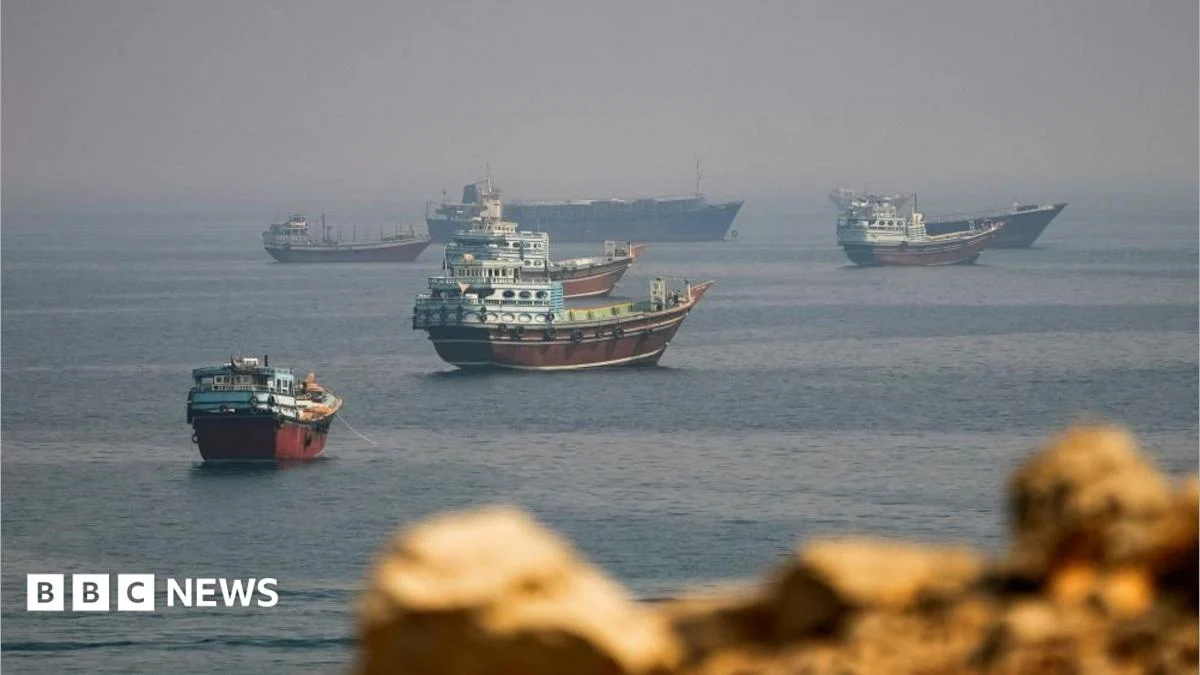
A dangerous new phase in the protracted geopolitical confrontation between the United States and Iran has commenced, following a series of Iranian missile and drone assaults against American military installations and allied territories across the Middle East, launched in direct response to renewed U.S. military actions earlier in the week. This significant surge in hostile engagement, characterized by sophisticated weaponry and extensive geographic reach, unfolded as international observers grappled with reports from Tehran indicating tragic civilian casualties, including a child, at a wedding celebration in southern Iran, allegedly caused by U.S. ordnance. The reported incident at Sirik has injected a deeply destabilizing element into an already combustible situation, with both Washington and Tehran issuing stern warnings and reaffirming their respective positions on the legitimacy of their military operations.
The recent cascade of events began with the United States Central Command (CENTCOM) announcing a resumption of offensive operations against targets within Iran, a strategic shift that marked the first such overt actions since late July. These strikes, executed primarily against facilities associated with the Islamic Revolutionary Guard Corps (IRGC), were justified by American authorities as necessary responses to what they described as persistent attempts by the IRGC to disrupt commercial maritime navigation in the vital Strait of Hormuz and to menace U.S. personnel deployed in the broader region. Specific targets of these initial American strikes included rocket launcher sites on Larak Island, a strategically significant location within the Strait.
Almost immediately following the American actions, Iranian state media and the Iranian Red Crescent reported a devastating incident in Sirik county, situated on Iran’s southern coastline along the Strait of Hormuz. Accounts indicated that shrapnel from a U.S. missile attack had struck a residential area where a wedding ceremony was underway, resulting in the deaths of five individuals, among them a child, and causing injuries to over fifty others. The U.S. military, through statements from CENTCOM officials such as Captain Tim Hawkins, acknowledged awareness of these reports but categorically denied intentionally targeting civilians, asserting a fundamental distinction between American operational doctrine and that of the IRGC. This stark divergence in narratives underscores the profound information warfare dimension inherent in the conflict, where perceptions of responsibility and culpability are fiercely contested.
The IRGC, a formidable and ideologically driven branch of Iran’s armed forces, swiftly condemned the U.S. strikes and vowed severe retribution, issuing a public declaration that the United States would "regret" its actions. True to its word, by the early hours of Wednesday, Tehran initiated a widespread and coordinated counter-offensive. Iranian semi-official news outlets, notably Tasnim, reported the launch of a volley of ballistic missiles directed at a U.S. Marine base located near Aqaba in Jordan. The Jordanian Armed Forces confirmed the engagement, stating that their sophisticated air defense systems had successfully intercepted thirteen ballistic missiles, with ten being destroyed mid-flight and the remaining three impacting in sparsely populated areas. Crucially, Jordanian authorities reported no fatalities or injuries as a direct result of these incoming projectiles, though a temporary public advisory was issued for residents in the Aqaba and Mafraq governorates regarding potential falling debris.
The scope of Iran’s retaliatory campaign extended beyond Jordan. Kuwaiti military officials confirmed that their national air defenses had been activated to counter incoming Iranian missile threats early Wednesday morning. Concurrently, Iranian state media corroborated reports of multiple explosions heard across Bahrain, indicating that American assets or allied interests within the island nation had also come under attack. Further east, in Iraq’s autonomous Kurdistan region, the IRGC explicitly claimed responsibility for striking U.S. military bases with a combination of missiles and drones. According to Iran’s state-run IRNA news agency, these targeted assaults successfully destroyed a maintenance center, several warehouses, and various pieces of military equipment, underscoring the precision and destructive potential of the Iranian arsenal.
The current escalation did not emerge in a vacuum. The geopolitical landscape of the Middle East has been characterized by a persistent and multifaceted rivalry between the United States and Iran, often manifesting through proxy conflicts and indirect confrontations. The Strait of Hormuz, a narrow maritime choke point through which a significant portion of the world’s oil supply transits, remains a primary flashpoint. Both nations have previously engaged in actions threatening commercial shipping in these critical waters, with Iran asserting its sovereign right to control passage and the U.S. enforcing naval blockades to counter perceived Iranian aggression and enforce sanctions.
A crucial backdrop to the present hostilities is the expiration of a previously negotiated Memorandum of Understanding (MOU) between the U.S. and Iran in June. This agreement had aimed to institute a temporary ceasefire and de-escalate tensions, particularly following a tumultuous period in late February when a series of wide-ranging U.S. and Israeli strikes against Iran were met with Iranian counter-attacks targeting Israel, U.S. bases, and Gulf allies. That particular cycle of violence had notably culminated in Iran effectively closing the Strait of Hormuz to marine traffic, sending shockwaves through global energy markets. The lapse of the MOU signaled a return to a more aggressive posture from both sides, stripping away a diplomatic veneer that had, however tenuously, managed to contain direct military engagements.
The current military actions are also intertwined with Washington’s broader "maximum pressure" campaign against Tehran. On August 24, the U.S. initiated a fresh round of stringent sanctions, explicitly designed to further isolate Iran economically and to broaden the scope of secondary sanctions against any entities or nations perceived as assisting Tehran. Speaking at a G20 finance ministers meeting, U.S. Treasury Secretary Scott Bessent highlighted robust international support for these measures, noting that many U.S. allies had pledged to "do whatever is necessary" in enforcing the sanctions regime. From Tehran’s perspective, however, these economic pressures are largely dismissed as a continuation of previous U.S. tactics, perceived as an attempt to compensate for what Iranian officials claim was a military failure in recent regional conflicts. Iranian President Masoud Pezeshkian, nonetheless, offered a glimmer of potential de-escalation, indicating that Iran would reciprocate if the U.S. demonstrated a renewed commitment to the aforementioned agreement.
The rhetoric accompanying these military maneuvers further amplifies the risk of miscalculation. Former U.S. President Donald Trump, commenting on the initial American strikes, issued a stark warning that any Iranian retaliation would be met with responses at "a much harder and higher level." Such pronouncements, coupled with the IRGC’s own defiant pledges, create a volatile environment where each action and reaction is scrutinized for weakness or resolve, potentially compelling both sides into further escalation to save face or assert dominance.
The implications of this renewed cycle of violence are far-reaching. Regionally, the stability of the Gulf Cooperation Council states, hosts to significant U.S. military presence and crucial to global energy security, is directly threatened. Any sustained disruption to maritime traffic in the Strait of Hormuz would have immediate and severe consequences for international trade and oil prices, impacting economies worldwide. The potential for a wider regional conflict, drawing in other actors and proxies, remains a significant concern for international security analysts.
From an analytical standpoint, the Iranian response demonstrates a calculated yet forceful posture. By striking multiple U.S. installations across different countries, Tehran signals its capability to project power and impose costs across a wide geographical expanse, thereby attempting to deter further American aggression. The specific targeting of military assets, while avoiding direct engagement with civilian centers, appears designed to demonstrate resolve without necessarily provoking an all-out war – a fine line that both sides are currently walking. However, the reported civilian casualties in Sirik, irrespective of intent, provide a potent propaganda tool for Iran and fuel domestic resentment, potentially increasing pressure on the Iranian leadership to maintain a robust retaliatory stance.
Looking ahead, the immediate future appears fraught with uncertainty. The expiration of the MOU removes a significant diplomatic off-ramp, leaving military channels as the primary mode of communication, albeit through actions rather than words. The international community, particularly major powers with vested interests in regional stability and global energy flows, faces a critical juncture. The absence of robust multilateral efforts to mediate or de-escalate the situation could see the current tit-for-tat exchanges spiral into a more expansive and devastating conflict. The effectiveness of current sanctions, the resolve of the U.S. to maintain its military posture, and Iran’s capacity to absorb further pressure while continuing its retaliatory strategy will all play crucial roles in shaping the trajectory of this perilous confrontation. The path forward demands a delicate balance of deterrence and de-escalation, a balance that appears increasingly precarious in the wake of the latest attacks.




 Aura Kasih
 Ayu Aulia

 Safa Marwah