
 Ayu Aulia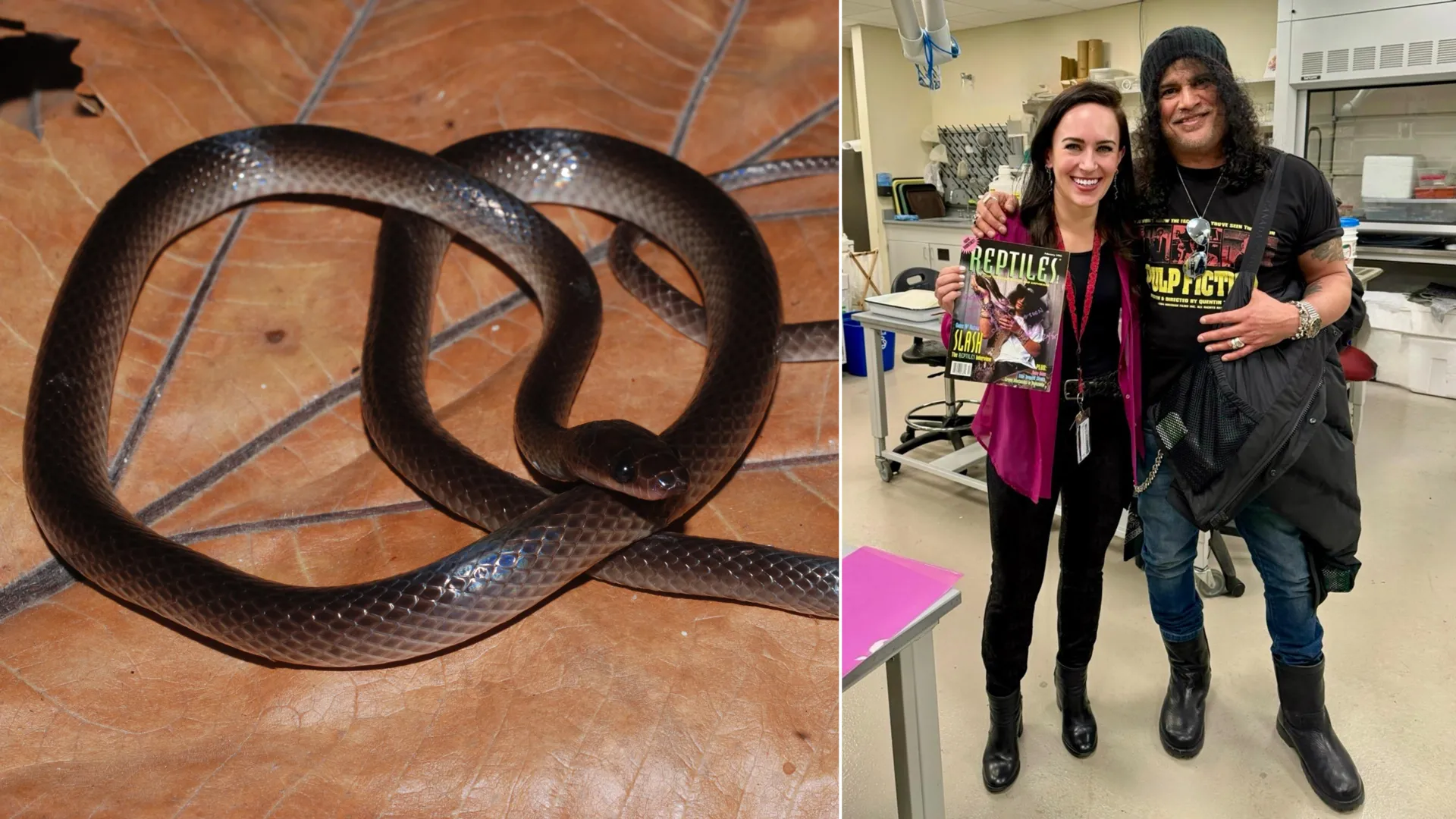
A previously undocumented serpent species, recently identified in the biologically rich yet underexplored forests of New Guinea, has been formally designated Lielaphis slashi, paying tribute to Saul Hudson, globally recognized as Slash, the renowned guitarist of Guns N’ Roses, whose profound and sustained passion for herpetology and natural history institutions has long been evident. This scientific honor underscores a distinctive intersection of popular culture and biological discovery, recognizing not merely a celebrity figure but a genuine advocate for reptile conservation and scientific inquiry.
The Intersection of Music and Herpetology
Saul Hudson, universally known by his stage name Slash, has achieved global acclaim as the lead guitarist for the iconic rock band Guns N’ Roses, crafting a distinctive sound that has influenced generations of musicians. Beyond his unparalleled musical prowess, however, lies a deep-seated and enduring fascination with reptiles. This lifelong interest has transcended mere hobbyism, evolving into active support for zoos, natural history museums, and various conservation initiatives. Such dedication from a figure of his stature provides a unique bridge between mainstream public awareness and the often-overlooked realm of herpetological science. The formal naming of Lielaphis slashi, or Slash’s groundsnake, represents a significant scientific acknowledgment of this commitment, offering a rare moment where the worlds of rock ‘n’ roll and zoological nomenclature converge.
Slash himself expressed profound gratitude and surprise at the recognition, stating, "As a long-time herpephile, I am extremely honored and humbled to have Lielaphis slashi from New Guinea named after me. It is truly exciting; I never would have imagined this moment would arrive." His statement reflects the genuine enthusiasm of an individual whose personal passion has now been indelibly etched into the scientific record.
A Personal Connection to Scientific Discovery
The decision to bestow this particular name was deeply personal for Dr. Sara Ruane, the Field Museum’s Associate Curator of Herpetology and a lead author on the descriptive paper published in Zootaxa. Dr. Ruane’s journey into herpetology was, in part, inspired by Slash’s public persona. She recounts a formative experience from her childhood: "Guns N’ Roses has been one of my favorite bands since I was in first grade, and by fifth grade, I had already told my teacher that I wanted to be a herpetologist – a scientist who studies reptiles – when I grew up." This early ambition found an unexpected connection when, at the age of twelve, she encountered an image of Slash on the cover of Reptiles Magazine, holding his pet reticulated python. This visual reinforcement of a rock icon embracing her own burgeoning scientific interest left a lasting impression.
Years later, as a seasoned scientist with the authority to assign official names to newly recognized reptile species, Dr. Ruane revisited that seminal magazine interview. Her recollection of Slash’s articulate discussions about his profound appreciation for museums, zoos, and the broader field of natural history, coupled with his childhood anecdotes of searching for snakes in the wild, resonated deeply with her own experiences and values. This confluence of shared passions solidified her conviction that Slash represented an ideal individual to honor through the scientific nomenclature of a new species. The naming therefore serves not only as a tribute to Slash but also as a testament to the inspirational power that public figures can wield in shaping future scientific endeavors.
Unveiling a Mystery from New Guinea’s Biodiversity Hotspot
The opportunity to name Lielaphis slashi arose from the discovery of a reddish-brown snake, approximately 28 inches in length, collected from the dense, biodiverse forests of New Guinea. This island, the world’s second-largest after Greenland, is geographically divided between Indonesia and Papua New Guinea. It stands as one of Earth’s most significant biodiversity hotspots, boasting an extraordinary array of flora and fauna, much of which remains poorly documented by the scientific community. The island’s complex topography, vast untouched rainforests, and historical isolation have fostered unique evolutionary pathways, resulting in a high degree of endemism.
The initial encounter with this enigmatic snake occurred during nocturnal fieldwork in 2006. Dr. Chris Austin, a distinguished professor and curator of herpetology at the Louisiana State University Museum of Natural Science and a co-author of the descriptive paper, discovered the specimen. He elaborated on the challenges of such expeditions: "These New Guinea groundsnakes are nocturnal, so the best way to find them is at night. They are typically found just after sunset at the base of large trees where they are looking for something to eat." The inherent risks of fieldwork in such environments are substantial, particularly given the presence of numerous highly venomous snake species that can bear a striking resemblance to their non-venomous counterparts. This necessitates extreme caution and expert identification skills during collection.
The collaboration between Dr. Ruane and Dr. Austin commenced in 2016, following Dr. Ruane’s doctoral studies. Their joint efforts focused on unraveling the complexities of New Guinea’s understudied ophidian populations, a partnership that has continued to yield significant insights into the region’s herpetofauna.
Rigorous Scientific Delineation of a New Species
Initially, the collected snake did not immediately present obvious morphological characteristics that definitively marked it as a species previously unknown to science. The subtle distinctions often require meticulous examination and advanced analytical techniques. The definitive identification of Lielaphis slashi as a novel species was ultimately achieved through a comprehensive suite of laboratory analyses, combining cutting-edge genetic methodologies with detailed morphological comparisons and ecological niche modeling.
Dr. Tianqi Huang, the study’s first author and a post-doctoral researcher working with Dr. Ruane at the Field Museum, elaborated on the rigorous process: "Using multiple cutting-edge genetic analyses, we found that L. slashi is genetically distinct from other similar snakes in the same genus." These genetic analyses typically involve sequencing specific mitochondrial and nuclear DNA markers. By comparing the genetic sequences of the newly discovered specimen with those of known species within the Lielaphis genus, researchers can quantify genetic divergence. Sufficient genetic differences, exceeding established thresholds for intraspecific variation, provide strong evidence for species-level distinction.
Complementing the genetic data were detailed morphological assessments. "The combination of physical characteristics, like differences in numbers of scales when compared with other species, and the genetic evidence is what led us to realize that it is an entirely new species," Dr. Huang noted. Herpetologists meticulously count and compare various scale patterns, including ventral, subcaudal, and dorsal scales, as well as head scutellation, which often exhibit subtle but consistent differences between closely related species. Furthermore, ecological modeling played a crucial role. "We also used ecological modeling to show that L. slashi‘s preferred habitat is different from similar snakes," Dr. Huang added. This technique predicts the environmental conditions under which a species is most likely to occur, thereby revealing distinct ecological niches and further supporting its designation as a separate species.
Ecological Insights into Slash’s Groundsnake
Despite its formal scientific description, detailed knowledge regarding the behavior and ecology of Lielaphis slashi remains limited. Observing snakes in their natural habitat poses significant challenges, as Dr. Ruane explained: "It’s incredibly hard to observe snakes in the wild before they slither away, so our knowledge about L. slashi is limited." However, anatomical features offer valuable clues about its likely lifestyle and dietary preferences.
Snakes within the Lielaphis genus are frequently characterized by the presence of enlarged teeth situated towards the rear of their mouths. This specialized dentition suggests a particular feeding strategy. Dr. Ruane posits that "New Guinea groundsnakes may use [these teeth] to grab on to and eat small, slippery-scaled lizards and the eggs of other reptiles; this snake isn’t grasping and squeezing its prey like a boa constrictor." This indicates a hunting method focused on securing agile, smooth-bodied prey rather than constriction. Crucially, while Guns N’ Roses has historically been dubbed "the most dangerous band in the world," its reptilian namesake presents no such threat to humans. Lielaphis slashi does not produce venom capable of inflicting serious harm upon a human, reinforcing its role as an integral, non-threatening component of its ecosystem.
Conservation Imperatives in New Guinea’s Threatened Forests
While Lielaphis slashi poses no danger to human populations, human activities pose a significant and escalating threat to the species and the myriad other organisms inhabiting New Guinea’s fragile forest ecosystems. The island’s rich natural resources and burgeoning population pressures drive extensive land-use changes. Dr. Ruane highlighted the immediate dangers: "The habitats that Slash’s groundsnake is from are under threat from industries like coffee farming and mining." These activities, alongside logging and agricultural expansion, lead to widespread deforestation, habitat fragmentation, and degradation, imperiling countless species, many of which remain undiscovered.
The formal identification and description of new species, such as Lielaphis slashi, are not merely academic exercises; they are fundamental steps in global conservation efforts. "That’s part of why describing the species that live there is important. Every species should be recognized in order for us to better understand how ecosystems work, how everything fits into the environment," Dr. Ruane emphasized. Without formal recognition, species exist in a scientific vacuum, making it virtually impossible to assess their conservation status, monitor their populations, or implement targeted protection strategies. "We can’t conserve animals or other living things that we don’t know about," she concluded.
By rigorously documenting species like L. slashi, scientists can construct a more accurate and comprehensive inventory of New Guinea’s extraordinary biodiversity. This baseline data is indispensable for informing conservation policies, designating protected areas, and understanding the ecological ramifications of habitat alteration. The discovery serves as a poignant reminder of the vast, undocumented biodiversity that still exists and the urgent need to explore and protect these critical ecosystems before they are irreversibly altered.
This study was a collaborative effort involving researchers from multiple institutions, including Tianqi Huang (Field Museum and Rutgers University), Chris Austin (Louisiana State University Museum of Natural Science), Justin Bernstein (Slippery Rock University and the American Museum of Natural History), Bulisa Iova (Papua New Guinea National Museum and Art Gallery), Jackson Roberts (Virginia Museum of Natural History), Jeffrey Frederick (University of Kentucky), and Sara Ruane (Field Museum). Their collective expertise underscores the interdisciplinary nature of modern biodiversity research and the global partnerships essential for advancing our understanding of the natural world.




 Lisa Mariana
 Aura Kasih


 Safa Marwah