Safa Marwah
Google has released a crucial security patch for its Chrome web browser, addressing a high-severity zero-day vulnerability actively exploited in malicious attacks. This critical flaw, rooted in the browser’s V8 JavaScript engine, alongside a suite of other security issues, necessitates immediate action from users globally to safeguard their digital environments.
The Immediate Threat: CVE-2026-85046 Under Active Exploitation
The most pressing concern addressed by the recent update is CVE-2026-85046, a type confusion vulnerability residing within the V8 engine. Google has unequivocally stated its awareness of "an exploit for CVE-2026-85046 existing in the wild," underscoring the severe and immediate risk posed to unpatched systems. This particular flaw was responsibly reported to Google by security researcher Salvatore Gulizia, who operates under the online pseudonym "Serotav," a testament to the vital role of the cybersecurity research community in identifying and mitigating pervasive threats. The emergency update elevates Chrome to version 152.0.7977.82/.83 for Windows and macOS platforms, and 152.0.7977.82 for Linux distributions, distributed through a phased rollout mechanism designed to ensure stability across diverse user bases.
Dissecting the Flaw: Type Confusion in the V8 Engine
To comprehend the gravity of CVE-2026-85046, it is essential to understand the underlying technical concepts. A "type confusion" vulnerability occurs when a program misinterprets an object’s type, treating it as something it is not. This fundamental misinterpretation can lead to memory corruption, where an attacker can write arbitrary data to memory locations they should not have access to, or read sensitive information from unauthorized areas. Such memory manipulation is a highly potent primitive for attackers, often serving as a critical step toward achieving more severe compromises.
The V8 engine, developed by Google, is Chrome’s robust, open-source JavaScript and WebAssembly engine. Its primary function is to compile and execute the complex code that powers modern websites, enabling dynamic and interactive web experiences. Given V8’s foundational role in processing untrusted web content, any vulnerability within it carries profound implications for browser security. In the context of CVE-2026-85046, a specially crafted HTML page embedded with malicious JavaScript could potentially trigger this type confusion flaw. This scenario could lead to remote code execution (RCE) within Chrome’s sandboxed renderer process, allowing an attacker to run arbitrary code on the user’s system through their browser.
The Gravity of "Zero-Day" Exploitation
The term "zero-day" refers to a software vulnerability that is unknown to the vendor and for which no patch or fix has been publicly released. When a zero-day flaw is "actively exploited in the wild," it signifies that malicious actors have discovered the vulnerability and are actively using it in real-world attacks before developers can issue a protective update. This situation presents a particularly acute danger, as users have no immediate means of defense until a patch becomes available. The window between discovery by attackers and the release of a patch is often exploited with maximum intensity, making rapid deployment of security updates paramount.
Attack vectors for such zero-day browser vulnerabilities are diverse and sophisticated. They commonly include drive-by downloads, where a user simply visiting a compromised website can inadvertently trigger the exploit, or highly targeted spear-phishing campaigns that direct victims to malicious web pages. Malvertising, the use of legitimate advertising networks to deliver malicious code, also presents a significant risk, as even reputable websites can unknowingly display ads containing zero-day exploits. Google’s decision to withhold specific technical and exploitation details regarding CVE-2026-85046 is a standard industry practice aimed at preventing further exploitation. This temporary silence allows users and dependent projects sufficient time to apply the necessary fixes before threat actors gain full insight into the vulnerability’s mechanics and potential attack methods.

Potential Ramifications: Beyond the Sandbox
While Chrome’s robust sandboxing architecture is designed to isolate web content and limit the damage from exploits, a successful remote code execution within the renderer process is still a severe breach. An attacker exploiting CVE-2026-85046 could potentially execute arbitrary code, which, while initially confined to the sandbox, could then be used to attempt a sandbox escape. A successful escape would grant the attacker broader access to the underlying operating system, enabling a range of nefarious activities. These could include:
- Data Exfiltration: Stealing sensitive personal information, credentials, financial data, or intellectual property stored on the compromised system.
- System Compromise: Installing additional malware, such as ransomware, spyware, or keyloggers, leading to complete system control.
- Lateral Movement: Using the compromised machine as a pivot point to gain access to other systems within an organizational network.
- Persistent Access: Establishing backdoors or other persistent access mechanisms to maintain control over the infected system.
For individuals, this could mean identity theft, financial fraud, or the loss of personal data. For organizations, the consequences could be far more reaching, encompassing significant financial losses, reputational damage, regulatory fines, and disruptions to critical operations.
A Broader Landscape of Vulnerabilities
Beyond the critical zero-day, Google’s latest update addresses an additional 11 vulnerabilities, with nine classified as high-severity. These include common yet dangerous flaws such as use-after-free and out-of-bounds memory errors across various Chrome components, including Crash Reporting, Network, Compositing, WebGL, CacheStorage, DevTools, and Skia. A race condition within the V8 engine was also patched.
- Use-after-free (UAF) vulnerabilities occur when a program attempts to use memory after it has been freed, potentially allowing an attacker to inject malicious code into the freed memory region, which is then executed.
- Out-of-bounds errors happen when a program tries to access memory outside the allocated buffer, leading to crashes, data corruption, or information disclosure.
The consistent presence of such high-severity flaws across diverse components underscores the inherent complexity of modern web browsers and the continuous battle developers face against an ever-evolving threat landscape. Each of these vulnerabilities, while perhaps less immediately critical than an actively exploited zero-day, represents a potential vector for attack if left unaddressed.
The Trend of Exploited Vulnerabilities
CVE-2026-85046 marks the sixth actively exploited zero-day vulnerability Google has patched in Chrome since the beginning of the year. This alarming frequency highlights a troubling trend: threat actors are increasingly proficient at discovering and leveraging these high-impact flaws. The growing market for zero-day exploits, often traded by sophisticated state-sponsored groups or well-resourced cybercriminal organizations, fuels this trend. The continuous discovery of such critical vulnerabilities in widely used software like Chrome underscores the persistent and escalating nature of cyber threats, demanding a proactive and agile response from both software vendors and end-users. This pattern indicates that attackers are either dedicating more resources to vulnerability research or that the complexity of modern software systems inherently offers more exploitable weaknesses.
The Urgency of Patching: A Call to Action
Given the active exploitation of CVE-2026-85046, immediate action is paramount. All Chrome users are strongly advised to apply the available update without delay. The process is straightforward:
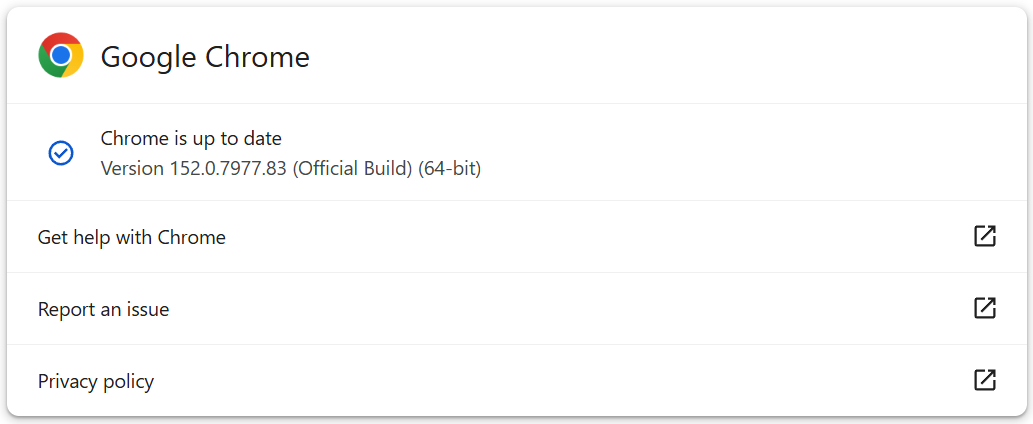
- Open Google Chrome.
- Navigate to
Settings(usually via the three-dot menu in the top-right corner). - Select
Help>About Chrome. - The browser will automatically check for, download, and install the latest update.
- A browser restart is required for the patches to take full effect and for the system to be protected.
It is critical to ensure that automatic updates are enabled for Chrome, as this feature provides the most expedient defense against emerging threats. For enterprise environments, security teams must prioritize the rapid deployment of this patch across all managed endpoints. Centralized patch management systems should be leveraged to accelerate the update process and ensure comprehensive coverage, minimizing the attack surface across the organization.
Impact on the Extended Browser Ecosystem
The implications of this zero-day extend beyond Google Chrome itself. Numerous other popular web browsers, including Microsoft Edge, Brave, Opera, and Vivaldi, are built upon the Chromium open-source project, which forms the core of Chrome. Consequently, vulnerabilities discovered in Chromium’s foundational components, such as the V8 engine, often affect these derivative browsers as well. While these browsers will eventually incorporate the necessary fixes, there may be a slight delay of a few days as their respective development teams integrate Google’s patches into their own release cycles. Users of Chromium-based browsers should monitor announcements from their specific browser vendors and apply updates as soon as they become available. Proactive vigilance is essential across the entire Chromium ecosystem.
Strategic Implications for Cybersecurity
The ongoing discovery and active exploitation of zero-day vulnerabilities in critical software underscore the perpetual cat-and-mouse game between defenders and attackers. For cybersecurity professionals, this situation highlights the imperative of maintaining robust threat intelligence, implementing layered security defenses, and fostering a culture of continuous patching. Organizations must also consider the broader implications for their supply chain security, recognizing that vulnerabilities in widely used third-party components like web browsers can create significant exposure. Investing in advanced endpoint detection and response (EDR) solutions and security awareness training for employees can provide additional layers of defense against sophisticated browser-based attacks.
Recommendations for Enhanced Digital Security
Beyond immediate patching, users and organizations should adopt a holistic approach to digital security:
- Enable Automatic Updates: Ensure all software, not just browsers, is configured to update automatically.
- Use Strong, Unique Passwords: Employ complex passwords and multi-factor authentication (MFA) for all online accounts.
- Exercise Caution with Links and Attachments: Be wary of unsolicited emails, suspicious links, and unexpected attachments, as these are common vectors for malware delivery.
- Regular Backups: Maintain regular backups of critical data to mitigate the impact of ransomware or data loss.
- Install Reputable Security Software: Utilize antivirus and anti-malware solutions and keep them updated.
- Principle of Least Privilege: For organizations, restrict user privileges to the minimum necessary for their roles.
- Network Segmentation: Implement network segmentation to limit lateral movement in the event of a breach.
Conclusion: Continuous Vigilance in a Dynamic Threat Landscape
The discovery and active exploitation of CVE-2026-85046 serve as a stark reminder of the dynamic and challenging nature of the cybersecurity landscape. While software vendors like Google are relentless in their efforts to identify and remediate vulnerabilities, the ingenuity and persistence of threat actors necessitate continuous vigilance from every user. Prompt patching, combined with robust security practices, remains the most effective defense against the evolving array of digital threats. In an interconnected world, the security of individual browsers contributes directly to the resilience of the entire digital ecosystem.




 Aura Kasih
 Ayu Aulia