Lisa Mariana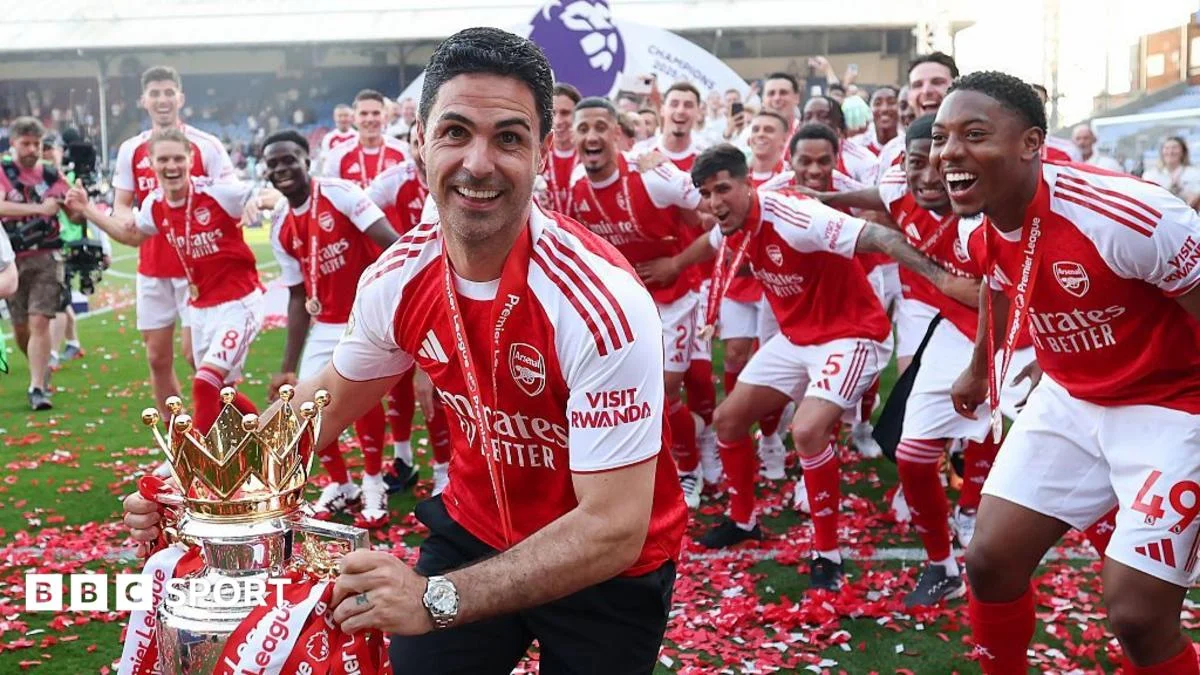
Following a season that saw them narrowly miss out on the Premier League title, Arsenal entered the summer transfer period with significant aspirations, aiming to solidify their position at the summit of English football. Buoyed by the perception of managerial flux among key rivals, the club envisioned a strategic window to reinforce their squad, assembling an initial shortlist comprising over two dozen potential acquisitions. This comprehensive list spanned top-tier European clubs, including Real Madrid and Atlético Madrid, and even extended to domestic competitors like Chelsea and Tottenham Hotspur, signaling an intent to acquire elite talent. However, as the transfer deadline approached, a nuanced picture emerged, characterized by both notable successes and considerable challenges, leading to a palpable sense of mixed outcomes among observers and a segment of the fanbase.
The initial blueprint for the summer was undeniably audacious. The club’s strategic planning department, in conjunction with manager Mikel Arteta and sporting director Andrea Berta, identified a broad spectrum of talent. This extensive roster of potential targets underscored a proactive approach to recruitment, seeking to capitalize on a perceived window of opportunity. The inclusion of players from rival clubs, both domestically and internationally, highlighted a willingness to engage in high-stakes negotiations for transformational signings. Yet, translating this expansive ambition into concrete acquisitions proved to be a complex undertaking, fraught with the intricate dynamics of player valuations, availability, and the competitive landscape of the transfer market.
A primary objective for the Gunners was the reinforcement of their midfield, a critical area for Arteta’s tactical system. While several options were initially explored, the pursuit of Bruno Guimarães from Newcastle United ultimately became the club’s most prominent acquisition in this department. Initially, other profiles were considered higher on the priority list. For instance, reports extensively linked Arsenal with Elliot Anderson, although his trajectory clearly indicated a move to Manchester City. Other midfield talents, such as Sandro Tonali, then at Newcastle, and Alex Scott of Bournemouth, were also assessed. While Tonali and Scott presented younger profiles compared to Guimarães, who approaches his 29th birthday, factors such as prohibitive asking prices—Tonali’s transfer to Tottenham commanded a minimum of £92 million—and player availability complicated these pursuits. Amadou Onana of Aston Villa was another player under consideration, but a significant knee injury sustained during the World Cup curtailed any potential move. By mid-June, Guimarães, benefiting from widespread internal endorsement at the Emirates, crystallized as the club’s principal target.
Andrea Berta’s established rapport with Guimarães’ representatives played a pivotal role in accelerating this transfer. This indirect negotiation approach, where intermediaries facilitate initial contact rather than direct club-to-club engagement, is a hallmark of Berta’s operational style. This explains Newcastle’s assertion that direct communication from Arsenal only occurred days before the deal’s finalization. While this method can be effective, it has not always yielded consistent success; for example, Arsenal’s attempts to sign Leicester City teenagers Jeremy Monga and Louis Page reportedly faltered due to a lack of direct club-level dialogue, with Monga eventually joining Manchester City despite appearing close to a move to North London. Nevertheless, Berta’s adeptness in pivoting towards Guimarães when alternative targets proved unfeasible was commendably received within the Arsenal hierarchy, demonstrating strategic flexibility in a dynamic market. Guimarães’ £75 million acquisition was seen as fulfilling Arteta’s explicit demand for proven, elite talent capable of elevating the starting eleven.
The recruitment of Ezri Konsa from Aston Villa represented another significant, albeit equally intricate, defensive reinforcement. Konsa was reportedly Arteta’s preferred choice for a defensive option, aligning with the manager’s preference for players possessing established Premier League experience, a criterion also evident in the club’s pursuit of Guimarães and the unsuccessful efforts to sign Morgan Rogers. Konsa’s versatility, particularly his capacity to operate at right-back, was a key attribute, outweighing initial considerations for an orthodox right-back like Ivan Fresneda. However, securing Konsa was not straightforward. Sporting director Berta initially expressed reservations regarding Villa’s valuation. An initial offer of £40 million was rejected, indicating a significant disparity in perceived worth. The deal, eventually agreed at £51 million plus £4 million in add-ons, reportedly required intervention at the ownership level between both clubs to reach a resolution. In the event of an impasse over Konsa, Tottenham Hotspur’s Cristian Romero and Micky van der Ven were identified as contingency targets, although their availability was severely constrained by their club’s firm stance against selling to a direct rival. Other long-term defensive monitoring included Como centre-back Jacobo Ramon and Tarik Muharemovic, who ultimately joined Leeds United.
On the attacking front, the acquisition of Christos Tzolis from Club Brugge for approximately £35 million has been lauded as one of the summer’s astute discoveries. The initial impetus for this deal reportedly stemmed from an intermediary with close ties to a senior coaching staff member. Subsequently, Maurizio Micheli, Berta’s deputy, undertook personal scouting of Tzolis during an international fixture between Greece and Sweden, returning with a favorable assessment. The 24-year-old Greek international has, thus far, demonstrated promising potential as a valuable addition to Arteta’s squad. Arsenal also finalized Piero Hincapie’s loan into a permanent deal and secured Illan Meslier on a free transfer, further bolstering the squad. However, the combined £126 million outlay for Guimarães and Konsa, both of whom will be 30 by the conclusion of the next season, has sparked discussions regarding squad longevity and its potential impact on future regeneration. Nonetheless, the club maintains that these acquisitions provide immediate elite quality and experience, justifying the market rates paid.
Despite these defensive and midfield successes, Berta’s primary directive to secure a top-tier attacker remained unfulfilled. Morgan Rogers was initially the prime target, with early indications suggesting the forward’s keenness to join. Arsenal’s internal valuation of Rogers stood at £80 million, while Aston Villa initially pegged his worth at £100 million. Berta expressed confidence in negotiating this price down. Concurrently, alternatives such as Bradley Barcola, Kenan Yildiz, Yan Diomande, and Nico Paz were under consideration, with Yildiz and Paz remaining realistic future targets. Anthony Gordon, a long-term interest, had already committed to Barcelona. The landscape, however, dramatically shifted with Elliot Anderson’s £116 million transfer from Nottingham Forest to Manchester City, which significantly inflated Villa’s valuation of Rogers to £120 million. Chelsea ultimately secured Rogers for £117 million. Arsenal, despite being afforded the opportunity to match Chelsea’s bid, declined, adhering to their £80 million valuation. This decision raises questions regarding whether a more aggressive early stance from Berta could have secured the player.
The failure to land Rogers marked the beginning of a challenging period for Berta in his quest for an elite left-sided attacker. Arsenal genuinely believed they had a credible chance of signing Vinicius Jr. before his new contract with Real Madrid. Both Berta and Arteta were fully committed to the Brazilian superstar, with the club prepared to finance a potentially British-record fee and one of the most lucrative remuneration packages in Premier League history, citing both sporting and commercial benefits. However, well-placed sources indicated Vinicius’s reluctance to depart Real, while others suspected Arsenal was being leveraged to secure a more lucrative contract at the Bernabéu – a suspicion that proved accurate. Similar reservations shadowed Arsenal’s pursuit of Julian Álvarez from Atlético Madrid, who reportedly favored a move to Barcelona. Despite Atlético’s categorical refusal to sell to Barcelona, Berta and Arteta persisted, hoping Álvarez might reconsider, only for him to ultimately remain at Atlético, despite reported tensions. The efficacy of these high-profile, ultimately unsuccessful, pursuits remains a point of contention.
In the wake of these setbacks, Berta explored other avenues. Intriguingly, Chelsea striker João Pedro, while admired by Arsenal, was deemed unavailable. Concerns regarding his tactical fit within Arteta’s system were also noted. Critiques suggest Berta’s recruitment strategy occasionally leans heavily on his extensive network of agent connections, potentially superseding the club’s pre-existing scouting intelligence. For example, previous scouting data reportedly favored Benjamin Sesko, but Berta’s influence led to a pivot towards Viktor Gyökeres, now considered the second-choice striker. The club’s late interest in Lyon winger Malick Fofana, offered through the management agency Roc Nation (which also represents Vinicius Jr. and Gabriel Martinelli), further exemplifies this reliance on agency relationships. The long-term impact of failing to secure a recognized top-tier attacker, especially following the departures of Martinelli and Leandro Trossard, remains to be seen.
Beyond player acquisitions, Arsenal entered the transfer window with a clear mandate to enhance financial sustainability and improve player trading capabilities, crucial for compliance with domestic and European financial regulations. The scale of potential deals for Vinicius Jr. or Álvarez would have undoubtedly tested the club’s adherence to these regulations. Nevertheless, maximizing player trading will become an increasingly integral component of Arsenal’s financial strategy. This was clearly evidenced by the record-breaking £60 million sale of Gabriel Martinelli to Al-Hilal, a deal that also included a sell-on clause. The combined exits of Martinelli, Trossard, Gabriel Jesus, Christian Nørgaard, Jakub Kiwior, Fábio Vieira, and Karl Hein generated approximately £114 million, providing significant financial flexibility. A mooted £80 million intermediary-led enquiry for academy midfielder Myles Lewis-Skelly, attracting interest from Manchester United, albeit at a valuation deemed too high, generated considerable fan consternation. Conversely, the club resisted permanent offers for Ethan Nwaneri, securing a loan to Borussia Dortmund with a January recall option. The £15 million fee for Trossard, approaching 32, was also considered a sound business decision.
Having invested nearly £450 million over the past twelve months, Berta’s strategic market operations have coincided with the club’s most successful league campaign in over two decades. Yet, despite this substantial expenditure, discernible gaps persist within the squad, particularly in the attacking third. The summer window has consequently left a segment of the supporter base questioning the overall effectiveness of Berta’s tenure. Furthermore, with the average age of the squad increasing due to the signings of Konsa and Guimarães, concerns have arisen about the long-term sustainability of the current team’s success and the necessity for future squad regeneration. The critical assessment remains whether the current blend of talent can establish a lasting dynasty before another significant overhaul becomes imperative.


 Aura Kasih
 Safa Marwah
 Ayu Aulia