
 Lisa Mariana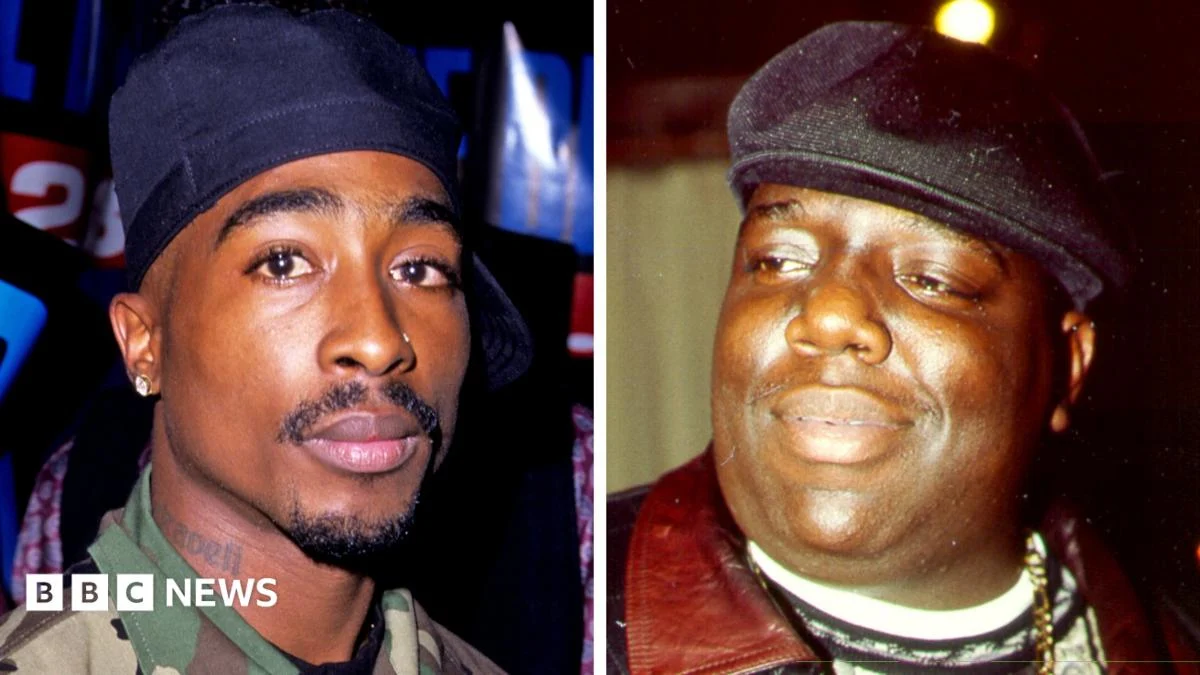
The recent conviction of Duane Davis for the 1996 murder of Tupac Shakur represents a monumental legal and cultural milestone, potentially injecting critical momentum into the long-dormant investigation surrounding the assassination of Christopher Wallace, famously known as The Notorious B.I.G., and offering a renewed beacon of hope for closure in one of hip-hop’s most profound and tragic mysteries.
For nearly three decades, the murders of Tupac Shakur and The Notorious B.I.G. have loomed as unresolved enigmas, casting a long shadow over the cultural landscape and fueling countless theories, documentaries, and public fascination. The two artists, once collaborators and friends, famously became the central figures in the acrimonious East Coast-West Coast hip-hop rivalry of the 1990s. Their untimely deaths, mere months apart in drive-by shootings, not only cut short brilliant careers but also symbolized a period of intense industry tension and street violence. The long-awaited verdict in the Shakur case, securing a conviction against Duane Davis, marks a pivotal shift, transforming a persistent narrative of impunity into one of accountability, and simultaneously raising profound questions about the potential for similar justice in the parallel, equally high-profile, unsolved killing of Wallace.
The breakthrough in the Shakur investigation can be attributed overwhelmingly to the cumulative effect of Duane Davis’s own extensive, self-incriminating statements made over many years. Through a series of media appearances, including documentaries, podcasts, his own published memoir, and even undisclosed police interviews, Davis consistently recounted his involvement in the events leading to Shakur’s death. He admitted to being present in the vehicle from which the fatal shots were fired on September 7, 1996, in Las Vegas, and to passing the weapon to his nephew, Orlando Anderson, who he claimed was the shooter. Anderson, who had consistently denied his involvement, was himself killed in 1998, further complicating the initial investigative efforts.
Prosecuting a case that had languished for nearly thirty years presented formidable challenges for the Clark County District Attorney’s office. The trial notably lacked conventional evidentiary cornerstones: there were no direct eyewitnesses to place Davis unequivocally in the shooter’s vehicle, no murder weapon was recovered or presented, and no contemporaneous video or photographic evidence linked him directly to the scene. The defense counsel, Michael Sanft, vehemently argued that the prosecution lacked concrete proof, portraying his client as an unreliable narrator whose narratives were crafted primarily to sensationalize and monetize his story. He urged the jury to disregard Davis’s admissions as the fabrications of a man seeking notoriety and financial gain.
However, the prosecution, led by District Attorney Steve Wolfson, embraced an unconventional strategy, relying heavily on the defendant’s own words as the most compelling evidence. Legal analysts, such as attorney Shaun Kent, observed that Davis himself became the "strongest witness against him," underscoring the extraordinary nature of the prosecution’s reliance on his repeated confessions. This approach, while risky, ultimately proved successful. The decision to pursue charges, described by legal expert Rahmani as an "uphill climb" and a "gutsy move," demonstrated a rare resolve to seek justice where many might have deemed the case unwinnable. The emotional outpouring from Shakur’s family members upon the guilty verdict underscored the profound personal and collective relief that accompanied the long-delayed administration of justice. As District Attorney Wolfson noted, the family had "waited 30 years for a trial," and their palpable relief was entirely understandable. This conviction serves as a powerful testament to the principle that persistence, even in the face of decades of silence and skepticism, can ultimately yield accountability.
The cultural and historical context of the mid-1990s is crucial for understanding the initial investigative quagmire surrounding both murders. This era was characterized by an intense period of gang violence that had deeply permeated the burgeoning hip-hop industry, intertwining musical rivalries with genuine street hostilities. A pervasive "street code" of silence, coupled with widespread mistrust of law enforcement, created an environment in which cooperation with authorities was considered taboo and dangerous. Even Tupac Shakur himself, mortally wounded in the drive-by, reportedly refused to cooperate with police, stating, "We’ll take care of it." This ingrained reluctance to engage with legal processes significantly hampered early investigations, contributing to the prolonged cold case status of both high-profile killings.
Christopher Wallace, The Notorious B.I.G., met a fate eerily similar to Shakur’s just six months later. On March 9, 1997, after attending an after-party for the Soul Train Music Awards in Los Angeles, his vehicle was ambushed at a red light by occupants of a black Chevrolet, who opened fire. Like Shakur, Wallace was a Grammy-nominated artist at the pinnacle of his genre, a prolific hitmaker whose music resonated globally. The subsequent investigations into his death, however, failed to yield any arrests or convictions, instead giving rise to a proliferation of theories and conjectures that have persisted for decades.
The failure to solve Wallace’s murder has long been viewed as a significant blemish on the record of the Los Angeles Police Department (LAPD). The fact that such a high-profile crime, involving an internationally renowned figure, occurred on a public street in the heart of the nation’s second-largest city, yet remained unsolved, has drawn consistent criticism. Legal commentators, including Rahmani, have highlighted the pressure prosecutors face to secure convictions and the perceived reluctance to pursue cases deemed difficult or likely to fail. This cautious approach, while understandable from a prosecutorial standpoint, has arguably perpetuated the cold case status of Wallace’s murder.
However, the success of the prosecution in the Shakur case now introduces a compelling new dynamic. The ability of the Las Vegas authorities to secure a conviction based largely on the defendant’s own admissions could serve as a powerful catalyst for renewed efforts in Los Angeles. This precedent demonstrates that even without traditional forensic evidence or direct eyewitnesses, a case can be successfully prosecuted if the defendant has, over time, inadvertently provided the critical missing pieces of the puzzle. The prospect that the LAPD and Los Angeles County District Attorney’s office might be "emboldened" to re-examine Wallace’s case with fresh vigor is now a tangible possibility.
The LAPD has confirmed that the murder of Christopher Wallace remains an active, unsolved case within its Robbery-Homicide Division, and that they are aware of the Shakur conviction. This official stance, while standard, now carries a heightened significance. The public’s interest in Wallace’s murder has never waned, fueled by the enduring cultural impact of his music and the symbolic weight of his unresolved death. Justin Tinsley, a journalist and author, aptly notes that these artists have been "gone longer than they’ve been alive," yet the "enduring mythology around these guys and their deaths will always be a topic of conversation." This sustained public scrutiny, coupled with the judicial breakthrough in the parallel Shakur case, creates an imperative for law enforcement to revisit Wallace’s file with renewed determination.
The implications for the Wallace investigation are multi-faceted. The success in Las Vegas could potentially encourage individuals with information, who have remained silent due to the "street code" or fear, to come forward, believing that justice is now genuinely attainable. It may also prompt a re-evaluation of existing evidence and interviews, seeking any overlooked admissions or inconsistencies that could now be leveraged in a similar fashion to Davis’s statements. Furthermore, the conviction underscores the importance of persistent investigation, even in the face of daunting odds, and sends a clear message that the passage of time does not necessarily absolve perpetrators of accountability.
While significant challenges undoubtedly remain, including the inherent difficulties of prosecuting a cold case nearly three decades old, the Shakur conviction represents a profound shift. It offers not just a glimmer of hope, but a tangible pathway towards potential resolution for The Notorious B.I.G.’s family and the millions of fans who have sought answers for far too long. The pursuit of truth, however delayed, can ultimately prevail, transforming historical tragedies into resolved narratives and cementing legacies with the closure they deserve. The ripple effect of one verdict may well redefine the possibilities for justice in another, long-standing cultural wound.




 Aura Kasih
 Ayu Aulia

 Safa Marwah