Lisa Mariana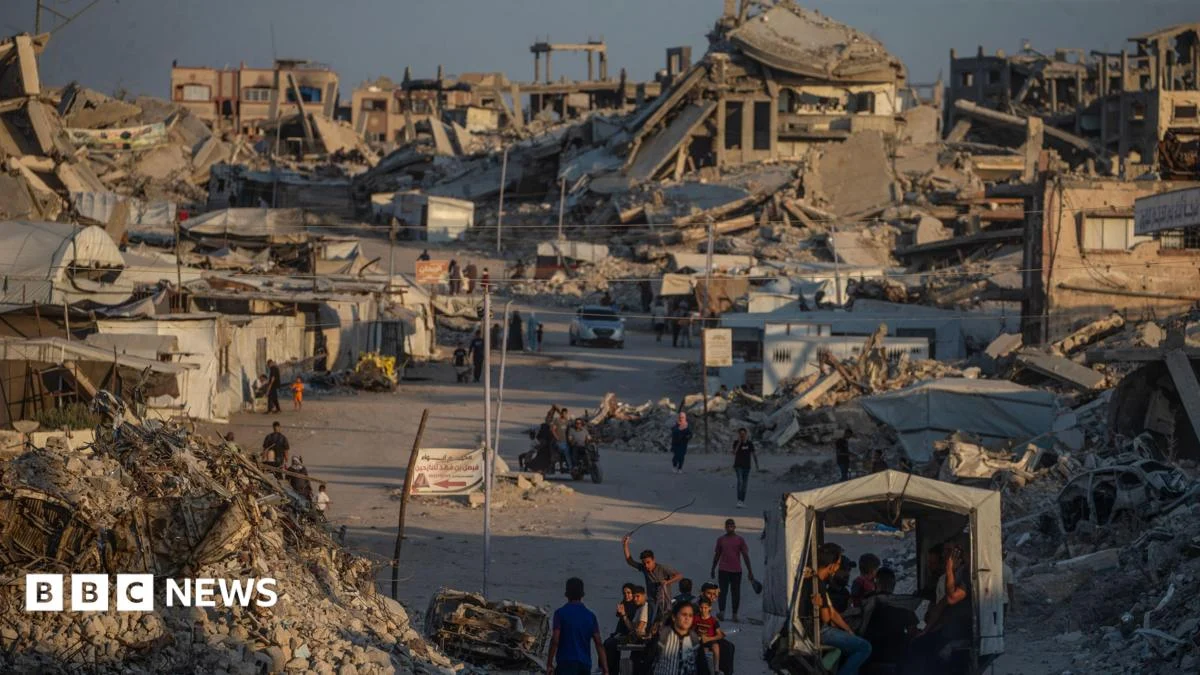
In a significant setback for international peacemaking efforts, Israeli Prime Minister Benjamin Netanyahu has unequivocally dismissed a comprehensive 15-point peace framework for the Gaza Strip, originally championed by former U.S. President Donald Trump’s administration. The Israeli leader’s firm stance hinges on an unyielding demand for the complete and verifiable disarmament of Hamas before any consideration of military disengagement, directly clashing with the militant group’s reciprocal condition for an Israeli withdrawal and the cessation of all forms of aggression. This rejection underscores the profound chasm of mistrust and competing priorities that continues to plague efforts to stabilize the volatile Palestinian enclave.
The peace initiative, initially unveiled in September of the previous year, aimed to chart a path toward lasting tranquility in Gaza, a territory ravaged by conflict and humanitarian crises. Central to this ambitious blueprint was the establishment of a specialized "Board of Peace," tasked with overseeing the implementation of the agreement. Key pillars of the proposed plan included the comprehensive demilitarization of Hamas and other armed factions, a phased withdrawal of Israeli forces from the territory, and a robust reconstruction program for Gaza, which has endured successive waves of devastating conflict.
Last month, the Trump administration’s "Board of Peace" had indicated that a preliminary understanding had been reached regarding the "complete disarmament" of Hamas and other armed groups operating within Gaza. However, Hamas swiftly countered, stipulating that the relinquishment of its heavy weaponry was contingent upon Israel’s cessation of all aggressive actions and the complete withdrawal of its military presence from the Strip. This fundamental divergence in sequencing and conditionality has proven to be an insurmountable hurdle, at least in the immediate term.
Addressing his cabinet on Sunday, Prime Minister Netanyahu articulated Israel’s unequivocal position. "Israel rejects the 15-point document," he declared, leaving no room for ambiguity. He further elaborated that the Israeli military "will not carry out any withdrawal until Hamas is genuinely disarmed and will continue to thwart threats against our forces and our citizens." This statement crystallizes Israel’s long-standing security doctrine, which prioritizes the neutralization of perceived threats originating from Gaza. The insistence on "genuinely disarmed" suggests a profound skepticism regarding any superficial or symbolic gesture of demilitarization, reflecting a deep-seated distrust rooted in decades of conflict.
In response, a Hamas official, speaking to a prominent international broadcaster on Sunday, reiterated the group’s "commitment" to the proposed agreement. The official affirmed Hamas’s readiness "to engage seriously and responsibly in implementing" the 15-point plan, while simultaneously appealing to international mediators to ensure "that all parties comply with what has been agreed." This public posture from Hamas highlights its strategic balancing act: projecting an image of readiness for a negotiated settlement while simultaneously upholding its core demands, particularly regarding the Israeli withdrawal and an end to military operations.
Israel’s outright repudiation of the document represents a significant blow to the viability of Trump’s Gaza peace plan, which many observers had already deemed fragile. The plan’s architects had envisioned a transformative process, moving beyond temporary ceasefires to address the root causes of instability. However, the current impasse underscores the immense difficulty of reconciling the fundamental security imperatives of Israel with Hamas’s demands for sovereignty and an end to what it perceives as occupation.
Netanyahu’s public declaration, while decisive, was not delivered instantaneously. Diplomatic analysts suggest that the delay in his formal rejection likely reflects the intricate geopolitical tightrope the Israeli leader is compelled to walk. On one hand, he harbors clear reservations about the proposed plan, particularly its implied concessions regarding military withdrawal without ironclad guarantees of Hamas’s irreversible disarmament. On the other hand, he remains acutely aware of the importance of maintaining robust relations with the United States, Israel’s most critical strategic ally. Upsetting Washington, especially an administration that has historically demonstrated strong support for Israel, is a calculated risk that Netanyahu would prefer to avoid.
The current situation also unfolds against a complex domestic political backdrop for Prime Minister Netanyahu. With Israeli elections on the horizon, he faces considerable pressure from within his own right-wing coalition to adopt an uncompromising stance on Gaza security. Figures such as National Security Minister Itamar Ben Gvir, representing the far-right flank of the coalition, have openly dismissed the draft plan as "not acceptable" and have vociferously called for a new cabinet vote to unequivocally terminate the Gaza initiative. Such internal pressures limit Netanyahu’s room for maneuver, making significant concessions on security matters politically untenable. His declaration therefore serves not only as a foreign policy statement but also as a clear signal to his domestic base that he remains steadfast in protecting Israel’s security interests.
The fundamental disagreement revolves around the sequencing of disarmament and withdrawal. Just over a week prior to Netanyahu’s rejection, Trump had heralded what he termed a "monumental step toward lasting peace and security," claiming that Hamas had, for the first time, agreed to disarm, albeit conditionally on an Israeli withdrawal. Netanyahu’s statement on Sunday firmly contradicted this narrative, asserting that genuine disarmament, not "fictitious disarmament," must precede any Israeli military disengagement.
Experts in conflict resolution frequently point to the inherent challenges of implementing phased disarmament and withdrawal agreements, particularly in environments characterized by deep-seated distrust. Such processes typically require extensive international monitoring, robust verification mechanisms, and a significant degree of political will from all parties to ensure compliance and build confidence incrementally. The "reality," as many analysts suggest, is that any successful disarmament and withdrawal would indeed necessitate a carefully constructed, multi-stage process, with each step contingent on the verifiable fulfillment of the preceding one. The current impasse, however, demonstrates that even the initial parameters of such a phased approach remain fiercely contested.
Netanyahu indicated that discussions with U.S. officials are ongoing regarding potential paths forward. "They have ideas; some of them are acceptable to us and some are not, and we know how to stand our ground on these matters," he stated, signaling a continued engagement but also an unwavering commitment to Israel’s core security principles. This suggests that while direct rejection of the current framework has occurred, the diplomatic channel remains open for alternative proposals or modifications.
Amidst these diplomatic challenges, Nickolay Mladenov, a senior diplomat specifically tasked with facilitating Donald Trump’s peace plan, publicly defended the initiative on Sunday. Speaking to an Israeli television channel, Mladenov urged Israel "to give the process a chance," asserting that the plan represented "the only way forward" to prevent a recurrence of the devastating 7 October 2023 attack by Hamas. He emphasized that the plan was meticulously structured as a "verifiable, reversible" process, allowing for incremental steps and built-in safeguards, ensuring that "at each stage can be stopped" if compliance falters. Mladenov also sought to address Israeli concerns directly, stating that Israel would not be compelled to withdraw its forces until verifiable steps toward Hamas’s disarmament had been taken. His comments aimed to reassure Israel that its security would not be compromised prematurely, but they appear to have fallen short of convincing the Netanyahu government.
The urgency of finding a viable path to stability in Gaza is underscored by the immense human cost of the ongoing conflict. The war, triggered by the brutal Hamas-led attack on southern Israel on 7 October 2023, resulted in the deaths of approximately 1,200 people and the abduction of 251 others as hostages. Israel’s subsequent military campaign in Gaza has led to catastrophic consequences for the civilian population. According to the territory’s health ministry, figures considered reliable by the United Nations, more than 73,000 people have been killed in Gaza since the commencement of hostilities. Furthermore, the United Nations estimates that about 1.9 million people – a staggering 90% of Gaza’s total population – have been displaced within the territory, facing dire humanitarian conditions and an uncertain future.
The current diplomatic stalemate, therefore, carries profound implications not only for regional security but also for the desperate humanitarian situation in Gaza. Without a credible pathway to de-escalation and long-term stability, the cycle of violence and suffering is likely to persist. The rejection of Trump’s 15-point plan highlights the deep-seated historical grievances, profound mistrust, and fundamental disagreements that continue to obstruct any meaningful progress toward a durable peace in one of the world’s most intractable conflicts. Future diplomatic efforts will undoubtedly need to contend with these ingrained obstacles, seeking creative solutions that address both Israel’s legitimate security concerns and the Palestinian demand for an end to occupation and the establishment of self-determination.



 Aura Kasih
 Safa Marwah
 Ayu Aulia