
 Lisa Mariana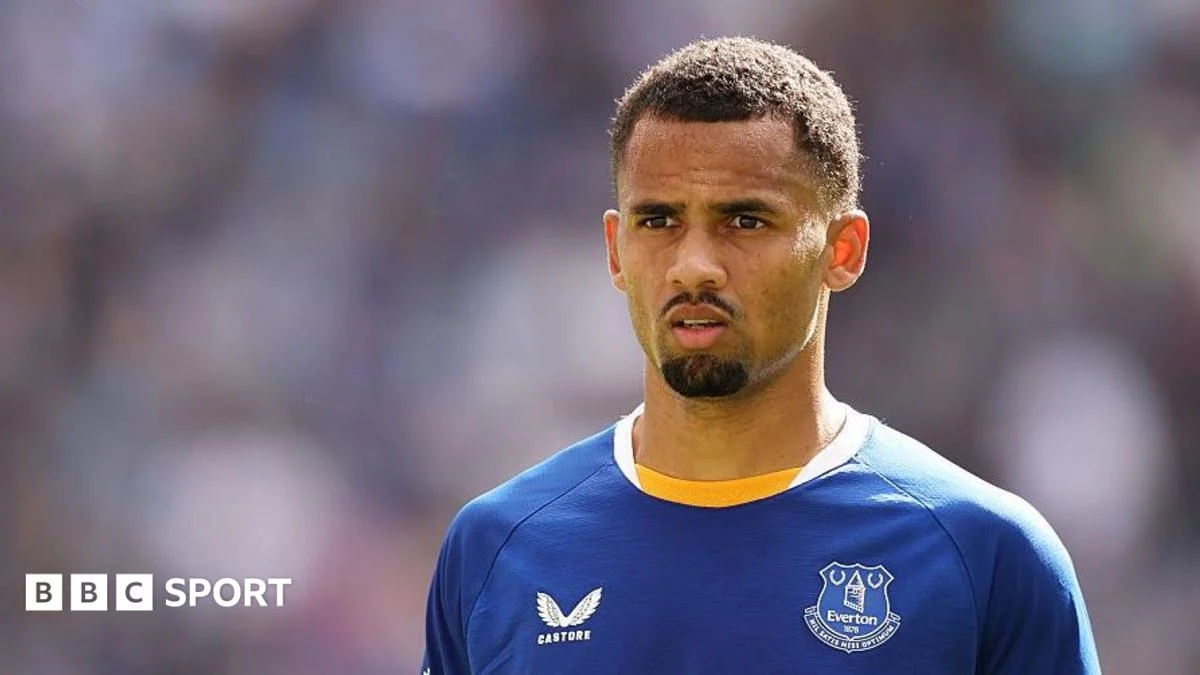
Manchester City has officially concluded a substantial transfer agreement, reportedly reaching a valuation of up to £65 million, to acquire Senegalese international forward Iliman Ndiaye from Everton, navigating a complex web of interconnected negotiations that saw other high-profile moves falter in the final stages of the transfer window.
The definitive understanding between the reigning Premier League champions and Everton stipulates an initial guaranteed payment of £60 million, complemented by an additional £5 million contingent upon performance-related add-ons. This acquisition represents a significant strategic move for Manchester City, bolstering their formidable attacking options with a player renowned for his pace, dribbling prowess, and goal-scoring capability. The finalization of this deal, however, emerged from a backdrop of intricate, multi-club discussions that underscore the often-unpredictable nature of elite football transfers, particularly as the deadline looms.
The Tottenham-Everton-Richarlison Conundrum
The path to Ndiaye’s eventual move to the Etihad Stadium was far from straightforward, heavily influenced by a preceding, ultimately unsuccessful, attempt by Tottenham Hotspur to secure the player. On the preceding Friday evening, reports indicated that Tottenham had made significant progress in negotiations with Everton, orchestrating a potential dual transaction. This arrangement proposed Ndiaye’s transfer to the London club, with Brazilian forward Richarlison moving in the opposite direction, rejoining his former club Everton in a separate, albeit linked, deal.
However, this meticulously crafted exchange encountered an unforeseen impediment: Richarlison’s failure to agree upon personal terms with Everton. Sources close to the negotiations revealed that Everton had tabled an offer in the region of £35 million for the Brazil international, a sum reflecting their valuation and desire to bring him back to Goodison Park. Despite the clubs having seemingly aligned on the financial aspects and player movements, Richarlison’s personal reluctance to finalize the terms effectively scuppered the entire sequence of transfers. His inability to reach a personal agreement meant Tottenham could not proceed with their planned acquisition of Ndiaye, leaving them in a precarious position as the transfer deadline approached.
Richarlison’s Public Declaration and its Implications
The fallout from the collapsed deal was further amplified by a candid and emotionally charged statement issued by Richarlison via his Instagram account on Monday. In a declaration that offered a rare glimpse into the player’s perspective amidst high-stakes negotiations, he asserted, "After everything I’ve been through in the last few years, I’ve decided that never again will anyone decide my future for me." This sentiment highlighted a desire for greater autonomy over his career trajectory, a powerful assertion of player agency in a market often dominated by club and agent interests.
Richarlison further elaborated on his intentions, stating, "If they reach an agreement between Spurs and Everton, I will return to my beloved club." This indicated a genuine willingness, perhaps even a strong preference, to return to Everton, a club where he enjoyed significant success and developed a strong connection with the fanbase. However, his subsequent remarks revealed a sense of disillusionment with the process: "My intention was to go back to the place where I was very happy, yes, but the negotiations happened only in the way certain people wanted, and it will no longer be like that." This pointed to dissatisfaction with how the discussions were managed, implying that external pressures or specific agendas dictated the terms, rather than a holistic consideration of his own desires. Despite the turmoil, he concluded by reaffirming his contractual obligations: "Despite all this turmoil, I am under contract at Spurs and will remain at the club’s disposal."
This public statement carries significant implications. For Tottenham, it creates a potential challenge in managing a player who has openly expressed a desire to depart, even while committing to his contractual duties. Such declarations can affect team morale, fan perception, and the player’s long-term integration. For players across the league, it serves as a potent reminder of the complexities of transfer sagas and the growing assertiveness of athletes in controlling their professional destinies.
Tottenham’s Strategic Pivot to Mykhailo Mudryk
With the Ndiaye deal collapsing, Tottenham were compelled to swiftly recalibrate their transfer strategy to address their pressing need for attacking reinforcement. The club subsequently entered into discussions with Chelsea for Ukrainian winger Mykhailo Mudryk, exploring the possibility of a season-long loan agreement. Mudryk, who joined Chelsea in a high-profile transfer from Shakhtar Donetsk, has yet to consistently replicate the form that attracted such a significant fee. A loan move could offer him regular first-team football and a platform to rediscover his potential, while providing Tottenham with a dynamic wide player without the immediate financial outlay of a permanent transfer. This tactical shift underscores the reactive nature of transfer windows, where one failed negotiation can trigger a cascade of alternative pursuits.
Manchester City’s Prior Pursuit of Cody Gakpo
The successful acquisition of Iliman Ndiaye by Manchester City also follows another high-stakes transfer narrative involving Liverpool’s Dutch forward, Cody Gakpo. Earlier on Monday, an £80 million move for Gakpo to Manchester City appeared to be on the brink of collapse, highlighting City’s proactive approach in exploring multiple elite targets simultaneously. City had initiated discussions with Liverpool regarding a potential deal for the Netherlands international, and Liverpool had indicated a willingness to consider Gakpo’s departure, contingent upon their ability to secure a suitable replacement.
This condition proved to be the stumbling block. Liverpool, having already completed the significant signing of French forward Bradley Barcola from Paris Saint-Germain for a fee potentially rising to £123 million on Monday, still desired to bring in another attacking player if Gakpo were to leave. The Anfield club had reportedly targeted Brighton’s Yankuba Minteh and Crystal Palace’s Ismaila Sarr as potential options to fill the void. However, negotiations concerning the valuation of both Minteh and Sarr proved problematic, with the asking prices reportedly exceeding Liverpool’s willingness to pay within the tight timeframe.
Consequently, with the transfer deadline rapidly approaching and no viable replacement secured for Gakpo, Liverpool ultimately decided to retain the 27-year-old forward. The expectation is that Gakpo will remain at Anfield unless a breakthrough can be achieved in securing a new winger before Tuesday’s final deadline. This intricate chain of events illustrates the profound interconnectedness of major transfers; one club’s decision to sell or buy can trigger a domino effect across multiple teams and player movements.
Iliman Ndiaye: Player Profile and Strategic Fit for Manchester City
Iliman Ndiaye, at 24 years old, arrives at Manchester City with a burgeoning reputation. His journey through the footballing ranks, including a notable spell at Everton where he showcased his flair and goal-scoring instinct, has prepared him for this step up to one of Europe’s elite clubs. Ndiaye is characterized by his exceptional dribbling ability, often demonstrating the capacity to glide past defenders in tight spaces, coupled with an impressive turn of pace that allows him to exploit channels and stretch opposition defenses. His vision and creativity also contribute to his effectiveness in the final third, making him a versatile attacking threat capable of operating across various forward positions, including on either wing or as a central attacking midfielder.
For Pep Guardiola’s Manchester City, Ndiaye’s arrival offers multifaceted benefits. He provides crucial depth in a demanding season across multiple competitions, allowing for rotation and maintaining high performance levels. His tactical adaptability aligns perfectly with Guardiola’s fluid systems, potentially offering a different dimension in breaking down stubborn defenses or providing an alternative to existing wide forwards. Furthermore, his relatively young age and potential for further development make him a long-term asset, capable of evolving within City’s high-performance environment. The £65 million investment underscores City’s belief in his immediate impact and future trajectory, signaling a clear intent to maintain their competitive edge.
Broader Market Implications and Future Outlook
The conclusion of these high-value transfers, particularly Ndiaye’s move to Manchester City, highlights several key trends in the contemporary football transfer market. The sheer financial scale of these deals, with multiple players commanding fees upwards of £60 million, reflects the escalating economic pressures and commercialization of the sport. The prevalence of add-ons, as seen in Ndiaye’s deal, also indicates a mechanism for clubs to mitigate immediate financial outlays while tying future payments to performance incentives.
The intricate interdependencies between clubs and players, as vividly demonstrated by the Tottenham-Everton-Richarlison and Manchester City-Liverpool-Gakpo sagas, underscore the strategic complexity involved. Clubs are often forced to juggle multiple targets, anticipate rival moves, and react swiftly to unforeseen obstacles, all while managing player expectations and agent demands. Richarlison’s public statement, in particular, points to an evolving landscape where player power, especially among established international talents, is becoming an increasingly significant factor in transfer outcomes.
For Manchester City, Ndiaye’s arrival strengthens an already formidable squad, enhancing their pursuit of domestic and European honours. For Everton, the substantial fee provides critical financial liquidity, though the pressure to wisely reinvest these funds to strengthen their squad remains paramount. Tottenham’s pivot to Mudryk signifies a reactive but potentially astute temporary solution, yet the longer-term implications of the Richarlison situation will need careful management. Liverpool’s substantial investment in Barcola, alongside the retention of Gakpo, indicates a strong commitment to reinforcing their attacking options, albeit through a more circuitous route than initially envisioned. As the transfer window closes, these final maneuvers will undoubtedly shape the competitive landscape of the Premier League and beyond for the season ahead.



 Aura Kasih
 Ayu Aulia

 Safa Marwah