Lisa Mariana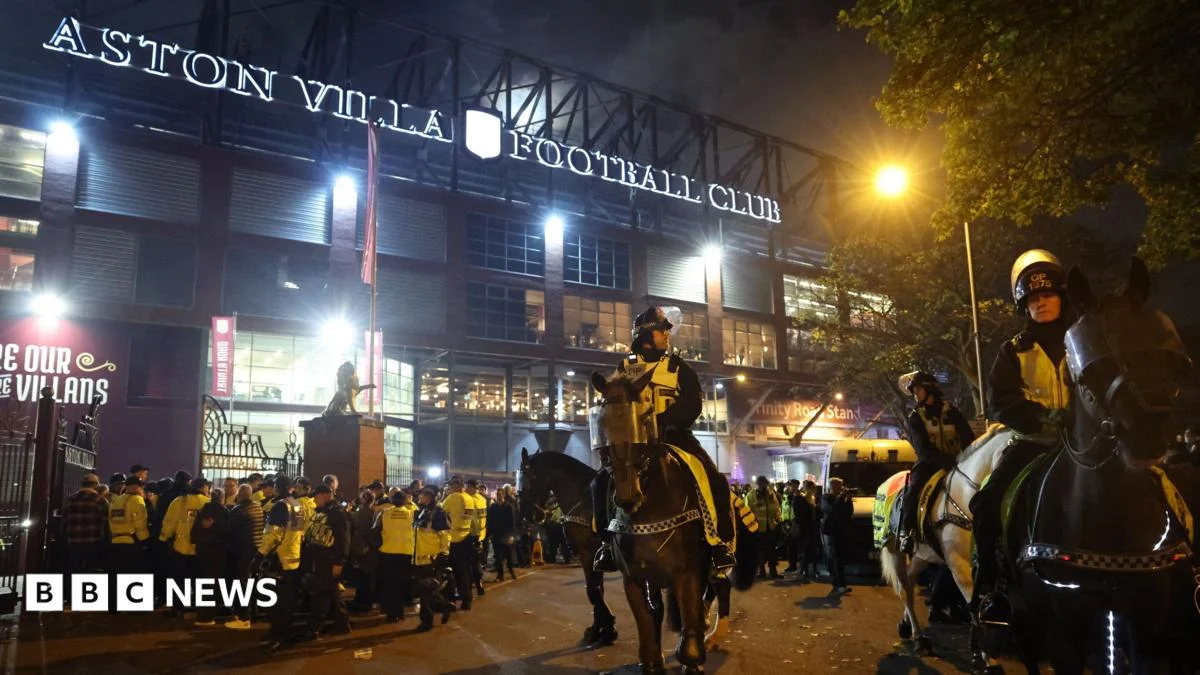
A comprehensive independent investigation is underway into the conduct of multiple senior police officers and staff members, focusing on serious allegations of professional misconduct, including a lack of impartiality and significant failures in intelligence handling during the planning of a major public event involving international sporting fans. This high-stakes inquiry, initiated by the Independent Office for Police Conduct (IOPC), centers on a controversial briefing document prepared for a Safety Advisory Group (SAG) meeting, which is now believed to have potentially contained inaccurate and biased information regarding supporters of an Israeli football club. The implications of this investigation extend far beyond the individuals involved, raising profound questions about the integrity of police intelligence processes, the ethical application of new technologies, and the imperative for unbiased policing in diverse communities.
The heart of the investigation lies in the preparation and dissemination of a critical briefing document designed to inform key stakeholders ahead of a football fixture. Central to the allegations is a senior serving officer, who held a pivotal role in the compilation of this operational briefing. This officer is under intense scrutiny for purportedly failing to ensure the document’s factual accuracy. Specifically, the IOPC’s examination suggests that information within the briefing may not have been represented truthfully, potentially leading to a significant "lack of impartiality" in its overall tenor. Furthermore, the inquiry is delving into whether this officer neglected their duty to appropriately manage "sensitive intelligence" contained within the report before it was circulated to SAG members, thereby risking the integrity of the planning process and potentially compromising the safety and fairness of the event.
Adding another layer of complexity to the intelligence failures, a staff member directly involved in the research and collation of intelligence for the game is also under investigation. This individual is alleged to have sourced inaccurate information from artificial intelligence (AI) searches and, critically, failed to take any subsequent corrective action to ensure this erroneous data was excluded from the official briefings. This particular allegation highlights a growing concern within law enforcement regarding the judicious integration of AI tools, underscoring the necessity for robust human oversight and rigorous verification protocols when leveraging automated intelligence gathering systems. The reliance on unverified AI output, if proven, represents a serious lapse in professional standards, capable of propagating misinformation and undermining operational decision-making.
Beyond the initial intelligence compilation, the scope of the investigation broadens to encompass two other senior serving officers, both of whom held crucial responsibilities in the force’s strategic planning for the event. These officers have formally been notified that their conduct is being investigated for potential misconduct. One of these officers faces allegations of insufficient diligence in the exercise of their duties, particularly in overseeing the broader operational strategy. This includes a purported failure to adequately balance operational security requirements with the vital need for engaging constructively with local Jewish communities. Compounding these concerns, this officer is also alleged to have exhibited a lack of impartiality towards supporters of the Israeli club in both their external communications with stakeholders and internal directives. Such allegations strike at the core of police professionalism, where impartiality and community trust are paramount.
The second senior officer under investigation is being scrutinised for their oversight responsibilities concerning the briefing document itself. Allegations against this individual mirror some of the concerns raised about their colleagues, specifically that they too lacked balance in their references to the Israeli club’s supporters. The cumulative weight of these allegations paints a concerning picture of systemic issues within the planning process, suggesting potential biases that could have fundamentally influenced operational decisions and public perceptions.
The Independent Office for Police Conduct, an autonomous body tasked with overseeing police complaints and investigations, has deployed a dedicated investigative team to manage this complex inquiry. To date, this team has undertaken a meticulous examination of over 600 distinct pieces of evidence. This extensive body of material includes a wide array of operational documents, internal reports, detailed intelligence research, comprehensive minutes from various planning meetings, and a substantial volume of correspondence, encompassing both emails and instant messages. This rigorous evidence-gathering process underscores the seriousness with which the IOPC is approaching the matter, ensuring that every facet of the alleged misconduct is thoroughly explored.
Derrick Campbell, the IOPC’s Director of Engagement, provided insight into the investigative trajectory, stating that the primary objective has been to ascertain whether there is any indication that individuals may have contravened one or more of the established standards of police professional behaviour. He elaborated that the exhaustive review of hundreds of evidentiary pieces has led the IOPC to conclude that there is indeed an indication that certain serving police personnel may have behaved in a manner that could warrant formal disciplinary proceedings. Consequently, these individuals have been officially informed that their conduct is now subject to full investigation. Campbell emphasized that at the conclusion of the inquiry, the IOPC will make a definitive determination on whether any individual has a "case to answer," which would then necessitate a misconduct meeting or a formal hearing. He prudently added that the serving of these notices does not automatically predetermine the outcome of disciplinary proceedings, stressing that all decisions remain under continuous review as the investigation progresses.
In response to these developments, West Midlands Police’s Temporary Deputy Chief Constable, Jen Mattinson, highlighted the force’s proactive stance. She confirmed that she initiated a voluntary referral to the IOPC regarding these conduct matters by senior officers and staff on her very first full day in the role. Mattinson clarified that this referral predated the IOPC’s announcement to utilize its "power of initiative" to independently investigate the potential misconduct. This swift internal referral demonstrates a commitment from the force’s leadership to address serious allegations transparently and without delay.
Mattinson acknowledged the profound impact of these events on public confidence. "We recognise that the public’s trust in West Midlands Police has been damaged by this event," she stated, reiterating the force’s sustained efforts over the past seven months to "rebuild confidence." She affirmed the West Midlands Police’s unwavering commitment to fully engage and cooperate with the IOPC as its work continues, signaling an organizational dedication to accountability and reform.
Background and Context: Policing High-Profile Events and Community Relations
The incident at the core of this investigation is not isolated but rather emblematic of the complex challenges inherent in policing large-scale public events, particularly those with international dimensions and potential geopolitical sensitivities. Football matches involving teams from Israel often attract heightened security considerations due to the broader political landscape. In such contexts, police forces are tasked with the delicate balance of ensuring public safety, maintaining order, and facilitating the rights of all attendees, while simultaneously navigating diverse community expectations and potential protest actions.
Safety Advisory Groups (SAGs) play a crucial role in coordinating these efforts, bringing together representatives from emergency services, local authorities, and event organizers. The information presented to SAG members forms the basis for critical operational decisions, from resource deployment to crowd management strategies. Any inaccuracies or biases within these foundational briefings can have far-reaching consequences, potentially leading to disproportionate policing, alienating specific communities, and undermining the legitimacy of police actions.
The allegations against the officers—particularly concerning a "lack of impartiality" and failure to "engage with local Jewish communities"—underscore the critical importance of community relations in modern policing. Effective policing relies heavily on the trust and cooperation of the communities it serves. When a police force is perceived as biased against a particular group, whether through its communications or operational decisions, this trust erodes rapidly. For the West Midlands Police, a force serving one of the UK’s most diverse regions, maintaining equitable relationships with all community segments is not merely a matter of good public relations but a fundamental component of effective law enforcement.
The Peril of Unverified AI in Intelligence Gathering
The explicit mention of "inaccurate information from AI searches" introduces a contemporary and critical dimension to the investigation. The integration of artificial intelligence into law enforcement intelligence gathering is a rapidly expanding field, promising enhanced analytical capabilities, faster data processing, and predictive insights. However, this case starkly illustrates the inherent risks and ethical dilemmas associated with relying on AI without robust human oversight.
AI systems are only as good as the data they are trained on. If training data is biased, incomplete, or reflects societal prejudices, the AI’s outputs will inevitably mirror and potentially amplify those biases. Furthermore, the "black box" nature of many sophisticated AI algorithms can make it difficult for human operators to understand how a particular conclusion was reached, making verification challenging. In a policing context, where decisions can impact individual liberties and community safety, the stakes for accuracy are exceptionally high.
This investigation serves as a potent reminder that AI should be viewed as a tool to augment human intelligence, not replace it. The alleged failure of a staff member to verify AI-sourced information before incorporating it into official briefings highlights a critical gap in professional practice. It emphasizes the need for comprehensive training for officers and staff on AI literacy, critical evaluation of AI outputs, and the establishment of clear protocols for human verification of all AI-generated intelligence, particularly when it pertains to sensitive matters or specific demographic groups. The case could become a landmark example for developing best practices for AI integration in law enforcement across the UK and internationally.
Implications for Police Professionalism and Public Accountability
This investigation carries significant implications for the broader discourse on police professionalism and accountability. The "standards of police professional behaviour" are a foundational framework guiding the conduct of all officers and staff, encompassing principles such as honesty, integrity, authority, respect, courtesy, equality, diversity, and impartiality. Allegations of a lack of diligence, failure to balance operational needs with community engagement, and explicit impartiality directly contravene these core tenets.
Should the IOPC’s investigation conclude that misconduct occurred, it will not only result in potential disciplinary action for the implicated individuals but also likely trigger a re-evaluation of internal processes within West Midlands Police. This could include reviews of intelligence gathering protocols, training modules on impartiality and community engagement, and oversight mechanisms for high-profile events. The force’s proactive voluntary referral and public acknowledgement of damaged trust are positive steps towards rebuilding confidence, but sustained efforts and demonstrable changes will be required.
The outcome of this investigation will be closely watched by other police forces, civil liberties groups, and the public. It will set a precedent for how allegations of bias and intelligence failures are handled in the era of increasingly complex event policing and emerging technologies like AI. The IOPC’s independent role is crucial in ensuring that accountability is upheld and that lessons learned contribute to strengthening public trust in law enforcement, fostering a police service that is not only effective but also fair, impartial, and transparent in its operations. The ongoing inquiry underscores the imperative for continuous vigilance in upholding the highest standards of integrity and service within the police profession.




 Aura Kasih
 Safa Marwah
 Ayu Aulia