Safa Marwah
A previously uncataloged and highly adaptable malware strain, now identified as SynkLoader, has been observed leveraging sophisticated phishing tactics within Microsoft Teams to illicitly acquire user credentials through a meticulously crafted deceptive lock screen. This revelation underscores a growing trend in the cyber threat landscape, where attackers increasingly exploit trusted communication platforms and employ multi-stage attack methodologies to compromise corporate environments. The discovery of SynkLoader signals a significant evolution in malware design, characterized by its unusual polyglot architecture and targeted deployment capabilities.
The initial distribution vector for SynkLoader involves a deceptive campaign impersonating internal IT support services within target organizations. This social engineering technique, identified as a rapidly escalating concern by cybersecurity experts, exploits the inherent trust employees place in internal communications, particularly when requests appear to originate from technical assistance departments. Attackers initiate contact via Microsoft Teams, leveraging the platform’s ubiquity in corporate settings to deliver seemingly legitimate messages that compel recipients to engage with malicious content. The psychological manipulation inherent in such "help desk impersonation" attacks significantly increases their efficacy, as victims are predisposed to follow instructions from what they perceive as an authoritative internal source, particularly when presented with an urgent technical issue.

The operational phase of the attack directs victims to install a fraudulent executable, cunningly disguised as a "PowerShell Cleaner." This malicious installer, typically packaged as a Microsoft Installer (MSI) file, is frequently hosted on legitimate cloud infrastructure, such as Microsoft Azure. This strategic choice of hosting serves a dual purpose: it lends an air of authenticity to the download, as legitimate software often resides on reputable cloud platforms, and it often bypasses initial perimeter defenses that might flag downloads from less credible sources. The perceived legitimacy of both the communication platform (Microsoft Teams) and the file hosting service (Microsoft Azure) creates a potent combination that disarms potential victims and reduces their suspicion.
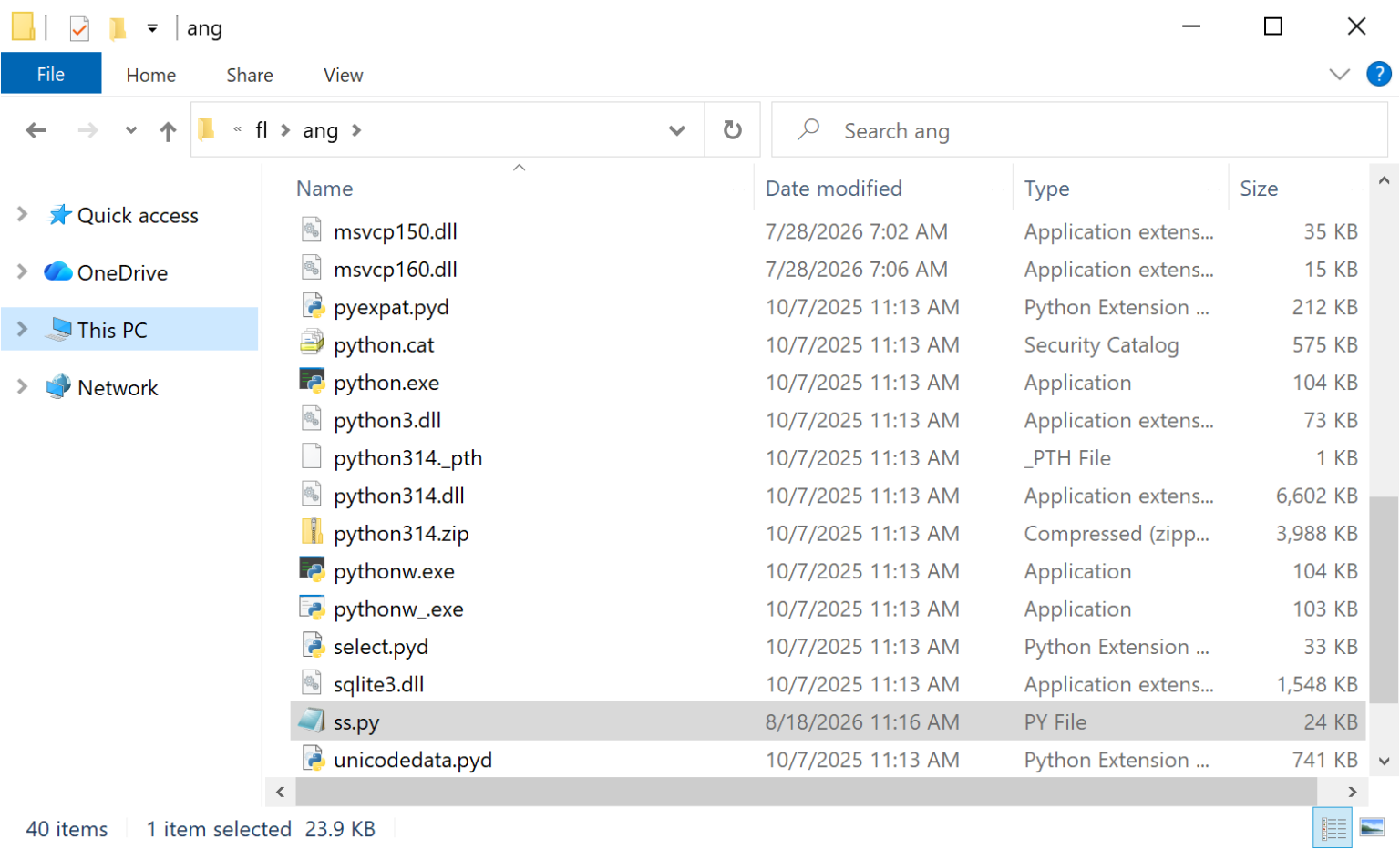
Technical analysis of SynkLoader indicates its initial compilation and distribution began around late July 2026, marking it as a relatively new entrant into the threat landscape. Upon execution, the installer unleashes a multi-component payload. This includes a PowerShell script, commonly named cleaner.ps1, which orchestrates subsequent stages of the infection. Crucially, it also extracts a ZIP archive containing a comprehensive Python framework, a core malicious Python script, a suite of precompiled Python libraries, and several deceptive Microsoft runtime Dynamic Link Libraries (DLLs). The inclusion of a full Python environment within the malware package is notable, providing attackers with a robust and flexible scripting platform that is increasingly difficult to detect through traditional signature-based methods.
One of SynkLoader’s defining characteristics is its sophisticated, modular architecture and polyglot programming approach. The malware distinguishes itself by integrating multiple programming languages—Python, PowerShell, C#, and C++—sometimes combining up to three distinct languages within a single module. This unusual blend contributes to the malware’s complexity, making reverse engineering more challenging and enabling it to leverage the strengths of each language for different functionalities, such as system interaction via PowerShell, complex logic via Python, and low-level system calls or obfuscation via C# or C++. The modularity also allows for adaptive deployment: based on a preliminary assessment of the compromised environment’s profile and the attackers’ specific operational objectives, a tailored set of modules can be deployed. This adaptability signifies a highly organized and resourceful threat actor group, capable of custom-fitting their attack tools to maximize impact and achieve specific goals within diverse target networks.

Among the identified modules, the "PhishLocker" component stands out as a critical element designed for direct credential harvesting. This module is engineered to present a highly convincing, full-screen, borderless graphical user interface (GUI) application that mimics a legitimate Windows 11 lock screen. The objective is to trick the victim into entering their Windows account password directly into this fake interface. The success of this technique hinges on the visual fidelity of the simulated lock screen, which is crafted to be virtually indistinguishable from the authentic operating system prompt. Once the victim inputs their credentials, the PhishLocker module captures and exfiltrates this sensitive information to the attacker’s command-and-control (C2) infrastructure.
The strategic importance of obtaining a victim’s Windows account password cannot be overstated. With valid credentials, attackers can leverage other SynkLoader modules, such as a tunneling component, to establish persistent access to the corporate network from the infected device. This bypasses common perimeter security measures, including IP allow-lists and other network-based restrictions, as the traffic originates from an authenticated and seemingly legitimate internal endpoint. While the fake lock screen is remarkably persuasive, a key vulnerability was identified: the deceptive overlay is merely a GUI application, meaning that standard Windows hotkeys like Alt+Tab can expose the underlying active windows, thereby revealing the fraudulent nature of the lock screen. Similarly, attempting Ctrl+Alt+Delete, which typically brings up the genuine Windows security options, would likely fail to produce the expected result, further exposing the deception. Educating users on these simple verification techniques is crucial for preventing successful credential theft via such methods.
Further investigation into SynkLoader’s operational intent suggests a strong potential link to ransomware operations. The malware incorporates functionalities to measure the size and scope of Active Directory environments, a common reconnaissance step performed by ransomware groups prior to deployment to assess the potential impact and tailor their ransom demands. Confirmation of "hands-on-keyboard" attack capabilities through the malware’s reverse shell module further supports this hypothesis. In controlled honeypot environments, threat actors were observed attempting to execute various profiling commands, indicating an interactive post-exploitation phase where attackers directly navigate and assess the compromised network. This level of interaction is characteristic of sophisticated adversaries preparing for data exfiltration, lateral movement, or the eventual deployment of ransomware. The fact that the attackers disconnected upon realizing they were in a simulated environment highlights their vigilance and operational discipline.
The sophistication of SynkLoader also extends to its evasion techniques. Security researchers have noted that the hashes of SynkLoader modules are often unique for each infection instance. This characteristic significantly hampers detection efforts that rely heavily on static signature-based methods, forcing defenders to adopt more dynamic and behavioral analysis techniques to identify and mitigate the threat. The constantly shifting digital fingerprints of the malware necessitate a proactive and adaptive defense posture, moving beyond simple blacklisting to encompass advanced endpoint detection and response (EDR) solutions, threat intelligence integration, and robust incident response capabilities.
To effectively counter threats like SynkLoader, organizations must implement a multi-layered defense strategy. At the forefront, robust security awareness training is paramount, focusing on educating employees about the latest phishing tactics, particularly those involving impersonation and unsolicited software installations. Employees must be trained to independently verify any unexpected IT requests, especially those prompting software downloads or credential entries, by contacting IT support through established, known channels rather than replying to the suspicious message. Furthermore, organizations should enforce strict policies against installing unsolicited MSI files or any executable from unverified sources.
From a technical standpoint, implementing strong authentication mechanisms, such as multi-factor authentication (MFA), across all corporate applications and systems, especially those accessible via Microsoft Teams, is critical. MFA acts as a significant barrier even if primary credentials are compromised. Deploying advanced EDR solutions capable of behavioral analysis and anomaly detection can help identify the execution of malicious scripts and unusual system activities that characterize SynkLoader’s operation. Network segmentation, principle of least privilege, and regular security audits further reduce the attack surface and limit potential damage from successful intrusions. Lastly, establishing clear protocols for incident response, including steps to take when confronted with a suspicious lock screen (e.g., attempting Ctrl+Alt+Delete or Alt+Tab to verify authenticity), empowers users to act as an initial line of defense.
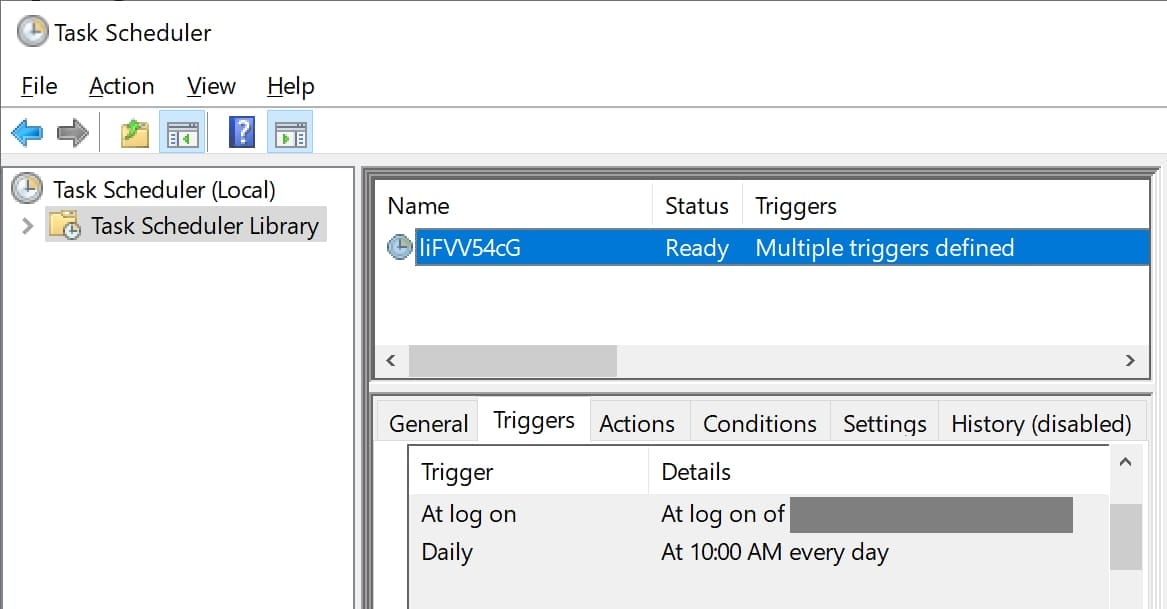
The emergence of SynkLoader represents a concerning advancement in the capabilities of cyber adversaries, showcasing a blend of social engineering prowess, sophisticated multi-language malware development, and adaptive post-exploitation strategies. Its ability to exploit trusted communication platforms and mimic legitimate system interfaces underscores the ongoing challenge for cybersecurity professionals. As threat actors continue to innovate, organizations must prioritize comprehensive security awareness, deploy advanced detection and response technologies, and foster a culture of vigilance to protect against these evolving and increasingly complex threats. The fight against sophisticated malware like SynkLoader demands continuous adaptation and a proactive, integrated security approach to safeguard critical assets and maintain operational integrity.




 Lisa Mariana
 Aura Kasih
 Ayu Aulia