Lisa Mariana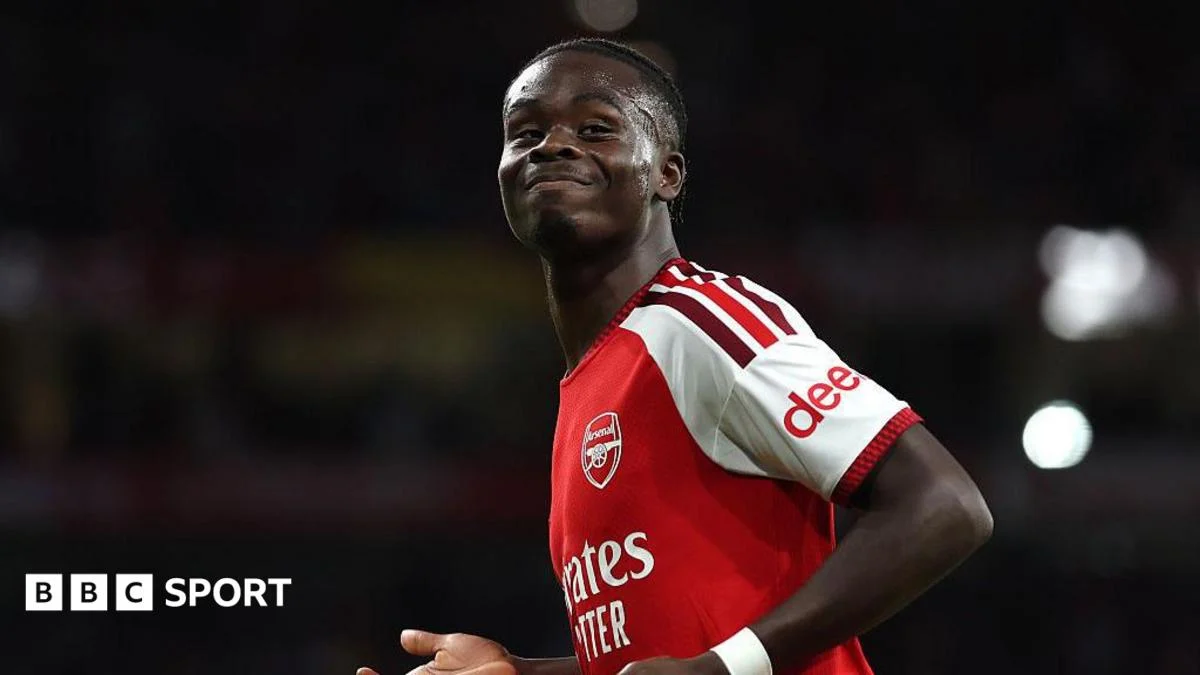
The resurgence of Bukayo Saka, a pivotal figure for Arsenal, has ignited optimism among supporters, signaling a potential return to the scintillating form that defines his elite status within European football. Following a period marked by persistent physical challenges, his commanding performance in the Premier League’s opening fixture has sparked widespread discussion regarding the trajectory of his fitness and influence for the North London club. This analysis delves into the multifaceted factors contributing to his current sharpness, examining the interplay of injury management, strategic rest, and tactical partnerships, all within the demanding context of top-tier football.
Saka’s journey to this juncture has been anything but linear. As a prodigious talent emerging from Arsenal’s academy, he swiftly became indispensable, shouldering immense creative responsibility at a remarkably young age. His ascent saw him evolve from a versatile utility player to a world-class right winger, a transformation underpinned by his exceptional dribbling, incisive passing, and growing goal threat. However, this meteoric rise was accompanied by an unrelenting workload. Over the past three seasons, Saka accumulated a staggering 153 appearances for Arsenal across all competitions, with 61 of those being full 90-minute displays. Such demands on a developing athlete, particularly one operating in a high-intensity attacking role, inevitably lead to physiological stress and an elevated risk of injury.
Indeed, the latter part of the previous season bore witness to the tangible effects of this strain. An Achilles injury sustained in March significantly hampered his contributions. While the club’s medical staff and coaching team meticulously managed his game-time, the winger was visibly operating below his optimal physical capabilities. He missed a crucial international break and seven fixtures for Arsenal, a testament to the severity of the issue. Despite these setbacks, his resilience shone through, and he returned to play a vital role in Arsenal’s sustained challenge for the Premier League title, even if they ultimately fell short. His commitment to playing through discomfort underscored his dedication but also highlighted the "gamble" he openly admitted to taking, prioritizing team objectives over personal well-being. This period of battling through injury, while commendable for his spirit, invariably impacted the consistency and explosiveness that are hallmarks of his peak performance.
The international stage also presented its own set of complexities regarding Saka’s fitness. While the original content mistakenly refers to Thomas Tuchel as England’s manager and contains several factual inaccuracies regarding specific World Cup matches, the overarching theme of managed minutes due to injury concerns remains pertinent. Under Gareth Southgate’s leadership, England’s national team management strategically limited Saka’s playing time during the tournament. Despite his significant contributions, including notable goals and assists (such as his hat-trick against Iran in the group stage, not France as incorrectly stated in the source), he started only three of England’s matches, accumulating just 357 minutes – roughly 48% of the team’s total playing time. This cautious approach, while perhaps frustrating for a player eager to contribute fully, inadvertently provided a crucial period of relative recuperation for his ailing Achilles.
This enforced, albeit partial, rest during the World Cup proved to be an unexpected boon. Rather than returning directly to the rigors of club football with an accumulated deficit of rest and recovery, Saka had a window to address his physical issues more comprehensively. His own reflections post-match underscore this deliberate approach. He revealed an intentional strategy of balancing rest with early, focused training during the summer break. "It was more about balancing my time off and not having too much of a break. I took seven days off and then started to train again," Saka stated, emphasizing his commitment to returning in prime physical condition. This proactive mindset, driven partly by the disappointment of England’s World Cup campaign, where he felt he wasn’t at 100%, fueled his hunger for the new season. He returned to training a few days earlier than scheduled, a clear indication of his determination to make an impact.
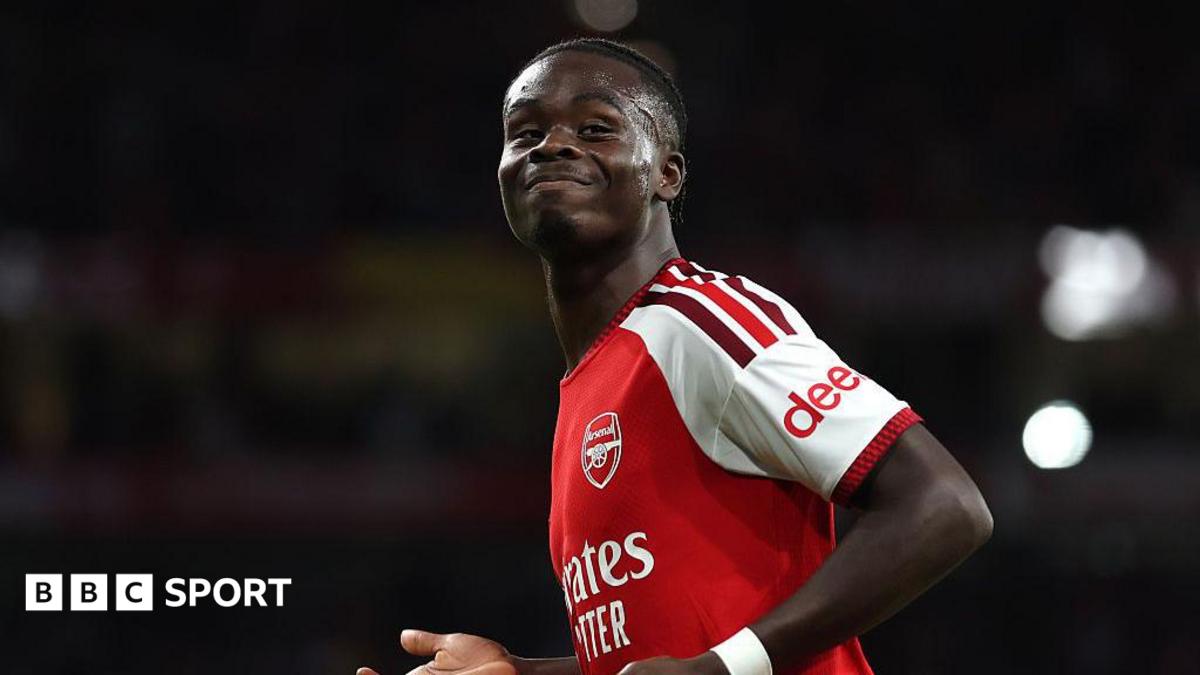
The fruits of this dedicated pre-season regimen were immediately apparent. His cameo in the Community Shield, despite Arsenal already holding a comfortable lead, showcased flashes of the acceleration and sharpness that had been somewhat absent towards the conclusion of the previous campaign. This early promise was then emphatically delivered in the Premier League opener against newly promoted Coventry. Saka’s performance was nothing short of dominant, tormenting full-back Jay Dasilva with his relentless attacking forays and culminating in a well-taken goal, Arsenal’s second in a decisive 3-0 victory. The sight of him "flying down the right wing and involved in a lot of Arsenal’s attacks" was a welcome reassurance for supporters and coaching staff alike, signaling a return to the dynamism that makes him such a potent threat.
Beyond individual fitness, Saka’s effectiveness is intrinsically linked to the symbiotic relationships he cultivates on the pitch. The seamless understanding with right-back Ben White remains a cornerstone of Arsenal’s attacking right flank. White’s intelligent overlapping runs and defensive solidity provide the necessary platform for Saka to isolate defenders, cut inside, or deliver dangerous crosses. This partnership creates space and uncertainty for opposition defenses, maximizing Saka’s creative license. Furthermore, the integration of new signings like Kai Havertz, alongside the established brilliance of Martin Odegaard, forms a formidable attacking quartet. The fluidity and interchangeability within this unit are crucial. The fact that the trio of Havertz, Saka, and Odegaard had rarely started a Premier League game together prior to the current season (correcting the erroneous "December 2024" to imply previous season’s challenges) due to various injury problems, underscores the significance of their collective fitness. When these key players are operating in unison, the burden of creativity is shared, allowing Saka to flourish without feeling overly isolated or targeted. This collective synergy enhances his individual output, enabling him to operate in a "flow state" where his decisions and actions are executed with natural precision.
From a statistical perspective, quantifying "best" form requires moving beyond mere goal and assist tallies, although these are crucial indicators. Advanced metrics like successful dribbles per 90 minutes, progressive carries, key passes, and expected goals/assists (xG/xA) offer deeper insights into a player’s all-around offensive contribution. While it is still early in the season, the qualitative aspects of his play—his confidence on the ball, the speed of his decision-making, his body language, and his ability to influence decisive moments—all point towards a player operating at a significantly higher tempo and efficiency than at the end of the last campaign. A fully fit Saka not only elevates his own statistics but also improves the offensive output of those around him, drawing defenders and creating opportunities.
The implications of a rejuvenated Saka are profound for Arsenal’s ambitions. A sustained Premier League title challenge hinges on the consistent brilliance of their star players, and Saka is undeniably one of their most valuable assets. His ability to unlock stubborn defenses, provide crucial goals, and deliver high-quality assists is indispensable. His return to peak form instills greater belief within the squad and among the fanbase, reinforcing the idea that Arsenal possesses the quality to compete at the very highest level. Furthermore, with Arsenal participating in the UEFA Champions League this season, Saka’s consistent performances will be paramount to their success on the European stage, where the margins for error are razor-thin. His long-term contract with the club also signals his commitment and provides a stable foundation for his continued development, allowing him to focus purely on his performance.
Looking ahead, the challenge for Saka and Arsenal’s management will be to sustain this excellence. The demands of a grueling season, encompassing domestic and European competitions, will test his physical resilience once again. Careful workload management, intelligent squad rotation, and proactive injury prevention strategies will be critical to ensuring he remains at his peak throughout the campaign. Furthermore, as he continues to mature, areas for further development include enhancing his defensive contributions, maintaining consistency in his end product under intense pressure, and embracing a growing leadership role within the squad. His performances will also be closely monitored by England manager Gareth Southgate, as the Three Lions look towards future international tournaments, with a fit and firing Saka being a cornerstone of their attacking prowess.
In conclusion, the early evidence overwhelmingly suggests that Bukayo Saka is indeed getting back to his best. His commanding performances, underpinned by a strategic approach to injury recovery and a renewed physical and mental sharpness, are a beacon of hope for Arsenal. His ability to influence games, create opportunities, and score crucial goals is unparalleled within the squad. While the season is long and challenges will undoubtedly arise, the current trajectory points towards a period where Saka, liberated from the shackles of injury, is poised to deliver the regular, scintillating performances that have come to define his burgeoning career, solidifying his status as one of football’s most electrifying talents.



 Aura Kasih
 Safa Marwah
 Ayu Aulia