Safa Marwah
A sophisticated digital asset expropriation event, estimated at $88.6 million in Bitcoin, has been definitively linked to a critical random number generator (RNG) vulnerability within specific firmware versions of COLDCARD hardware wallets, impacting thousands of users who relied on the devices for secure self-custody. This significant breach underscores the paramount importance of robust cryptographic randomness in digital security infrastructure and highlights the severe consequences when fundamental security primitives are compromised.
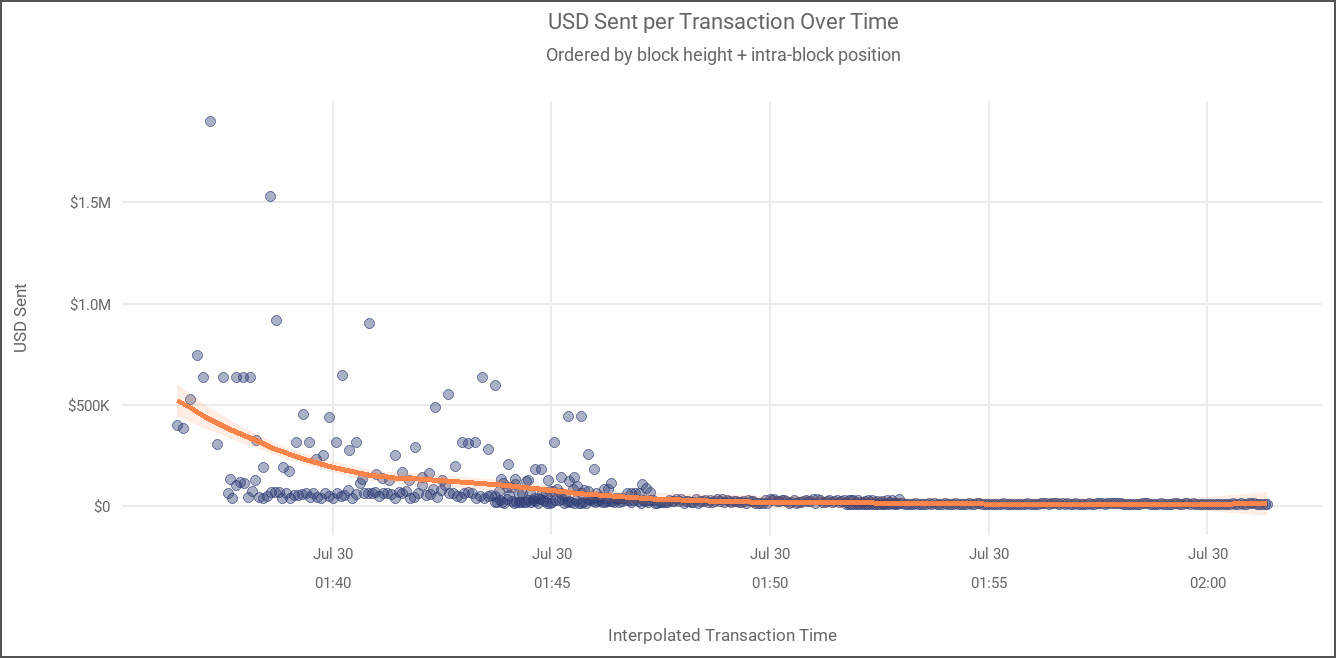
The extensive theft unfolded rapidly, with initial reports indicating a concentrated attack on July 30th. Digital asset analytics firm Galaxy Research identified a primary wave of transactions that systematically drained approximately 1,083 Bitcoin, valued at an estimated $70.2 million at the time, from 1,196 distinct addresses. This meticulously executed cyber-attack transpired over a mere 41-minute window, preceding the public disclosure of the underlying flaw by COLDCARD’s manufacturer, Coinkite, by approximately 30 hours.
Analysis of the illicit transactions revealed a consistent and strategic operational pattern. Every transfer initiated by the perpetrators utilized an identical, hardcoded fee rate of 30 satoshis per virtual byte. This rate represented a substantial overpayment—ranging from 30 to 75 times higher than the prevailing median transaction fees of 0.4-1.0 satoshis per virtual byte during that period. Furthermore, none of the transactions included a change output, meaning the entirety of the input amount was transferred, minus the exorbitant fee. These characteristics strongly suggest the use of an automated tool, pre-programmed to sweep funds efficiently from compromised keys, rather than manual transfers by legitimate owners. Galaxy Research concluded that such behavior is indicative of an attacker who already possessed the necessary private keys, prioritizing rapid fund consolidation over cost efficiency.
The initial wave of theft was not an isolated incident. By August 1st, Galaxy Research reported identifying subsequent waves of transactions, elevating the total estimated losses to 1,367 Bitcoin, equivalent to approximately $88.6 million. These additional attacks expanded the scope of victims, encompassing a total of 4,585 affected addresses. Crucially, as of the latest reports, the stolen Bitcoin remained within attacker-controlled addresses, signaling a deliberate and calculated effort to hold or further obfuscate the assets.
Further forensic analysis by firms like Chainalysis provided deeper insights into the attacker’s methodology. It was observed that the perpetrators specifically targeted high-value wallets, managing to siphon roughly $30 million within the first ten minutes of the initial attack. One victim alone suffered a loss of $1.8 million. This selective targeting strongly implies that the attackers had conducted extensive reconnaissance, identifying and studying potential high-yield targets well in advance of initiating the actual theft. Such preparation suggests a sophisticated and well-resourced adversary.
The Genesis of the Vulnerability: A Flawed Random Number Generator

The root cause of this widespread compromise lies in a fundamental flaw within the COLDCARD’s random number generation (RNG) implementation. Following reports of Bitcoin being siphoned from COLDCARD wallets, security teams from Block (formerly Square) collaborated with other researchers to conduct a thorough analysis of the device’s firmware. Their investigation pinpointed an integration error within COLDCARD’s RNG code, subsequently disclosed to Coinkite on July 30th.
At the heart of the issue was a design oversight where the COLDCARD firmware, specifically in certain versions, failed to properly utilize its dedicated hardware random number generator (RNG) provided by the STM32 microcontroller. Instead, due to an incorrect check in the firmware, the system defaulted to MicroPython’s deterministic Yasmarang fallback generator. This fallback mechanism, while functional for non-cryptographic purposes, is critically unsuitable for generating cryptographic keys. It relied on inputs such as the device’s unique microcontroller identifier and system timing values, which are inherently not cryptographically secure sources of randomness. These values are often predictable, observable, or reconstructable, making the "random" outputs far from truly unpredictable.
Cryptographic security, especially for generating wallet seeds and private keys, hinges on the principle of strong entropy—true unpredictability. A hardware wallet’s primary function is to generate and securely store these keys offline, isolated from internet-connected threats. If the initial generation of the seed, which forms the basis for all subsequent private keys, is compromised by predictable randomness, the entire security model collapses. In this scenario, attackers could theoretically generate a limited set of possible wallet seeds offline, based on the deterministic inputs. By deriving the associated Bitcoin addresses from these potential seeds and cross-referencing them with public blockchain data, they could identify addresses holding funds that were generated using the flawed firmware. Once a match was confirmed, the correct seed would be known, allowing the attacker to derive the private keys and orchestrate the theft of funds.
Scope of Affected Devices and Firmware Updates
Coinkite’s official advisory detailed the specific range of affected COLDCARD models and firmware versions. This included seeds generated on Mk2 and Mk3 devices running firmware versions 4.0.1 through 4.1.9. For Mk4 and Mk5 devices, the vulnerability impacted those with firmware versions prior to standard version 5.6.0 or Edge version 6.6.0X. Similarly, Q devices with firmware versions before standard version 1.5.0Q or Edge version 6.6.0QX were also susceptible.
In response, Coinkite swiftly released updated firmware versions designed to rectify the flaw. Users of Mk2 and Mk3 devices are advised to update to version 4.2.0 or later. For standard Mk4 and Mk5 devices, version 5.6.0 or later provides the fix, while standard Q devices require version 1.5.0Q or later. Corresponding Edge releases (6.6.0X or 6.6.0QX) also incorporate the necessary patch.

It is crucial for affected users to understand that updating the firmware does not retroactively secure a seed that was generated using the compromised random number generator. The flaw affects the generation process itself. Therefore, any seed created with the vulnerable firmware remains compromised, regardless of subsequent firmware updates.
Mitigation Strategies and User Directives
For users whose COLDCARD wallets may have been affected, immediate and decisive action is imperative. The recommended migration process is comprehensive and must be followed meticulously:
- Verify Existing Backup: Confirm the integrity and accessibility of the current wallet seed backup. This is a critical first step before any migration.
- Update Firmware: Install the latest secure firmware version on the COLDCARD device. While this doesn’t fix a compromised seed, it ensures any new seed generated will be secure.
- Generate New Seed: Following the firmware update, generate a completely new seed on the device. This new seed will benefit from the corrected RNG implementation. Securely record and back up this new seed, following best practices for offline storage.
- Verify New Wallet Address: On the COLDCARD device, verify the new wallet address associated with the newly generated seed.
- Small Test Transaction: Send a minimal amount of Bitcoin to the new wallet address to confirm functionality and access.
- Migrate Remaining Funds: Once the test transaction is confirmed, transfer all remaining funds from the old, potentially compromised wallet to the new, secure wallet.
- Retain Old Backup: It is advisable to retain the old seed backup until the migration is fully complete and all funds are confirmed to be securely in the new wallet.
Coinkite also noted that seeds supplemented with at least 50 fair, independent, and privately executed dice rolls are considered less at risk from this specific flaw alone. Such manual entropy injection would override the predictability of the faulty software RNG. Additionally, while a strong, unique BIP-39 passphrase (often referred to as a "25th word") significantly enhances security by making brute-force attacks more difficult, it does not fundamentally repair the underlying vulnerability of a predictably generated seed. Therefore, migration is still strongly recommended even with a passphrase.
It is important to highlight that other Coinkite products, including TAPSIGNER, OPENDIME, and SATSCARD, were confirmed to be unaffected by this particular vulnerability, as they operate on distinct codebases.
In a proactive measure reflecting the severity of the flaw, Coinkite publicly announced the destruction of all COLDCARD devices awaiting shipment that contained the affected firmware. Furthermore, customers whose devices had already been dispatched were contacted directly via email, receiving the security advisory and detailed instructions for migrating their funds to new, secure seeds.
Broader Implications and Future Outlook
This incident serves as a stark reminder of the intricate challenges inherent in hardware wallet security and the broader digital asset ecosystem. The compromise of a seemingly minor integration detail in the RNG mechanism underscores how a single point of failure in a critical cryptographic primitive can unravel the entire security posture of a device designed for ultimate protection.
For the cryptocurrency community, this event will undoubtedly impact user trust in hardware wallets, prompting renewed scrutiny of their underlying firmware and manufacturing processes. It reinforces the need for continuous, independent security audits of all hardware and software components involved in cryptographic key generation and storage. The "trust but verify" mantra takes on new significance, as even reputable manufacturers can inadvertently introduce critical vulnerabilities.
From an industry perspective, this breach highlights several crucial lessons: the imperative for rigorous quality assurance in firmware development, especially concerning cryptographic components; the value of open-source scrutiny, which can sometimes detect such flaws before widespread exploitation; and the complexities of managing supply chain security. The attacker’s precision and rapid execution also demonstrate the evolving sophistication of threats targeting self-custody solutions, where vulnerabilities are quickly identified and exploited before patches can be widely deployed.
Looking ahead, this incident will likely spur further innovation and standardization in hardware wallet design, emphasizing verifiable randomness sources, enhanced entropy harvesting, and more robust update mechanisms. Users, in turn, are advised to adopt multi-layered security practices beyond just relying on a single hardware device. This includes diversifying their self-custody strategies, regularly validating their security setups, staying informed about potential vulnerabilities, and diligently following manufacturer advisories. The ongoing cat-and-mouse game between security researchers and malicious actors continues, underscoring that vigilance remains the ultimate currency in securing digital assets.




 Aura Kasih
 Ayu Aulia