Lisa Mariana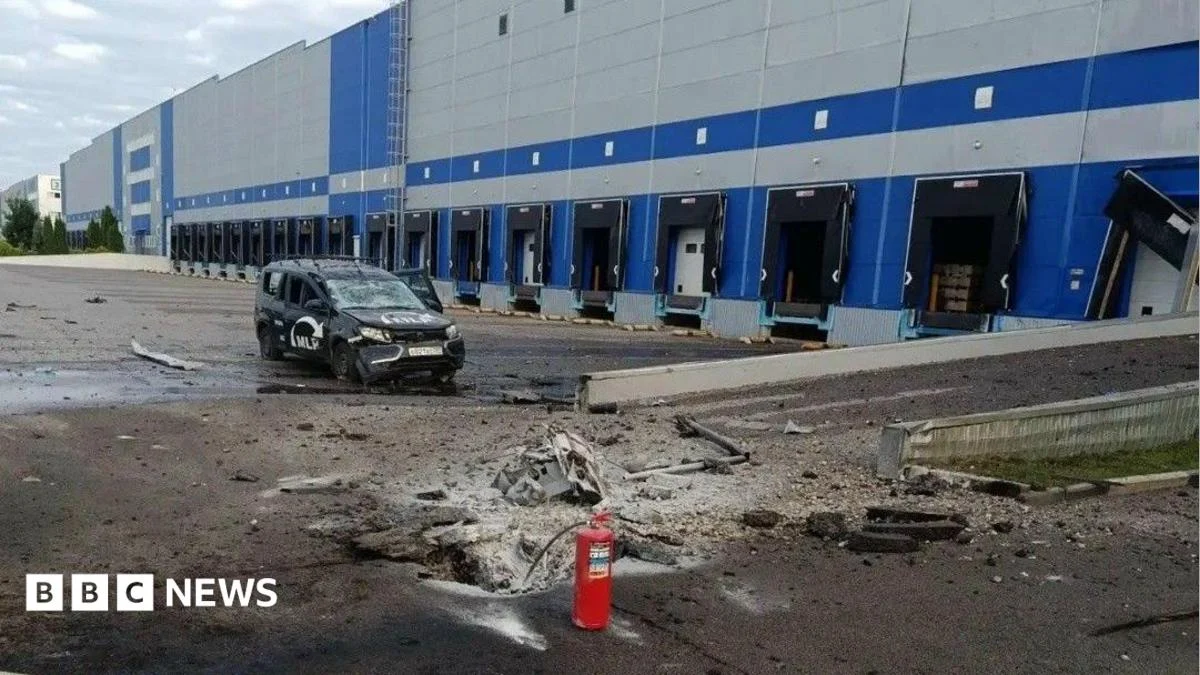
The protracted conflict between Russia and Ukraine has entered a new and increasingly lethal phase marked by a significant escalation in long-range strikes, resulting in a rising civilian death toll and extensive infrastructure damage across both nations. This intensification is underscored by a recent drone strike on a populated beach in Russia’s southern Krasnodar region, which claimed multiple lives and injured dozens, coinciding with a relentless barrage of Russian missile and drone attacks on Ukrainian urban centers like Mykolaiv and Sumy, claiming the lives of vulnerable civilians, including children. Simultaneously, Ukrainian forces have reportedly sustained their aerial campaign targeting strategic logistical and industrial facilities deep within Russian territory, including the Moscow region, indicating a broadening geographical scope of hostilities and a concerning increase in human suffering.
The recent wave of assaults highlights a troubling shift from concentrated front-line engagements to a more expansive strategy of deep strikes, with both sides leveraging advanced weaponry to target areas far from conventional battlefields. This tactical evolution carries profound implications for civilian populations and critical infrastructure, signaling a period of heightened insecurity and uncertainty.
Humanitarian Crisis Deepens in Ukraine Amid Relentless Russian Attacks
Ukrainian authorities have detailed a series of devastating overnight and daily strikes across various regions, illustrating the indiscriminate nature and severe human cost of Russia’s continued aggression. In the southern port city of Mykolaiv, a particularly harrowing incident saw an 89-year-old woman tragically killed, while seven others, including two young girls aged two and twelve, sustained injuries. Mykolaiv, a strategically vital Black Sea port, has endured relentless bombardment throughout the conflict, with Russian forces consistently targeting its infrastructure and residential areas. The repeated assaults on this urban center have severely disrupted daily life, caused widespread displacement, and placed immense strain on emergency services and healthcare facilities. The targeting of civilian residences in Mykolaiv, often far from military installations, underscores a pattern of warfare that exacts a heavy toll on non-combatants.
Further east, the northeastern city of Sumy, located close to the Russian border, experienced a similarly tragic attack on a residential area. This strike resulted in the deaths of a woman and two young girls, aged five and ten, with four additional individuals reported injured. Sumy’s proximity to the border makes it particularly vulnerable to artillery and missile strikes, frequently leading to civilian casualties and the destruction of homes. The cumulative effect of these attacks has instilled a pervasive sense of fear among residents, many of whom have endured prolonged periods without essential services or adequate shelter. The psychological trauma inflicted on communities in Sumy and similar border towns is immense, contributing to a broader humanitarian crisis that necessitates ongoing international support and protection.
Beyond these fatal incidents, Russian aggression has caused significant damage and disruption elsewhere. In Bilhorod-Dnistrovskyi, a city in the Odesa region, two people were injured in separate strikes, further illustrating the wide geographical reach of Russian military operations. Moreover, the city of Dnipro, a major industrial hub in central Ukraine, witnessed a substantial food warehouse engulfed in flames following a Russian attack. Such incidents not only pose immediate threats to human life but also cripple essential civilian infrastructure, impacting food supply chains and exacerbating economic hardship. The deliberate targeting or incidental destruction of facilities like food warehouses raises concerns about potential violations of international humanitarian law, which strictly prohibits attacks on objects indispensable to the survival of the civilian population.
Escalation of Cross-Border Strikes into Russian Territory
While Ukraine continues to grapple with daily assaults, the conflict has also seen an escalation of cross-border attacks originating from Ukrainian territory into Russia. The original prompt’s context, mentioning "Five dead in Moscow region as Ukraine continues warehouse strikes," points to a significant development: the extension of Ukrainian drone operations into Russia’s heartland and against its logistical hubs. Although specific details regarding the Moscow region fatalities and associated warehouse strikes were not elaborated in the provided content snippet, the broader trend of such attacks has been well-documented. Ukrainian forces have increasingly employed unmanned aerial vehicles (UAVs) to target military depots, oil refineries, industrial facilities, and logistical centers within Russian borders.
The strategic rationale behind these Ukrainian operations is multifaceted. Firstly, they aim to disrupt Russia’s war machine by degrading its supply lines and manufacturing capabilities. Attacks on fuel depots and ammunition warehouses directly impede the logistical flow necessary to sustain front-line operations. Secondly, these strikes serve a significant psychological purpose, demonstrating Ukraine’s capability to project power deep into Russian territory and challenging the Kremlin’s narrative of an unchallenged conflict. They aim to erode public confidence within Russia and compel a reallocation of air defense assets from the front lines to protect domestic targets, potentially creating vulnerabilities for Ukrainian ground forces.
The Krasnodar Beach Incident: A Contested Narrative
One of the most high-profile recent incidents on Russian soil involved a drone strike on a busy beach in the Krasnodar region, a popular tourist destination in southern Russia. According to Russian officials, this attack resulted in seven fatalities and 58 injuries, marking a stark and tragic instance of civilian casualties within Russia. Social media footage, widely circulated and verified by independent analysis, depicted a drone crashing and exploding on the beach as vacationers watched from the shore and the water, transforming a scene of leisure into one of horror.
The circumstances surrounding this strike have become a focal point of competing narratives. Ukrainian Telegram channels quickly advanced claims that the drone may have crashed onto the beach due to electronic warfare (EW) jamming, suggesting that its intended target might have been elsewhere and that its impact on civilians was unintentional. This explanation implies a technical malfunction or a loss of control caused by Russian countermeasures. Conversely, eyewitness accounts cited by Russian media reported hearing gunfire preceding the explosion, indicating that Russian air defenses might have attempted to shoot down the drone. If true, this suggests a potential interception attempt that went awry, with debris or the drone itself impacting the populated area.
The regional governor of Krasnodar unequivocally accused Ukraine of conducting "a deliberate strike on civilians," a charge that Ukraine has not officially commented on. This silence, in the context of international conflict, is often interpreted through various lenses – strategic ambiguity, an inability to confirm or deny specific operations, or a deliberate choice to avoid legitimizing Russian accusations. Both Russia and Ukraine have consistently denied deliberately targeting civilians, yet such tragic incidents continue to occur, fueling a complex debate over accountability, proportionality, and adherence to international humanitarian law in the fog of war.
Strategic Implications and International Law
The intensification of long-range strikes by both belligerents carries significant strategic implications. For Ukraine, the ability to strike targets deep within Russia serves as a form of asymmetric warfare, compensating for numerical disadvantages in conventional forces. It pressures Russian leadership, disrupts military logistics, and seeks to undermine public support for the war. For Russia, the continued targeting of Ukrainian cities and critical infrastructure appears aimed at breaking Ukrainian morale, degrading its defensive capabilities, and potentially hindering its economic recovery and future war efforts.
However, these tactics raise profound questions regarding international humanitarian law (IHL), particularly the principles of distinction, proportionality, and precaution. The principle of distinction mandates that parties to a conflict must distinguish between civilian objects and military objectives, and between civilians and combatants. Attacks must be directed only against military objectives. The principle of proportionality dictates that even if a target is a legitimate military objective, an attack is prohibited if the expected civilian harm is excessive in relation to the anticipated military advantage. The principle of precaution requires parties to take all feasible precautions to avoid, or at least minimize, civilian harm.
In the highly contested information environment of this conflict, attribution and verification of intent become exceedingly difficult. Both sides routinely accuse the other of war crimes and deliberate targeting of civilians. The Krasnodar beach incident, with its conflicting narratives of EW jamming versus air defense interception, exemplifies this challenge. While a deliberate attack on a civilian beach would be a clear violation of IHL, an accidental impact due to defensive measures or technical failure, though tragic, would be legally distinct. Similarly, Russian strikes on Ukrainian residential areas, food warehouses, and port cities, while often justified by Moscow as targeting military infrastructure, frequently result in significant civilian casualties and destruction of non-military targets, prompting widespread international condemnation and investigations into potential war crimes.
The Evolving Nature of Warfare: Drone Technology and Air Defenses
The current phase of the conflict underscores the pivotal role of unmanned aerial systems (UAS) and advanced missile technologies. Drones, ranging from sophisticated long-range models to inexpensive FPV (First Person View) drones, have become indispensable tools for reconnaissance, targeting, and direct attack. Their proliferation has democratized aerial warfare to some extent, allowing nations with less advanced air forces to conduct deep strikes. This has, in turn, spurred a rapid evolution in air defense systems and electronic warfare capabilities, creating a constant cat-and-mouse game between offensive and defensive technologies.
Ukraine has demonstrated increasing sophistication in its drone programs, expanding the range and payload capacity of its UAVs to reach targets deep within Russia. Russia, on the other hand, heavily relies on its formidable arsenal of cruise missiles (like the Kalibr and Kh-series), ballistic missiles (Iskander), and Iranian-supplied Shahed-type ‘kamikaze’ drones to overwhelm Ukrainian air defenses and strike targets across the country. The effectiveness of these weapons and the countermeasures employed by both sides are constantly under scrutiny, with each successful strike or interception offering valuable lessons for future operations. The protection of critical infrastructure and civilian populations against these evolving threats remains a paramount challenge for both governments.
Future Outlook and International Response
The current trajectory suggests that cross-border strikes and deep attacks will continue to be a defining feature of the conflict. The strategic objectives driving these operations – degradation of military capabilities, psychological impact, and political signaling – are unlikely to diminish in the near term. This portends a prolonged period of insecurity for civilian populations in both Ukraine and Russia, with a continued risk of mass casualty incidents.
The international community faces immense challenges in responding to this escalating violence. Calls for de-escalation and adherence to international humanitarian law are constant, yet their impact remains limited in the absence of a viable diplomatic pathway to peace. Humanitarian organizations continue to provide crucial aid, but the scale of destruction and human suffering demands sustained and robust international assistance. The focus on accountability for war crimes and violations of IHL will also intensify, with ongoing investigations by international bodies seeking to document and prosecute those responsible for atrocities.
Ultimately, the escalation of long-range strikes underscores the brutal reality of modern warfare, where the lines between front line and home front become increasingly blurred, and civilians often bear the heaviest burden. As the conflict grinds on, the international community’s capacity to protect non-combatants and uphold the principles of humanitarian law will be severely tested.




 Aura Kasih
 Safa Marwah
 Ayu Aulia