Safa Marwah
An alarming surge in cyberattacks has led to the successful exploitation of a severe security flaw within the Zimbra Collaboration Suite (ZCS), resulting in the compromise of more than 270 email and collaboration servers globally. This ongoing campaign targets a high-severity remote code execution vulnerability, allowing unauthorized actors to gain deep access to critical organizational infrastructure, underscoring the persistent threat posed by unpatched enterprise software.
The Zimbra Collaboration Suite, a widely adopted email and collaboration platform, serves a vast user base encompassing hundreds of millions of individuals, thousands of commercial enterprises, and numerous governmental entities worldwide. Its pervasive deployment across diverse sectors makes it a prime target for threat actors seeking to infiltrate organizations, exfiltrate sensitive data, or establish persistent footholds within network environments. The recent wave of attacks leverages a specific weakness, tracked as CVE-2026-73570, which was identified as a command injection vulnerability within the Simple Network Management Protocol (SNMP) monitoring component of ZCS. This flaw, when SNMP notifications are enabled—a configuration that, while not always default, is prevalent in many deployments—allows unauthenticated attackers to execute arbitrary code on vulnerable servers remotely. Such capabilities grant attackers a high degree of control, enabling them to bypass security controls, steal credentials, deploy malware, or disrupt services.
Synacor, the developer behind Zimbra, addressed this critical security flaw with the release of ZCS version 10.1.20 on July 20. The rapid deployment of a patch was a direct response to the recognition of the vulnerability’s severity and its potential for widespread exploitation. However, the timeline between patch availability and widespread application often presents a critical window of opportunity for malicious actors, a period that has demonstrably been exploited in the current attacks.

The first public alerts regarding active exploitation of CVE-2026-73570 emerged from CERT Polska, the Polish Computer Emergency Response Team, earlier this month. Their intelligence indicated that the vulnerability was being actively targeted in the wild, prompting an immediate warning to security teams globally. CERT Polska’s advisory included specific indicators of compromise (IoCs), urging administrators to scrutinize their server logs for unusual activity. Key areas of concern highlighted included unexpected restarts of the Zimbra service and the creation of unfamiliar files within critical directories such as /opt/zimbra/jetty/webapps/, /opt/zimbra/jetty_base/webapps/, and /tmp/, particularly if these files were generated by the ‘zimbra’ user account within the preceding 30 days. These detailed recommendations provided actionable intelligence for organizations to detect potential breaches and respond proactively.
Following CERT Polska’s urgent warning, the Cybersecurity and Infrastructure Security Agency (CISA) in the United States swiftly added CVE-2026-73570 to its Known Exploited Vulnerabilities (KEV) Catalog. The KEV Catalog is a definitive list of vulnerabilities that are known to be actively exploited by threat actors, serving as a critical resource for federal agencies and a strong recommendation for all organizations. Inclusion in this catalog triggers a mandatory patching directive for U.S. Federal Civilian Executive Branch (FCEB) agencies, which were given a strict deadline of August 24 to apply the necessary updates. CISA’s decisive action underscored the perceived immediate and significant risk posed by this vulnerability, highlighting the potential for widespread disruption and data theft if left unaddressed.
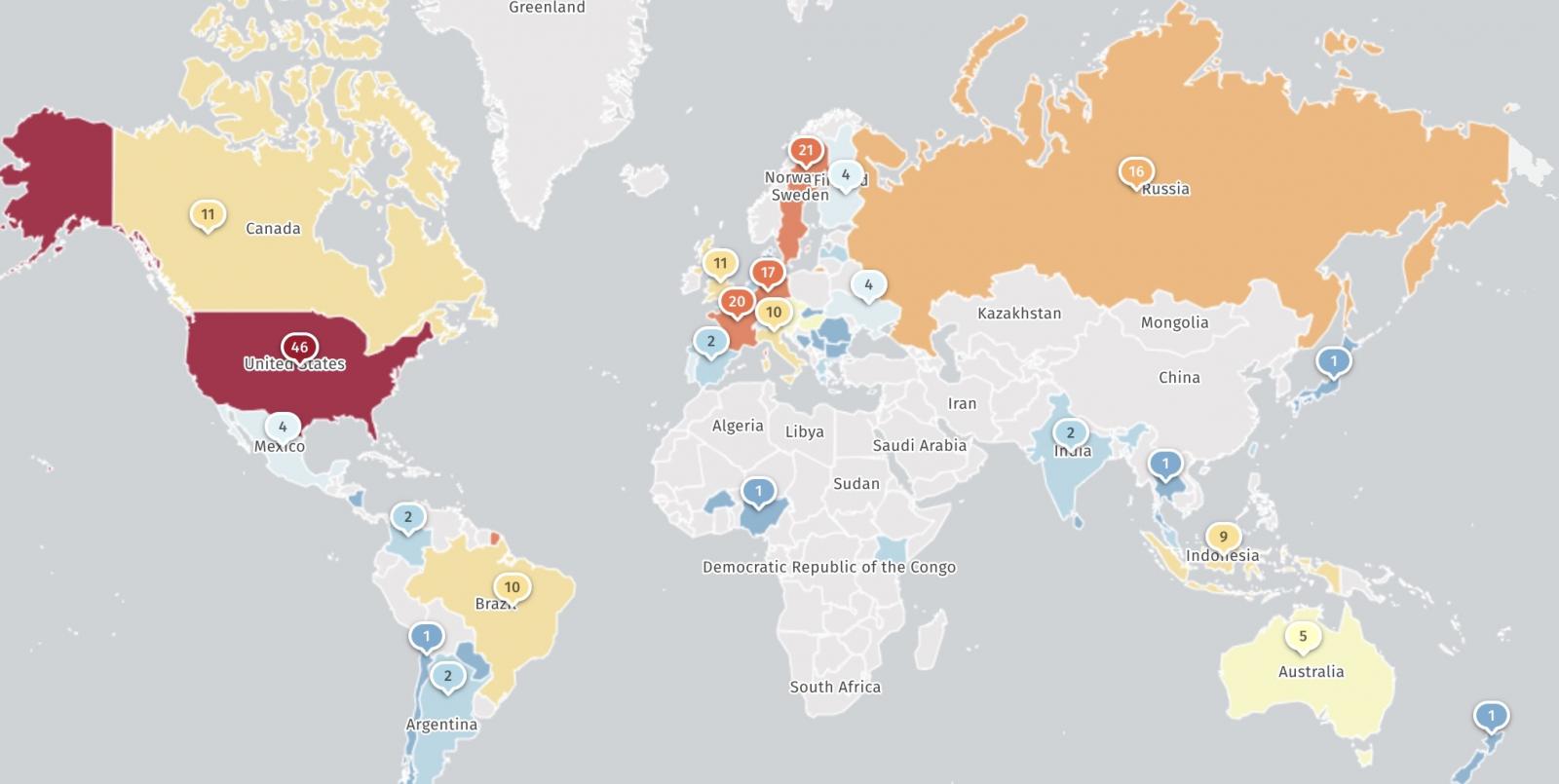
The scale of the ongoing exploitation was further illuminated by the security watchdog Shadowserver. On August 22, Shadowserver reported that its scanning efforts had detected 274 Internet-exposed Zimbra instances that showed clear artifacts of having been compromised through the exploitation of CVE-2026-73570. This figure represents a substantial number of successful intrusions within a short timeframe since the vulnerability was publicly acknowledged as being exploited. While Shadowserver also noted that at least 8,200 Zimbra instances remained unpatched, they clarified that not all unpatched instances would necessarily be exploitable, specifically due to the requirement for SNMP notifications to be enabled. However, the sheer volume of unpatched servers, combined with the proven rate of successful exploitation, suggests a significant attack surface that continues to pose a risk. The geographical distribution of these compromised servers, as observed through security intelligence, indicates a global impact, affecting organizations across various continents.

The frequent targeting of Zimbra vulnerabilities by both financially motivated cybercriminals and sophisticated state-sponsored hacking groups is a well-established pattern in the cybersecurity landscape. The platform’s extensive adoption makes it a high-value target, as successful breaches can yield access to vast repositories of sensitive communications, intellectual property, and user credentials. Furthermore, compromised email servers often serve as strategic entry points for attackers to pivot deeper into an organization’s network, launch phishing campaigns, or conduct further espionage.
Historical context reinforces the current concerns. In March of the preceding year, researchers from Seqrite Labs documented how APT28, a group widely attributed to Russian military intelligence, exploited a stored cross-site scripting (XSS) vulnerability within Zimbra to breach Ukrainian government servers. These attacks were part of a broader campaign targeting critical infrastructure and government entities amidst geopolitical tensions. Similarly, in October 2024, U.S. and UK cyber agencies issued a joint warning regarding the activities of APT29, also known as Midnight Blizzard or Cozy Bear—a group associated with the Russian Foreign Intelligence Service. These actors were observed compromising Zimbra servers, leveraging a previously exploited ZCS flaw to steal email account credentials, underscoring the persistent interest of state-backed entities in compromising email systems for espionage purposes. Another notable campaign involved Russian Winter Vivern cyber spies, who exploited a reflected Cross-Site Scripting (XSS) vulnerability to exfiltrate emails from NATO-aligned accounts, specifically targeting Zimbra webmail portals. These repeated incidents highlight Zimbra’s recurring status as a focal point for advanced persistent threats (APTs) and sophisticated cyber espionage operations.
The implications of a successful Zimbra server compromise extend far beyond mere data theft. Organizations face the immediate risk of data exfiltration, encompassing sensitive emails, confidential documents, and critical business intelligence. Such breaches can also lead to widespread credential theft, enabling attackers to move laterally across an organization’s network, escalating their privileges, and accessing additional systems. The installation of backdoors and other persistent malware is another common outcome, ensuring long-term access for the attackers. Beyond direct security impacts, organizations may suffer significant operational disruptions, reputational damage, and face substantial financial penalties due to regulatory non-compliance, particularly concerning data privacy laws. For service providers using Zimbra, a compromise can also introduce supply chain risks, affecting their downstream clients.
Mitigating the threat posed by vulnerabilities like CVE-2026-73570 requires a multi-faceted and proactive security posture. The most immediate and critical step for any organization operating Zimbra Collaboration Suite is to apply the patch provided in ZCS version 10.1.20 without delay. This must be coupled with rigorous post-patch verification to ensure the update has been successfully implemented and that no residual compromise exists. Beyond immediate patching, organizations must implement robust proactive monitoring strategies, including continuous log analysis, deployment of intrusion detection/prevention systems (IDS/IPS), and regular vulnerability scanning. Security configurations should be thoroughly reviewed, ensuring that unnecessary services like SNMP notifications are disabled if not critically required, and that strong authentication mechanisms are uniformly enforced. Network segmentation is crucial to limit the potential blast radius of a successful attack, isolating critical servers from less secure parts of the network. Furthermore, every organization must possess a well-defined and regularly tested incident response plan to facilitate rapid detection, containment, eradication, and recovery from any breach. Regular vulnerability management programs, encompassing routine patching and configuration audits, are essential to maintain a hardened security posture against emerging threats.
The ongoing exploitation of the Zimbra vulnerability serves as a stark reminder of the continuous cat-and-mouse game between threat actors and cybersecurity defenders. The challenge of promptly patching distributed systems, particularly in large and complex organizational environments, creates windows of opportunity that sophisticated attackers are quick to exploit. As widely used software platforms like Zimbra continue to be targeted, the importance of collective defense, intelligence sharing among security agencies and organizations, and a proactive, defense-in-depth approach to cybersecurity cannot be overstated. It is highly probable that Zimbra will remain a high-value target for threat actors, necessitating perpetual vigilance and rapid adaptation from its user base. The current wave of compromises underscores the imperative for all organizations to prioritize software updates and fortify their digital infrastructure against an ever-evolving threat landscape.


 Aura Kasih
 Lisa Mariana