Ayu Aulia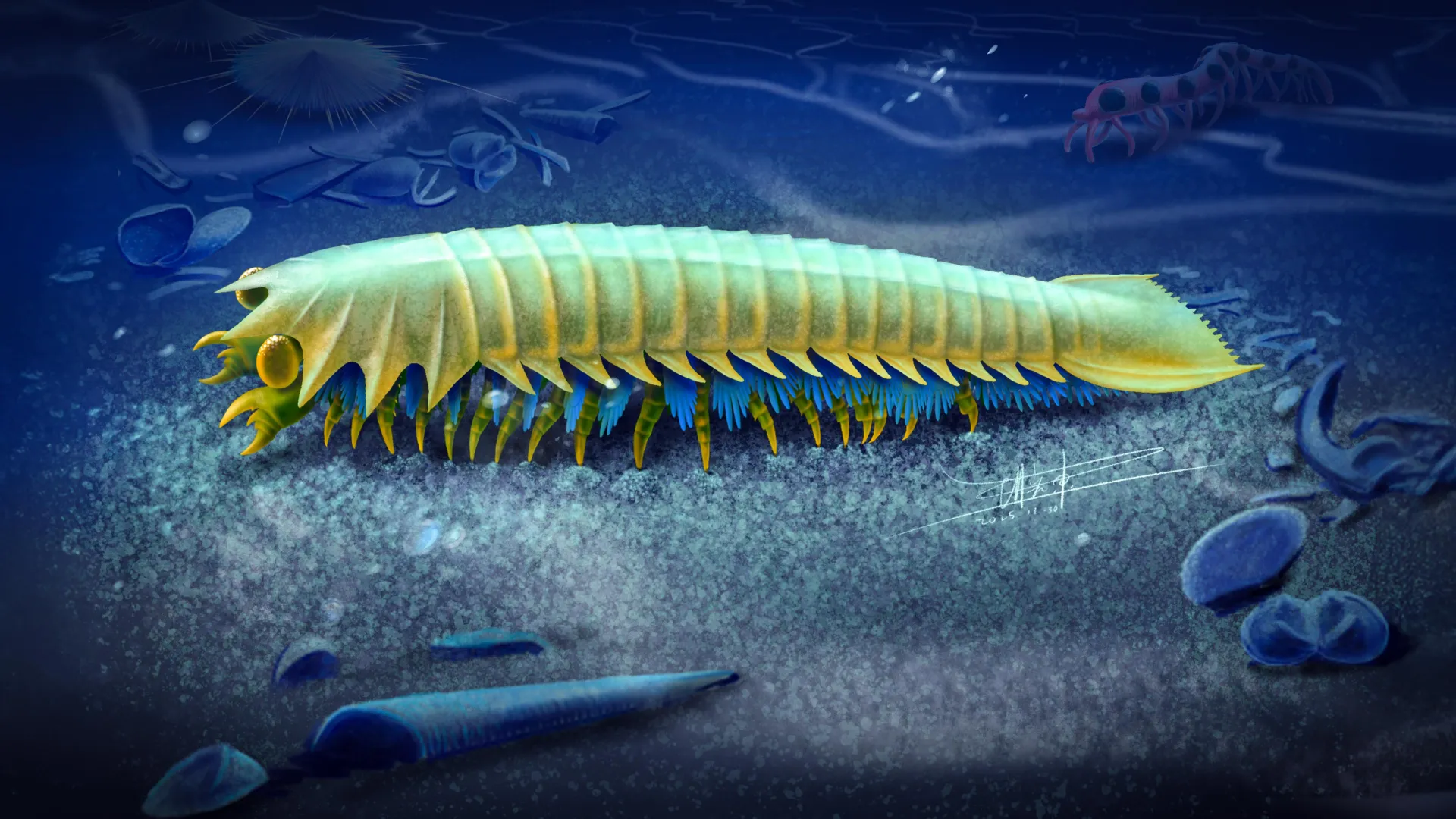
A groundbreaking paleontological discovery has unearthed the earliest definitive evidence of specialized feeding structures that represent the evolutionary precursors to the fangs found in modern spiders and scorpions, pushing their known origins back an astonishing 518 million years to the early Cambrian Period.
The formidable fangs of spiders, whether evoking the venomous prowess of a black widow or the fantastical abilities of a comic book hero, stand as iconic symbols of arachnid predation. Yet, the complex evolutionary journey that culminated in these sophisticated hunting tools commenced in the primordial oceans, long before terrestrial spiders ever spun their first web. A recent collaborative investigation, culminating in a publication in the esteemed journal Nature, meticulously traces the genetic and morphological lineage of these critical appendages to a diminutive marine organism identified as Urokodia, which thrived during a pivotal era of biological diversification.
Unveiling the Cambrian Ancestor: Urokodia
Spiders are integral members of the diverse phylum Arthropoda, specifically belonging to the subphylum Chelicerata. This expansive group encompasses over 100,000 described species, including familiar terrestrial inhabitants such as scorpions, ticks, and mites, as well as marine relatives like horseshoe crabs. A hallmark feature defining chelicerates is the presence of a unique pair of anterior appendages, termed chelicerae, situated in front of the mouth. These structures exhibit remarkable functional plasticity across species, manifesting as pincer-like claws, piercing stylets, or the distinctive fangs employed for seizing, injecting, or manipulating prey.
The fossilized remains of Urokodia were meticulously recovered from the globally celebrated Chengjiang biota in Yunnan Province, southern China—a site renowned for its exceptional preservation of soft-bodied organisms from the Cambrian Explosion. This particular study’s publication serendipitously coincided with the 42nd anniversary of the Chengjiang site’s initial discovery, underscoring its enduring significance to paleontology.
Measuring a mere two to three centimeters in length, Urokodia presented a morphology strikingly different from its distant arachnid descendants. It possessed prominent stalked eyes positioned anteriorly, a segmented trunk, and articulated limbs extending beneath its slender body. Its overall appearance offered little superficial indication of its profound evolutionary connection to the predatory arachnids that would later dominate terrestrial ecosystems. However, the true significance of Urokodia lay hidden within its remarkably preserved internal anatomy.
Advanced Imaging Reveals Ancient Soft Tissues
The extraordinary preservation quality of the Chengjiang fossils, particularly their capacity to retain details of soft tissues, provided an unparalleled opportunity for scientific inquiry. Researchers from Yunnan University in China, in collaboration with scientists from the University of Leicester in the United Kingdom, deployed state-of-the-art X-ray tomography to non-invasively probe the rock matrix encasing the Urokodia specimens. This advanced imaging technique allowed them to reconstruct the internal structures of the ancient creature with unprecedented resolution, revealing intricate anatomical details that had remained entombed and mummified for over half a billion years.
Crucially, these high-fidelity scans brought to light a pair of diminutive, pincer-like appendages situated immediately posterior to the organism’s large eyes. These structures, distinct from the walking limbs, were identified as proto-chelicerae—the earliest known morphological representation of the specialized mouthparts that would undergo extensive evolutionary modification to become the diverse array of pincers and fangs characteristic of extant chelicerates. This finding provides direct fossil evidence for the ancient origins of a key arthropod innovation.
Beyond the proto-chelicerae, the X-ray analysis also illuminated other significant anatomical features. The fossilized legs of Urokodia exhibited structures interpreted as book gills, external respiratory organs adapted for aquatic respiration. The presence of such structures in Urokodia suggests an ancient origin for these respiratory adaptations, which are still observed in contemporary aquatic chelicerates, most notably the horseshoe crabs (Limulus polyphemus), providing a compelling example of evolutionary stasis in certain fundamental physiological systems.
The Genesis of a Successful Predatory Lineage
The Chelicerata represent one of Earth’s most evolutionarily successful and ecologically dominant animal groups, having diversified across an immense spectrum of marine, freshwater, and terrestrial habitats. Their transition onto land marked a pivotal moment in the evolution of terrestrial ecosystems, giving rise to some of the most efficient and widespread predators. Paleontological records unequivocally demonstrate that the ancestral forms of this lineage had already established sophisticated predatory strategies hundreds of millions of years prior to their terrestrial expansion.
Despite popular cultural depictions, such as those found in cinematic productions like Arachnophobia, which often exaggerate the threat posed by spiders, the vast majority of these arachnids present no danger to humans. Their venom delivery systems and biting mechanisms have evolved over eons to effectively subdue prey orders of magnitude smaller than a human, reflecting a finely tuned co-evolutionary arms race within their respective ecological niches.
Professor Yu Liu of Yunnan University, who also holds a Visiting Professorship at the University of Leicester, spearheaded this significant research. Professor Liu articulated the excitement of the discovery: "Our application of X-ray tomography analysis to these remarkable fossils allowed us to penetrate the rock and unveil their soft anatomy, preserved for hundreds of millions of years. The moment we observed the distinctive pincer-like limbs at the anterior of the animal, we recognized the profound significance of this fossil. It was immediately apparent that we had uncovered a very early and distant ancestor of all living chelicerates, including the diverse spiders and scorpions we know today."
A Crucial Window into the Dawn of Animal Life
Urokodia existed within the dynamic and burgeoning marine ecosystems of the early Cambrian Period, a geological epoch characterized by the "Cambrian Explosion"—a period of rapid and unprecedented diversification of multicellular life forms. The Chengjiang fossil site, where Urokodia was found, stands as an unparalleled paleontological archive, preserving an astonishing array of over 200 distinct animal types that populated the ancient oceans more than half a billion years ago. These fossils offer a singular, invaluable glimpse into the initial stages of animal evolution and the establishment of complex food webs.
Professor Mark Williams from the University of Leicester’s School of Geography, Geology and the Environment, a co-author on the study, emphasized the broader ecological context: "The discovery of Urokodia places it within an incredibly rich ancient ecosystem, comprising over 200 different animal species that thrived in the marine environments of over 500 million years ago. These spectacularly preserved fossils are not merely static remnants; they are dynamic insights into the fundamental processes of biological evolution unfolding on our planet during the very genesis of animal life."
This pivotal research was generously supported by a grant from the Department of Science and Technology of Yunnan Province (202401BC070012) awarded to Professor Yu Liu, whose ongoing work is further bolstered by funding from the Yunnan Revitalization Talent Support Program. The insights gleaned from Urokodia profoundly enhance our understanding of arthropod phylogeny, the evolution of predatory adaptations, and the intricate tapestry of life that emerged during one of Earth’s most transformative geological periods. Future investigations into such ancient biota will continue to refine our comprehension of the deep evolutionary history underpinning the biodiversity observed in the modern world.



 Aura Kasih
 Safa Marwah