Lisa Mariana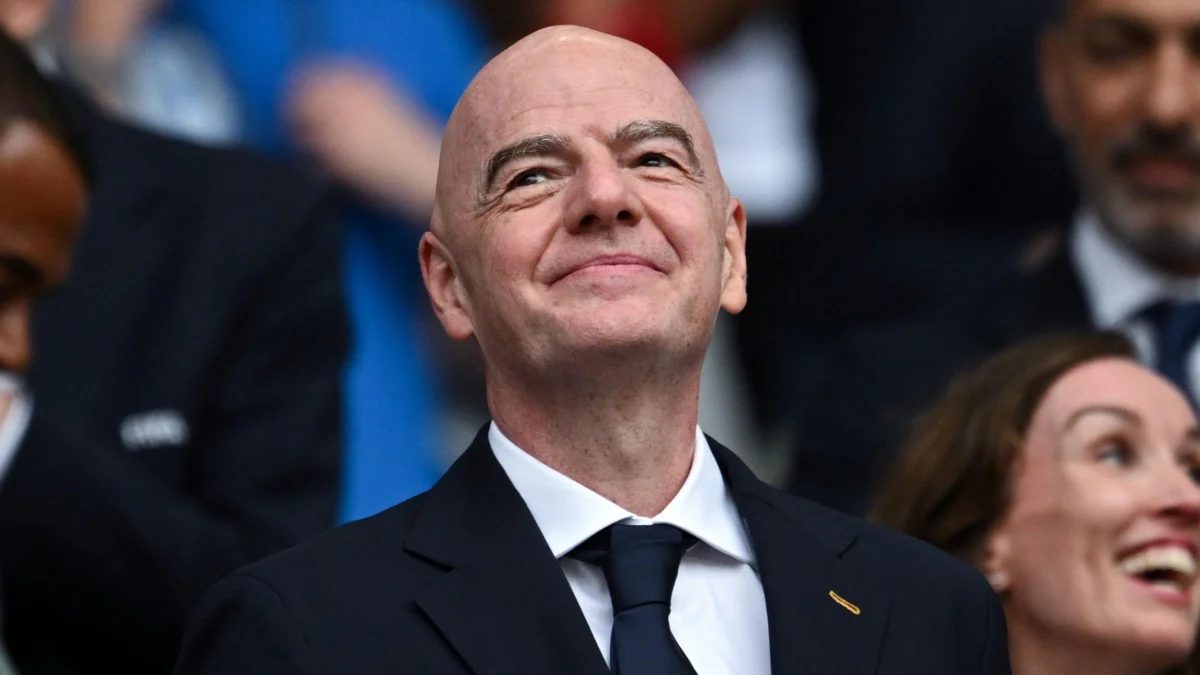
The highest echelons of global football governance are embroiled in a profound crisis, as Gianni Infantino, the president of FIFA, faces unprecedented internal dissent and widespread international condemnation over his ambitious, yet highly contentious, proposals to privatize significant commercial stakes in the sport’s premier competitions. A powerful wave of opposition from key confederations and senior FIFA executives signals a critical juncture for the organization’s leadership and the future trajectory of football’s commercial landscape.
The controversy centers on Infantino’s initiative to establish a new commercial entity, provisionally named "Fifa Forward Enterprise" (FFE), designed to manage and monetize the organization’s most lucrative assets, including the prestigious FIFA World Cup. Under this plan, external private investors would be invited to acquire minority, non-controlling equity stakes in the FFE. Proponents within FIFA, notably detailed in a confidential 25-page document crafted by investment banking giant JP Morgan, project that this commercial restructuring would unlock substantial new revenue streams, potentially yielding an estimated 24 million euros per member association within the 2035-2039 financial cycle. The document characterizes the World Cup as "the most widely viewed" sporting event yet asserts that FIFA’s commercial potential remains "under-monetised," advocating for "new business initiatives" and "incentive-driven compensation" to attract top talent. However, the conspicuous absence of any specific provisions or considerations for the women’s game within these foundational documents has drawn additional scrutiny. Reports indicate that Thrive Eternal, an American venture capital firm co-founded by Joshua Kushner, brother-in-law to former US President Donald Trump’s son-in-law Jared Kushner, is poised to lead the proposed investor group for FFE, adding a layer of political intrigue to the financial dealings.
The gravity of the situation was underscored by an extraordinary public rebuke from Kevin Lamour, FIFA’s chief operating officer, who released a blistering statement to the Associated Press. Lamour, a crucial figure in FIFA’s operational hierarchy, unequivocally denounced the controversial scheme as "the project of one person," expressing profound dismay and asserting that the organization’s own administrative apparatus had been "deceived" regarding the true nature and implications of the proposal. His statement painted a grim picture of an organization adrift, with the president failing to unite or inspire, fostering an environment where many dedicated employees no longer feel pride in their work. Lamour, acknowledging his duty of loyalty to his employer but prioritizing his allegiance to "certain values" and the well-being of his colleagues, declared his willingness to face job termination for speaking out, stating, "If that means I lose my job, then so be it… At least I’ll sleep well tonight." This unprecedented public challenge from within FIFA’s senior management signals a deep fracture at the heart of the organization, far beyond mere policy disagreement.
Further compounding Infantino’s woes was the immediate resignation of Carlos Cordeiro, his long-serving senior adviser on global strategy and governance. Cordeiro, a former president of US Soccer and an experienced investment banker with Goldman Sachs, had been a trusted confidant for nearly five years, even representing FIFA on the White House task force for the 2026 World Cup. His departure carried significant weight, as he unequivocally stated his opposition to the FFE plan, labeling it "a bad deal for football" that would "mortgage football’s future." Cordeiro emphasized that FIFA’s primary responsibility is not to "maximise commercial returns at any cost," but rather "to protect and strengthen football for future generations." He voiced profound concerns over the lack of transparency, the haste with which the proposal was being pushed, and the absence of answers to fundamental questions: "Why this deal? Why now? What oversight exists? Who benefits?" He criticized the expectation for member associations to make a decision of such "enormous consequence in barely 50 days" without adequate information, calling it "not a responsible way to determine the future of the world’s game."
The internal upheaval was mirrored by a formidable united front of opposition from three of football’s most powerful confederations. The Union of European Football Associations (UEFA), the Confederation of North, Central America and Caribbean Association Football (CONCACAF), and the Asian Football Confederation (AFC) have all publicly rejected Infantino’s plans. UEFA, representing 55 member nations, had already voted to boycott future World Cups if the privatization scheme proceeded, a threat that carries immense weight given Europe’s significant contribution to the tournament’s quality and commercial appeal. CONCACAF, with 35 votes, swiftly followed suit. The AFC, comprising 46 nations, added its voice to the growing chorus, stating its solidarity with European and North American counterparts. The AFC’s statement sharply criticized FIFA for setting the "direction of travel" on such a significant initiative without proper consultation, exposing "fundamental weaknesses in Fifa’s consultation and decision-making processes." It accused FIFA of leaving "confederations, member associations and even Fifa’s own governing bodies, including the Fifa Council, feeling sidelined." Collectively, if all member associations were to align with their confederations’ stances, this would create a formidable voting bloc of 136 nations against Infantino’s proposal, significantly exceeding the 106-vote simple majority required for approval within FIFA’s 211-member structure. This mathematical reality makes the passage of the FFE plan in its current form highly improbable.
The South American football governing body, CONMEBOL, while not outright rejecting the proposal, adopted a cautious stance, requesting "additional information and clarifications" regarding the "scope, structure, governance and possible effects" of the plans. This measured response from a confederation representing football powerhouses like Argentina and Brazil underscores the widespread demand for greater transparency and deliberation. The African (CAF) and Oceanian (OFC) confederations have indicated they will discuss FIFA’s plan in August, signaling that a global consensus is far from being reached.
Despite the escalating backlash, FIFA issued a statement vowing to press ahead with the plan, asserting that "nobody is selling football" and attributing the widespread concern to "incorrect media reports" that had "disrupted" the consultation process. This defiant posture, however, did little to quell the storm, with UEFA specifically accusing FIFA of attempting to use football "to enrich themselves and their friends," and Andy Burnham, a prominent political figure, publicly declaring Infantino "the wrong man to lead the organization."
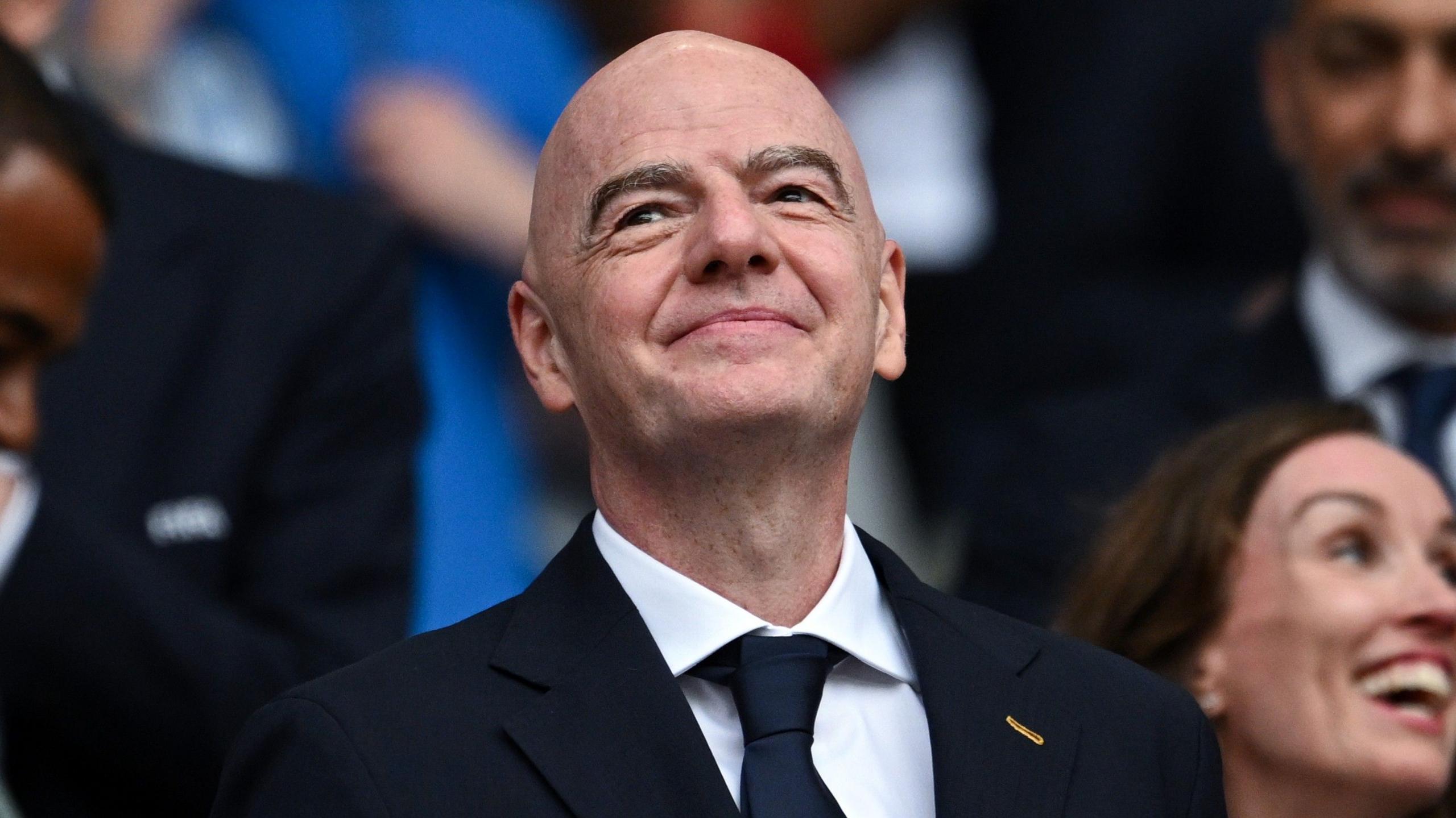
The genesis of Infantino’s commercialization drive lies in a desire to further expand FIFA’s financial reach and distribute more funds to its member associations, particularly those in less developed footballing nations. The existing FIFA Forward development program has already seen significant increases in funding, with $2.8 billion allocated for the 2019-2022 cycle and a 30% increase for the 2023-2026 period. This includes an additional $5 million for every member association and $60 million for each confederation. For many "smaller" nations, particularly in Africa and parts of Asia, these funds are critical for basic infrastructure, grassroots development, and operational stability. Rogers Byamukama of the Ugandan Football Federation articulated this perspective, highlighting how FIFA funding supports crucial projects and inspires growth in regions where resources are scarce. He suggested that while wealthier European nations might not rely on FIFA funding, many others do, making any avenue for increased resources appealing. This dichotomy creates a complex political landscape within FIFA, where Infantino’s popularity often remains strong in regions heavily reliant on his financial initiatives.
Beyond the FFE, Infantino’s expansionist vision for the World Cup itself is also a key driver. Having already expanded the men’s tournament from 32 to 48 teams for the 2026 edition, FIFA is now actively exploring a further expansion to 64 teams for 2030. Documents seen by BBC Sport reveal an aggressive timeline for this assessment, with agency proposals due by August 7, a FIFA decision by August 14, and analysis delivery by September 11. Such rapid decision-making further fuels concerns about transparency and adequate stakeholder consultation.
In conclusion, Gianni Infantino’s presidency is facing its most severe test yet. The synchronized opposition from key confederations, coupled with unprecedented internal dissent and high-profile resignations, has exposed deep fissures within FIFA’s governance structure and cast a long shadow over the proposed commercialization of its most valuable assets. The core debate transcends mere financial strategy, touching upon fundamental questions of football’s heritage, its governance integrity, and the delicate balance between commercial imperatives and the sport’s universal values. The coming months will be pivotal in determining not only the fate of Infantino’s radical plans but also the long-term direction and credibility of global football’s governing body. The current trajectory suggests that without significant concessions, a consensus on FIFA’s future commercial strategy remains an elusive goal, potentially triggering a profound re-evaluation of its leadership and operational philosophy.



 Aura Kasih
 Safa Marwah
 Ayu Aulia